Can ChatGPT create flashcards?
Key Facts
- ChatGPT can now create flashcards natively through QuizGPT, a free feature for all users per OpenAI's announcement.
- QuizGPT flashcards hide answers until flipped, using retrieval practice methods recognized in learning science to strengthen memory and recall according to the announcement.
- The AI-generated personalized flashcard market was valued at $2.13 billion in 2025 and is projected to reach $5.9 billion by 2030 per market research.
- 33% of EU internet users took online courses or used digital learning materials in 2024, up from 30% the year before according to Eurostat data.
- Over 20 dedicated flashcard platforms, including Chegg, Quizlet, and Anki, compete on features like spaced repetition and knowledge-gap mapping per industry analysis.
- Chegg launched its 'Create' feature in April 2025, converting class notes into practice questions with confidence tracking and customized study plans according to market research.
- QuizGPT accepts uploaded lecture slides, class notes, PDFs, and text files on both desktop and mobile at no additional cost per the feature announcement.
You Need Flashcards Fast, and Everyone Says "Just Ask AI"
It's 8 p.m., the spelling test is tomorrow, and someone in a Facebook group just told you to "ask ChatGPT." If you've typed "can ChatGPT create flashcards" into a search bar tonight, you're in good company, and the short answer is yes.
ChatGPT can now create flashcards natively through QuizGPT, a free feature in ChatGPT for Education. According to OpenAI's announcement, you can ask Chat to quiz you on any topic, or upload your own lecture slides, class notes, PDFs, and text files, and get interactive flashcards back. The cards hide answers until flipped, a retrieval practice approach learning scientists have long recognized for strengthening memory and recall.
You're not imagining the hype, either. AI-generated personalized flashcards were a $2.13 billion market in 2025, and market researchers project that figure to reach $5.9 billion by 2030. Digital learning is mainstream: 33% of EU internet users took online courses or used digital learning materials in 2024, up from 30% the year before.
Here's the honest caveat, though: the answer depends on what kind of flashcards you actually need.
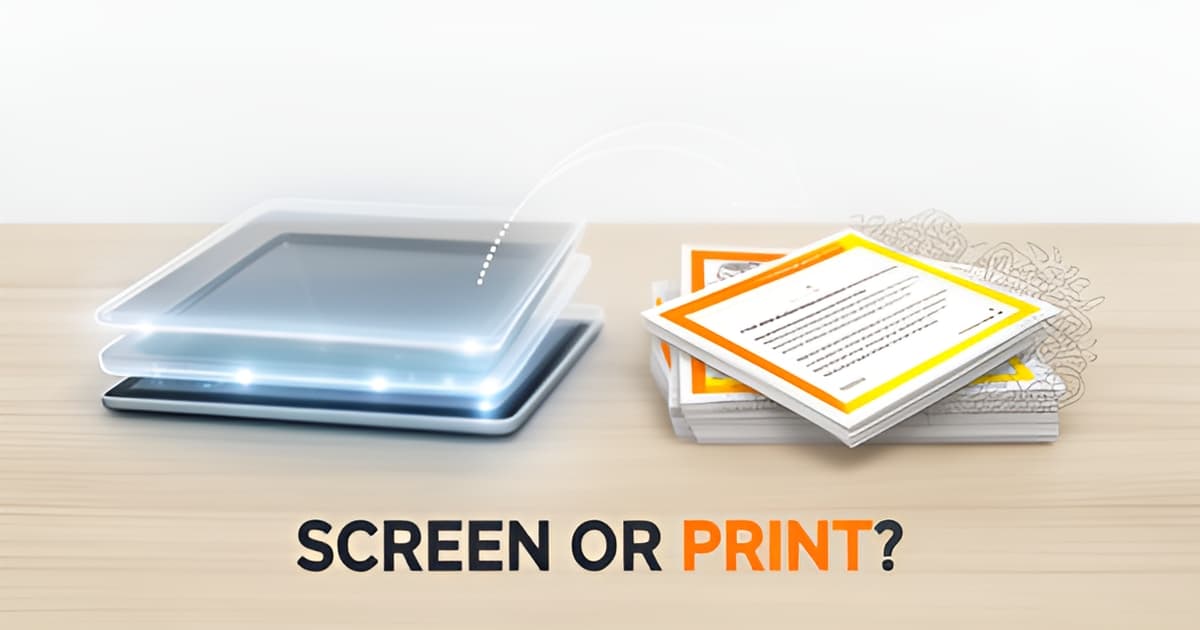
ChatGPT's flashcards live on a screen. That's great for self-quizzing on a phone, but it's a different animal from the cards most parents and teachers picture: something you can print, cut apart, stick in a backpack pocket, and hand to a seven-year-old without handing over a device. Dedicated tools compete on features general chatbots don't natively provide, like:
- Spaced repetition and adaptive learning algorithms that adjust to a learner's progression
- Knowledge-gap mapping that targets what a student actually struggles with
- Multilingual generation and cross-platform sync
- Print-ready output for screen-free, hands-on study
That last point is where the comparison gets practical. Industry analysis shows a crowded field of 20+ dedicated platforms, from Chegg to Quizlet to Anki, all competing on screen-based features. Printoodle sits in a different corner of that market: a dedicated generator that turns your topic or material into print-ready PDF flashcards, including sight word flashcards for early readers, where physical cards arguably matter most.
So yes, ChatGPT can make flashcards, and it's free. Whether it makes your flashcards depends on whether tomorrow's study session happens on a screen or at the kitchen table with a pair of scissors.
What ChatGPT's Flashcards Actually Are: Interactive, On-Screen, and Quiz-Style
If you've been wondering whether you can ask a chatbot to quiz you before tomorrow's exam, the answer is now a firm yes. ChatGPT's flashcards come through QuizGPT, a dedicated feature that generates interactive, on-screen cards from any topic you name, or from your own uploaded notes, lecture slides, PDFs, and text files. According to ChatGPT for Education's announcement, the feature is free to all ChatGPT users at no additional cost, on both desktop and mobile (you may need to update the mobile app).
The format will feel familiar if you've ever used a study app. QuizGPT creates flashcards that hide answers until you flip them, a quiz-style interaction built on retrieval practice, which the announcement describes as a method widely recognized in learning science for strengthening memory and recall. You can even ask Chat to quiz you "with QuizGPT" on a specific subject and get tested right in the chat window.
It's worth understanding how ChatGPT's version fits into a much bigger, and very crowded, market. AI-generated personalized flashcards were a $2.13 billion market in 2025 and are projected to reach $5.9 billion by 2030, according to market research from The Business Research Company. That growth tracks with broader digital learning adoption: 33% of EU internet users took online courses or used digital learning materials in 2024, up three percentage points from the year before.
But here's the catch. Dedicated flashcard platforms compete on features a general chatbot doesn't natively provide, including:
- Spaced repetition algorithms that resurface cards right before you'd forget them
- Adaptive learning that adjusts content to your progression
- Knowledge-gap mapping to flag what you haven't mastered
- Cross-platform synchronization across devices
That's why the space includes more than 20 established players like Chegg, Quizlet, and Brainscape. Chegg, for example, launched its "Create" feature in April 2025, converting class notes into practice questions with confidence tracking and customized study plans. None of these tools are trying to be a chatbot, and ChatGPT isn't trying to be a full study platform.
There's also a format question worth asking: do you want your flashcards on a screen at all? ChatGPT's cards are interactive and on-screen by design, which works well for solo studying and exam prep. For younger learners, though, physical cards often work better, and that's where a dedicated generator like Printoodle comes in, producing print-ready PDF flashcards you can cut out and shuffle. Its sight word flashcards generator, for instance, is built for early readers who benefit from handling real cards rather than tapping through a chat window.
So ChatGPT's flashcards are real, free, and grounded in solid learning science. Whether they're the right fit depends on what and how you're studying.
Where ChatGPT Falls Short: It Can't Hand You a Printable Card
ChatGPT can now create flashcards natively through its QuizGPT feature, offering interactive, screen-based quizzing that hides answers until flipped, a method research shows strengthens memory and recall. This capability gives ChatGPT a foothold in the rapidly expanding AI flashcard market, which industry analysis projects will grow from $2.13 billion in 2025 to $5.9 billion by 2030. However, the practical utility of those cards ends at the screen boundary. If you are working with a 5-year-old on sight words, running a classroom station, or simply prefer learning away from devices, ChatGPT’s output offers no ready-made print option. You are left to copy, format, and print the cards yourself, turning a quick idea into a manual formatting task.
This gap is precisely where a dedicated print-ready generator finds its audience. Printoodle’s flashcard tool is built for users who need physical cards instantly, without leaving the browser. Educators and parents can generate sight word flashcards for early readers that print cleanly on letter or A4 paper, ready for hands-on practice. The cards live in a library where reprints are always free, meaning a teacher can generate a set once and reprint it for a new class or a parent can reprint for a sibling years later. Unlike ChatGPT’s interactive quiz mode, Printoodle outputs static PDFs designed for printing, coloring, or cutting, making it the practical choice for screen-free learning environments.
sight word flashcards for early readers where physical cards matter most.
How to Choose: Match the Tool to the Learning Moment
ChatGPT can now create flashcards natively via QuizGPT, a feature that lets users generate interactive cards from any topic or their own uploaded lecture slides and notes. This capability confirms that AI-generated flashcards have entered a rapidly growing market, where the sector was valued at $2.13 billion in 2025 and is projected to reach $5.9 billion by 2030. However, ChatGPT’s output remains screen-based and interactive, designed for digital self-quizzing rather than hands-on practice.
For learners who need physical cards, whether for early readers, classroom distribution, or screen-free study, a dedicated generator like Printoodle’s remains the better fit. Printoodle’s tool converts uploaded material or a short brief into print-ready PDF flashcards sized for Letter or A4 paper. Users pick their topic, upload their content, generate the cards, and download the PDF for immediate printing. Because every creation is saved to a personal library, reprints are always free, so a worn deck is never a sunk cost.
Sight word flashcards are a prime example of this print-focused utility, ideal for parents and teachers who want customized, themed cards without the need for an app or screen.
AI flashcard generation is a mainstream category now, with 33% of EU internet users participating in online courses or using digital learning materials as of 2024, a figure that reflects the broader shift toward digital education adoption. While ChatGPT offers a convenient way to quiz yourself on uploaded material before an exam, Printoodle provides the print-ready PDFs that support tangible, screen-free learning moments.
Try It Yourself: Make Your First Printable Flashcard Deck
You’ve got a topic, a stack of notes, and a desire to study without staring at a screen. ChatGPT can now create flashcards via QuizGPT, a free feature that generates interactive cards from any subject or from uploaded lecture slides and PDFs. This means you can quiz yourself on the fly, with answers hidden until you’re ready to flip them, using retrieval practice methods recognized by learning science to boost recall. However, ChatGPT’s output stays digital, interactive and screen-based, whereas dedicated generators like Printoodle produce print-ready PDF flashcards designed for hands-on, offline use.
The AI flashcard market is growing fast. In 2025, AI-generated personalized flashcards were valued at $2.13 billion and are projected to reach $5.9 billion by 2030, with North America leading revenue and Asia-Pacific expected to be the fastest-growing region. A recent Eurostat report cited by the market research firm found that 33% of EU internet users participated in online courses or used digital learning materials in 2024, a three-point increase from 2023. This momentum shows that families and educators alike are looking for efficient ways to build study tools, whether on a tablet or on paper.
Printoodle’s flashcard generator fills a specific niche that general chatbots don’t cover: printable, personalized decks you can hand to a child, tuck into a bag, or spread across a classroom table. Unlike screen-based tools, Printoodle outputs a PDF that’s ready to print on Letter or A4 paper, free forever after the initial credit purchase. There’s no subscription, no app required, and reprints are always free from your library.
Starter projects matched to your needs:
- Sight word cards for a kindergartner: Upload a short list or let the generator pull from a themed prompt. Print a deck of high-frequency words your child can trace, color, or match throughout the week.
- Vocabulary cards from a teacher’s own lesson material: Drop in a syllabus, a short story, or a set of definitions. Printoodle will turn your content into cards you can use for in-class quizzes or send home for extra practice.
- Themed cards for a party or classroom activity: Create bingo-style flashcards, trivia decks, or matching games tied to a holiday theme or classroom unit. Print one copy for the table and extras for goody bags.
Print it. Doodle it. Done.
Frequently Asked Questions
Can ChatGPT actually create flashcards for free, or is there a catch?
Will ChatGPT flashcards work on a phone, or do I need a computer?
Can ChatGPT make printable flashcards that I can cut out and use offline?
What are the main differences between ChatGPT flashcards and dedicated flashcard apps?
Is the AI flashcard market actually growing, or is this just hype?
Can I use ChatGPT to make flashcards from my own class notes or lecture slides?
Screen or Shelf? Choosing the Right Flashcard for the Job
ChatGPT can now create flashcards natively via QuizGPT, offering interactive, on-screen quizzing that turns lecture slides and notes into instant study tools. This capability confirms that AI-generated flashcards have entered a rapidly growing market, valued at $2.13 billion in 2025 and projected to reach $5.9 billion by 2030. However, ChatGPT’s output remains screen-based and interactive, designed for digital self-quizzing rather than hands-on practice. For learners who need physical cards, whether for early readers, classroom distribution, or screen-free study, a dedicated generator like Printoodle remains the better fit. Printoodle’s tool converts uploaded material or a short brief into print-ready PDF flashcards sized for Letter or A4 paper, ready for hands-on use. Because every creation is saved to a personal library, reprints are always free, so a worn deck is never a sunk cost. Whether you are quizzing a kindergartner on sight words or prepping for a professional certification, the right tool depends on where the learning happens. Print it. Doodle it. Done.