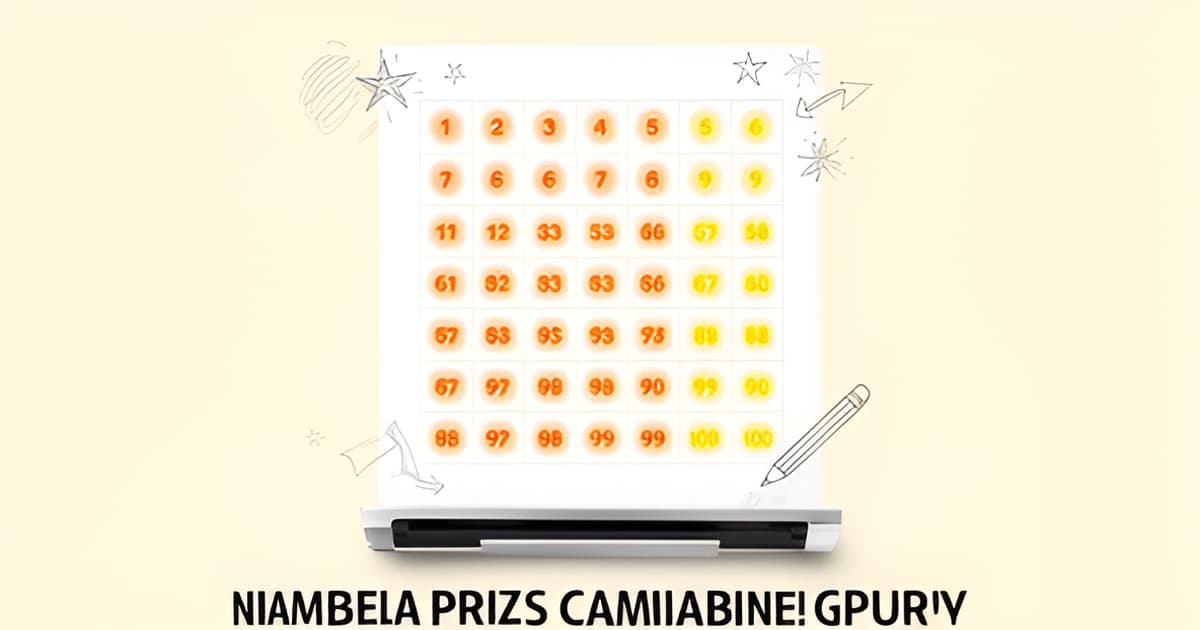
Can you give me a list of numbers 1 to 100?
Key Facts
- 487 ratings give a TeachersPayTeachers number line 1-100 a 4.78/5 average, with 100% of reviewers stating it met expectations
- https://www.teacherspayteachers.com/Product/Printable-Number-Line-1-100-1245114
- Most free printable number resources cover 0-20 or function as number lines, leaving a plain 1-100 list a genuine gap for educators
- https://superstarworksheets.com/math-worksheets/number-sense/number-sense-charts/
- Educators laminate number lines for desk references, tape them to the floor for counting-on activities, and use cut-and-glue worksheets to combine number practice with fine motor skill development
- https://www.teacherspayteachers.com/Product/Printable-Number-Line-1-100-1245114
- Fun Learning for Kids lists over 130 free number sense activities, stressing that manipulatives are key to building number fluency
- https://funlearningforkids.com/free-number-sense-activities-and-printables/
The Full List of Numbers 1 to 100 (Ready to Print)
Finding a straightforward list of numbers 1 to 100 that you can print and use right away is harder than it seems. A quick search reveals that most free resources focus on number lines running from 0 to 100 or charts that stop at 20, leaving a gap for anyone needing a simple, enumerated 1–100 list. This Printoodle resource fills that gap directly, providing a clean, print-ready grid that educators and parents can use without workarounds.
Research into the landscape of free printable number resources shows just how common this gap is. A popular printable number line 1–100 on TeachersPayTeachers has accumulated 487 ratings with a 4.78/5 average, and it has received 80+ views in the last 24 hours alone, with 100% of reviewers stating it met expectations. Educators frequently laminate these lines for desk references, tape them to the floor for "counting on" activities, or use cut-and-glue worksheets to combine number practice with fine motor skill development. However, the majority of available resources cover 0–20 or function as number lines rather than a simple list of numerals. A review of number sense charts across multiple sites found that many only extend to 0–20, while 100 and 120 chart games are the primary resources involving numbers up to 100. This concentration on lines and smaller ranges means a plain, complete 1–100 list is a genuine need that Printoodle addresses with a flexible, downloadable format.
Teachers and parents can put this list to work in several practical ways. Laminating the sheet turns it into a reusable desk mat for quick number checks. Hanging it as a classroom wall reference gives students a constant visual anchor during math time. For hands-on activities, the list can be cut into individual number cards for ordering games or used as a master sheet for "find and cover" activities where students locate specific numerals. The grid format also lends itself to skip-counting exercises, such as marking every second number to practice counting by twos.
After using the list, the next logical step for building number fluency is exploring patterns like even and odd numbers. Printoodle’s even and odd numbers tool offers a clean way to extend the activity, helping students categorize the numerals they just printed and sorted. This pairing of a foundational number list with an pattern-recognition tool provides a complete mini-lesson in under a minute.
Print it. Doodle it. Done.
Why a Simple Number List Beats a Number Line for Some Learners
A plain list of numbers one through one hundred might seem too basic to matter, but for early learners it is often the first bridge between counting aloud and recognizing quantity. Research into how teachers actually use number resources shows a strong preference for flexible, hands-on formats, laminated sheets that survive daily use, posters taped to the floor for "counting on" games, and cut-and-glue worksheets that blend number sense with fine motor practice. A free printable number line 1–100 on TeachersPayTeachers has earned 487 ratings averaging 4.78 out of 5, with 100% of reviewers saying the resource "met expectations" and 100% saying they would "purchase more," a clear signal that educators value ready-to-use number grids for the classroom.
Number sense is not an innate talent; it is a teachable, foundational skill that grows through repeated, varied exposure. As Amber Pasillas notes on Superstar Worksheets, "Number sense plays a vital role in a student's ability to understand and work with numbers throughout their mathematical lifetime," and she emphasizes that this skill can be taught and nurtured. Fun Learning for Kids echoes this, stating that "manipulatives are key" and that students need to think flexibly about numbers to build fluency. This is why a simple 1 to 100 list serves a distinct purpose: it offers a static reference that students can return to again and again without the visual distraction of a number line’s start and end points.
Teachers have developed specific routines around these printables that go beyond simple counting. Many educators laminate number charts so students can use dry-erase markers to highlight patterns, while others hang large-format prints as permanent references along a classroom wall. Some tape a 10x10 grid to the floor, inviting children to physically step from one number to the next, reinforcing the idea that each successive number is one unit larger. Cut-and-glue number line worksheets remain popular for kindergarten and first grade, combining counting practice with the development of scissor skills and number formation.
One of the most powerful benefits of a 10x10 grid format is the way it helps K-3 students internalize numerical patterns. When children see numbers arranged in columns, they quickly notice that each column ends with the same digit, all numbers in the far-left column end in 1, the next column ends in 2, and so on. This visual structure makes the abstract concept of place value concrete, aligning directly with CCSS counting standards such as K.CC.2, which asks students to count forward beginning from a given number, and 1.NBT.A.1, which involves counting to 120 and representing numbers with written numerals. The grid format turns a memorization exercise into a pattern-spotting activity, building the kind of flexible thinking that research shows is essential for later math success.
After students have explored the list, many teachers naturally progress to sorting and categorizing the numbers. Skip-counting by twos, fives, and tens becomes much easier when the numbers are visible in a structured layout, and this is where Printoodle’s even and odd numbers tool can serve as a helpful extension activity. By highlighting which numbers are even and which are odd, students deepen their understanding of number relationships and prepare for operations like addition and subtraction. Print it. Doodle it. Done.
7 Hands-On Ways Teachers and Parents Use a 1 to 100 List
A plain list of numbers 1 to 100 is one thing. What teachers actually do with it is where the learning happens, and the documented classroom habits around these printables are surprisingly creative.
The demand is real. A free printable number line on TeachersPayTeachers has earned a 4.78/5 average from 487 ratings, with 100% of buyers saying it met expectations. That kind of feedback doesn't come from kids staring at a poster; it comes from teachers turning the same sheet into a dozen different activities.
Here are seven hands-on ways educators put a 1 to 100 list to work:
- Laminate it as a desk reference. Teachers routinely laminate number lines so students can grab them, point to them, and use them all year.
- Tape it to the floor for counting-on games. Kids physically hop forward along the numbers, which turns "what comes after 47?" into a whole-body activity.
- Cut it into strips and have students rebuild the sequence. Cut-and-glue number line worksheets for K–1 pair counting practice with fine motor skills, as Super Teacher Worksheets notes.
- Black out numbers for skip counting by 2s, 5s, and 10s. Freebie Finding Mom documents this exact workaround, including masking the 0 on a 0–100 line to create a 1–100 version.
- Play Find and Color games, where you call out a number and kids race to find and shade it.
Two more ideas round out the set. Hang a copy at kid height as a visual reference; one parent reported that a child struggling with subtraction finally got it by imagining "a frog hopping" back along the line. And once skip counting clicks, extend the activity with a lesson on even and odd numbers, which builds naturally on the same printed list.
The pedagogy behind all of this is consistent across educator sites: manipulatives matter. As Fun Learning for Kids puts it, giving kids hands-on, tangible ways to explore numbers is key to future math understanding, and repeated exposure builds flexible thinking. A single printed list, used seven different ways, delivers exactly that repetition without boring anyone.
That's the thinking behind Printoodle's printable format, too. Generate the list once, print as many copies as your classroom needs, and let the same sheet serve as desk reference, floor game, puzzle, and coloring hunt. Print it. Doodle it. Done.
Make It Yours: Generate a Custom 1 to 100 List with Printoodle
Static PDFs ask a lot of you. The most popular free workaround for turning a 0–100 line into a true 1–100 list is to literally black out the zero with a marker, according to Freebie Finding Mom's own instructions. If you're asking "can you give me a list of numbers 1 to 100" and want it exactly right the first time, there's a better path.
Printoodle generates your list in seconds, in whatever format you actually need. Want a plain enumerated list, a grid, or a skip-counting version for 2s, 5s, or 10s? You describe it, and the tool produces a print-ready PDF in Letter or A4. No markers, no cropping, no improvising.
Everything you make lives in your Printoodle library, where reprints are free forever. That matters more than it sounds. Teachers laminate, tape number lines to the floor, and hang them as visual references, and one popular number line on TeachersPayTeachers has drawn 487 ratings (4.78/5 average) and 80+ views in a single day. When a copy gets scuffed by twenty kindergartners, you just print another.
Here's what you can do with yours:
- Laminate it for desk reference or hang it as a classroom visual.
- Cut it into strips and have kids reassemble the sequence, a documented K–1 fine motor activity.
- Print a copy for counting-on games taped along the floor.
- Regenerate a fresh version whenever a theme or format change would help.
The customization gap is real. Most free resources stop at number lines and 0–20 charts, and educators consistently say that repeated, varied exposure builds number fluency. A tool that reshapes the same core list into new formats fits that pedagogy perfectly.
Once your child can read the full list, a natural next step is sorting it: which numbers divide evenly, which don't. Printoodle's even and odd numbers tool extends the same practice into pattern recognition, and it takes about as long as a reprint.
Generate your list, pick your paper size, and print as many copies as the year demands. Print it. Doodle it. Done.
Frequently Asked Questions
Can you give me a list of numbers 1 to 100 that I can print right away?
Why is it so hard to find a simple 1 to 100 list instead of a number line?
How do teachers actually use a printable 1 to 100 list in the classroom?
Is there real demand for printable number resources like this?
What's the difference between a number list and a number line, and which should I use?
What's a good next activity after my child masters the 1 to 100 list?
From 1 to 100 and Beyond: Your Next Step
The search for a simple list of numbers 1 to 100 usually ends in number lines, 0–20 charts, or marker workarounds, but it doesn't have to. As we've seen, a plain 1–100 list is a genuinely useful tool for K–3 learners, whether it's laminated as a desk reference, taped to the floor for counting-on games, cut into strips for sequencing practice, or used to spot the column patterns that make place value click. The demand is real, too: one printable number resource on TeachersPayTeachers has earned a 4.78/5 average from 487 educator ratings, with 100% of reviewers saying it met expectations. Printoodle makes it easy to get exactly the format you need, enumerated list, grid, or skip-counting version, as a print-ready PDF in seconds, with free reprints forever in your library. Once your students can read the full list, extend the lesson naturally by sorting it with Printoodle's even and odd numbers tool, turning one printed page into a complete mini-lesson in number patterns. Generate your list, print as many copies as your classroom needs, and keep the learning moving. Print it. Doodle it. Done.