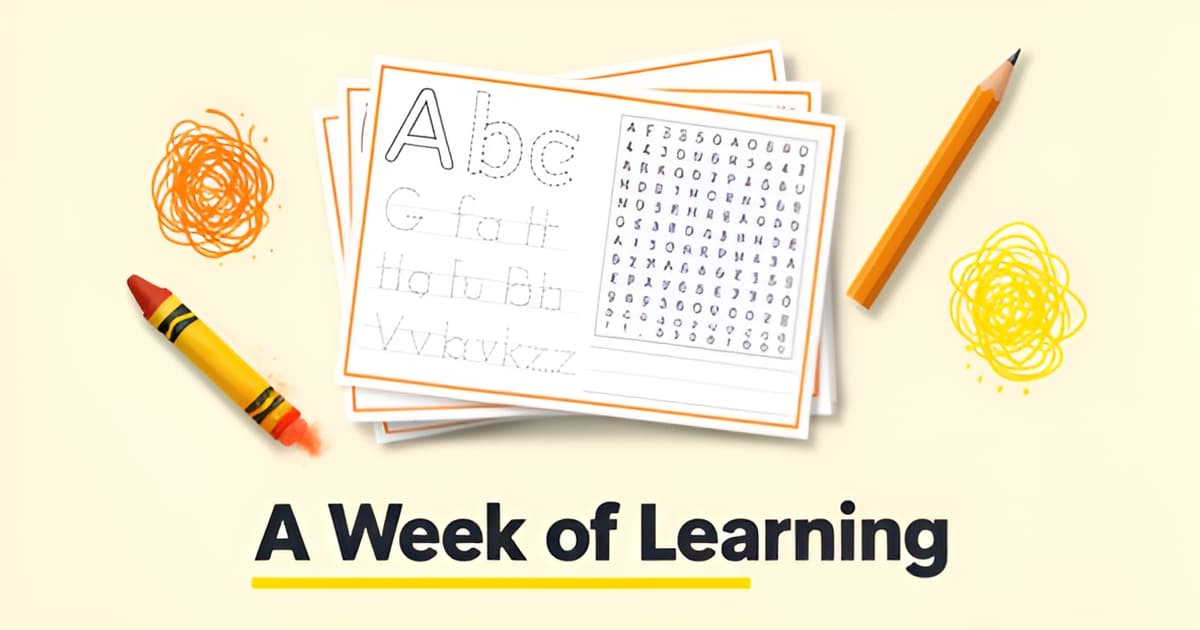
Free Printable Activities for Kindergarten: A Full Week of Learning Pages
Key Facts
- DIY.org structures activities by age band, noting that "Ages 5–7 enjoy drawing, dictating stories, and answering interview prompts with adult support" source
- Scholastic's Science of Reading framework emphasizes decoding, making inferences, and building knowledge and vocabulary from the very start source
- TIME for Kids offers free resources with a K-1 grade category and publishes new stories every week source
- DIY.org's mini newspaper activity runs about 1.5 hours across 14 steps with 3–5 news items per paper source
- Scholastic's kindergarten magazine is a paid subscription, with its Science Spin add-on priced at $1.49 per student source
- Printoodle offers 10 free credits on email verification, with the ability to reprint every creation forever at no additional cost source
- Printoodle's free tier removes the barrier of commercial worksheet packs that typically cost upwards of six dollars per student for a single theme source
The Kindergarten Activity Hunt: Why It's Harder Than It Looks
You sit down at the kitchen table with a fresh cup of coffee, ready to plan the week, and immediately hit a wall. You open a tab for "free kindergarten worksheets," and the results are a scattered mess: a few tracing pages here, a coloring sheet there, each from a different site with a different agenda. Some are behind paywalls, others are too easy, and most don't align with what your child actually needs right now. You spend an hour piecing together a coherent plan, only to realize you’ve barely scratched the surface. The reality is that free resources are typically partial or gated, Scholastic's kindergarten magazine, for instance, is a paid product, and the Science Spin add-on costs $1.49 per student, leaving a genuine gap where a full, free week of learning pages in one place simply doesn't exist.
The good news is that you don't have to build everything from scratch. Research into age-appropriate early-elementary strategies shows that children ages 5–7 enjoy drawing, dictating stories, and answering interview prompts with adult support, which provides a natural framework for structuring daily activities. Skill development is a core benefit here; creating simple projects strengthens reading, writing, and verbal skills while boosting creativity and confidence. On the literacy side, the Science of Reading framework emphasizes decoding, making inferences, and building knowledge and vocabulary from the very start. Commercially, the gap is clear: while many paid curricula exist, truly free, comprehensive week-long plans are rare, making the need for accessible, high-quality printables even more pressing.
The solution lies in tools designed specifically for this age group and learning stage. Printoodle’s tracing worksheets provide a structured way to practice letter formation and fine motor control, while the kindergarten sight words tool helps build instant recognition of high-frequency words essential for early reading fluency. For numeracy, number tracing worksheets offer guided practice that reinforces counting and number identification in a low-pressure format. And when it comes to expression, kindergarten writing paper gives children a dedicated space to draw a picture and dictate a sentence, with the adult serving as scribe, a direct application of the drawing, dictation, and adult support model recommended by early-learning researchers. Each of these resources is designed to be generated, printed, and reused on demand, eliminating the need for endless searching.
You don't have to let the activity hunt derail your week. Printoodle offers a free tier that gives you 10 credits on email verification, with the ability to reprint every creation forever at no additional cost. This means you can generate a full week's worth of custom tracing worksheets, sight word cards, number practice pages, and themed writing paper without spending a dime. Give it a try, print the pages, sit down with your kindergartner, and turn those scattered searches into a focused, fun learning routine. It’s a simple way to bring structure and joy to your week, one printable at a time.
What Actually Works at Age 5: The Research on Kindergarten Learning Activities
Before you print a single page, it helps to know what a five-year-old can actually do at a table, and the answer is probably more than you think, as long as the activity fits how their brains work. The research on early-elementary learning is surprisingly clear on this point, and it shapes every printable in the week ahead.
DIY.org, a kids' creative learning platform, structures its activities by age band, and its guidance for this stage is specific: children ages 5–7 learn best through drawing, dictating stories, and answering prompts with adult support, according to DIY.org's activity guidance. That's not a limitation. It's a design blueprint.
What does that look like in practice? Your kindergartner draws the picture while you write the caption. They tell you the story out loud while you act as scribe. You ask an open question, they answer, and the page captures it. The adult support isn't cheating; it's the mechanism that makes the learning stick.
The skill benefits are real and well documented. DIY.org notes that structured creative activities like these strengthen reading, writing, and verbal skills while boosting creativity and confidence. Their flagship example, a mini newspaper project designed for ages 5–12, runs about 1.5 hours across 14 steps and even suggests 2–6 sentence articles for younger kids, with adults writing down dictated answers.
Scholastic frames kindergarten literacy around what educators now call the Science of Reading: "From decoding to making inferences, students apply research-based reading strategies to every text while building knowledge and vocabulary," according to Scholastic's kindergarten materials. Those three skills map neatly onto printable activities:
- Decoding gets practiced every time a child traces letters or matches sight words, turning abstract symbols into muscle memory.
- Making inferences grows when a child draws a picture and tells you what happens next in the story.
- Building vocabulary happens through conversation, which is exactly what prompt-style pages are built to spark.
Each day's printable follows the same rule: the child does the creating, you do the scaffolding. That means tracing worksheets and number tracing worksheets build fine motor control and symbol recognition, while kindergarten sight words pages target decoding directly. Later in the week, kindergarten writing paper opens the door to dictation, drawing, and storytelling with you nearby.
It's worth noting that comparable structured resources often sit behind paywalls. Scholastic's kindergarten magazine is a paid subscription, with its Science Spin add-on priced at $1.49 per student. Printoodle's approach keeps the same evidence-based structure in free printable activities for kindergarten, so the learning principles don't depend on a budget.
Your Free Week of Printable Kindergarten Activities, Day by Day
A week of free printable activities for kindergarten works best when each day has one clear focus. That's exactly how this plan is built: five days, five skills, all generated in seconds with Printoodle's free tools and printed at home. The structure follows what activity designers already know about this age: kids ages 5–7 "enjoy drawing, dictating stories, and answering interview prompts with adult support," according to DIY.org's age-band guidance.
Monday: Letter formation. Start with tracing worksheets for the letters your child is working on. Sit beside them and name each letter as they trace. To adapt down, stick to letters in their own name; to adapt up, add simple words beneath the tracing lines.
Tuesday: Early reading. Generate a set of kindergarten sight words and treat them as flashcards plus a tracing page. Cut them apart and hide a few around the room for a quick hunt. This builds the decoding work that Scholastic frames as Science-of-Reading-ready practice for young readers.
Wednesday: Numbers. Pull up number tracing worksheets covering 1 through 10. Have your child count objects aloud first, then trace each numeral. Adapt down with numbers 1–5; adapt up by asking them to write the numeral that comes next.
Thursday: Dictation and drawing. Print a page of kindergarten writing paper and let your child draw a picture, then tell you a story about it while you write their words down. This parent-as-scribe approach is the exact method DIY.org recommends for the 5–7 band, and it strengthens reading, writing, and verbal skills at once.
Friday: Mix and review. Combine the week's favorites into one short session:
- Trace three letters and three numerals from the week
- Read five sight words from Tuesday's set
- Draw one new picture and dictate one new sentence
Keep Friday under 20 minutes and end with a high-five. If your child wants more for the weekend, a mini newspaper project adapted from DIY.org's 14-step activity works well: cut it to 1–2 news items, let the parent write, and add crayons and stickers. For a free weekly supplement, TIME for Kids publishes new K-1 stories every week. Print it, doodle it, done.
Make It Yours: Generating and Printing These Pages in Minutes
Ready to turn screen time into hands-on learning? Printoodle makes it possible to generate a full week of kindergarten activity pages in minutes, not hours. With a free account, you receive 10 credits instantly upon email verification, and every creation lives in your personal library where reprints are always free, no subscription needed to keep the pages coming.
Printoodle’s generators cover every core skill a kindergartner needs. Start Monday with tracing worksheets that build pencil control and letter formation, then move to kindergarten sight words for instant recognition practice. Wednesday brings number tracing worksheets to master counting and numeral writing, while Friday offers kindergarten writing paper perfect for stories, sentences, or illustrated reflections. All pages are designed to print on standard Letter size, but a simple toggle switches the layout to A4 for international families or larger classroom displays.
Personalization is where Printoodle shines. Each generator lets you insert your child’s name directly into the activity, turning a generic worksheet into "Sam’s Number Hunt" or "Emma’s Sight Word Search." This small detail boosts engagement and helps emergent readers connect print to their own identity. Once a page is perfected, it saves automatically to your library. Need another copy later? Reprints are free forever, no credits spent, no hidden fees.
Compared to commercial alternatives, Printoodle’s model offers serious value. A typical kindergarten worksheet pack from a major publisher can cost upwards of six dollars per student for a single theme, and reprints often require additional purchases. Printoodle’s free tier removes that barrier entirely. You get 10 credits on day one, generate as many pages as those credits allow, and keep every file in your library indefinitely. If you run out, credit packs start at just five dollars, but most families find the initial 10 credits plus free reprints more than sufficient for a full week, or many more.
Print it. Doodle it. Done.
Bonus Weekend Project and Extra Free Resources
Weekends are the perfect time for a project that feels like play but quietly builds real skills. One of our favorites is a scaled-down version of the mini newspaper challenge from DIY.org, which strengthens reading, writing, and verbal skills while boosting creativity and confidence. The original runs about 1.5 hours across 14 steps with 3–5 news items, but for a kindergartner, you can trim it down beautifully.
Here's the kindergarten version: pick just 1–2 news items from your week (a trip to the park, a lost tooth, a new pet), interview your child with open questions like "how" and "why," and write down exactly what they dictate. DIY.org's own age guidance notes that kids ages 5–7 enjoy drawing, dictating stories, and answering interview prompts with adult support, so you're right in the sweet spot. Then hand over the crayons and stickers for the illustrations.
- Print a few sheets of kindergarten writing paper for the "articles" you'll transcribe.
- Ask 2–3 interview questions and record your child's answers word for word.
- Let your child draw a picture for each news item and add a headline with help from tracing worksheets.
- Decorate with stickers, then "publish" it on the fridge for the whole family to read.
Keep it light on safety, too. DIY.org recommends getting permission before using other people's photos or quotes and reviewing content before it goes out, which is a nice habit to model even for a kitchen-table newspaper. And there's a fun history hook if your child asks where newspapers came from: the Romans posted public news called the Acta Diurna over 2,000 years ago.
If your little reporter gets hooked on real news, TIME for Kids is a genuinely free supplement worth bookmarking. It publishes new stories every week, organizes content by grade level including a K-1 category, and was named a Common Sense Selection for Learning by Common Sense Education. Reading one story together on a Sunday morning pairs nicely with the week's kindergarten sight words or number tracing worksheets pages, and it costs nothing.
That's the whole week: Monday through Friday of printable learning pages, plus a weekend project that turns your child into the star reporter of your household. Printoodle's free tier gives you 10 credits to start, and reprints are always free, so you can run this plan again next week with fresh themes. Print it. Doodle it. Done.
Frequently Asked Questions
What kind of activities are actually right for a 5-year-old?
Can I really get a full week of free printable activities for kindergarten without hitting a paywall?
How do printable worksheets connect to what my child is learning in school?
What does a realistic week of kindergarten printables look like?
Is writing down my child's stories for them cheating?
Are there other genuinely free resources to pair with printable worksheets?
One Week, One Table, Zero Paywalls: Your Kindergarten Plan Starts Now
You started this article staring down a scattered mess of search results; you're ending it with a complete, five-day plan built on what actually works for five-year-olds. Research-backed principles, drawing, dictation, and adult support, shape each day: Monday's tracing worksheets for letter formation, Tuesday's kindergarten sight words for decoding, Wednesday's number tracing worksheets for numerals, Thursday's kindergarten writing paper for dictation and storytelling, and a quick Friday review to tie it together. Compare that to paid alternatives like Scholastic's kindergarten magazine, where even the Science Spin add-on runs $1.49 per student, and the value of free printable activities for kindergarten becomes obvious. Your next step is simple: verify your email with Printoodle, claim your 10 free credits, generate this week's pages, and hit print. Reprints are free forever, so next week just needs a fresh theme. Print it. Doodle it. Done.