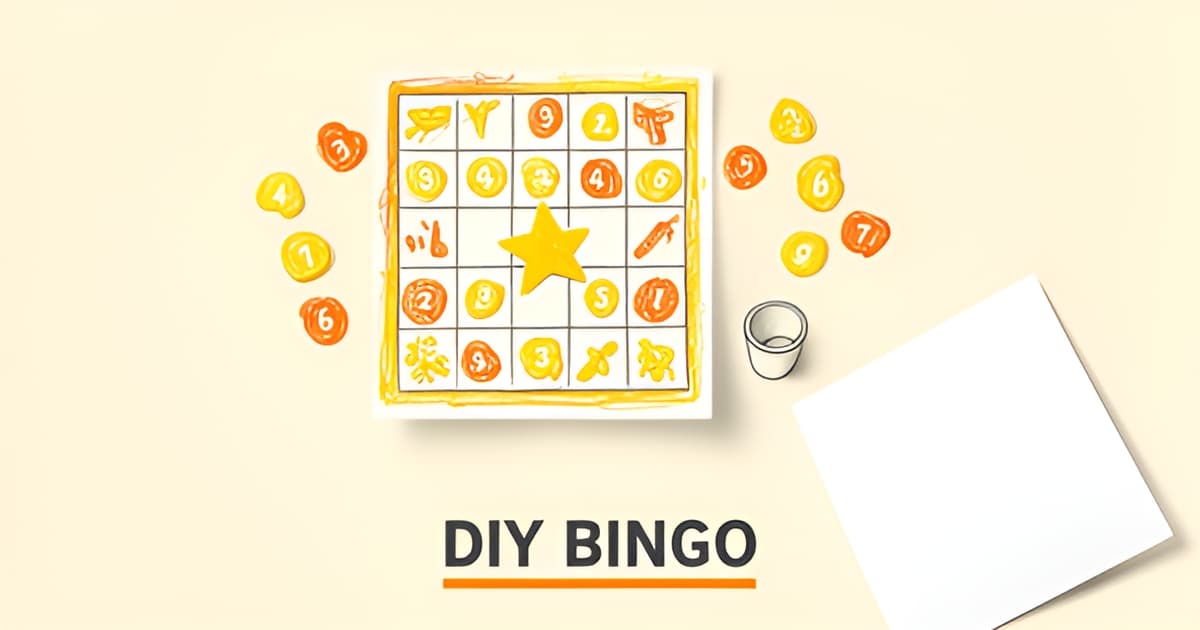
How can I make a homemade bingo game?
Key Facts
- A classic bingo card uses a 5x5 grid with 24 playable squares plus a free center space.
- A 3x3 grid works better for young kids ages 3-6, keeping games fast and attention spans engaged.
- Standard bingo uses numbers 1 to 75, while words and pictures can replace them for themed play.
- A bingo card generator randomizes every card so no two boards are alike, delivering print-ready PDFs in seconds.
- The whole homemade bingo game comes together in under an hour using supplies you already have at home.
- Gift bingo at showers keeps guests engaged by marking predicted items as gifts are unwrapped.
- Laminated cards with dry-erase markers become infinitely reusable, and reading bingo PDFs offer free reprints forever.
Why Homemade Bingo Beats a Store-Bought Set
You’ve settled on the perfect theme for your gathering, only to realize that a standard store-bought bingo set offers generic phrases that don’t match a single moment of your event. Boxed games come with pre-printed number grids and generic caller cards, leaving you to scramble for themed replacements or settle for a mismatch. A homemade version puts the control entirely in your hands, letting you swap the standard numbers for custom words, images, or inside jokes that resonate with your specific group. Whether you are hosting a classroom lesson, a birthday celebration, or a casual get-together, customizing the cards ensures every player engages with content that feels relevant and fun.
The essentials for any bingo setup are straightforward: cards featuring a 5x5 grid, a set of caller cards to draw from, and markers to cover the called items. While you can certainly hand-draw these components, the process is time-consuming and often results in uneven grids or mismatched themes. Printoodle’s bingo card generator streamlines this entirely, allowing you to input your own list of words or themes and instantly produce professional-looking, print-ready cards in seconds. This tool eliminates the need for manual layout work, giving you more time to focus on the event itself rather than the logistics of game preparation. According to industry research on DIY activity planning, customizing game materials significantly increases participant engagement and satisfaction compared to using generic, off-the-shelf options.
Beyond the basic mechanics, the real advantage of going homemade is the ability to tailor every aspect to your audience. You can create a baby shower bingo game filled with predictions about the new arrival, a classroom activity reinforcing vocabulary words, or a birthday party featuring the guest of honor’s favorite hobbies. Printoodle’s platform supports this flexibility by letting you upload a brief or select from themed templates, ensuring the final product feels intentional rather than arbitrary. A bingo card generator handles the heavy lifting of grid generation and printing, while a reading bingo option offers a structured approach for literacy-focused events. The result is a cohesive experience that feels personal and well-executed, all without the hassle of sourcing mismatched pieces from a retail aisle.
Customizing your game also means you can adapt the difficulty and content to suit any age group or interest level. For younger children, you might use images or simple words; for adults, trivia questions or pop culture references work well. This level of personalization is nearly impossible to achieve efficiently with a pre-packaged set, which is designed for broad appeal rather than specific occasions. By using a digital generator, you ensure that the cards are not only themed correctly but also printed at a high quality that looks professional and stands up to repeated use. The ability to reprint from your library means you can always have fresh cards on hand for future events, making the initial setup a one-time investment in versatile entertainment.
The freedom to create a game that reflects your unique vision is what truly sets a homemade bingo set apart from anything you could buy off the shelf. You avoid the frustration of searching for a set that “almost” works and instead build exactly what you need from the ground up. This approach transforms a simple game into a memorable part of your event, one that guests will talk about long after the cards are cleared away. Ready to see how easy it is to bring your vision to life? Print it. Doodle it. Done.
How Can I Make a Homemade Bingo Game From Scratch?
So you want to make a homemade bingo game from scratch. The good news: it's one of the easiest party or classroom projects you can pull off with stuff you already have at home, and the whole thing comes together in under an hour.
Start with your grid size, because it sets the difficulty for your whole game. A classic bingo card uses a 5x5 grid, which gives you 24 playable squares plus a free center space. For young kids, a 3x3 grid works better: fewer squares means faster games and shorter attention spans stay engaged. Preschoolers can handle picture bingo on a 3x3 board, while school-age kids and adults do fine with the full 5x5 layout.
Next, pick what goes in the squares. You've got three solid options:
- Numbers for classic play, 1 to 75 for standard bingo
- Words for vocabulary practice, sight words, or holiday themes
- Pictures for pre-readers, cut from magazines or printed clip art
Teachers often turn lesson vocabulary into bingo cards, and a themed set like reading bingo works the same way: swap the numbers for book titles, genres, or reading challenges and you've turned game night into literacy practice.
Now the step where homemade bingo usually goes sideways: making every card different. When you hand-draw cards, it's tempting to sketch one, copy it, and shuffle a few squares. But players notice quickly when two cards match, and a duplicate win kills the fun. With a 5x5 grid there are billions of possible number arrangements, yet hand-drawn duplicates still happen constantly because we unconsciously repeat patterns.
That's the pitfall a bingo card generator solves for you. Printoodle's generator randomizes every card so no two boards are alike, then hands you print-ready PDFs in seconds. You type in your numbers, words, or image ideas, and the tool handles the uniqueness math. No ruler, no graph paper, no eraser shavings.
Finally, gather your markers. Anything small and grabbable works:
- Buttons or dried beans from the junk drawer
- Cereal pieces, which double as a snack when the game ends
- Stickers for kids who like decorating their wins
- Bottle caps or folded paper squares for a zero-cost option
One caller needs the master list of every item, shuffled in a bowl. Draw, call, and let the shouting begin. Print it, doodle it, done.
Themed Bingo Ideas for Every Age and Occasion
The best homemade bingo games share one trait: they fit the people playing. A card that thrills a five-year-old will bore a bridal shower, and vice versa. Once you've learned how can I make a homemade bingo game, the real fun starts with tailoring the squares to your crowd.
Start with age. For children ages 3 to 6, keep cards small (3x3 works well) and use pictures instead of words. Animal bingo and color bingo are classics for a reason: toddlers can match a picture of a cow or a red square without needing to read a thing. Call out the image, hold up a matching card or toy, and let them find it.
Once kids start reading, word-based versions take over. Sight-word bingo is a favorite with early elementary teachers because it turns repetition into play. You can build a custom set in minutes with Printoodle's reading bingo tool, which generates cards from the exact word list your child or class is working through. Same game, real reading practice.
Birthday parties call for personalization. Put the birthday child's name across the top, then fill the squares with their favorite things: their dog's name, pizza, soccer, their best friend. Guests mark squares as the child opens gifts or as you call out facts about them ("Who has 'loves dinosaurs' on their card?"). It doubles as an icebreaker for kids who don't know each other well.
Adult gatherings work differently. Bridal and baby shower bingo traditionally uses gift bingo: each guest fills their card with items they predict the mom- or couple-to-be will receive, then marks squares as gifts are unwrapped. It keeps the crowd engaged during a long gift-opening stretch. Swap in "bride says a word on her card" variants for a livelier room.
A quick matching guide:
- Ages 3-6: picture squares, 3x3 grids, colors and animals
- Ages 5-8: sight words, simple vocabulary, short sentences
- Birthday parties: the child's name and favorite things
- Showers: gift predictions or guest-of-honor catchphrases
The common thread is difficulty. If players can find a match on nearly every call, the game drags; if squares are too obscure, they lose interest. Aim for a card where a win feels possible but not guaranteed within the first few minutes.
Whatever theme you choose, a bingo card generator handles the layout work, so you spend your time on the fun part: picking squares your players will actually recognize. Print it. Doodle it. Done.
Printing, Playing, and Reusing Your Bingo Set
You've built your cards. Now comes the easy part: getting them onto paper and into little hands without a printer meltdown.
Printing tips that save you headaches. Print one card per page so the grids stay large enough for kids to mark with chunky markers or dot stickers. Use cardstock if you have it; standard paper works fine for a single afternoon, but heavier stock survives enthusiastic daubing. Printoodle defaults to Letter size with an A4 toggle, so your PDF fits whichever paper your printer holds without scaling surprises. Run a single test page first to check that the grid lines and images print crisply.
Running the game without chaos. Keep the rules simple, especially for players aged 3 to 7. Call an item, show it if you can (holding up a picture beats shouting), and let everyone mark their card. Decide your win condition up front and announce it:
- One line wins for younger kids, so the game ends before attention does.
- Four corners or an X keeps mid-game energy high for a second round.
- Full card, or "blackout," makes a satisfying grand finale for a party.
- For classroom versions, have the winner call the next round so everyone stays involved.
Prizes that cost almost nothing. You don't need a toy chest to keep kids motivated. Stickers, a "winner picks the snack" privilege, a homework pass, or first pick of the next activity all work remarkably well. Small and immediate beats big and delayed every time with this age group. If you're building a literacy-themed set, a book-choosing privilege pairs nicely with a reading bingo game, where finishing a card can unlock the next story night.
Make it a set you keep. Laminate your cards and the game survives juice spills, crayons, and being stuffed in a backpack. Dry-erase markers turn laminated cards into infinitely reusable boards. If laminating isn't an option, a plastic sleeve from any office supply aisle does nearly the same job.
Here's where the bingo card generator workflow pays off: generate, print, play, and file the PDF in your library. Every file you've made stays there, and reprints are free forever, so when the birthday kid asks for the dinosaur bingo again six months later, you're one click from a fresh set. That's the real answer to "how can I make a homemade bingo game": make it once, keep it, and reprint it whenever the moment calls.
Print it. Doodle it. Done.
Frequently Asked Questions
How can I make a homemade bingo game without buying anything?
What grid size should I use for a homemade bingo card?
How do I make sure every bingo card is different?
What should I put in the bingo squares besides numbers?
How do I match the bingo theme to my players' ages?
Can I reuse my homemade bingo set for future events?
Your Bingo Set, Your Rules
Making a homemade bingo game comes down to three things: pick the right grid for your players, fill the squares with content they'll recognize, and make sure no two cards match. Whether you're building sight-word boards for a classroom, gift-prediction cards for a shower, or dinosaur bingo for a birthday kid, the game works because it fits the people playing it. And with a bingo card generator, the fiddly parts, randomized cards, clean printable grids, PDFs that fit your paper, take seconds instead of an evening with a ruler. Your finished sets stay in your Printoodle library with free reprints forever, so the game you build today is ready to play again six months from now. Start with the free tier: generate one set, print a test page, and see how fast it comes together. Your next game night is one click away. Print it. Doodle it. Done.