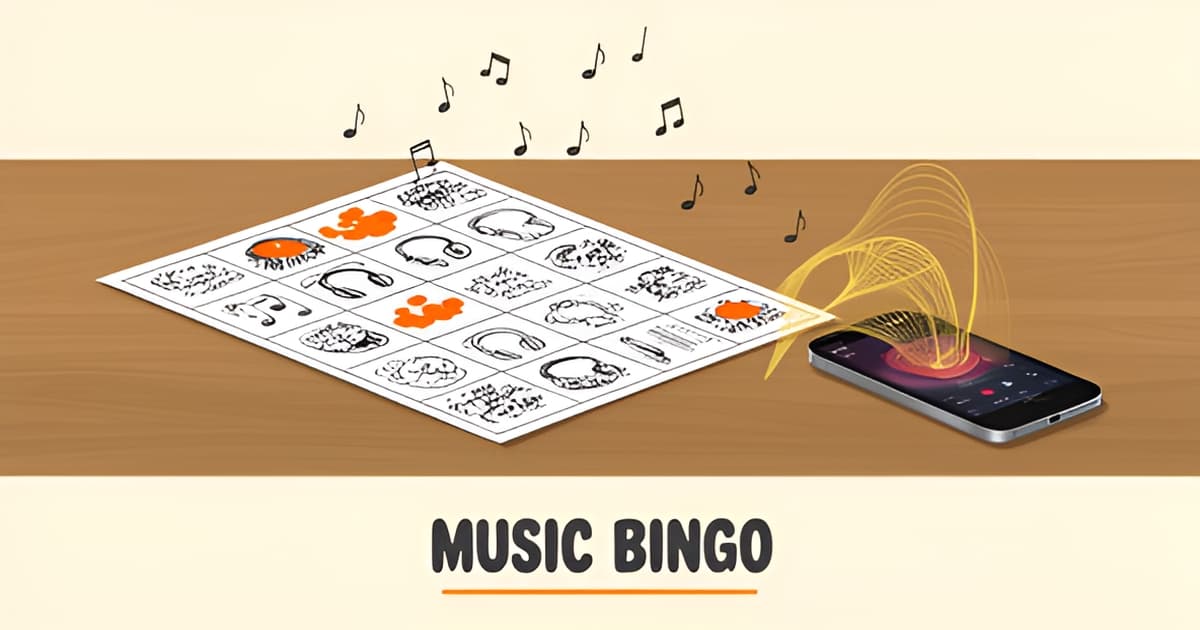
How can I make my own music bingo cards for free?
Key Facts
- "A playlist of 60–75 recognizable songs can fill 50 different cards with 24 titles each, keeping a single round going 20–40 minutes according to Bingo Maker's guidelines",
- "DIY music bingo requires a minimum pool of 25 unique songs for a 4x4 grid, while a 5x5 grid needs at least 30 songs per Bingofy's rules guide",
- "Hosts play 30–45 second song clips in random order, dropping to 15–20 seconds for speed rounds or stretching to a full minute for sing-alongs per Fat City Entertainment rules",
- "Fat City Entertainment's game packs print up to 250 randomized cards and work for anywhere from 3 to over 100 players according to their generator specs",
- "A 4x4 grid needs a minimum pool of 25 unique songs, while a 5x5 grid needs at least 30, and a playlist of 60 to 75 recognizable songs can fill 50 different cards with 24 titles each per Bingo Maker's setup guidance",
- "Printoodle offers 10 free credits on email verification for their bingo card generator, beating competitors' free tiers and directly addressing the reported 'quality sheet generator' gap per Reddit host demand",
- "Bingo Maker provides 2 free credits at signup, covering the first 25 digital cards, plus a selection of ready-made packs that download for free without requiring an account per Bingo Maker's free tier"
What Music Bingo Is and Why Everyone Wants Custom Cards
Music bingo turns the luck out of bingo and replaces it with your record collection. Instead of waiting for someone to call "B-12," players listen as the host plays short clips of songs, then scramble to find the matching title or artist on their cards. It's known by a few names, including "song bingo" and "musical bingo," and the format rewards knowing music rather than luck alone, as Fat City Entertainment explains.
The rules are simple. A host plays clips in random order, typically 30 to 45 seconds each, and players mark off titles or artist names on their cards. Most hosts run a two-win structure: a line first, then a full card, which keeps everyone at the table playing until the end, per Bingofy's rules guide.
The real reason people search "how can I make my own music bingo cards for free" is customization. Ready-made packs exist, but they can't compete with a card built around your crowd. According to industry commentary on bingo's growing popularity, the ability to customize games is exactly what keeps players coming back.
Proven themes that hosts use again and again include:
- Decade themes: 70s, 80s, 90s, and 2000s chart hits
- Wedding playlists built from songs meaningful to the couple
- Milestone birthdays featuring hits from the birth year
- Genre nights: Motown, disco, country, or 90s R&B
Here's where DIY plans usually fall apart. Building cards by hand in Word or a spreadsheet is free, but practitioner guides describe it as free but time-consuming, and the biggest pitfall is insufficient randomization: cards that are too similar reduce fairness, and identical cards trigger simultaneous wins across the room.
You also need enough songs to make randomization possible. A 4x4 grid needs a minimum pool of 25 unique songs, while a 5x5 grid needs at least 30, and a playlist of 60 to 75 recognizable songs can fill 50 different cards with 24 titles each, per Bingo Maker's setup guidance. That's a lot of shuffling to do by hand.
Even experienced hosts feel the gap. One music bingo host on Reddit reported being unable to find a quality sheet generator for the job. The good news: you don't need one. A free bingo card generator like Printoodle's handles the randomization for you, and the same approach works for any themed game, from music nights to reading bingo for classrooms. Print it, doodle it, done.
Your Free Options: Generators, Free Tiers, and DIY Spreadsheets
Finding a genuinely free way to build music bingo cards comes with a few distinct paths, each with its own setup style and limits. For hosts starting out, free-tier generators offer the fastest route. Bingofy, for example, allows users to generate up to 15 cards directly from a Spotify playlist at no cost, and the editor remains free for design tweaks. Bingo Maker provides 2 free credits at signup, which covers the first 25 digital cards, plus a selection of ready-made packs that download for free without requiring an account.
For those who prefer a set of pre-made cards rather than building from scratch, free downloadable packs exist. Boogie Bingo Games offers a complimentary pack of print-ready PDFs that requires no special software or credit card, intended for personal or small-scale use. Fat City Entertainment provides a free generator along with downloadable music bingo card sets that work for anywhere from three to over a hundred players. Both options are attractive for one-off events, though the song selection and grid layouts are fixed rather than fully customizable.
The do-it-yourself route using Word, Excel, or Google Sheets is always free, but it demands a significant time investment. A standard 4x4 grid requires a minimum of 25 unique songs, and assembling a playlist of 40 to 75 recognizable tracks ensures the game runs smoothly for 20 to 40 minutes. The main trade-off is randomization: hand-built cards often end up with overlapping song choices, which reduces fairness and can lead to simultaneous wins among players. Professional generators solve this by pulling from the same source playlist but varying the selection and placement automatically.
Regardless of the method chosen, the goal is a card set that feels tailored to the room while staying easy to manage. Printoodle’s bingo card generator provides a free entry point, 10 credits on email verification, that lets hosts customize themes, colors, and song lists without the manual overhead of spreadsheets. It’s a practical middle ground for anyone who wants the flexibility of a custom game without starting from a blank document. Print it. Doodle it. Done.
The Numbers That Make a Good Music Bingo Game
Before you print a single card, get your numbers right. The right grid size, song pool, and clip length make the difference between a game that crackles along and one that stalls by round two. Here's what the numbers look like when you make your own music bingo cards for free.
Grid and song pool. The DIY standard is a 4x4 grid with 16 squares, and experienced hosts recommend aiming for 48 songs for a complete custom game. The math is simple: each card needs a minimum pool of 25 unique songs for a 4x4 grid, and the larger pool keeps cards varied and the game unpredictable.
Playlist size and pacing. For a full event, build a playlist of 40–75 recognizable songs, depending on how many rounds you plan. A pool of 60–75 songs can fill 50 different cards with 24 titles each and keeps a single round going for 20–40 minutes, according to Bingo Maker's guidelines.
Your clip length and round structure matter just as much:
- Play 30–45 second clips in random order; drop to 15–20 seconds for speed rounds, or stretch to a full minute for sing-alongs.
- Run 3–4 shorter rounds of 15–25 minutes instead of one long game; full events typically last 90–120 minutes.
- Use a two-win structure: first a line, then a blackout. A line gives the room an early moment to celebrate, and the full card keeps everyone playing afterward.
Song selection. Match your songs to the audience's age, musical preferences, and familiarity, and balance well-known hits with lesser-known favorites. Two rules save you headaches: avoid songs that sound too similar (players can't tell them apart from a short clip), and test every track for audio quality and recognition before game night. Identical or near-identical cards are another common DIY trap, since they cause simultaneous wins and drain the fun out of the room.
A quick word on cards. If you'd rather skip the spreadsheet work, a bingo card generator handles the randomization for you, which is exactly where hand-built cards tend to fall short. The same logic applies to classroom or library variants like reading bingo, where the theme changes but the structure stays the same.
Nail these benchmarks first. Everything else, from printing on thicker 120–160 g/m² paper to picking prizes, builds on a game that's sized correctly from the start.
Make Your Cards in Minutes with a Bingo Card Generator
If you've ever tried making music bingo cards by hand, you know the math gets ugly fast. One experienced host on Reddit put it bluntly: he couldn't find a quality sheet generator anywhere. That's exactly the gap a good bingo card generator fills, and it's the fastest way to answer the question "how can I make my own music bingo cards for free" without spending an evening in a spreadsheet.
Step 1: Pick your theme. Start with the audience, not the songs. Practitioner guidance from Boogie Bingo Games recommends choosing tracks based on your crowd's age and familiarity, balancing well-known hits with deeper cuts. Proven themes include:
- Decades: 70s, 80s, 90s, and 2000s chart hits
- Motown, Disco, and Hair Bands nights
- Disney and family favorites for kids' parties
- Movie soundtracks for mixed crowds
- Holiday and Christmas party rounds
Step 2: Paste your song list. Size your pool before you generate. A Bingofy guide sets the minimums at 20 unique songs for a 3x3 grid, 25 for a 4x4, and 30 for a 5x5. For a full event, aim higher: sources suggest 40 to 75 recognizable songs, and a pool of 60 to 75 can fill 50 different cards while keeping a round going 20 to 40 minutes.
Step 3: Randomize and download. Here's where a generator earns its keep. DIY cards that are too similar reduce fairness, and identical cards trigger simultaneous wins that deflate the room. Printoodle's generator shuffles your pool into a unique card for every player, then hands you a print-ready PDF.
Step 4: Print smart. Use thicker paper, around 120 to 160 g/m², so cards survive spilled drinks at pub tables, and print extras for walk-ins. Laminating a set gives you reusable cards for recurring events.
One last tip: if you're building bingo for a classroom or reading challenge instead, the same approach works with reading bingo templates. Pick the theme, paste the content, print.
Theme Ideas and Ways to Play Beyond the Basics
If you’ve ever thought about hosting a music bingo night, the hardest part isn’t the playlist, it’s the cards. Creating custom cards from scratch can eat up hours of design time, especially when you need to ensure every player has a fair shot at winning. The good news? You don’t need expensive software or design skills to get started.
Music bingo swaps numbered balls for song clips, and the format has exploded across occasions, from milestone birthdays to classroom lessons. Research shows that customization is the format’s biggest draw; hosts tailor games to everything from a couple’s first dance to chart hits from a specific birth year. The key is having a generator that handles the heavy lifting, shuffling songs, varying card layouts, and keeping the gameplay fair. For hosts who have searched high and low, Printoodle’s bingo card generator offers a free, credit-based way to create professional-looking cards without the manual headache.
When building your cards, song count and grid size matter more than you might think. Most DIY guides recommend a 4x4 grid with a minimum of 25 unique songs, though aiming for 48 songs total creates a more complete custom game. For longer events, a playlist of 40 to 75 recognizable tracks is the standard range, keeping a round going 20 to 40 minutes. To avoid the common DIY pitfall of identical cards causing simultaneous wins, a good generator pulls from the same playlist but randomizes song selection and placement for every card. This ensures each player has a unique experience, whether you’re running a quick round or a full evening of games.
Themed ideas are where the format really shines, and demand is high across specific occasions. Milestone birthdays often feature chart hits from the guest of honor’s birth year, while weddings use songs meaningful to the couple’s journey. Classrooms can turn music history lessons into a game by era, or test instrument recognition with audio clips. Holiday parties naturally lean into seasonal playlists, from Christmas classics to spooky Halloween tracks. These themes don’t just make the game more fun, they make it memorable. If you want to explore other bingo formats, Printoodle also offers a reading bingo tool for adding variety to your themed game nights.
One practical detail often overlooked: if you’re running a venue event, it’s worth checking local prize and gaming laws before tying rewards to entry fees or ticket sales. Regulations vary by region, but a quick check ensures your event stays fun and compliant. Ready to make your first set? Printoodle’s bingo card generator is free to start, sign up with email for 10 credits and start designing cards in seconds. Print it. Doodle it. Done.