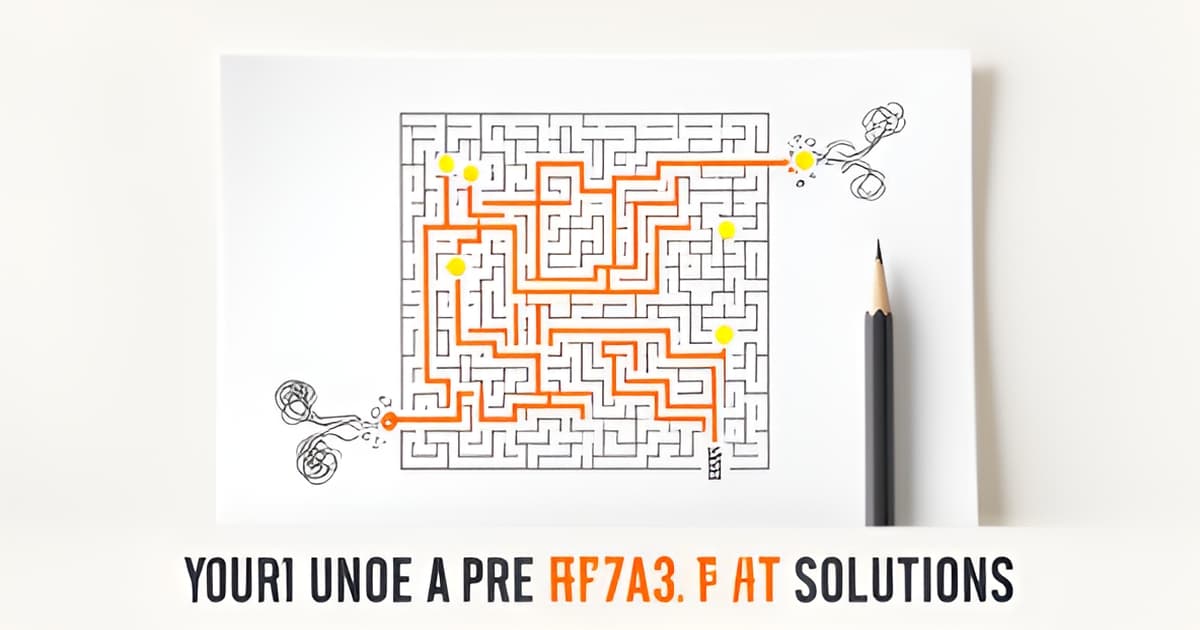
How do maze generators work?
Key Facts
- Every generated maze has exactly one solution because it's built as a spanning tree, according to the classic Stack Overflow reference.
- The Recursive Backtracker produces mazes with only about 10% dead ends, creating long, winding 'river' passages per the mazelib library author.
- Only 2 of 11 classic algorithms, Aldous-Broder and Wilson's, can theoretically generate every possible maze according to Professor-L's algorithm guide.
- Jamis Buck documented 11 classic maze algorithms in a six-week blog series on his well-known Buckblog.
- Recursive Division is the only classic algorithm that adds walls instead of carving passages per Jamis Buck's recap.
- Practitioners argue that 'well placed loops make mazes more interesting' than mathematically perfect ones in a Hacker News discussion.
- Eller's and Sidewinder algorithms can generate infinite mazes one row at a time according to algorithm documentation.
Why Every Good Maze Starts as a Grid and a Tree
If you've ever printed a maze for a rainy afternoon and wondered why there's always exactly one way through, the answer sits underneath every maze generator ever built: a grid of cells connected into what programmers call a spanning tree. Understanding how maze generators work means understanding that single idea, because nearly everything else follows from it.
Here's the mental model. Take a grid of cells, each separated by walls, and think of every cell as a node in a graph. A generator's job is to connect those nodes with passages until every cell is reachable from every other cell, with no loops in the connections. That structure, one path between any two points, is what maze researchers call a "perfect maze": a maze with exactly one solution, according to the classic Stack Overflow reference on maze algorithms. No loops means no second route to the exit. That's why generated mazes never have two answers.
Generators reach that tree by one of two opposite strategies, and this is the fork in the road for how maze generators work:
- Carving passages: start with a solid block of walls and knock passages between cells until the tree spans the grid. Most algorithms work this way.
- Adding walls: start with an open field and divide it into chambers. Recursive Division is the lone wall-adder among the classics, slicing the grid with straight walls, each with one gap, then recursing into the chambers it creates.
Jamis Buck, whose six-week blog series documented 11 classic algorithms, notes that Recursive Division stands alone in that second camp. It has a known weakness, too: its straight walls create obvious bottlenecks that make mazes easier to solve, a fixable problem with randomized wall placement.
The perfect-maze guarantee is why the maze you generate for a kid's birthday party or a classroom worksheet is solvable, fair, and checkable. It's also why tools like Printoodle's printable maze generator can produce a fresh puzzle in seconds: the underlying math guarantees structure before any art or theme lands on top.
The tree concept scales down nicely for young solvers and up for adults who want a real challenge, the same way difficulty scales across a themed activity pack, whether that's pairing a spooky maze with halloween trivia or mixing puzzles into a family trivia game night. One tree, one solution, every time.
How Do Maze Generators Work? Meet the Main Algorithms
Maze generators work by applying graph and tree algorithms to a grid of cells, transforming a wall-filled space into a "perfect maze", one with exactly one solution from start to finish. The process varies by algorithm, but all begin with a structured grid and apply logic to carve passages or add walls until the maze rules are satisfied.
The Recursive Backtracker stands out as the practical go-to for many developers. It is fast, easy to implement, and generates mazes that are aesthetically pleasing, though it produces the fewest dead ends, roughly 10%, and creates long, winding passages with a high "river" factor. In contrast, Prim's and Kruskal's algorithms tend to produce many short cul-de-sacs, offering a different texture of difficulty. Jamis Buck, recognized authority and author of Mazes for Programmers, notes that the Recursive Backtracker became his "go-to algorithm for years" due to its balance of speed and visual appeal.
A key distinction exists between algorithms that generate uniform spanning trees (USTs) and those that do not. Only the Aldous-Broder and Wilson's algorithms can theoretically generate every possible maze, as they select randomly from the full list of permutations. Aldous-Broder is described as "almost trivial in its simplicity," involving picking a random cell and jumping to a random neighbor, though it is "very inefficient." All other algorithms, including Recursive Division, Eller's, and the common backtracking methods, trade that statistical purity for speed and simpler implementation. Professor-L, an educational resource on maze algorithms, considers Prim's "inferior to the backtracking algorithm," while the author of the mazelib Python library, john_science, ranks Prim's second in preference, a clear disagreement in expert opinion.
Beyond perfect mazes, some algorithms enable infinite generation. Eller's and Sidewinder can generate infinite mazes "one row at a time," allowing the maze to scroll indefinitely as new rows are generated. This approach keeps only part of the maze in memory, making it possible to create expansive, never-ending layouts.
For those building printable activities, understanding these algorithms reveals why maze "personality" shifts depending on the method. Recursive Backtracker yields fewest dead ends and long passages; Kruskal's and Prim's yield many cul-de-sacs; Binary Tree has a diagonal bias; and Sidewinder features one long passage across the top. Weighting edge choices by connected type can give mazes distinct characteristics, allowing creators to tailor difficulty and flow to their audience.
Printoodle users can explore these principles with every generated maze, whether for a rainy-day activity or a themed party pack. Print it. Doodle it. Done.
halloween trivia and family trivia game pair perfectly with a freshly generated maze for a complete themed activity afternoon.
Why 'Perfect' Mazes Aren't Always Fun Mazes
Maze generation feels like pure math until you watch a human try to solve one. Research into generation algorithms reveals a surprising gap: the methods computers use to create "perfect" mazes, those with exactly one solution, often produce layouts that bore people. A Stack Overflow survey of the 11 classic algorithms found the Recursive Backtracker generates mazes with about 10% dead ends, creating long, winding passages that feel more like a river than a puzzle. Meanwhile, Prim's and Kruskal's algorithms produce many short cul-de-sacs, which can feel repetitive and predictable to a solver.
The tension becomes clear when you look at what humans actually prefer. A Hacker News discussion among practitioners argued that "perfect maze" properties create visually uninteresting results, and that "well placed loops make mazes more interesting" because solvers must track where they have been. The conversation also highlighted that humans do not pick routes at crossroads with equal likelihood; the specific details of branching matter significantly to the solving experience. For a children's audience, this means an easy mode with a few short, carefully constructed loops is far more engaging than a purely algorithmically pure layout.
Printoodle’s maze generator applies these principles to create print-ready activity pages. By selecting algorithm variants that balance structural integrity with solver engagement, the platform ensures that mazes are not just mathematically valid, but genuinely enjoyable to navigate. Whether for a rainy-day activity or a birthday kit, the goal is a maze that feels intuitive, not arbitrary.
algorithm choice shapes the final feel of a maze. loop placement determines how engaging it is for a human solver. branching details affect which paths a person actually chooses.
halloween trivia pairs perfectly with a spooky maze for a themed activity pack. family trivia game offers another way to keep kids engaged after the last corner is turned.
How Printoodle Uses Maze Personalities for Printable Puzzles
Not every maze is created equal, and the algorithm behind it is why. If you've ever wondered how maze generators work well enough to notice that some mazes wander while others feel bushy, you're seeing algorithm "personality" in action.
Each classic algorithm leaves a signature. The Recursive Backtracker produces long, winding passages with the fewest dead ends of any approach, around 10% of cells, according to the author of the mazelib library. Prim's and Kruskal's, by contrast, scatter many short cul-de-sacs throughout the grid, creating that dense, branching feel. As Jamis Buck notes, even weighting edge choices during generation can give mazes "distinct characteristics or personalities."
Printoodle leans on this. A maze built for a five-year-old on a rainy afternoon shouldn't feel like one designed for a classroom of ten-year-olds, so algorithm choice becomes a design decision, not just a technical one:
- Winding: backtracker-style passages with few dead ends, easier for younger kids to follow without constant wrong turns.
- Bushy: Prim's-style branching with lots of short dead ends, better for older kids who want a real challenge.
- Classic: a balanced middle ground, the "absolutely good enough" default that one algorithm guide recommends for general use.
Speed matters here too. When someone clicks generate, they expect a print-ready PDF in seconds, and the Recursive Backtracker delivers: it's fast and, as Buck puts it, produces mazes that are "quite esthetically pleasing." Slower algorithms like Aldous-Broder, which is "very inefficient," simply don't fit a consumer tool.
There's also a human factor that pure computer science misses. Practitioners on Hacker News point out that technically "perfect" mazes can be boring for people, and that well-placed loops make solving more engaging. For kids aged 3 to 12, a few carefully constructed loops can turn a frustrating puzzle into a fun one.
That's why themed mazes pair so well with other printable activities. A spooky maze for a classroom Halloween party works beautifully alongside a halloween trivia sheet, and a birthday activity pack might combine a maze with a family trivia game for kids and parents to play together. The maze generator does the hard carving in seconds; you just pick the theme, print it, and hand over the pencil.
Frequently Asked Questions
Why do all generated mazes have exactly one solution?
Which maze generation algorithm is the best default for printable activities?
Why do some mazes feel more difficult or 'bushier' than others?
Can maze generators create infinite or scrolling mazes?
Do 'perfect' mazes with one solution make for good puzzles for children?
How can I pair a maze with other activities for a themed event?
One Tree, One Solution, Endless Fun
So, how do maze generators work? Every one of them starts with a grid and ends with a spanning tree, a structure that mathematically guarantees exactly one path from start to finish. From there, personality takes over: the Recursive Backtracker carves long, winding passages with only about 10% dead ends, while Prim's and Kruskal's scatter short cul-de-sacs that make solvers work harder. The best generators know that "perfect" isn't the same as "fun", a few well-placed loops can turn a dry puzzle into one kids actually want to finish. That's the thinking behind Printoodle's maze generator: pick a style that matches your solver, and get a fresh, print-ready PDF in seconds. Ready to put the theory to the test? Generate a maze for your next rainy afternoon, then pair it with a halloween trivia sheet or a family trivia game for a full activity pack. Print it. Doodle it. Done.