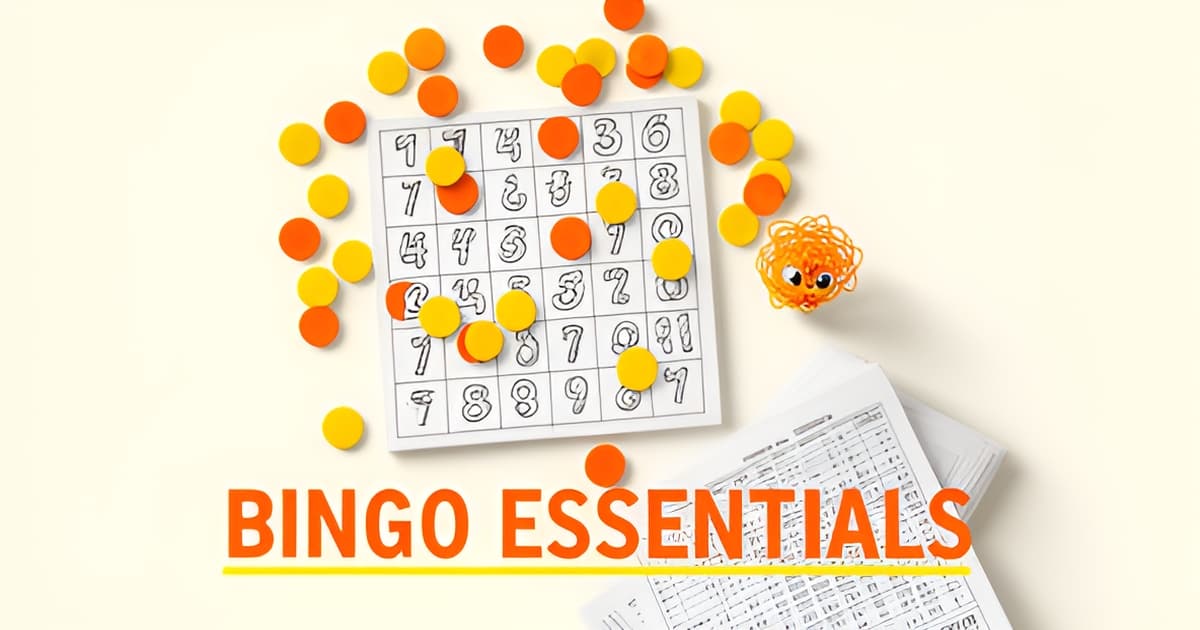
How many items do you need for a bingo game?
Key Facts
- A traditional 75-ball bingo card can produce over 15.5 septillion unique combinations, while a 3x3 mini card only manages 362,880, card generator documentation shows.
- A standard commercial bingo pack contains 100 books with 10 sheets each, covering a 10-game session for about $6.49 per bingo supply retailers.
- Bingo tickets are single-use, so hosts should always buy or generate 10–20% more cards than their confirmed guest count according to home hosting guides.
- Modern bingo generators support up to 350 squares per card, far beyond the traditional 75-item format according to generator data.
- A professional bingo cage and ball set costs $20–$50, but numbered ping pong balls work just as well for a few dollars per hosting guides.
- Budget daubers run $1.00–$1.75 each, though dried beans or any household marker can replace them entirely according to bingo supply retailers.
- A 90-ball UK bingo ticket holds just 15 numbers across three lines, with prizes for one line, two lines, and full house per UK bingo event guides.
What a Bingo Game Actually Requires
If you've ever wondered how many items do you need for a bingo game, the honest answer is: fewer than you'd think. A minimal home setup requires just three things: bingo tickets or cards, a way to generate numbers, and something to mark the cards with. As one hosting guide puts it, "you don't need a lot of expensive equipment to host your bingo night at home."
That said, a traditional full-scale game runs on five core physical items, and each one scales with your group size:
- Bingo cards or tickets, one or more per player
- A number-calling method, from a ball cage to an electronic generator
- Markers or daubers, one per player
- A designated caller to run the game
- Prizes for the winners
Group size is what determines quantity. According to Casino Supply's party guide, the number of players directly drives how many cards and markers you need, and large events add a microphone and speakers so everyone can hear the calls. One detail catches new hosts off guard: paper tickets are single-use. Since you can't reuse them, the practical advice is to generate or buy extras before game night.
Budget-wise, bingo flexes in both directions. Commercial paper cards are typically sold in packs of 100 books, with 10 sheets per book and one card per sheet, built around a standard 10-game session. But hosting guides widely endorse DIY substitutions: ping pong balls or folded paper slips in a box can replace a cage and numbered balls, and homemade cards work fine in place of purchased ones. You can spend as much or as little as you wish.
There's also a second meaning of "items" worth knowing: the items printed on each card. A traditional 75-ball card uses all 75 numbers, while modern generators can support up to 350 squares. For themed or educational games, you can swap numbers for words, songs, or even quiz answers, which is exactly what tools like Printoodle's bingo card generator and its reading bingo templates are built for. Generate your cards in seconds, print them at home, and you've covered the biggest item on the list. Print it. Doodle it. Done.
How Many Items Go on the Card
When people ask how many items do you need for a bingo game, the card itself is where the math gets interesting. The minimum is simple: fill the entire grid. But the traditional structure and what modern generators can do are two very different numbers.
A standard American 75-ball card uses all 75 numbers, arranged in five columns of fifteen. Each column is fixed to a number range, and items only shuffle within their own column, which keeps every card fair and recognizable. That structure is why a 5x5 card can produce a staggering 15,511,210,043,330,985,984,000,000 unique combinations, while a smaller 3x3 card tops out at just 362,880, according to Bingo Baker.
Generators change the ceiling. Where a printed pack locks you into one format, a bingo card generator can support up to 350 squares, opening the door to themed and oversized variants that would be impractical to hand-build.
That flexibility matters most for custom games. Swapping numbers for words, song titles, or celebrity names is a recurring trend among hosts, and Silver Magazine notes that custom variants can even shrink to a 30-ball "super quick" format. For classrooms, question-and-answer bingo takes it further: items entered on the back of squares appear in the call list, turning the game into a live quiz. Printoodle's reading bingo tool leans into this, letting teachers and parents build cards from their own vocabulary or book lists.
A few practical rules of thumb when deciding how many items your cards need:
- Match the grid to the game: 75 numbers for traditional US bingo, fewer squares for faster rounds.
- Keep columns fixed for number bingo so the call list lines up with the card layout.
- Use word or image substitutions for themed parties and educational variants.
- Remember tickets are single-use, so generate extras for every player.
The short answer to "how many items do you need for a bingo game" is that the card minimum is the full grid, tradition says 75, and your generator sets the real limit. Print it. Doodle it. Done.
Scaling Supplies and Prizes to Your Event
Once you've settled the basic item list, the real planning question becomes quantity: how many cards, how many markers, and how many prizes does your crowd actually need? Get this wrong and you're either scrambling for paper mid-game or recycling a drawer full of unused supplies.
Group size drives everything. According to bingo party planning guides, the number of cards and daubers you need scales directly with your headcount, so start with a confirmed guest list before you buy or print anything. Budget one dauber or marker set per player, plus a few spares for guests who want to play multiple cards.
The catch with paper bingo is that tickets are single-use. As one home bingo hosting guide puts it, you won't be able to reuse them, so always buy or generate more than you think you'll need. Commercial sessions are built around this reality: a standard pack contains 100 books, with 10 sheets per book and one card per sheet, covering a 10-game session at roughly $6.49 per pack, per bingo supply retailers.
DIY hosts should follow the same logic. If you're planning ten games for twenty players, that's 200 cards minimum, and extra sheets cover last-minute arrivals or a sudden second-round demand. Generating in bulk also guarantees every card in play is unique, which matters when a 5x5 grid can produce 15,511,210,043,330,985,984,000,000 distinct combinations but a 3x3 mini card only 362,880, according to card generator documentation. Printoodle's bingo card generator handles this step for you: set your player count and game count, and print the whole batch at once, with reprints free if you need a backup set.
A quick scaling checklist:
- Count confirmed guests, then add 10–20% for unexpected players and misprints.
- Multiply cards per player by games per session (commercial standard: 10 games).
- Provide one dauber or marker per player; budget-friendly daubers run $1.00–$1.75 each.
- For classroom or literacy twists, a reading bingo variant swaps numbers for book titles and reading challenges.
Prizes deserve equal attention. As party supply experts note, it's not a bingo game without prizes at the end, and your prizes should match both the theme and the guests. For a 90-ball style event, award a smaller prize for one line and a bigger one for the full house, a structure recommended in UK bingo event guides. Crowd-pleasing options include candles, bath bombs, chocolates, film tickets, and gift cards.
For a kids' party, theme the prizes to the occasion: small toys or stickers for a dinosaur afternoon, bookmarks for a reading bingo session. Whatever you choose, keep one prize per game and a grand prize for the finale, and your supply count stays as tidy as your card count. Print it, doodle it, done.
DIY Substitutions and Digital Alternatives
Here's the good news if you're budgeting for bingo night: you don't need to buy much of anything. As one hosting guide puts it, "you don't need a lot of expensive equipment to host your bingo night at home," and the answer to how many items do you need for a bingo game shrinks fast when you know which swaps work.
The calling system is the easiest place to save. A professional cage and numbered ball set can run $20 to $50 in bulk supplies alone, but a guide to hosting bingo parties endorses simple substitutions: ping pong balls numbered with a marker, or folded slips of paper in a box, work just as well for drawing numbers. Either option costs a few dollars at most.
Cards are the other big line item, and they're just as replaceable. Commercial paper cards are sold around a 10-game session structure (100 books per pack, 10 sheets per book, $6.49 per pack), and since tickets are single-use, "you won't be able to reuse them," so hosts have to keep buying. Homemade cards break that cycle. Print a batch, play, and print more whenever you need them.
Digital generators take the DIY approach one step further. Tools like Printoodle's bingo card generator produce print-at-home cards in seconds, with options to print 1, 2, or 4 cards per page. Generators in this category also support virtual play links and even a caller feature, which makes remote games over Zoom or Teams workable without any physical supplies at all.
The same tools unlock themed and educational variants that store-bought cards can't match. Custom cards can swap numbers for words, songs, or celebrity names, and question/answer formats let items entered on card squares appear in the call list, which turns a game into a quiz. For parents and teachers, a reading bingo card is a good example: sight words or book titles replace the numbers entirely.
A few swaps worth trying:
- Numbered ping pong balls or folded paper slips instead of a cage and ball set
- Any household marker, pen, or dried beans instead of daubers, which retail for $1.00 to $1.75 each
- Homemade or generated cards instead of purchased book packs
- A phone or laptop number generator instead of a caller's cage for virtual games
The bottom line on budget: hosts can spend "as big or as little a budget as you wish," according to Space Coast Daily. Prizes still matter (candles, chocolates, and joke gifts are popular picks), but everything else on the equipment list has a cheap or free substitute. Generate your custom bingo cards in seconds: print it, doodle it, done.
Themed, Educational, and Reading Bingo Variants
Hosting a themed bingo night starts with understanding what "items" actually fill the card. In a traditional 75-ball game, the card itself holds 24 numbers arranged in a 5x5 grid, drawn from a pool of 75 total items. This fixed structure means every square contains a number, and the caller draws from the same pool, creating the classic pattern-based win conditions players expect. For hosts looking to move beyond numbers, themed variants swap these items entirely, replacing digits with words, images, or custom phrases to fit a specific occasion or classroom lesson.
Themed and educational bingo transforms the game by substituting content items for numbers. A "book bingo" card might feature author names or genres instead of digits, while a "vocabulary bingo" card swaps definitions for target words. This flexibility is what makes bingo a staple in classrooms and party planning alike. Bingo Baker notes that generators can support up to 350 squares, allowing hosts to get creative with grid size and content type. Similarly, Silver Magazine reports that custom variants can substitute numbers with songs, celebrity names, or themed items, proving the format adapts to any audience.
Question-and-answer bingo takes this a step further, turning the card into a quiz tool. In this format, the items on the back of the squares appear in the call list, enabling educators and party hosts to run trivia-style rounds. This variant is particularly effective for reading practice or subject review, as the answers drive the gameplay rather than random draws. Online Bingo Guide confirms that this method enables educational quizzes, making it a natural fit for teachers integrating lesson material into a familiar game structure.
Reading bingo cards take the substitution concept a step further by replacing numbers with words or images. This format is designed specifically for classroom use and parent-child activities, turning reading logs or sight-word practice into a game of chance. A child might mark off a card as they complete bedtime stories or identify objects in a picture book, blending literacy goals with play. Printoodle’s reading bingo tool supports these variants for teachers and party hosts, offering a way to generate customized cards that fit specific lesson plans or activity themes.
The physical items needed to run any bingo variant scale with the group size. Whether using a physical ball cage, an electronic generator, or a printable PDF, hosts need cards, a calling method, and markers. Casino Supply lists the core essentials as cards, markers, a number generation system, prizes, and a caller. Since traditional bingo tickets are single-use, generating enough cards for every participant ensures the game runs smoothly without running out mid-round.
Generators have made it possible to customize every aspect of the game, from the grid content to the number of cards printed per page. Hosts can swap numbers for themed terms, adjust grid sizes, and print cards at home for immediate use. This DIY approach means a bingo game can be as simple or as complex as the host wants, limited only by the content they choose to place on the card. My Free Bingo Cards offers print-at-home options that support this level of customization, aligning with the flexible needs of modern hosts.
Whether the goal is a themed party, a classroom quiz, or a reading activity for young learners, bingo’s adaptability makes it a versatile choice. The core mechanics remain the same, marking items as they are called, but the content inside those squares can reflect any interest or educational goal. Printoodle’s bingo card generator and reading bingo tools provide the platform for hosts to create these customized experiences quickly, turning a standard game into a tailored activity for any audience. Print it. Doodle it. Done.
From Three Items to a Full House: Your Bingo Blueprint
Whether you're hosting a quiet night at home or planning a large-scale event, the answer to how many items do you need for a bingo game comes down to three core pillars: the cards to play, the method to call numbers, and markers to track progress. From a minimal setup requiring just tickets, a number generator, and daubers, to a traditional game built on five physical essentials, the scope of bingo is defined by your group size and creativity. As the research shows, group size drives everything, from the quantity of cards and markers to the scale of prizes, and because traditional tickets are single-use, generating extras before game night is the practical rule of thumb. Budget-wise, bingo is beautifully flexible; you can spend as much or as little as you wish by swapping expensive cages for ping pong balls and store-bought cards for homemade or generated versions. For those looking to personalize their experience, customizing the content on the card opens the door to themed parties, educational quizzes, and reading practice, all made simple with tools that let you generate and print cards in seconds. Print it. Doodle it. Done.