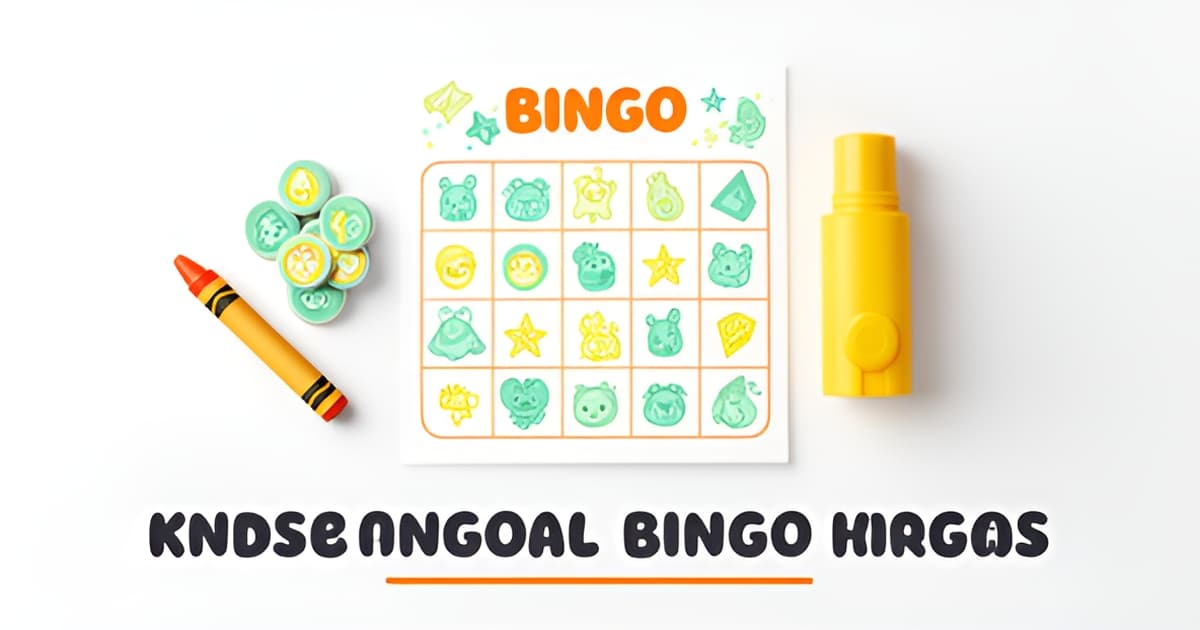
How to create a bingo game for kids?
Key Facts
- Bingo post-test scores jumped from 6.3 to 10.62 in a peer-reviewed study, with about 90% of students calling it engaging according to research.
- Students scored 92.7 on bingo-covered exam topics versus 83.75 on uncovered ones, a statistically significant gap per the study.
- A 5×5 bingo card needs a word list of 25–35 items; with only 24, every card ends up identical classroom guides warn.
- Grids should scale with age: 3×3 picture boards for pre-readers, 4×4 for intermediates, and classic 5×5 for older kids per bingo guidance.
- A single classroom bingo round takes 10–20 minutes, and most teachers fit 2–3 rounds into a 45-minute period per classroom data.
- Special educator Christine Reeve notes bingo lets even students who struggle with turn-taking play alongside everyone else in her 30+ years of practice.
- Pausing 5–8 seconds after each call is when the actual learning happens; rushing turns bingo into a lottery classroom guides advise.
Why Bingo Is the Perfect Game to Make Yourself
Most store-bought bingo sets share the same problem: they're generic. A boxed set with random animals or numbers can't match your child's current obsession, and kids outgrow fixed themes fast. When you make your own, every square can serve the exact age, reading level, and interests in front of you, which is why learning how to create a bingo game for kids yourself beats buying one off the shelf every time.
Bingo has a few structural advantages that most board games lack. Everyone plays at once, so there's no turn-taking to wait through, which makes it a strong introductory game for kids still learning to win and lose gracefully. Christine Reeve, a special educator with 30+ years of experience, notes that bingo lets even students who struggle with turn-taking play alongside everyone else.
The luck element matters too. Because winning is random, a child who struggles academically can still beat the room, and that chance to win builds confidence instead of frustration. As eeBoo puts it, the random nature of the game gives everyone an equal shot, which promotes fairness and sportsmanship.
This isn't just a rainy-day theory. A peer-reviewed study using bingo as a learning strategy found post-test scores jumped from 6.3 to 10.62 (P < 0.01). About 90% of participants called the activity engaging, and over 85% said it helped them spot weak areas before exams. The study's conclusion was direct: bingo is an effective strategy to promote learning.
Beyond the scores, the social learning happens in the gaps. Practitioners at ChildCareEd observe that the most important moments often come between calls: a child waits for a marker, asks for help, congratulates a peer, or tries again after losing.
A custom set lets you match the game to the player, not the other way around:
- Grid size by age: a 3×3 picture board for pre-readers, 4×4 for intermediates, and the classic 5×5 for older kids.
- Themes that stick: dinosaurs, sight words, or family photos turn a generic grid into something your child actually wants on the table.
- Skill targeting: the same game can drill letter sounds on Monday and multiplication facts on Friday.
That's the case for making your own. Tools like Printoodle's bingo card generator handle the layout and randomization, so you spend your energy on the fun part: choosing what goes in the squares. And if you want to round out a quiet afternoon, pairing bingo with one minute games for kids, mazes for kids, or a kids sudoku printable keeps the same learning momentum going with fresh formats.
How to Design a Bingo Game for Kids That Fits Their Age
A bingo board that fits the child sitting in front of you is the difference between ten minutes of happy focus and a table of confused faces. When you set out to create a bingo game for kids, three design decisions do most of the heavy lifting: grid size, your word or picture list, and how accessible the board is for every player.
Start with the board itself. Classroom bingo guidance recommends scaling the grid with your players:
- 3×3 grid (9 squares) for young learners and pre-readers, filled with clear pictures instead of words.
- 4×4 grid (16 squares) as an intermediate step, mixing pictures with simple words.
- 5×5 grid (24 squares plus a free space) for older kids ready for the classic format.
The 3×3 picture board matters most. According to early childhood practitioners, picture-based boards with generous spacing let children who can't read yet play fully on their own. That's a big deal for siblings of different ages at one table.
Here's the detail most first-time creators miss: your word or picture list needs to be larger than the board. For a 5×5 card, aim for 25 to 35 items. With only 24 items, every card ends up containing the same words and the game collapses; with a deeper list, each randomized card genuinely differs, which keeps a full table of players honest and engaged. A classroom of 30 kids needs 30 unique cards, and a peer-reviewed bingo study used exactly this approach, generating randomized cards where no two matched.
Printoodle's bingo generator handles this step for you: enter your themed list, set the grid size and card count, and it randomizes and lays out print-ready PDFs in seconds. Reprints stay free in your library, so a second round costs you nothing but paper.
Inclusive boards are simple to make if you follow one rule: never rely on color alone. Pair each color with a picture, label, or shape, a recommendation aligned with NAEYC guidance, so kids with color vision differences never get stuck. High contrast images and easy-to-grasp markers like dried beans or pennies complete the setup.
Themes keep the format fresh across ages and subjects: animals for preschoolers, sight words for early readers, states and capitals or math facts for older kids. And if bingo night goes well, the same word list works beautifully for other printables, from one minute games for kids to mazes for kids or a kids sudoku printable. Print it, doodle it, done.
Making Your Bingo Cards with Printoodle (Step by Step)
Once you've decided on your theme and grid size, the fastest way to create a bingo game for kids is to let a generator do the shuffling for you. Printoodle's bingo tool turns a short list of words or pictures into a full set of randomized, print-ready cards in under a minute.
Step 1: Pick your theme. Choose something your group already loves: animals for preschoolers, sight words for early readers, dinosaurs for the obsessed six-year-old, or a birthday theme featuring the child's name. Picture-based boards are the right call for pre-readers, since clear images with generous spacing let children who can't yet read play along, according to childcare practitioners.
Step 2: Enter your word or picture list. Aim for 25 to 35 items if you're making 5×5 cards. Classroom guides note that with only 24 items, every card ends up containing the same words, while a slightly larger pool means randomization produces meaningfully different cards. A peer-reviewed study used exactly this approach: one word per box, randomized so each card differs.
Step 3: Set the card count to your group size. Type in the number of players, whether that's four kids at a kitchen table or a class of 30. The generator creates one unique card per player, so nobody's board matches their neighbor's.
Step 4: Generate and download. Hit generate and download your print-ready PDF in Letter format, or toggle to A4 if that's your paper standard. Everything stays in your Printoodle library, so reprints are always free. Lost a card before the party? Print it again at no cost.
For markers, skip the fancy chips:
- Dried beans or pennies, the classic low-cost options teachers swear by
- Dry-erase sleeves, which let you wipe cards clean and reuse them all year
- Snack items like cereal pieces, which double as an edible reward
One tip worth keeping: pair your bingo set with other printables built from the same word list. Practicing the same vocabulary across formats improves retention, and Printoodle's one minute games for kids, mazes for kids, and kids sudoku printable tools make that easy. Print it, doodle it, done.
Ways to Play and Keep the Game Fresh
Once your cards are printed, the real fun begins: changing how you play. A few simple variations keep kids asking to play again long after the novelty of the first round wears off, and they cost you nothing extra.
Classic five-in-a-row and blackout work best for young kids, while pattern bingo suits older children who want a challenge, according to family game bloggers. Try mixing in these winning shapes between rounds:
- Four corners: first player to mark all four corner squares wins.
- Postage stamp: a 2x2 block anywhere on the card.
- Blackout: cover every square, a good long-game option for a rainy afternoon.
You can also swap the letters B-I-N-G-O for a themed word like A-C-O-R-N in autumn or S-N-O-W-Y in winter, a trick game leaders recommend for keeping repeat sessions fresh. Food markers like cereal pieces or crackers double as a snack, and a seat swap every 5 to 7 calls was reportedly "a favorite version among the youth" in one family's testing. If you're using Printoodle to generate your cards, themed letters pair nicely with a matching word list.
The single most important habit: pause 5 to 8 seconds after each call. As one classroom guide puts it, that wait time is when the actual learning happens, and rushing turns the game into a lottery. Model the sequence for kids: listen, find, mark, check, wait.
Keep rounds short. A classroom bingo round typically runs 10 to 20 minutes, and most teachers fit two or three rounds into a 45-minute period. One practitioner's rule of thumb: a shorter round is a successful round. Kid-friendly prizes like stickers, temporary tattoos, and glow sticks keep energy high without breaking the budget.
Here's where a single afternoon of prep pays off all month. The same 25 to 35 words from your bingo card can become a whole activity rotation, and revisiting the same vocabulary in different formats improves retention. Turn your word list into quick one minute games for kids for transitions, mazes for kids themed around the same topic, or a kids sudoku printable for quiet time. The peer-reviewed evidence backs this up: students who studied bingo-covered topics scored significantly higher on those exam questions than on uncovered ones (92.7 versus 83.75, P < 0.01), so the repetition genuinely sticks.
Print your bingo set, play two rounds tonight, then stretch the same word list across the week in whatever format tomorrow calls for.
Frequently Asked Questions
What size bingo grid should I use for my child's age?
How many words or pictures do I need on my list to make bingo cards?
Is bingo actually educational for kids, or just a time-filler?
How do I make bingo cards for a kid who can't read yet?
What can I use as bingo markers instead of buying chips?
How long should a bingo round with kids last, and how do I keep it fresh?
Your Bingo Night Starts Tonight
Learning how to create a bingo game for kids comes down to three decisions: match the grid to your players, build a word or picture list of 25 to 35 items so every card is genuinely different, and let a generator handle the shuffling. The payoff is real, a peer-reviewed study found bingo measurably improved test scores, with roughly 90% of players calling it engaging. That's a strong return for a game that costs pennies to run. Your next steps are simple: pick a theme your kids already love, generate your set with Printoodle's bingo card generator, and print one unique card per player. Then stretch the same word list across the week with one minute games for kids, mazes for kids, or a kids sudoku printable to lock in the learning. Print it. Doodle it. Done.