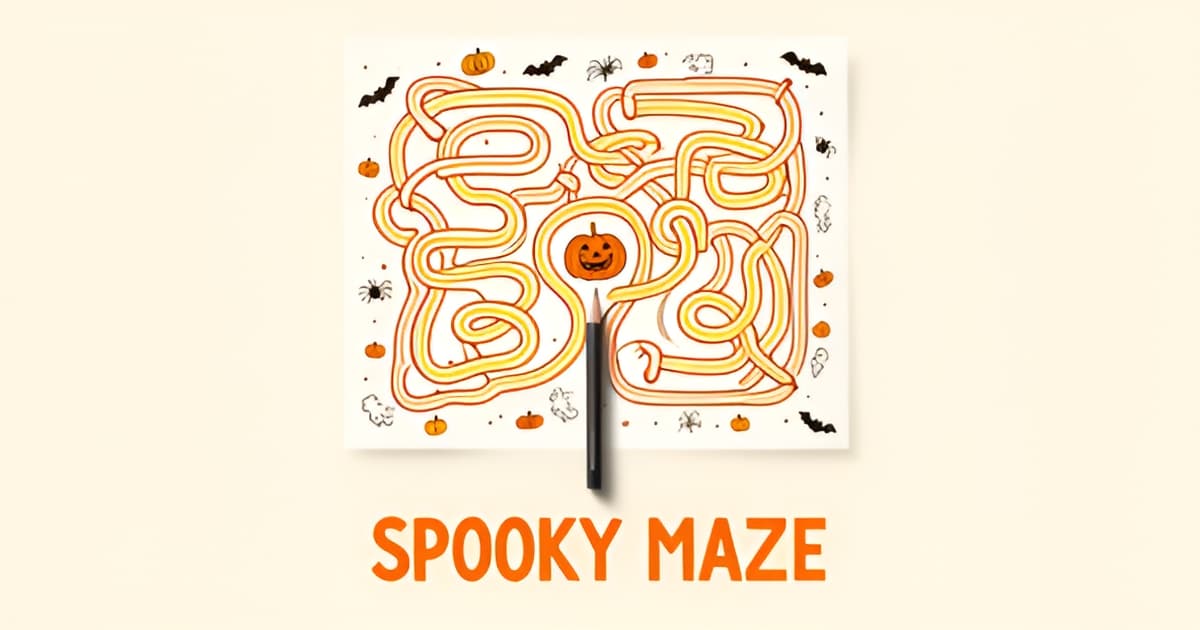
How to create a Halloween maze?
Key Facts
- A Halloween maze without a theme feels random, as one horror dome designer warns: "a maze without a theme feels random." The Horror Dome
- Popular printable Halloween maze collections lean on five reliable themes: witches, bats, ghosts, pumpkins, and candy, with candy-themed mazes serving as non-scary alternatives for inclusive classrooms DoYouMaze
- Age-appropriate specs dictate maze design: ages 4–6 need 0.5–0.75" paths on 8x8–12x12 grids with only 0–3 dead ends KDP Easy
- Classroom parties succeed with station rotation: set up three or four game stations and rotate groups every 10–12 minutes Learn Bright
- Black-background maze pages "look cool" but generally aren't recommended for printing because they consume ink rapidly DoYouMaze
- One popular Halloween maze collection features 33 total mazes across three difficulty levels (easy, medium, hard) featuring witches, bats, ghosts, candy, and pumpkins DoYouMaze
Why Your Halloween Maze Needs a Theme Before Anything Else
Halloween is days away, the kids need an activity tonight, and a plain rectangular maze isn't going to cut it. A generic grid of lines technically counts as a puzzle, but it looks like homework, and kids can smell homework from across the room.
There's a reason professional haunted-maze designers insist on theme before anything else: as one themed maze builder puts it, "a maze without a theme feels random." That principle holds just as true on paper. When the maze itself is shaped like a jack-o-lantern or a ghost, the puzzle becomes part of the holiday instead of a worksheet wearing a costume.
So before you draw a single path, pick your theme. Popular printable Halloween maze collections lean on a short, reliable list of characters, including:
- Witches, the classic choice with hats, brooms, and cauldrons to build the shape around
- Bats and ghosts, which work well as silhouette-shaped mazes for younger kids
- Pumpkins and jack-o-lanterns, a friendly option if your audience skews young
- Candy and treats, a non-scary pick for classrooms where some families don't celebrate Halloween
That last one matters more than you might think. Classroom party guidance recommends offering a fall harvest alternative with no scary images when your group includes families who skip Halloween, and a candy-themed maze is an easy way to cover everyone with one printout.
Theme also drives the difficulty decision. A ghost maze for a five-year-old needs wide paths (around half an inch) and almost no dead ends, while a witch maze for a ten-year-old can handle tighter paths and a dozen dead ends. Matching the theme to the age band keeps the puzzle fun instead of frustrating.
Once you've settled on a theme, creating the maze itself is the fast part. Printoodle's halloween maze generator turns your theme choice into a print-ready PDF in seconds: pick a style, set the difficulty for your age group, and print. If you're building a full party station rotation, pair it with a halloween word search or a round of halloween trivia so each station feels distinct. Print it. Doodle it. Done.
Match the Difficulty to the Age (With Real Specs)
Designing a Halloween maze that actually works for your audience starts with the right specs. Research into established printable collections shows that age-appropriate difficulty is the difference between a finished puzzle and a frustrated child. Industry collections consistently organize their offerings into three tiers, easy, medium, and hard, with one popular set featuring 33 total mazes that include witches, bats, ghosts, candy, and pumpkins across those levels.
For the youngest artists, ages 4 through 6, the path needs to be wide and the grid small. The research specifies a path width of 0.5 to 0.75 inches and a grid size of 8x8 to 12x12, with only 0 to 3 dead ends. This ensures the challenge is present but not overwhelming, keeping the experience playful rather than frustrating.
Ages 7 to 10 are ready for a step up in complexity. The specs shift to a tighter 0.3 to 0.4 inch path width, a larger 15x15 to 20x20 grid, and 5 to 12 dead ends to navigate. This range supports developing problem-solving skills while still providing the satisfaction of reaching the goal.
Tweens and teens, ages 11 and up, can handle the most intricate designs. The research recommends 0.2 to 0.3 inch paths, grids of 25x25 or larger, and 15 to 25 dead ends. These denser configurations provide a genuine brain teaser for older kids and adults alike.
Printoodle’s maze tool lets you generate print-ready PDFs in seconds, and because the output is designed for standard printing, you avoid the ink-heavy black backgrounds that some DIY templates warn against. Pairing the maze with a halloween trivia card or a halloween word search creates a complete station activity, mirroring how professional collections bundle mazes with complementary puzzles for classroom parties or holiday gatherings.
Ready to build a maze that matches your group's skill level? Printoodle’s free tier gives you 10 credits on sign-up, with credit packs starting at $5, and every design you create is saved to your library for free reprints forever. Print it. Doodle it. Done.
Step by Step: Build Your Halloween Maze with Printoodle
You've picked your theme, so let's build the thing. Learning how to create a halloween maze is mostly a series of small, deliberate choices, and Printoodle's halloween maze tool walks you through each one in a single sitting.
Step 1: Choose your theme. Theme comes before everything else. As one haunted-maze designer puts it, "a maze without a theme feels random," while a maze with a story pulls people in (source: The Horror Dome). Witches, bats, ghosts, pumpkins, and candy are the proven crowd-pleasers, and they're exactly the motifs popular printable collections lean on (source: DoYouMaze). If your crowd includes families who skip Halloween, a fall-harvest theme with no scary imagery works just as well.
Step 2: Set difficulty for your age group. Match the specs to the kids, not the other way around. Maze publishers use concrete numbers for this:
- Ages 4–6: wide paths (0.5–0.75"), small 8x8 to 12x12 grids, and 0–3 dead ends.
- Ages 7–10: 0.3–0.4" paths, 15x15 to 20x20 grids, and 5–12 dead ends.
- Ages 11 and up: 0.2–0.3" paths, 25x25 to 35x35 grids, and 15–25 dead ends.
Those specs come from KDP Easy's maze book guide, and they translate directly to the difficulty settings in the generator. Pick one age band and design around it; publishers who target a single age band report their books outperform mixed-age ones by roughly 3:1.
Step 3: Generate and download the PDF. Enter your theme and difficulty in the halloween maze generator, and you'll get a print-ready PDF in seconds. The default is Letter size, with an A4 toggle if you're printing outside North America. One click downloads it, and it lives in your Printoodle library afterward, so reprints are always free. Need copies for a classroom of 28? Reprint without spending another credit.
Step 4: Print smart. Here's the tip most people learn the hard way: skip ink-heavy designs. Black-background mazes "look cool," as one maze creator admits, but dark pages drain a cartridge fast, and he doesn't recommend printing them (source: DoYouMaze). Clean white pages with bold outlines print beautifully and photocopy cleanly for groups.
Step 5: Pair it with other activities. A maze works best as part of a set. Classroom party guides suggest running three or four stations and rotating groups every 10–12 minutes (source: Learn Bright), and a maze is a natural fit for one station. Fill the others with halloween trivia cards or a halloween word search, and you've got a full 90-minute party rotation covered.
Use Your Maze at Parties and in Classrooms
A maze you spent an evening designing shouldn't sit in a drawer. The best use for a printable Halloween maze is as one activity among several at a class party or Halloween get-together, where it fills a station slot and keeps kids engaged without extra setup.
The logistics are simple. Classroom party guides recommend planning 60 to 90 minutes for the event and setting up three or four game stations, rotating groups every 10 to 12 minutes. A maze fits that window perfectly: younger kids can finish an easy path in a few minutes, while older students can race each other on a harder grid. Print a few copies per rotation group and you're done.
The maze also works well alongside other printable stations. Popular Halloween maze collections bundle mazes with coloring pages and other puzzles, and that same bundling logic works at a party. Pair your maze with a round of halloween trivia for kids who finish early, or set out a halloween word search at the next table over. Three stations, one rotation schedule, and the party basically runs itself.
If you're hosting in a classroom, keep inclusion in mind. Some families don't celebrate Halloween, and education sites suggest you choose a fall harvest theme, skip scary images, and offer an alternative activity. That's easy to accommodate when you generate your own mazes: swap the ghost for a pumpkin, keep the candycorn path, and every child gets a puzzle they can enjoy. Printoodle's maze tool keeps safe-for-kids defaults on by default, so nothing trademarked or spooky slips in unless you want it to.
Don't underestimate what a maze actually teaches. As one classroom resource puts it, "a party day can still be a learning day. These activities feel like play, but they build real skills." Mazes build pencil control, visual tracking, and problem-solving persistence, all while kids think they're just having fun.
- Run the maze as one station in a 10-12 minute rotation within a 60-90 minute party.
- Print a fresh copy per child so nobody waits for a turn.
- Pair it with trivia or word search stations for variety.
- Offer a fall-harvest variant for families who skip Halloween.
Once your halloween maze is generated, reprinting is free forever, so you can restock a station mid-party without a second thought. Print it. Doodle it. Done.
Frequently Asked Questions
My kids are different ages, how do I pick the right maze difficulty without frustrating them?
I want to make a Halloween maze for a classroom party, but some families don't celebrate Halloween. What are my options?
Will a black background maze look good when I print it, or will it waste too much ink?
How many stations should I set up for a Halloween class party, and how long should each last?
Can I reuse the maze I created, or do I have to pay every time I want a new copy?
What themes work best for Halloween mazes, and can I mix them with other activities?
Your Halloween Maze Is One Click From Ready
That's really all it takes to learn how to create a halloween maze: pick a theme that matches your crowd, size the difficulty to the kids holding the pencils, and print on clean, ink-friendly pages. Whether it's wide paths and a friendly pumpkin for five-year-olds or a dense 25x25 grid that keeps tweens guessing, the specs do the heavy lifting once you've made two simple decisions. And remember, a maze rarely works alone, it shines as one station in a 10–12 minute rotation, flanked by a halloween trivia round or a halloween word search, with a fall-harvest variant ready for families who skip the spooky stuff. As one classroom resource puts it, these activities "feel like play, but build real skills", pencil control, visual tracking, and persistence included. Ready to start? Head to the halloween maze generator, choose your theme, and download a print-ready PDF in seconds, free reprints forever means you can restock mid-party without a second thought. Print it. Doodle it. Done.