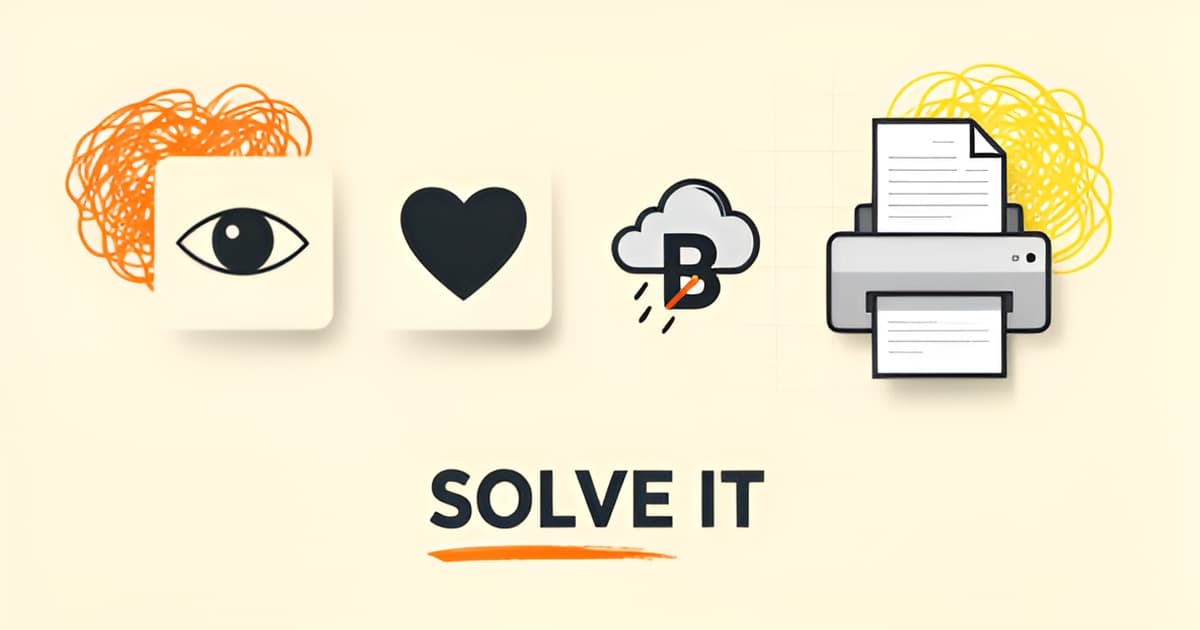
How to create a rebus puzzle?
Key Facts
- Free, no-signup browser-based rebus generators dominate creation, with Edupics offering 'free, no registration required, unlimited use' and Homeschool of 1 providing 'free with no account or sign-up required'
- Generator workflows converge on a consistent 4-6 step pattern across tools like Edupics, Homeschool of 1, Puzzel.org, and rebuses.org, starting with entering text and ending with downloadable print-ready PDFs
- The Puzzling Stack Exchange community-endorsed principle states 'a good rebus puzzle will include various different such methods' among the nine construction techniques, with the accepted answer earning 24 upvotes
- Edupics suitability ranges from 'children from age 7 (simple sentences) through adults (complex sentences)', supporting a broad audience spectrum for puzzle difficulty scaling
- Puzzel.org's creation guide notes 'short sentences with everyday nouns give the best picture clues,' with words like 'cat,' 'rain,' and 'star' translating cleanly into images while abstract words don't
- WeAreTeachers documents that 'the clever placement of the word head and the clear imagery tell a lot,' identifying prepositions and spatial positioning as 'key decoding hints that play a vital role' in puzzle meaning
- Rebusly charges $125 one-time for a hand-crafted custom rebus, delivered within 48 hours, while Printoodle's free tier offers 10 credits on email verification with free reprints forever
Why Rebus Puzzles Are Tricky to Make by Hand (and What a Good One Looks Like)
If you've ever tried sketching a rebus by hand, you know the frustration: your puzzle is either decoded in two seconds or leaves everyone staring at a picture of a cat wondering what on earth it means. That gap between too easy and unsolvable is exactly where most DIY rebus puzzles land, and it's why learning how to create a rebus puzzle starts with understanding what makes one work.
A rebus encodes a word or phrase using pictures, letters, symbols, and wordplay. The building blocks are standardized across most generators: a minus sign removes letters, a plus sign adds them, and an operation like c=h swaps one letter for another. So a brain picture with "-b" decodes to "rain," and a cat with "c=h" becomes "hat."
The trick is that letter operations alone make for flat puzzles. The puzzle-making community on Puzzling Stack Exchange identifies nine core construction techniques: position, highlighting, direction, size, numbers, colour, style, sound, and image. Their widely-endorsed principle is that a good rebus puzzle will include various different such methods rather than leaning on a single trick.
A few examples show how these techniques layer together:
- Position: the number 12 placed inside the word "DOOR" decodes to "Foot In The Door."
- Size: the word "Deal" printed extra large becomes "Big Deal."
- Sound: four 2s in a row read as "Tuesday."
- Numbers: "2 Funny 4 Words" becomes "Too Funny For Words."
Placement matters more than most beginners realize. As education site WeAreTeachers notes, prepositions and spatial positioning are key decoding hints that play a vital role in a puzzle's meaning. A word sitting above, below, or inside another word is itself a clue.
There's also a practical sweet spot for source material: short sentences with everyday nouns give the best pictures, according to Puzzel.org's rebus builder. Words without a fitting image simply stay as letters, which is fine, as long as the overall puzzle still decodes cleanly. Rebusly, which hand-crafts custom puzzles, frames the quality bar the same way: a well-made rebus reads cleanly and actually works as a puzzle.
This is where a generator earns its keep. When you build with a rebus puzzle maker like Printoodle's, you enter your phrase, let pictures attach to the words, then adjust the letter-operation clues until the solution checks out. Always verify with the solution view before printing, a step every experienced creator swears by. If you want a steeper challenge, layering multiple techniques by hand is how the best hard rebus puzzles are built, while simpler picture-plus-word versions work well as rebus puzzles for kids.
Get the mix right, and your puzzle lands in that satisfying middle ground: solvable, but only after a satisfying squint.
The Nine Rebus Techniques That Make a Puzzle Work
Once you've picked your phrase, the real craft begins: deciding how to encode it. The best builders of rebuses rely on a shared toolbox of techniques, catalogued by the puzzle community on Puzzling Stack Exchange in a thread whose accepted answer earned 24 upvotes. Learn these nine tricks and you can build almost any phrase into a picture puzzle.
The nine techniques, with examples
- Position: place 12″ (a "foot") inside the word DOOR and you get "Foot In The Door."
- Direction: two "Feet" pointing left reads as "Two Left Feet."
- Size: write "Deal" in oversized letters for "Big Deal."
- Numbers: 2 "Funny" 4 "Words" solves to "Too Funny For Words."
- Colour: "Tickled" printed in pink gives you "Tickled Pink."
- Style: skinny letters spell "Skinny Dipping"; sound ("2222" = "Tuesday") and pure image combinations (Apple + Pi = "Apple Pie") round out the set, along with highlighting clues like arrows or bolding.
Why does placement carry so much meaning? Because prepositions and spatial positioning act as key decoding hints. As WeAreTeachers puts it, "the clever placement of the word 'head' and the clear imagery tell a lot." A word sitting above, inside, or beside another word isn't decoration; it's the grammar of the puzzle.
What generators do, and what you add yourself
Here's the practical split when you create a rebus puzzle with a tool like Printoodle's rebus puzzle maker: generators shine at image-plus-letter-operation puzzles, where an emoji stands in for a word and symbols like minus signs remove letters or c=h swaps one letter for another. Visual-arrangement tricks, the position, size, colour, and style plays from the list above, are best added by hand afterward. That's exactly how you scale difficulty for a tougher crowd, and the Stack Exchange author's stated principle backs this up: "a good rebus puzzle will include various different such methods."
Match the technique to the audience
For children, keep it simple: one picture plus one word operation, the format suitable for ages 7 and up according to Edupics, works beautifully for spelling words and vocabulary practice. Printoodle's rebus puzzles for kids sit firmly in this easy tier, where a single clear clue does the job.
Adults want friction. Stack two or three techniques into one arrangement, say a word written backwards in small pink letters, and solvers have to work for it. For that tier, browse Printoodle's hard rebus puzzles for inspiration, then hand-craft your own layered version. Before you print, verify the solution actually lands the way you intended, a step every generator guide recommends.
How to Create a Rebus Puzzle with Printoodle's Generator, Step by Step
Creating a rebus puzzle is easier than it looks once you know the workflow. Printoodle’s rebus puzzle maker follows the same four-to-six step pattern used by Edupics, Homeschool of 1, and Puzzel.org: enter your word or phrase, generate the initial picture clues, swap in alternatives, and fine-tune difficulty settings before downloading a print-ready PDF.
The process starts with the text you want to encode. After entering your sentence, the generator assigns image clues automatically. From there, you can click on any picture clue to swap it for a different option, ensuring the visual matches the word you have in mind. If your phrase involves letter operations, like removing a letter with a minus sign or replacing one letter with another, the generator lets you toggle those conventions directly, following the standardized conventions documented across multiple tool sources.
Once the images are set, the difficulty helpers let you control how much support appears on the page. You can toggle word labels on or off, show or hide the solution, and add letter-count dots that mark how many letters are in each answer word. These options make the puzzles adaptable for different age groups, from early readers to adult solvers. Before finalizing, the "Show Solution" feature lets you verify that the rebus actually produces the intended answer, preventing any mismatches between clue and answer.
The finished puzzle downloads as a print-ready PDF, defaulting to Letter size but offering an A4 toggle for different paper standards. Because Printoodle’s free-reprint library stores every creation, you can reprint the puzzle as many times as needed, for classroom worksheets, birthday party activities, or family game night. This is especially helpful for party hosts creating bridal shower bingo clues or teachers building vocabulary exercises from lesson material.
Letter-operation conventions are a core part of the customization. A minus sign removes a letter, a plus sign adds one, and replacement operations like c=h swap one character for another. These conventions, documented across generator platforms, allow you to encode complex phrases using a mix of images and text manipulation.
Difficulty controls complete the workflow. The word label, solution, and letter-count dot toggles let you adjust the puzzle’s challenge level in real time, making it simple to create a quick activity for kids or a brain-teaser for adults.
Ready to make your own? The Printoodle generator is free to try with 10 credits on sign-up, and every puzzle you create lives in your library with free reprints forever. Print it. Doodle it. Done.
rebus puzzle maker | hard rebus puzzles | rebus puzzles for kids
Design Tips, Use Cases, and Common Mistakes to Avoid
A rebus is only as good as its weakest clue. The difference between a puzzle that delights and one that frustrates usually comes down to a handful of design choices you make before you ever hit print.
Start with short sentences and everyday nouns. According to Puzzel.org's creation guide, short sentences with everyday nouns give the best picture clues. "Cat," "rain," and "star" translate cleanly into images; abstract words like "nevertheless" don't. Don't force it. The same guide notes that a word with no fitting picture simply stays as letters, which is a perfectly good outcome.
Split words to unlock better images. If a single word has no good picture, break it into pieces. Insert a space within it, like "gene rator," and the generator encodes it as two separate images, a technique documented by rebuses.org. This works especially well for compound words, which educators already use as a classroom rebus exercise (WeAreTeachers).
Always verify before printing. Homeschool of 1's tutorial recommends using the "Show Solution" toggle to confirm the puzzle actually produces your intended answer. A rebus that reads cleanly and works as a puzzle, in the words of one puzzle studio, is the quality bar. Print yours only after solving it yourself.
For harder puzzles, mix your techniques. The community-endorsed construction methods include nine tricks: position, highlighting, direction, size, numbers, colour, style, sound, and image. The accepted principle: a good rebus puzzle includes several of them, not just one.
Where rebuses shine:
- Spelling worksheets and vocabulary lessons, including EFL/ESL and speech therapy uses documented by Edupics
- Birthday wishes, Mother's Day messages, and other personal greetings
- Escape rooms and scavenger hunts, per Homeschool of 1
- Party clues and treasure hunts, uses listed by Puzzel.org
Edupics pegs the audience range from age 7 with simple sentences through adults with complex ones, so you can scale difficulty easily. Printoodle's rebus puzzle maker handles both ends: try gentle rebus puzzles for kids for young solvers, or multi-technique hard rebus puzzles for puzzle-night veterans. Whatever you build, once you know how to create a rebus puzzle that works, the rest is printing it.
Print it. Doodle it. Done.
Frequently Asked Questions
How do I create a rebus puzzle step by step?
What do the minus sign, plus sign, and c=h symbols mean in a rebus puzzle?
What are the main techniques used to make a rebus puzzle harder?
What kind of sentences work best for rebus puzzles?
How do I check that my rebus puzzle actually works before printing?
Are rebus puzzles suitable for young kids, and how do I adjust the difficulty?
Your Rebus Is Ready, Now Put It to Work
Learning how to create a rebus puzzle comes down to a few dependable principles: start with short sentences and everyday nouns, mix multiple construction techniques rather than leaning on one trick, and always verify the solution before you print. Whether you're building gentle picture-plus-word puzzles for young spellers or layered, multi-technique brain-teasers for puzzle-night veterans, the same workflow applies, enter your phrase, adjust the picture and letter clues, check the solution view, and download a print-ready PDF. From classroom vocabulary worksheets to birthday messages, escape room clues, and scavenger hunts, a well-made rebus turns any phrase into a moment of delight. Ready to build yours? Try Printoodle's rebus puzzle maker for free, or browse the rebus puzzles for kids and hard rebus puzzles for inspiration. Print it. Doodle it. Done.