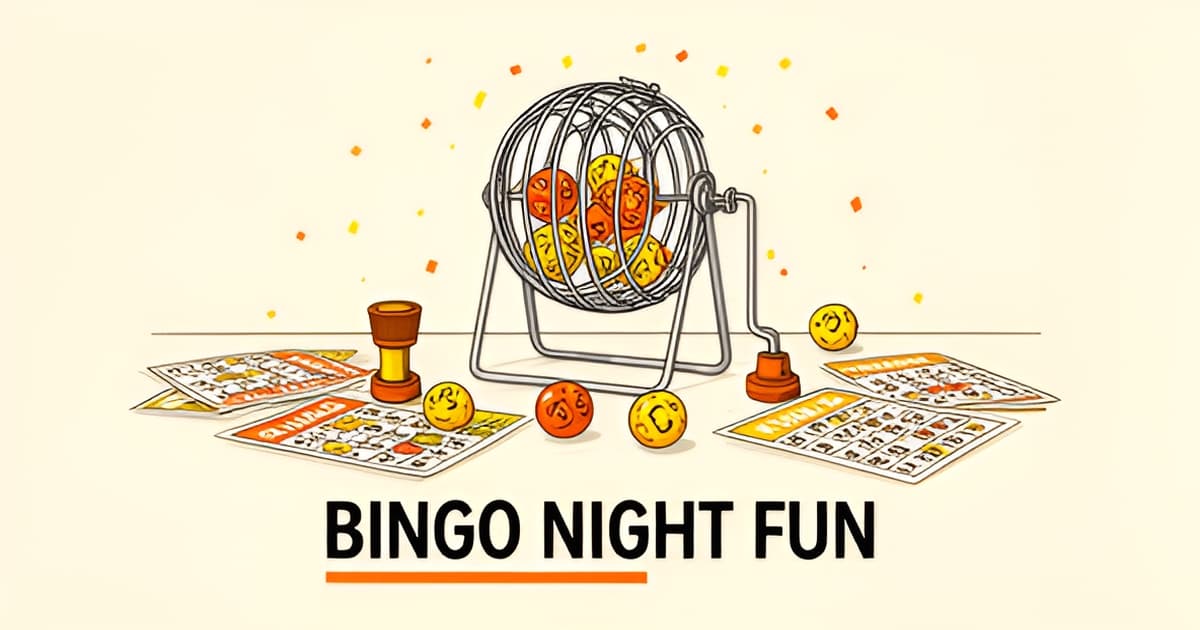
How to host a fun bingo?
Key Facts
- A single UK school bingo night with 180 attendees raised £1,183 by charging modest entry and selling 30p dabbers for £1, according to PTA UK.
- A typical two-hour bingo event fits in 10 to 15 games, with small prizes early and the grand prize saved for last, per fundraising organizers.
- Hosts should print one card per guest plus 10% extras on cardstock, bingo planning guides recommend.
- UK fundraising bingo needs no gambling licence if admission stays at £8 per person or less and prizes don't exceed £600, per Gambling Commission rules cited by PTA UK.
- Family bingo nights run best at 60 to 90 minutes, allowing 15 to 20 minutes per full-house game, family hosting guides suggest.
- Generic bingo nights are forgettable while themed bingo nights get talked about, according to hosting experts.
- Family-friendly bingo entry fees of $5 to $10 per person work well, while adults-only nights can charge $15 to $25+, fundraising benchmarks show.
Why Generic Bingo Nights Fall Flat
You said yes to hosting bingo night, and now the worry creeps in: what if everyone leaves saying "well, that was fine"? It's a fair fear. Bingo is easy to run, which is exactly why so many hosts coast on the basics and end up with an evening nobody remembers. Learning how to host a fun bingo is less about the game itself and more about the choices you make before the first number is called.
Here's the good news: bingo's biggest strength is that it works for everyone. It's cost-effective, easy to play, and brings everyone together, from kids and parents to grandparents and neighbours. PTA UK even calls bingo nights one of the easiest events you can hold. That cross-generational appeal means your room is already primed for a great night. The problem isn't the game. It's the generic version of it.
As one hosting guide puts it bluntly: generic bingo nights are forgettable, while themed bingo nights get talked about. The same standard cards, the same flat delivery, the same single prize at the end. Players finish their daubers, fold their cards, and forget the whole thing by Monday. A themed night, by contrast, gets people planning costumes and texting friends about it afterward. That's the difference between "fine" and "remember when."
So what separates the two? Across eight independent hosting guides, four levers come up again and again:
- A theme that carries through décor, snacks, music, and cards, not just a poster on the wall.
- Custom cards tied to that theme. As one guide notes, standard cards are fine, but custom ones "create a completely different experience."
- Caller energy that turns a get-together into gameshow-level excitement.
- A prize strategy with small wins early and a grand prize saved for the final game, so nobody leaves before the end.
The custom-card lever is the easiest win of the four. A tool like Printoodle's bingo card generator lets you swap numbers for theme-tied pictures in minutes, and picture-based cards are especially recommended for younger children. If you're hosting a classroom or literacy night, a reading bingo set does the same job while sneaking in a little learning. Print one card per guest plus about 10% extras, and you've handled the detail most hosts get wrong.
Master those four levers and your night stops being "just bingo." It becomes the event people ask you to run again next year.
Pick a Theme and Build Custom Cards That Match It
Picking a theme first is the single most effective way to turn a standard game into a memorable experience. Research consistently shows that themed nights dramatically improve the overall guest experience, with multiple independent sources agreeing that generic bingo nights are quickly forgotten while themed versions get talked about long after the last number is called. Themes should extend across every element of the event, from décor and costumes to music and snacks, ensuring a cohesive atmosphere that guests can immerse themselves in.
The most popular theme categories include decades, holidays, tropical escapes, travel adventures, and animal safaris, each offering a ready-made framework for customizing cards and activities. A travel-themed night, for example, might replace the traditional "BINGO" header with "WORLD" and feature landmark pictures instead of standard numbers, transforming the card into a mini travel guide. For younger children, picture-based cards are particularly recommended, as they remove the reading barrier and allow kids to play based on recognition rather than numeral identification.
The biggest differentiator between a forgettable night and a talked-about event is the cards themselves. Standard bingo cards are functional, but custom, theme-tied cards create a completely different experience. Research indicates that custom cards with theme-specific icons, such as bats, pumpkins, or witches' hats for a Halloween night, double as keepsakes and elevate the perceived value of the game. This is the natural place to introduce the Printoodle bingo card generator, which allows hosts to create personalized cards in seconds. By using the bingo card generator, hosts can ensure every card matches their chosen theme precisely, whether it features tropical palms for a summer luau or snowflakes for a winter wonderland. For a literacy or classroom angle, the reading bingo generator offers a perfect solution for turning vocabulary practice into a game.
Beyond aesthetics, the practical structure of the game matters just as much. The 75-ball format, with its familiar 5x5 grid and free center space, is recommended as the most approachable option for families and mixed-age groups. To keep the pacing brisk and engaging, the research suggests running 10 to 15 games within a two-hour event, allowing for short rounds and built-in breaks. A critical printing rule advises printing one card per guest plus an additional 10% extras, all on cardstock for durability and potential reuse across future events.
The caller serves as the heartbeat of the evening. A charismatic host who maintains a consistent calling format, injects humor, and watches the room’s energy can transform a simple get-together into gameshow-level excitement. If players are still scanning their cards when the next number is announced, the pace should be slowed, particularly for children and grandparents. Between rounds, mini-games, costume contests, or a "losers lottery" can fill lulls and maintain momentum, ensuring the energy stays high from the welcome mixer to the final blackout finale.
Pick your theme, then let everything else follow. Custom cards tied to that theme are the fastest way to upgrade the experience, and Printoodle makes it easy to generate them in seconds. Print it. Doodle it. Done.
For classroom literacy nights, the reading bingo card set turns book tracking into a playful challenge, perfect for encouraging young readers.
Run the Night: Caller, Pacing, and Game Structure
A great bingo night lives or dies with the person holding the microphone. As one hosting guide puts it, the right caller takes your event from a simple get-together to gameshow-level excitement, so treat the calling role as the centerpiece of the evening, not a chore.
Caller fundamentals matter more than charisma. Use a consistent call format every time, something like "B-4, that's B-4," so players always know what they heard. Project your voice, and add rhyming calls like "six and three, sixty-three" for atmosphere, a trick long favored by school bingo organizers. Handle disputed wins diplomatically: pause the game, repeat the number, and check the card together.
Pacing keeps the room energized. For family nights, plan on 60 to 90 minutes total, and allow 15 to 20 minutes per full-house game including the line prize, per family bingo guidance. Slow down when kids or grandparents are playing. The best rule from experienced hosts: if players are still scanning their cards when you're ready for the next number, you're going too fast.
Structure the evening as an arc that builds toward the finale:
- Open with simple line games so everyone, including first-timers, gets a quick win.
- Move to four corners and X patterns mid-event, roughly one special pattern game per hour.
- Save blackout for the grand finale and attach your best prize, which keeps everyone engaged to the end.
- Fill lulls between rounds with trivia, raffles, or a "losers lottery" so momentum never drops.
Several short rounds beat one long game every time. If you're running a two-hour event, fundraising hosts typically fit in 10 to 15 games, with small prizes early and the grand prize saved for last.
Your cards should support the arc, too. Print one card per guest plus about 10% extras on cardstock so replacements are always on hand, and consider making them yourself with a bingo card generator so the design matches your theme. For younger players or a literacy twist, picture-based cards like a reading bingo set work beautifully, since kids match images instead of racing through numbers.
When the final blackout wraps and someone's holding the grand prize, you'll know the night worked: every number heard the first time, every round short enough to stay exciting, and the room still full when the last card gets called.
Prizes, Logistics, and Your Pre-Event Checklist
A great bingo night is won in the small details: how you hand out prizes, what food you serve, and whether your backup plan actually works when the bingo machine jams. Get these right and the evening runs itself.
Structure your prizes to keep people in their seats. Hand out small prizes early so everyone gets a taste of winning, then save your best prize for the final game. This is the single most reliable way to stop the room emptying before the last round, according to fundraising organizers. For a family-friendly night, an entry fee of $5 to $10 per person works well; budget roughly £5 to £50 per prize, with 5 to 10 prizes for a mid-sized event.
The numbers genuinely add up. Hill View Primary School in Bournemouth raised £1,183 from a single bingo night with 180 attendees, simply by charging modest entry and selling dabbers at £1 that cost 30p. Norris Bank Primary in Stockport took £5 per family and raised £345.64 in a relaxed 90-minute evening. Neither needed fancy equipment, just good planning.
- Finger foods only. Anything eaten with a fork risks grease and sauce on paper cards, so stick to snacks people can manage with one hand.
- Low background music during calls. Every number must be heard the first time; crank the volume up between rounds instead.
- A visible prize table. People play harder when they can see what they're playing for, so display the prizes prominently from the moment doors open.
- A backup number-drawing method. A second set of balls, an app, or even numbered slips in a bucket will save the night if your main set fails.
- Cardstock printing. Print one card per guest plus 10% extras, on cardstock so cards survive the whole event and can double as keepsakes.
If you're charging entry, check your local licensing rules first. In the UK, fundraising bingo counts as "non-commercial prize gaming" and needs no gambling licence as long as admission stays at £8 per person or less and prizes don't exceed £600. Canadian events usually require a provincial licence, and US rules vary by state, so verify before you sell a single ticket.
For the cards themselves, a themed set beats standard cards every time. Printoodle's bingo card generator creates custom, print-ready cards in seconds, and since reprints are always free, those 10% spares cost you nothing extra. If your crowd includes younger children, picture-based cards work better than numbers, and a reading bingo set can turn the whole night into a sneaky literacy boost.
Print it. Doodle it. Done.
Frequently Asked Questions
How many bingo games should I plan for a two-hour bingo night?
Do I really need a theme, or is regular bingo fine?
How do I make custom bingo cards that match my theme?
What's the best bingo format for kids and mixed-age groups?
How much money can a bingo night actually raise?
Do I need a gambling licence to host a bingo fundraiser?
From "Fine" to "Remember When": Your Bingo Night Starts Now
Knowing how to host a fun bingo comes down to four levers: a theme that carries through everything, custom cards that match it, a caller with real energy, and a prize strategy that keeps the room full until the final blackout. None of these require a big budget, Hill View Primary School raised £1,183 from a single bingo night with modest entry fees and simple planning. The fastest win is the cards: swap standard numbers for theme-tied pictures, print one card per guest plus 10% extras on cardstock, and you've handled the detail most hosts miss. Printoodle's bingo card generator makes that part take minutes, and for younger players or a classroom twist, a reading bingo set turns the night into a sneaky literacy boost. So pick your theme tonight, draft your call sheet, and get ready for the event people ask you to run again next year. Print it. Doodle it. Done.