How to make a classroom fun?
Key Facts
- 46% of teachers report student engagement has declined compared to 2019 according to a Discovery Education survey
- 83% of students say there are not enough opportunities at school to be curious according to a Discovery Education survey
- Curiosity drops from 76% of elementary students to 49% of high school students according to a Discovery Education survey
- 75% of students say self-paced learning would help them feel empowered and more prepared for the future according to a Discovery Education survey
- 93% of teachers say adaptive learning would help increase engagement according to a Discovery Education survey
- 87% of surveyed educators agree digital tools are essential for optimizing content for individual learning according to a Discovery Education survey
- The NYT Learning Network offers 50 distinct activity ideas for teaching current events according to The New York Times Learning Network
The Engagement Problem: Why Students Check Out
The post-pandemic classroom is facing a quiet crisis. 46% of teachers report that student engagement has declined compared to 2019, and the data reveals why: 83% of students say there are not enough opportunities at school to be curious. Perhaps most striking is the curiosity gap itself, 76% of elementary students say they are curious at school, but that number drops to only 49% by high school. Students are noticing the gap too; 57% feel their school is not preparing them with the life skills they need. The real challenge for educators isn't finding ways to entertain, but rather giving students room to be curious.
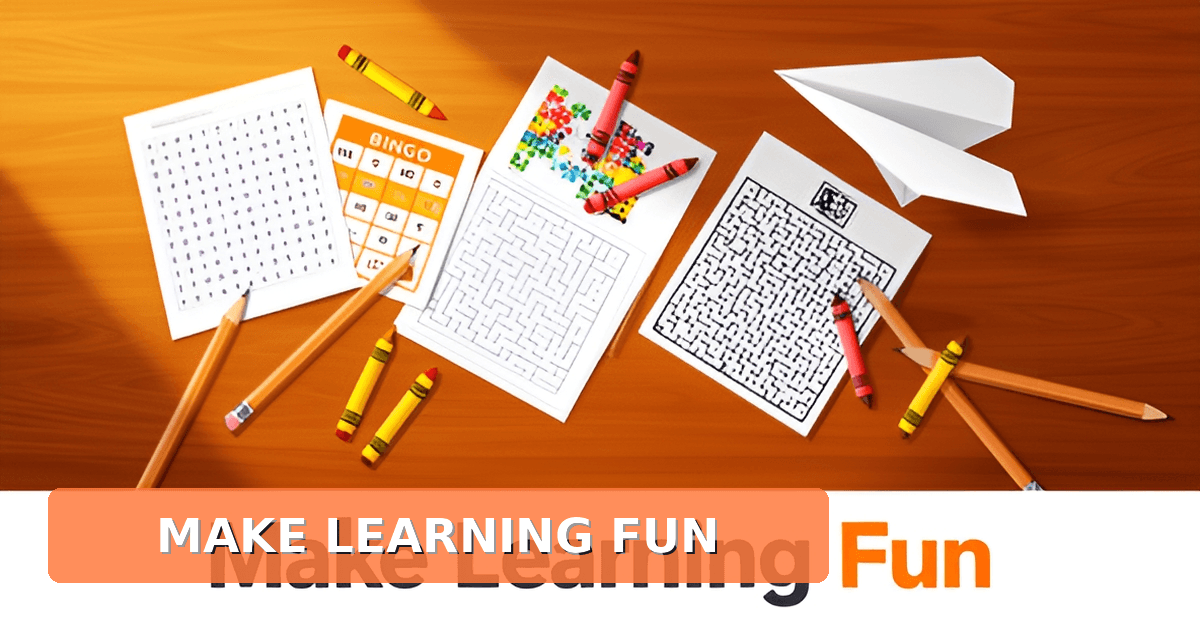
Game-based learning emerges as a proven path forward. Both the NYT Learning Network and Education World catalog dozens of classroom-tested formats, bingo, scavenger hunts, matching games, and fantasy sports, that transform passive listening into active participation. Printoodle’s custom activity packs, including the word search maker and printable word search tools, directly support this approach by providing ready-to-print materials that turn vocabulary practice into an engaging challenge. These formats align with the research-backed strategy of incorporating choice and competition to reignite student interest.
Self-pacing is another lever with strong data behind it. 75% of students say self-paced learning would help them feel empowered and more prepared for the future. Printoodle’s platform enables teachers to generate personalized, print-ready activity pages where students can choose formats that match their interests and skill levels. Whether it is a themed coloring page, a pixel color-by-number mystery, or a custom crossword, the ability to differentiate while maintaining fun formats addresses the engagement decline reported by nearly half of all teachers.
Framing lessons as mysteries also shifts student buy-in. Edutopia teachers have observed that when students must tease out elements of a story or solve a problem without all the answers revealed upfront, captivation increases significantly. This mystery-based approach can be adapted across subjects using Printoodle’s versatile formats, teachers might create word searches with hidden messages or trivia cards where answers reveal a larger puzzle, transforming passive learning into active discovery.
Connecting activities to real-world interests completes the engagement equation. The Discovery Education survey identifies seeing connections between lessons and real-world jobs and skills as critical for student buy-in. Printoodle’s library of themed packs, from pet-photo coloring pages to career-focused word searches, allows teachers to ground learning in contexts students already care about. The platform’s free reprints mean these materials can be reused throughout the year to reinforce those connections.
Printoodle offers a practical solution for teachers seeking to implement these strategies. The free tier provides 10 credits upon email verification, and every activity generated lives in a library where reprints are always free. For educators looking to bring game-based learning, self-paced options, and real-world connections into their classrooms, Printoodle provides the tools to create custom activities in seconds. Print it. Doodle it. Done.
What Actually Works: Games, Choice, and Mystery
So what actually moves the needle when you're figuring out how to make a classroom fun? The research points to three levers that consistently outperform the lecture-and-worksheet routine: games, student choice, and a little mystery.
Games beat worksheets, and the research backs it up. The NYT Learning Network's collection of 50 classroom activity ideas includes proven formats like bingo, scavenger hunts, and headline mix-and-match games. Education World adds 25+ more activities, from news scavenger hunts to "You be the editor" exercises. These work because they turn passive review into something students actively want to finish.
You don't need elaborate setups to run these formats. A few go a long way:
- Bingo cards built from your own vocabulary list or unit content
- Scavenger hunts where students hunt for answers instead of being handed them
- Matching games that make recall competitive and fast-paced
- Word searches that sneak in spelling and vocabulary practice
That last one is easier than it sounds. Printoodle's word search maker lets you generate a puzzle from your actual lesson material in seconds, and every printable word search lives in your library so reprints are free.
Choice is the second lever, and the data is striking. According to a Discovery Education survey, 75% of students say self-paced learning helps them feel empowered and better prepared. When students pick their own path, whether that's a maze, a crossword, or a trivia card set, engagement stops being something you impose and becomes something they own.
Mystery is the third, and it's underused. An Edutopia teacher observed that students show "much greater buy-in" when a lesson is framed around an unfolding event rather than a complete set of facts. As that teacher put it, presenting a story as fully resolved "requires no further exploration." Withholding the ending makes students lean in.
Why do these three levers outperform lectures? They all attack the same problem: the curiosity gap. The same survey found 83% of students say school gives them too few chances to be curious, and curiosity drops from 76% in elementary school to 49% by high school. Games, choice, and mystery hand curiosity back to students instead of rationing it.
Printable Activities That Build These Habits In
The best engagement strategies don't help much if they take three hours of prep on a Tuesday night. That's where printables earn their keep: they turn the habits above into something you can hand out tomorrow morning, no laminator required.
With nearly half of teachers reporting lower engagement than in 2019, and 83% of students saying school gives them too few chances to be curious, the format matters as much as the content. A worksheet that feels like a puzzle flips that dynamic fast.
Word searches and crosswords turn vocabulary review into a hunt. Instead of memorizing a list, students scan, pattern-match, and cross off words, which keeps curiosity in play. The NYT Learning Network's 50 current-events activity ideas lean on this same instinct: practice disguised as play.
Bingo and mazes add the competitive layer that classroom-tested game formats consistently deliver. Education World's news bingo and scavenger hunts work because students race each other, not the clock. A definition bingo card or a maze with a review question at each dead end gets the same energy.
Pixel color-by-number mystery pictures are the closest printable equivalent to framing a lesson as a puzzle. Students solve problems or find words, and each answer reveals part of a hidden image. The Edutopia teacher who observed "much greater buy-in" when lessons withheld the full story would recognize the mechanic immediately: the picture stays unknown until the work is done.
A few ways to use these formats without extra planning:
- Drop this week's spelling or subject vocabulary into a puzzle as a warm-up or early-finisher task.
- Run bingo as a review game the day before a test, with definitions as clues.
- Use a mystery picture as a self-paced station, since 75% of students say self-paced work helps them feel empowered.
- Keep a printed packet on hand for substitutes so the fun doesn't stop when you're out.
The real trick is customization. Generic puzzles are fine, but puzzles built from your own lesson material hit differently, because students recognize the words and feel the connection to what they just learned. That's exactly what Printoodle's word search maker does: paste in your vocabulary list and get a print-ready page in seconds, no formatting fiddling.
The same goes for any printable word search you generate, which lands in your library where reprints stay free forever. Build it once, use it every year. Print it, doodle it, done.
Your 5-Step Plan to Make Your Classroom Fun This Week
Your students are watching the clock. According to recent education research, 46% of teachers report that student engagement has declined since 2019, and 83% of students say there aren't enough opportunities for curiosity at school. The good news? Small, intentional shifts can flip the script in days, not months.
Start by picking one game format and attaching it to your existing lesson content. Game-based learning isn't a separate curriculum, it's a delivery method. A word search built from your vocabulary list, a bingo card with comprehension questions, or a scavenger hunt using your current reading material turns passive review into active play. The NYT Learning Network identified 50 activity ideas specifically designed to make current events interactive, and Education World offers 25+ newspaper-based games that translate to any subject. These formats work because they add competition and structure without requiring you to redesign your whole unit.
Next, build a choice-driven activity menu for early finishers. Research shows 75% of students feel empowered by self-paced learning, and that empowerment directly fuels engagement. Instead of "free time" or another worksheet, offer three print-ready options students can select based on interest or mood: a themed word search, a color-by-number pixel mystery, or a short maze. When students choose their path, they invest in the outcome.
Frame one lesson this week as an unsolved mystery. The Edutopia source observed that when teachers present material as a puzzle rather than a completed story, students show much greater buy-in. This could look like a word search with a hidden message, a set of trivia cards where the answers reveal a code, or a pixel color-by-number that gradually uncovers an image. The mystery framing transforms "here is information you need to know" into "here is a problem you need to solve."
Theme your activities around students' real-world interests. The Discovery Education survey found that student buy-in depends on seeing connections between lessons and real-world jobs and skills. Leverage that by creating word searches around pet photos, career-themed vocabulary, or seasonal topics that matter to your class right now. Printoodle’s photo-to-coloring-page feature lets you turn a student’s pet picture or a family snapshot into line art that can be printed and colored, making the content instantly personal and relevant.
Finally, balance screen time with print-ready PDFs. While 87% of surveyed educators agree digital tools are essential for individualized learning, hands-on, offline work provides a crucial break and supports different learning preferences. Printoodle’s platform lets you generate custom activity packs from your own lesson material, then download print-ready PDFs that work as well on a desk as they do on a screen. The best part? Everything you create lives in your library where reprints are always free.
Word search maker and printable word search tools make it easy to generate these activities from your own terms in seconds.
Generate a custom pack from your lesson material, print it, and keep reprints free forever.
Frequently Asked Questions
How do I make my classroom fun without losing instructional time?
Why are my high school students less engaged than my elementary students were?
Does letting students choose their own activities actually improve engagement?
What's the easiest game format to start with if I've never used games in class?
How do I frame a lesson as a mystery to get better student buy-in?
Do printable activities still work in a digital-first classroom?
Fun Isn't a Bonus, It's How Curiosity Comes Back
Making a classroom fun isn't about entertaining students, it's about handing curiosity back to them. The research is clear: 83% of students say school gives them too few chances to be curious, and engagement has dropped since 2019 for nearly half of teachers. The fixes that work, games, student choice, mystery framing, and real-world connections, all share one trait: they turn passive listening into active discovery. Start small this week. Turn one vocabulary list into a puzzle, offer a choice menu for early finishers, or frame one lesson as an unsolved mystery. Printoodle makes the prep painless: paste your lesson terms into the word search maker, grab a printable word search from your library, and print as many copies as you need, reprints stay free forever. You bring the lesson; Printoodle brings the fun. Print it. Doodle it. Done.