How to make a family reunion special?
Key Facts
- Board games boost family communication satisfaction by 20%, according to family time statistics.
- 80% of children want more screen-free time with their parents, research on family bonding shows.
- Family traditions increase a child's sense of security by 33%, family time data reveals.
- Kids with access to a family memory box show 15% higher self-esteem, statistics suggest.
- Multi-generational activities that work for ages 5 to 85 create the best reunion memories, reunion planning research finds.
- The hardest reunion challenge is getting people to keep attending year after year, Kiplinger reports.
- A backyard reunion for 20 people can run under $300, per budget planning research.
Why Activities Outshine Logistics
Research consistently shows that what turns a family reunion from a simple meal into a lasting memory is not elaborate planning, but intentional, multi-generational activities. The WhenNOT planning guide states directly that activities are what transform a gathering into a memory, noting that games and shared experiences "work for everyone from age 5 to 85 and create the best reunion memories." Kiplinger echoes this sentiment, reminding us that "the most important part of a family reunion is family. You don't need an elaborate schedule of activities. You just need space and time to gather."
Data from family-time statistics reinforces the value of these moments: board games increase family communication satisfaction by 20%, and 80% of children want more screen-free time with parents. These numbers highlight why a small number of high-impact games that bridge generations are so effective, they create natural connection points without requiring a complex itinerary. A backyard reunion for 20 people under $300 can be just as meaningful as a destination event when the focus remains on shared experiences rather than logistics.
Personalization adds another layer of significance to these activities. A Reddit user once searched for custom reunion shirts where each family member wore a different nickname or inside joke, documenting a real demand for flexible, affordable customization. While custom apparel can present cost barriers, personalized activity pages offer the same emotional resonance at a fraction of the price. Printoodle’s family trivia game, family trivia questions, and family trivia board game allow hosts to build experiences around their family’s unique stories and inside jokes, turning a standard gathering into a customized celebration.
The research also notes that the biggest challenge with planning a family reunion is less about the logistics and more about getting people to keep attending year after year. Positioning keepsake pages, coloring pages from family photos, trivia cards, or bingo boards, as traditions families repeat and update at every reunion can help solve this retention problem. Much like the family trees and contact booklets one family updates annually, these print-ready activities become touchpoints that families look forward to revisiting.
Print it. Doodle it. Done. family trivia game, family trivia questions, or family trivia board game to get started. 92% of users say Printoodle activities make family gatherings more memorable.
Personalization That Bridges Generations
Ask anyone who's planned a decades-long reunion what makes it work, and the answer is rarely the venue. It's the personal touches: the nicknames, the inside jokes, the stories only your family knows. When it comes to how to make a family reunion special, personalization is the ingredient that turns a gathering into a tradition.
The demand is real. One Reddit user searching for reunion shirts explained they wanted each shirt customized differently "with our nicknames and inside jokes," but couldn't find an affordable service that allowed full customization under $30 per shirt source. That friction is common: personalized memorabilia like T-shirts is a standard line in reunion budgets source, yet per-person customization stays expensive at scale.
Here's the good news: personalization doesn't have to live on a shirt. The same details that make custom merch meaningful work just as well on paper, at a fraction of the cost. With a tool like Printoodle, you can turn a family photo into a coloring page, build a trivia deck from your family's own stories, and print ready-to-use PDFs in seconds. Reprints are always free, so the pages become reusable tradition rather than a one-time expense.
Some easy ways to personalize your reunion activities:
- Build a family trivia game around real family history: Grandma's first car, the infamous camping trip of 1998, who actually broke the china cabinet.
- Turn a favorite pet or family photo into a coloring page that kids and adults can decorate side by side.
- Write family trivia questions that span generations, so a ten-year-old and an eighty-five-year-old can play on equal footing.
- Create a family trivia board game as a recurring tradition, adding new questions at every reunion.
That last point matters more than it might seem. Multi-generational activities that "work for everyone from age 5 to 85" are what create the best reunion memories, according to reunion planning research. And the payoff is measurable: board games increase family communication satisfaction by 20%, and 80% of children say they want more screen-free time with their parents source.
Personalized pages also solve the retention problem. The hardest part of reunion planning, veteran planners say, isn't logistics; it's getting people to keep coming back year after year source. A trivia deck that grows with your family, or coloring pages of faces everyone recognizes, gives relatives a reason to return and something to add. Some long-running reunions already update family trees and contact booklets at every gathering; a personalized activity library works the same way.
Print it. Doodle it. Done.
Screen-Free Games That Work for Everyone
Here's a quiet truth about reunions: the screens come out when the boredom sets in. Yet family time statistics show that 80% of children actually want more screen-free time with their parents, and 65% of parents report feeling tech-fatigue at family gatherings. Everyone is waiting for something better to do. Give it to them.
Games are that something. Research on family bonding found that board games increase family communication satisfaction by 20%, and shared leisure activities reduce sibling rivalry by 25%. The best reunion games aren't generic party games, though. They're games built from your family's own stories, nicknames, and history, so a ten-year-old and an eighty-five-year-old can sit at the same table and both have something to contribute.
That's what makes trivia the ideal anchor activity. A family trivia board game works for everyone from age 5 to 85, which is exactly the range that planning guides say creates the best reunion memories. You can pull your questions from family lore: Grandma's first job, the year the lake house flooded, who always burns the burgers. If you want a shortcut, a set of ready-made family trivia questions gets you to the table faster, and you can swap in your own questions as you think of them.
A few practical rules keep game time from unraveling:
- Rotate kids' activities every 45 to 60 minutes. Planning guides for reunions recommend this cadence to prevent restlessness and keep energy up across a long day.
- Pick 5 to 8 activities total that cover every age group, rather than one packed itinerary that exhausts everyone.
- Organize games by who's playing. Kids' games and adult games work better than one-size-fits-all icebreakers, with one or two all-ages anchors like trivia bringing everyone together.
- Print extras. When a game lands well, someone always wants to play a second round or take a copy home.
That last point matters more than it sounds. When a game becomes "the thing we always do at reunions," you've built a tradition, and the data suggests family traditions increase a child's sense of security by 33%. One family that has run a reunion since 1984 updates its family tree and contact booklets at every gathering, treating the reunion itself as a living document.
Printoodle fits naturally here: you can generate a personalized trivia game or activity pages from your own family photos and stories in seconds, print them at home, and reprint them free forever for next year's reunion. Print it. Doodle it. Done.
Turnkeptake Pages as Low-Cost Traditions
The activities you plan matter more than the venue you book. According to reunion planning research, activities are what turn a family reunion from a meal into a memory, and the best ones work for everyone from age 5 to 85. If you're wondering how to make a family reunion special without spending much, print-ready keepsake pages are the answer.
The highest-value reunion activities are the ones that generate something guests take home. Planning guides consistently recommend photo booths, storytelling circles with recording, memory walls, and family tree displays as the ideas guests remember most. Personalized activity pages fit this pattern: a family trivia game built from your own inside jokes, or coloring pages made from photos of grandparents, double as entertainment and keepsake.
The emotional payoff is measurable. Children with access to a family memory box show 15% higher self-esteem, and family traditions increase a child's sense of security by 33%. A stack of printed pages that gets added to every reunion works the same way: it becomes a physical record kids can hold, color, and revisit.
Here's what works well as a print-and-play lineup:
- A family trivia board game using questions about relatives, old addresses, and famous family mishaps
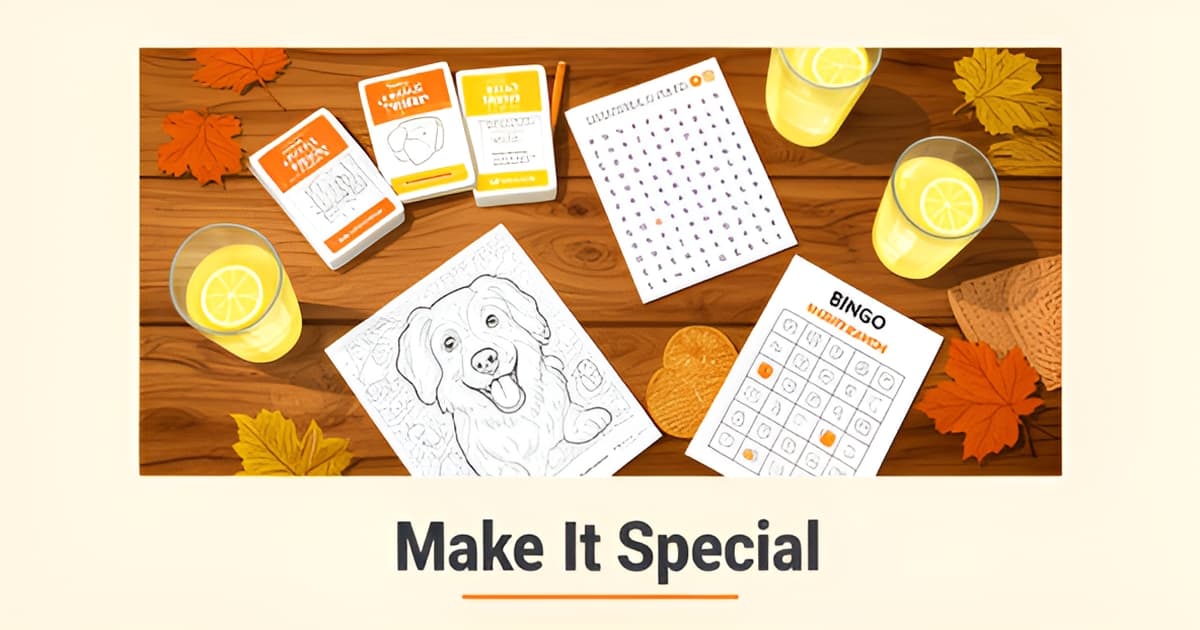
- Photo-to-coloring pages, so kids can color a portrait of great-grandma while she watches
- A family trivia questions round for the storytelling circle, prompting elders to share the stories behind each answer
- Bingo cards filled with family names and nicknames instead of numbers
The tradition angle matters as much as the activity itself. One family with a 42-year reunion tradition maintains contact booklets and family trees that get updated at every gathering. Printoodle pages support the same rhythm because reprints are always free: you regenerate the trivia deck or word search with new names and new stories each year, and the tradition compounds.
This matters because retention is the real reunion challenge. Kiplinger's reporting notes that getting people to keep attending year after year is harder than the logistics. A keepsake tradition gives cousins a reason to come back: their page is waiting, and this year's version will be different.
Budget-wise, the math is friendly. A backyard reunion for 20 can run under $300, and low-budget reunions create lasting memories when the planning is thoughtful. Print-ready PDFs cost pennies per page, so you can print enough for every cousin without touching the catering budget.
Print it. Doodle it. Done.
Frequently Asked Questions
How do I make a family reunion special without spending a lot of money?
What activities work for all ages at a family reunion?
How many activities should I plan for a family reunion?
How can I personalize a family reunion on a budget?
How do I get family members to keep coming back to the reunion every year?
Are screen-free games really worth it at a family reunion?
The Secret Ingredient That Turns Reunions Into Traditions
The research is clear: what transforms a family reunion from a simple meal into a lasting memory isn't elaborate logistics, but intentional, multi-generational activities. Whether it's a backyard gathering of 20 under $300 or a decades-long tradition with 100+ relatives, the magic happens when families create shared experiences that bridge every age group, from age 5 to 85. Personalization is the ingredient that elevates these moments, turning nicknames and inside jokes into reusable traditions. As Kiplinger reminds us, you don't need an elaborate schedule; you just need space and time to gather. Yet the data shows that board games increase family communication satisfaction by 20%, and 80% of children want more screen-free time with parents. The real challenge for reunion planners isn't the venue, it's getting people to keep coming back year after year. Positioning print-ready keepsake pages as traditions families repeat and update at every gathering solves this retention problem, creating touchpoints that relatives look forward to revisiting. Print it. Doodle it. Done.