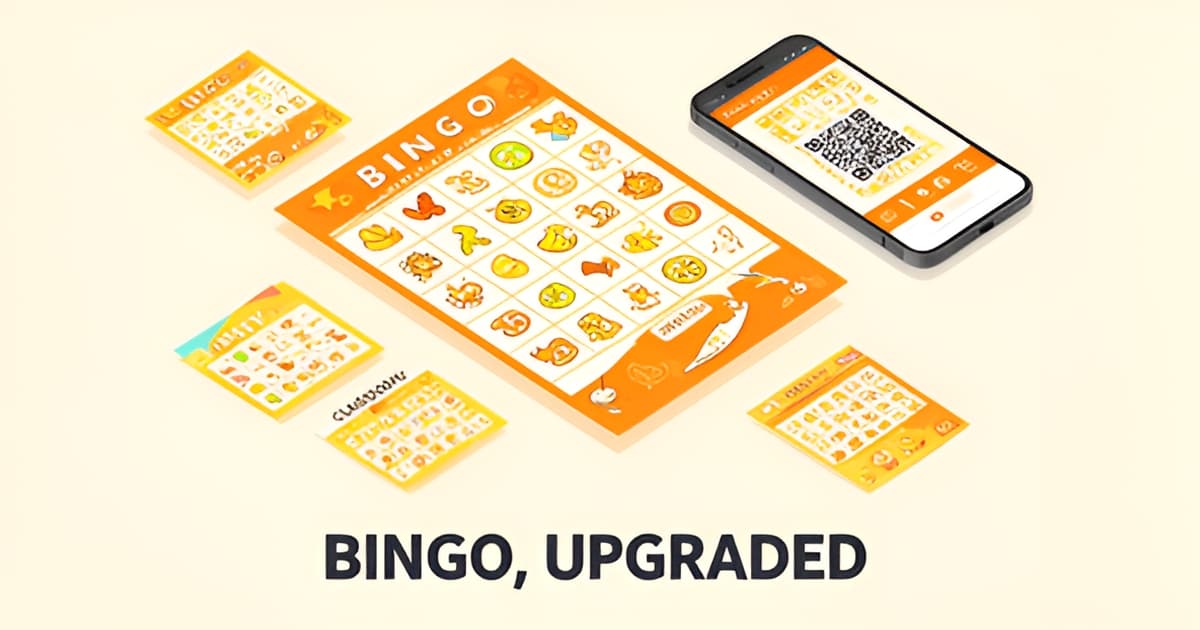
How to make bingo more interactive?
Key Facts
- The global online bingo market is projected to grow from $1.8 billion in 2024 to $2.7 billion by 2030, according to Grand View Research.
- Bingo players who actively use chat features generate 2.4 times the lifetime value of non-chatting players, per market analysis from Dataintelo.
- Mobile platforms account for 54.2% of online bingo revenues in 2025, according to market data.
- QR code card access links printed cards to game access, reducing manual matching during draws, per a bingo software review.
- Digital bingo communities see 60% of players engaged in chat and 40–50% participating in special events, according to engagement metrics.
- Industry growth is driven directly by increasing demand for interactive and social gaming experiences, market research confirms.
- Players aged 18–25 are the fastest-growing bingo segment, drawn in by league structures, badges, and leaderboards, Grand View Research reports.
Why Interactivity Matters in Modern Bingo
Bingo's comeback isn't happening by accident. Industry research attributes the game's growth directly to "increasing demand for interactive and social gaming experiences worldwide," and if you're wondering how to make bingo more interactive, the market has already answered: personalization, theming, and social connection are what keep players coming back.
The numbers back this up. The global online bingo market is projected to grow from $1.8 billion in 2024 to $2.7 billion by 2030, according to a Grand View Research report. The same research notes that personalized avatars, themed rooms, and adaptive difficulty have become standard offerings, precisely because they boost engagement. Players don't just want to mark squares; they want the game to feel like it was made for them.
Social features matter even more. A market analysis found that players who actively use chat features generate 2.4 times the lifetime value of players who don't. In other words, the conversation around the game is worth as much as the game itself. That's a lesson any host can apply, whether you're running a classroom session or a baby shower.
What does this mean for your next bingo night? The same levers that drive engagement online translate directly to printed cards:
- Personalize and theme your cards so they match the occasion, from holiday parties to lesson vocabulary.
- Build in social moments between rounds, since conversation is what turns casual players into invested ones.
- Add light gamification, like small prizes, team play, or a running scoreboard across games.
- Vary your patterns and pacing, because pattern variety and quick rounds keep energy high.
One more finding worth noting: most bingo card generators handle only the cards themselves, leaving "the interactivity of the gameplay" to the host. That's actually good news. It means the host who adds a themed card set, a QR code linking to a digital caller, or a prize structure instantly stands out. A tool like Printoodle's bingo card generator makes the personalization part easy, letting you create custom, print-ready cards in seconds, whether you're setting up a party game or a classroom round of reading bingo.
Interactivity isn't a bonus feature anymore. It's the reason bingo is growing, and it's entirely within your control at the table.
Turn Passive Cards into Active Play with QR Codes
If you're wondering how to make bingo more interactive, the answer often sits in the gap between the printed card in someone's hand and the game running at the front of the room. A QR code printed on each card closes that gap. When a player scans it, their physical card connects to the live game, and the software handles the matching for them.
This isn't speculative. A review of bingo card generator software identifies QR code card access as a standout feature because it "links printed cards to game access, reducing manual matching during draws." That single mechanic changes the host's job. Instead of pausing every round while players squint at their cards and argue about whether B-7 was actually called, the system tracks each card automatically.
The same review notes a broader limitation worth knowing: most generators stop at printing cards, and "interactivity of the gameplay itself is usually handled outside the generator." QR codes are how you push past that limit. Printoodle's bingo card generator handles the printed side, and a QR code turns each sheet into a live entry point rather than a static piece of paper.
Hybrid play is where this gets genuinely useful. Some tools let you export the same cards for in-person and remote sessions, which means a grandparent on a video call can play the same round as the kids at the kitchen table. Given that mobile platforms already account for 54.2% of online bingo revenues, per market data from Dataintelo, your players almost certainly have a scanner in their pocket already.
A few practical ways to use QR codes on your next set of cards:
- Link each card to a digital caller so remote players follow the same draw as the room.
- Point to a live leaderboard that updates after each round, which keeps everyone watching between calls.
- Reveal a themed prize page or answer key only when scanned, adding a small surprise to each win.
- Connect a classroom set, such as a reading bingo board, to a progress tracker students check themselves.
Start small: generate your cards with Printoodle, add one QR code that links to your caller or prize reveal, and test it with two players, one in the room and one on a call. Once the scan-to-play habit clicks, you'll find yourself adding codes to every set you print.
Add Social and Gamified Elements Around the Game
The cards themselves are only half the fun. What happens between the calls (the chatter, the rivalry, the running score) is what turns a one-off game into a night people keep asking about. If you're wondering how to make bingo more interactive, the social layer you build around it matters as much as the cards you print.
The evidence for this comes straight from the online bingo world. Players who actively use chat features generate 2.4 times the lifetime value of players who never type a word. Digital bingo communities report 60% of players engaged in chat and 40–50% participating in special events, according to one analysis of engagement metrics. People show up for the connection as much as the game.
You don't need an app to get those benefits. Try these around your printed cards:
- Run a series leaderboard. Award points per win, per second-line, even per loudest groan, and post the running totals between rounds. League structures are how online bingo platforms tap into the competitive spirit of younger players, per Grand View Research.
- Play in teams. Pair a confident caller-follower with a newcomer on one card, so every number sparks a conversation instead of silence.
- Add conversation prompts between rounds. A quick "what's your luckiest moment?" question keeps the table talking while you reset the cards.
- Themed variants. Holiday specials and themed rooms are standard engagement tools in online bingo, and the same trick works on paper with seasonal or classroom-themed cards.
Gamification is worth the small setup effort, especially with mixed-age groups. The 18–25 segment is the fastest-growing part of the bingo market, and platforms attribute that to badges, missions, and leaderboards rather than the game itself. A paper scoreboard and a cheap prize accomplish the same thing at a family game night or a classroom party.
The cards make this easier to pull off when they're personalized. Printoodle's bingo card generator lets you build custom, themed cards in seconds, so a series leaderboard can have matching holiday cards in December and dinosaur cards in March. For classrooms, a reading bingo set doubles as a month-long challenge with a leaderboard on the wall.
One practical note: most bingo card generators don't handle the gameplay itself, since "interactivity of the gameplay itself is usually handled outside the generator," as one software review roundup puts it. That's your opportunity. The cards get people to the table; the leaderboard, the team banter, and the between-round prompts keep them there. Print it. Doodle it. Done.
Practical Steps: Using Printoodle to Create Interactive Bingo Nights
The fastest way to answer "how to make bingo more interactive" is to stop handing players generic cards and start handing them ones built for your event. Market research on online bingo shows that personalized avatars, themed rooms, and themed events have become standard engagement drivers, and the same logic applies to a printed card on a kitchen table or classroom desk.
Here's a practical setup using Printoodle's bingo card generator:
- Build themed cards around your audience. Enter a short brief (a birthday, a book unit, a baby shower) and generate print-ready cards in seconds. For classrooms, the reading bingo tool turns lesson material into cards students actually want to complete.
- Add a QR code to each card linking to a digital caller, an answer key, or a prize reveal. This mirrors what works in digital tools, where QR code card access links printed cards to game access and reduces manual matching during draws.
- Print extras for remote players. The same PDF works for in-person and virtual sessions, so anyone who can't attend still plays the same game.
- Reprint free forever. Every card you make lives in your Printoodle library, so a rain-date party or a second class period costs nothing.
Then vary the gameplay itself. Pattern diversity, from classic lines to diamonds and letters, can spice up bingo nights without any extra prep, so plan three or four rounds with a different winning pattern each time. Keep early rounds quick; fast-paced variants are specifically credited with attracting younger players to the game.
Finally, build the social layer around the cards. That part matters more than hosts usually assume: one market analysis found that players who actively use chat features generate 2.4x the lifetime value of non-chatting players. Translate that to your event with team play, a running leaderboard across rounds, small prizes, and conversation prompts between rounds.
Start with the free tier (10 credits on email verification), generate one themed set, and print it. Doodle it. Done.
Frequently Asked Questions
What makes bingo more interactive for in-person events?
How can QR codes improve the bingo playing experience?
Why do some players engage more than others in bingo games?
What gamified elements can I add to a bingo night?
Can I use the same bingo cards for in-person and remote players?
Your Next Bingo Night Starts with One Great Card
Interactivity isn't a nice-to-have in bingo anymore, it's the reason the game is growing. The levers that drive engagement online translate directly to your table: themed, personalized cards; QR codes that link paper to live play; social layers like leaderboards, team play, and between-round chatter; and varied patterns and pacing to keep energy high. Remember that players who actively use chat features generate 2.4 times the lifetime value of those who don't, conversation is where the magic happens. Your next step is simple: pick your occasion, build a themed card set with Printoodle's bingo card generator (or a classroom reading bingo board), add one QR code linking to your caller or a prize reveal, and plan three rounds with different patterns. Test it with two players, one in the room and one on a call. Print it. Doodle it. Done.