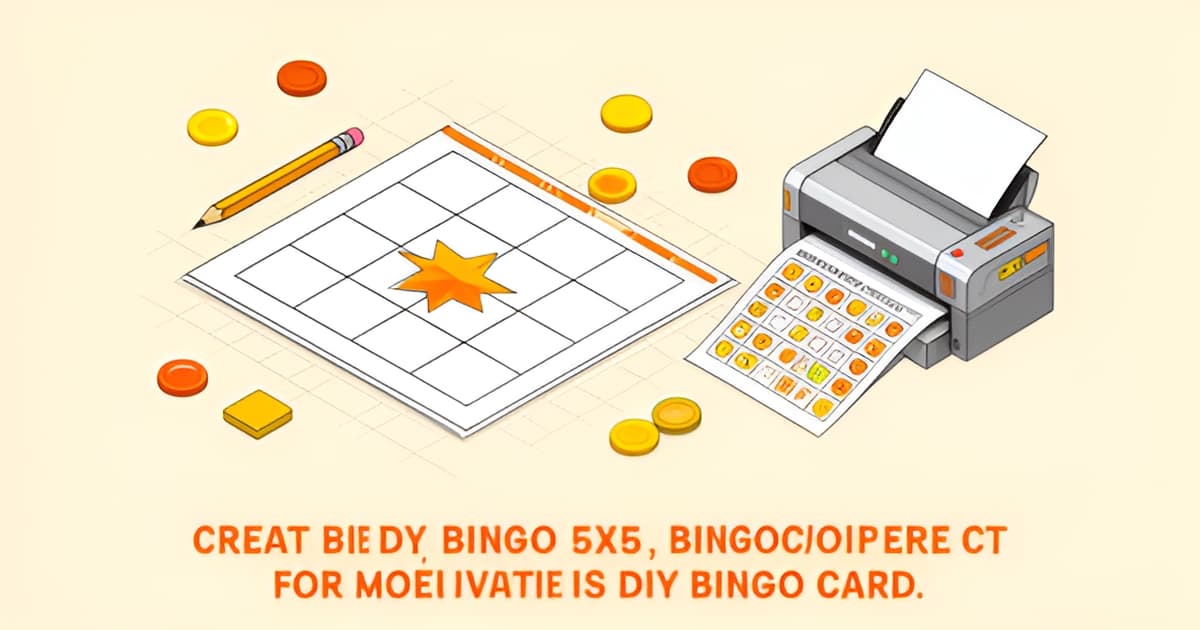
How to make your own bingo cards at home?
Key Facts
- A standard bingo card is a 5x5 grid with a free space in the center, as Apartment Therapy notes.
- Traditional number bingo uses 75 items, according to BingoBaker.
- A 5x5 bingo grid can produce over 15.5 sextillion unique card combinations, per BingoBaker's documentation.
- Vision board bingo, where squares hold personal goals instead of numbers, became a 2025 TikTok trend, reports Pedestrian.TV.
- Crossing off a completed goal delivers a visual reward that 'reaffirms that dopamine hit,' psychologist Sahra O'Doherty told Mamamia.
- One creator accomplished far more goals with a bingo card than a written list because it stayed visible all year, she told Mamamia.
- A 3x3 bingo card produces only 362,880 unique combinations, according to BingoBaker.
The Problem With Store-Bought Bingo
Walk into any party supply aisle and you'll find the same tired bingo sets: generic numbers, flimsy cardstock, and zero connection to the people actually playing. It's no surprise that more people are searching for how to make your own bingo cards at home than ever before. Store-bought cards simply can't keep up with what bingo has become in 2025.
The biggest shift is the TikTok vision board bingo trend, where each square holds a personal goal like "watch a sunrise" or "run a marathon" instead of a number. You cross a square off when you achieve it. A pre-printed card from a store can't do any of this. It has no room for your goals, your inside jokes, or your kid's dinosaur obsession.
There's real psychology behind why the homemade version works so well for goal tracking, too. Principal Psychologist Sahra O'Doherty told Mamamia that crossing off an item gives you a visual reward that "reaffirms that dopamine hit" when intrinsic motivation runs low. One creator reported accomplishing far more with a bingo card than she ever had writing goals in a list, simply because the card kept her thinking about them all year.
Store-bought sets also box you into a rigid format. Traditional number bingo uses 75 items, according to BingoBaker's documentation, and most retail sets stick to exactly that. But if you're running a reading bingo challenge for a classroom or a themed baby shower, you need your own words and images in those squares. That's where the format itself matters.
The good news is that the structure of a bingo card is refreshingly simple. Bingo cards are typically five squares by five squares, as Apartment Therapy notes, with a free space in the center for standard gameplay. A 5x5 grid can produce a staggering 15,511,210,043,330,985,984,000,000 unique card combinations, which means every player at your table can get a genuinely different card.
So what are your actual options when a store set won't cut it?
- Hand-draw a grid with a ruler and fill squares with pencil first, then colored markers, for full creative freedom.
- Design in Canva, the tool most TikTokers use for "aesthetically pleasing" cards, though it takes time and design patience.
- Use a dedicated generator like Printoodle's bingo card generator to turn your own words into print-ready cards in seconds.
Here's the catch: most guides stop at generic instructions. Almost none walk you through creating themed cards for specific situations, like a reading bingo sheet for a reluctant reader or a personalized birthday set with your child's name in every square. That's the gap worth closing, and it starts with understanding what you actually need before you print anything.
Print it. Doodle it. Done.
Pick Your Grid and Your Goal
Before you draw a single square, decide what the card is for. That choice shapes everything else. If you're learning how to make your own bingo cards at home for an actual game night, you'll follow the traditional format. If you're making one to track personal goals, you'll break the rules on purpose.
Traditional number bingo follows a well-established structure. Cards are typically five squares by five squares, according to Apartment Therapy's guide to bingo card design, with the center square usually marked as the free space. Traditional number bingo uses 75 items, and a 5x5 grid can generate over 15.5 sextillion unique card combinations, which is why no two players at your table will likely hold matching cards.
For goal-tracking bingo, the format stays but the content changes. This approach has become a popular alternative to vision boards, with each square holding a personal goal like "read three books this year" or "save $1,500 by December" that gets crossed off when achieved. The trend took off on TikTok in 2025, where creators design "aesthetically pleasing" bingo cards as a game-like way to organize their year.
There's real psychology behind why this works. Principal Psychologist Sahra O'Doherty explains that when a task doesn't deliver its own sense of satisfaction, crossing off a square gives yourself a small reward that "reaffirms that dopamine hit." One creator who used the format noted she accomplished far more because the card kept her goals visible all year, something a written list never did.
So which format fits your project? A quick way to decide:
- Game night: 5x5 grid, numbers drawn from a pool of 75, free space in the center.
- Goal tracking: 5x5 grid filled with specific, measurable personal goals instead of numbers.
- Kids' version: smaller 3x3 grid with pictures or simple words, which also supports a free space.
- Party bingo: squares describing moments likely to happen at the event, like "someone mentions the bride's ex."
One caution from O'Doherty applies to the goal format: unless you've worked out the steps to achieve each goal, the task can feel so overwhelming that you avoid it entirely. Keep your squares achievable.
Whichever format you pick, a bingo card generator handles the grid layout and printing for you, so you can focus on filling the squares. For goal-oriented cards with a reading theme, a reading bingo template gives you a ready-made starting point you can customize before printing.
Design Your Card in Seconds
Creating printable bingo cards at home is faster than ever with the right digital tools. Printoodle’s bingo card generator removes the guesswork from grid design, automatically handling the 5x5 layout that has become the standard format for traditional gameplay. According to industry research, a 5x5 grid can produce over 15.5 sextillion unique card combinations, making duplicate cards virtually impossible when items are shuffled correctly.
The tool gives you control over how items distribute across your card. For authentic bingo behavior, users can opt to shuffle items only within their specific columns rather than across the entire card, which maintains the traditional number distribution players expect. The generator also automatically inserts the free space in the center square, a standard feature available on 5x5 and 3x3 grids that adds a strategic element to every game.
Beyond the technical setup, Printoodle’s interface lets you customize what appears in each square. Whether you are printing number-based cards for a family game night or filling squares with personal goals for a vision board format, the shuffling preferences adjust to your needs. Once your card is designed, you download a print-ready PDF, Letter size by default, with an A4 toggle available, and you can reprint from your library whenever you like, with no additional cost.
Free tier users start with 10 credits upon email verification, which is enough to generate and download several card designs. If you need more, credit packs start at $5, and every design you create lives permanently in your library for free reprints.
Ready to play? Print it. Doodle it. Done.
Print, Play, Track
Once your custom cards are generated, the next step is getting them from screen to hands. Printoodle exports everything as a downloadable PDF, ready for Letter or A4 paper, just hit download, load your printer, and you’re set. The file format ensures your grid lines stay sharp whether you’re printing a single sheet or a whole batch for a party. For that classic tactile feel, a ruler and pencil sketch first, then go over your numbers or goals in pen, just as the Apartment Therapy guide suggests for full creative freedom without digital limitations.
After the ink dries, the real magic happens during play. Research from Mamamia highlights that Principal Psychologist Sahra O’Doherty found crossing off completed tasks provides a visual trigger for that dopamine hit we all crave when a goal is met. This simple act of checking a square transforms a passive sheet into an active reward system, making progress feel tangible rather than abstract. Whether you’re tracking personal milestones or running a traditional game, those crossed-off squares do more than mark a win, they deliver a small, satisfying win every time.
Ready to create your own? bingo card generator on Printoodle and start designing. If you’re planning a reading-focused event, also check out the reading bingo tool for themed prompts. Print it. Doodle it. Done.
Frequently Asked Questions
What size grid should I use to make my own bingo cards at home?
Can I make a bingo card for goals instead of numbers?
Will everyone at my game night get the same bingo card?
How many numbers does traditional bingo use?
Do I need design skills or special software to make bingo cards?
Why do bingo cards work so well for tracking goals?
Key Takeaways
Learning how to make your own bingo cards at home comes down to one simple truth: the best card is the one built for the people holding it. Whether you hand-draw a 5x5 grid with a ruler, design in Canva, or let a bingo card generator do the layout for you, the result is the same: a card that actually fits your game night, your classroom, or your goals. So pick your format, fill your squares, and start crossing them off. Print it. Doodle it. Done.