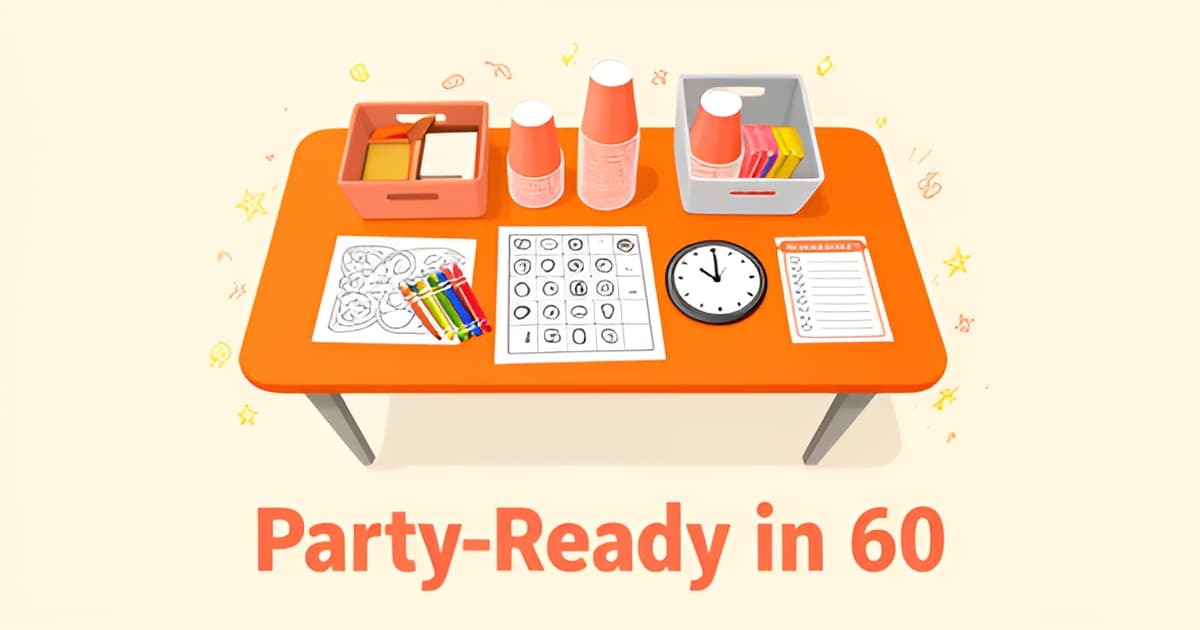
How to plan a class party?
Key Facts
- The single biggest predictor of a smooth class party is a 3–4 week planning runway, according to SignUp.com.
- Most experts recommend 2–3 rotating activity stations of about 10 minutes each for a 45-to-60-minute party.
- The ideal volunteer ratio is one adult per 6–8 students, about 3–4 helpers for a class of 25, per SignUpGenius.
- Typical class party budgets run $30–$75, with a suggested $3–$5 per-family share, per classroom planning guides.
- An unplanned party drifts into unstructured chaos within about 10 minutes, experts warn.
- Serve cake before the high-energy game: sweets can crash a class within about 30 minutes, experienced planners caution.
- Food-free parties are increasingly common for allergy safety, kids care more about the fun than the snacks, per SignUp.com.
Why Class Parties Fall Apart (and How to Start Early Enough to Stop It)
The biggest source of party-day stress is not bad luck. It is starting too late. Research across eight planning guides confirms that the single most critical factor in a smooth class party is a 3–4 week runway, yet many parents wait until the week of the event to organize anything. This rushed timeline leaves no room for the essential first step: a conversation with the teacher. Without confirming the date, time, and school policies upfront, planners risk clashing with food allergy guidelines, decoration restrictions, or limited party slots that some schools dictate well in advance.
The typical class party runs 45 to 60 minutes, a timeframe that balances engagement with elementary attention spans. Budget-wise, families can expect to contribute $30 to $75 total, with a suggested $3 to $5 per-family share covering supplies. To keep that hour flowing smoothly, the most-endorsed structure is station-based activities. Setting up 2–3 rotating stations of approximately 10 minutes each keeps kids contained and minimizes the unstructured downtime that often derails parties. Pre-portioned supplies in individual bags and printed instruction cards for volunteers the day before are simple prep steps that dramatically reduce day-of chaos.
A critical detail often overlooked is the teacher’s allergy list. Not asking for the current class list can turn a celebration into a medical emergency, especially given that food-free parties are becoming more common in classrooms with severe allergies or strict school policies. When food is off the table, activities take center stage. Printable games, coloring pages, and bingo are the natural centerpiece of a food-free format, offering structure and fun without the allergy risk.
Printoodle’s printable templates and activity packs map directly onto this station model. A word search maker can generate customized puzzles for an independent activity station, while printable word search options provide ready-to-go entertainment that requires no setup. Bingo is explicitly recommended as a whole-class activity, and themed coloring pages can serve as both a station activity and a take-home gift. All materials are downloadable as print-ready PDFs, and reprints are free forever, making it easy to prep multiple stations or send extras home.
The most reliable parties start with a concrete timeline. Three to four weeks out, lock in the date with the teacher and confirm allergy guidelines. Two weeks out, recruit 3–5 volunteers and assign specific roles, games lead, craft helper, cleanup crew, rather than leaving it to a general "can anyone help?" request. One week out, finalize the activity lineup and print materials. On party day, arrive 20–30 minutes early to set up stations and build in a 10-minute buffer. With this structure, the party runs its full 45–60 minutes, the teacher gets to relax, and the kids leave with positive memories, not a pile of stress.
Print it. Doodle it. Done.
Ready to stop the party-day chaos? word search maker and printable word search tools let you generate customized activities in seconds. Print a batch, pre-bag them, and watch the stations run themselves.
Build the Party Around Stations, Not One Big Activity
One big group activity sounds efficient on paper, but in practice it means twenty-five kids waiting for a turn. Experienced party planners almost universally recommend the opposite approach: split the class into small groups and rotate them through stations.
According to teachers who've run dozens of these events, stations keep kids engaged while keeping them contained. They also simplify your planning, because each activity only needs to hold attention for about 10 minutes per rotation. Aim for two or three activities total, which matches the recommendation from SignUpGenius that 2–3 activities is the sweet spot for a typical 45-to-60-minute party.
The prep trick that makes stations work is simple: pre-portion everything. Classroom party guides suggest putting supplies for each activity into individual ziplock bags, one per child, so nobody waits for materials or argues over the glue stick. A kid's maximum wait time at any station should be about one minute.
Here's a station lineup that covers the full 60 minutes:
- Active game station (15 minutes): a movement game or dance-freeze round
- Craft or coloring station (15 minutes): pre-cut, pre-bagged kits
- Puzzle station (10 minutes): word searches, mazes, or bingo cards
- Snack or story station (10 minutes): swap in a read-aloud for food-free rooms
- Cleanup (5 minutes): assign specific jobs to specific kids
Printable activities deserve a special mention here because they're essentially zero-prep stations. A word search, bingo card, maze, or coloring page needs nothing but a printer and a stack of copies, and it runs itself while you manage the louder stations. You can build a custom puzzle around your party's theme in minutes with a word search maker, then print a class set from the printable word search download. Printoodle's reprints are always free, so if a station runs short you can print a fresh batch without buying anything twice.
The station model also pairs perfectly with the biggest shift in class party planning: going food-free. SignUp.com notes that food-free parties are becoming more common in classrooms with severe allergies or strict school food policies, and they cut costs significantly. As one planning guide puts it, kids care much more about the fun than the snacks. When there's no cupcake table, printable games and crafts simply become the party, and a puzzle station does the heavy lifting that snack time used to.
One planning note: schedule cleanup as part of the party itself rather than an afterthought. Parties drift into unstructured chaos within about ten minutes without a plan, so end each rotation with a signal and keep the schedule visible.
Recruit Volunteers with Specific Roles (Not 'Can Anyone Help?')
Planning a class party without a clear volunteer structure is like herding cats, everyone means well, but nothing actually gets done. Research into party planning consistently shows that vague appeals like "Can anyone help?" generate low response rates, while specific role requests get filled quickly and reliably. The data confirms a volunteer ratio of one adult per six to eight students, or roughly three to four helpers for a class of twenty-five; this ratio is the minimum needed to keep activities moving and supervision consistent. When volunteers know exactly what is expected, whether running a game station, managing the craft table, reading instruction cards, or overseeing cleanup, they show up prepared and stay engaged from start to finish.
The four roles that matter most are the games lead, who keeps the energy high and transitions smooth; the food or craft helper, who ensures supplies are pre-portioned and accessible; the instruction-card reader, who guides kids through each activity without constant teacher intervention; and the cleanup crew, who wrap up the event in five minutes or less. A critical detail that separates organized parties from chaotic ones is preparing printed instruction cards for volunteers the day before the event; this simple step keeps helpers confident and prevents the "what do I do now?" moments that derail station flow. Printoodle’s printable templates and activity packs are designed with this in mind, offering ready-to-go word searches, bingo cards, and coloring pages that can serve as independent station activities, each with clear, printed directions volunteers can reference instantly.
The most successful class parties follow a station-based model, rotating small groups through three to four short activities every ten minutes. This structure keeps kids engaged, minimizes wait time, and makes it easy for a small team of volunteers to manage multiple zones simultaneously. Printoodle’s word search maker and printable word search tools map directly onto this model, providing instant, low-prep activities that require no setup beyond printing and distributing. For classrooms navigating allergy concerns or school food policies, a food-free party format is increasingly common, and printable activities become the central entertainment, replacing snacks with take-home pencils, bookmarks, or themed coloring pages.
Recruiting volunteers with defined roles transforms a party from a free-for-all into a smooth, enjoyable experience for everyone. When each person has a clear job, the teacher can focus on connecting with families rather than managing the event, and the kids benefit from structured fun that feels special but not overwhelming. Print it. Doodle it. Done.
Your 60-Minute Party Schedule and Day-Of Checklist
Parties run 45 minutes to an hour in most classrooms, and a party without a plan drifts into unstructured time within about ten minutes. That's why veteran party planners sketch the whole hour in advance, minute by minute, before anyone brings in the juice boxes.
Here's a 60-minute run-of-show that holds up in a real classroom:
- Arrival and free time (10 min): Kids trickle in from specials or recess, so give them a low-key landing activity like a printable word search at their desks while you count heads.
- Active game (15 min): Burn the wiggles first with a whole-class game that keeps everyone playing at once, since waiting kids cause problems.
- Snack or quiet activity (15 min): If you're serving treats, this is the slot, and the timing matters (more on that below).
- Craft or coloring station (15 min): A calm wind-down, ideally with pre-bagged supplies so each kid gets a ready kit.
- Cleanup with assigned kid jobs (5 min): Build cleanup into the party itself and assign specific jobs to specific kids. It ends the hour on structure instead of chaos.
Two timing rules make or break this schedule. First, arrive 20 to 30 minutes early. Party day always throws surprises at you, and a 10-minute buffer absorbs most of them; showing up late cuts the party short minute for minute. Second, watch the sugar clock. If you serve cake or cupcakes, plan the high-energy game before the treat, not after, because one experienced planner warns that sweets can crash a class within about thirty minutes. Serving snacks near the end, followed by the quiet craft and cleanup, keeps the crash contained.
The other rule: always have one backup activity in your back pocket. It's never a bad thing to over plan, and a simple game like dance-freeze takes zero supplies and can be skipped entirely if time runs short. When an activity flops or finishes early, you'll be glad it's there.
Personalized printables earn their keep in the last ten minutes. A trick worth stealing from experienced room parents: print a themed coloring page for each child, have kids decorate it during the craft slot, then staple it to their named take-home bag. If you're short on station ideas, a word search maker lets you build a puzzle from your own party theme in seconds, and Printoodle saves everything in a library so reprints are always free if a page gets torn or a second kid wants a copy.
Print it, set your timer, and run the room.
Frequently Asked Questions
When should I start planning a class party to avoid last-minute stress?
How do I handle food allergies and school policies for the party?
What is the best structure for keeping kids engaged during the party?
How many volunteers will I need and what should their roles be?
What should the party schedule look like hour-by-hour?
Can I use printable activities instead of food or expensive crafts?
The Party Plan That Runs Itself
Learning how to plan a class party comes down to a few proven moves: start 3–4 weeks out, confirm the date and allergy rules with the teacher first, recruit 3–5 volunteers with specific roles, and run the hour as 2–3 rotating stations of about 10 minutes each. Pre-portion supplies, print instruction cards the day before, arrive 20–30 minutes early, and build cleanup into the schedule itself. Whether your room goes food-free or not, printable activities are the lowest-effort, highest-reward station you can add, a word search, bingo set, or themed coloring page needs nothing but a printer. Printoodle's word search maker lets you build a puzzle around your party theme in seconds, and the printable word search library delivers class sets as print-ready PDFs with free reprints forever. Your next step is simple: message the teacher this week, sketch your 60-minute run-of-show, and print your stations. Print it. Doodle it. Done.