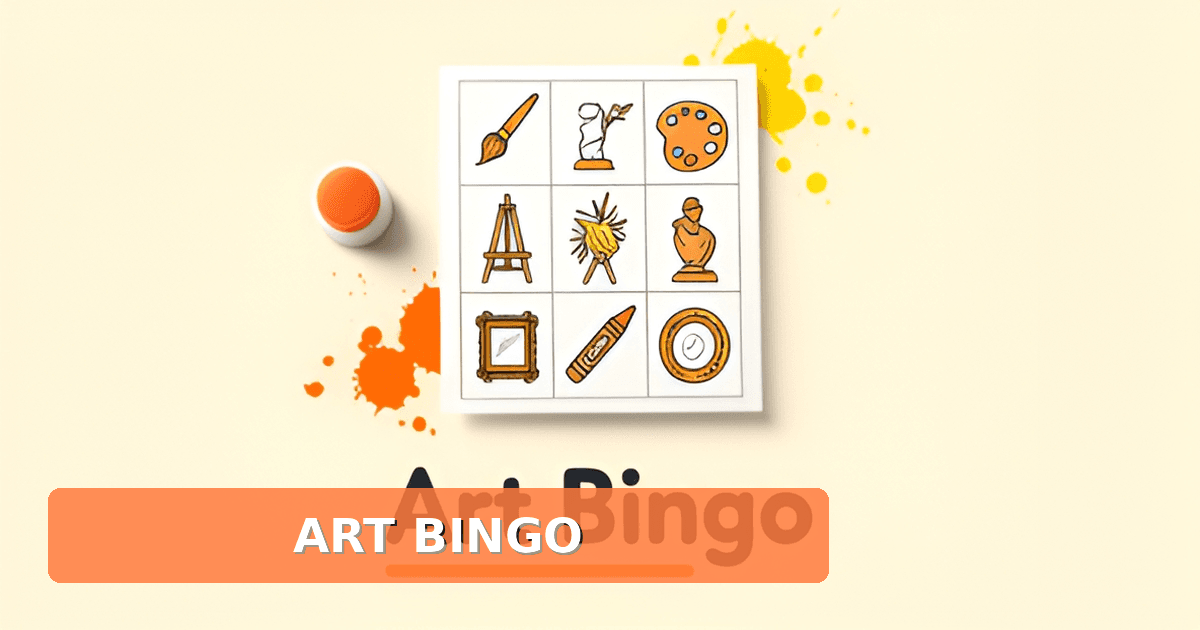
How to play art bingo?
Key Facts
- A TeachersPayTeachers search for art bingo returns 13,034 results, priced $2.00–$19.95 with ratings typically between 4.67 and 5.0 according to the marketplace.
- A popular Etsy art bingo set offers 30 unique cards and 36 calling images for $1.99, earning a 4.8/5 rating from 40 buyers per the listing.
- A 5x5 bingo card can produce over 15 sextillion unique combinations, while a 3x3 card yields only 362,880 according to card math.
- Art educator Cassidy Reinken built 30 custom classroom cards from a bank of 48 famous artworks after a commercial game proved out of budget per The Art of Education.
- Pop up Art School, which runs over 50 workshops a year, recommends 20 to 30 minutes of play to give everyone plenty of chances to win per their workshop blog.
- A false BINGO claim disqualifies the player from that round, keeping the game honest per IUP's classroom bingo guide.
- The Black Art Bingo Library Edition features 45+ artists across three themed categories per the art library blog.
Why Art Bingo Works (and Why Ready-Made Sets Fall Short)
You've decided to play art bingo, so you search for a set... and hit a wall. The classroom set covers Monet and Haring, but your party needs shapes and colors for six-year-olds. The vocabulary deck is perfect, except it costs more than your entire activity budget. This is the core problem with learning how to play art bingo: the game itself is universal, but no two groups need the same cards.
The demand is easy to see. A search for "art bingo" on TeachersPayTeachers returns 13,034 results, with products spanning PreK through adult education, priced between $2.00 and $19.95 and typically rated 4.67 to 5.0 out of 5. Ready-made printable sets sell well on Etsy too: one popular listing offers 30 unique cards and 36 calling card images for $1.99, with a 4.8/5 rating from 40 buyers. People clearly love this game.
So why do so many educators and hosts end up making their own cards? Because a fixed set is a fixed set. If your students haven't studied the artists in the deck, or your party theme doesn't match the images, the commercial product can't flex. Art educator Cassidy Reinken ran into exactly this: a commercial art history game was "out of my budget," so she built a blank template in Excel and an image bank of 48 famous artworks to produce 30 custom classroom cards. Her takeaway: once the template existed, she could create a variety of art-themed bingo games on demand.
That DIY tradition solves the fit problem but creates a labor problem. Building 30 unique cards by hand in a spreadsheet takes hours, and the card math explains why you can't just print one card 30 times: a 5x5 grid can produce over 15 sextillion unique combinations, so every card should differ. Most classroom sets ship 30 to 40 boards for a reason.
The modern shortcut is to let a tool do the randomizing. With a bingo card generator like Printoodle's, you supply your own words or images and get a print-ready PDF of unique, randomized cards in seconds, with reprints free forever. The same approach powers themed variants like reading bingo, so one workflow covers every subject you teach or celebrate.
A few practical notes before you build your set:
- Include extra images in your calling pool so games last longer; Reinken used 48 images for her 30-card set.
- Plan for 20 to 30 minutes of play to give everyone plenty of chances to win.
- Print in color on letter-size paper, one or two cards per page, and laminate if you want to reuse the set.
Whether you're filling paint-drying time with teenagers or running a family game night, custom cards are what make art bingo actually fit your room. Print it. Doodle it. Done.
How to Play Art Bingo: The Core Rules
The beauty of art bingo is that you already know how to play it. The mechanics are classic bingo; only the content changes. Whether your cards feature Monet and Klee, art vocabulary, or simple images for kindergarteners, the game runs the same way it has for generations.
Learning how to play art bingo takes about two minutes. First, distribute one card to each player. Second, the caller either shows an image of an artwork or calls out the artist or painting name. As one teacher's rules put it, you can "show students the images of the artwork or call out the artist or painting name to increase the challenge" (per TeachersPayTeachers). Third, players mark the matching square on their cards. The first player to complete a full row, column, or diagonal calls BINGO and wins.
One rule matters more than the rest: a false BINGO disqualifies the player from that round. Indiana University of Pennsylvania's teaching guide (bingo instructions for the classroom) spells this out, and it keeps the game honest. It also means you should double-check your marked squares before shouting.
Here's the full loop at a glance:
- Distribute one unique card per player, plus markers (tokens, buttons, or crayons work).
- The caller shows an artwork image or announces the artist or painting name.
- Players cover the matching square on their cards.
- First completed row, column, or diagonal wins the round.
- A false BINGO claim knocks that player out of the round.
Plan for 20 to 30 minutes of play time, which Pop up Art School recommends "to allow for plenty of chances to win" (their workshop blog notes the remote version also runs about 30 minutes). To stretch a game, include extra images in your calling pool. Art educator Cassidy Reinken kept a bank of 48 different artwork images to feed her classroom set (The Art of Education).
Prizes keep energy high, and they don't need to be elaborate. Pop up Art School hands out lollipops and deploys the game during paint-drying downtime: "There's nothing worse than watching paint dry, in awkward silence, especially with a room of awkward teenagers." That makes art bingo a natural filler for teen workshops, end-of-year classes, and early finishers.
If you're building your own set, a bingo card generator like Printoodle's does the shuffling for you, randomizing your chosen artworks or terms into unique, print-ready cards. The same approach works for other subjects too; try a reading bingo set for your next library night. Print it. Doodle it. Done.
Three Ways to Play: Art History, Vocabulary, and Picture Bingo
The beauty of art bingo is that the rules never change, only the content on the cards does. Once you know how to play art bingo in one format, you can run all three of the documented versions with the same calling routine, and each format doubles as a difficulty dial for your group.
Art history bingo is the classic version. Cards feature famous paintings, and Pop up Art School's set spans works by Monet, Klee, Hockney, and Haring, covering "old masters to contemporary artists" according to their workshop blog. The caller shows an image or calls out the artist's name, and players mark the matching square. It's a proven way to help students recognize famous paintings and the names behind them.
Vocabulary bingo raises the ceiling for older students. Instead of images, the squares hold art terms drawn from the Elements and Principles of Art, media, and core concepts. One popular classroom set includes 50 vocabulary words across 35 letter-size cards, and it's flexible enough that you can update the word list for each new topic, which is exactly what the IUP teaching guide recommends for reuse.
Image-based bingo is built for K–2. Cards use pictures instead of words, covering primary colors, shapes, types of line, landscape, seascape, and portrait. As one teacher puts it, "You play it the same way you play" regular bingo, so even non-readers can join without any adaptation.
Here's where the difficulty scaling comes in, and it works across all three formats:
- Show the image: easiest mode, ideal for K–2 and any group meeting the art for the first time.
- Call the artist or painting name: players must recall the work from memory, which "increases the challenge."
- Ask a question-style clue: "Who painted the water lilies?" works well for review sessions before a test.
If you're building your own set rather than buying one, Printoodle's bingo card generator handles the randomization for you, which saves the spreadsheet work that art educator Cassidy Reinken put into her DIY set of 30 cards from a bank of 48 artwork images. Her advice still holds: include extra images in your pool so games last longer.
Want a companion activity for literacy-focused classrooms? Pair this with a reading bingo set and you've got a themed bingo station that works for early finishers, substitute plans, and end-of-year wind-downs alike.
Making Your Own Art Bingo Cards in Minutes
Hand-building a bingo set in a spreadsheet works, but it's slow. Art educator Cassidy Reinken built her own classroom set in Excel because a commercial game was out of her budget, assembling an image bank of 48 famous artworks to produce 30 unique cards. It's a smart approach, and it's exactly the kind of work a dedicated tool can compress into a few minutes.
If you'd rather skip the spreadsheet, a bingo card generator like Printoodle's does the fiddly parts for you: you supply your list of artworks, artists, or art terms, and it randomizes them into unique, print-ready cards. Here's how to set it up well.
Pick the right grid size for your players. A 3x3 grid suits young kids who are still matching images, while a 5x5 grid gives older students and classrooms a longer, more challenging game. The math matters here too: a 3x3 card has only 362,880 possible arrangements, while a 5x5 card can produce quintillions of unique combinations, so bigger grids mean far less chance of duplicate winners.
Load extra items into your pool. This is Reinken's best tip: "Be sure to include extra images so the games last a little longer." If your grid holds 24 squares (5x5 with a free center), feed the generator 40 to 48 images or terms. Every card draws from a bigger pool, so no two rounds play out the same way and games stretch toward the recommended 20 to 30 minutes of play time.
Print enough unique cards for your group. Standard sets run 30 cards, which covers most classrooms and parties. The generator randomizes each card automatically, so printing 30 takes no more effort than printing 5. If you're playing remotely, everyone just prints their own card at home and you call the game over video conferencing; Pop up Art School runs exactly this format and it takes about 30 minutes end to end.
A few printing tips make the set last:
- Print in color so young players can match images accurately, and set the output to 1 or 2 cards per page on letter paper (or flip the A4 toggle if you're printing outside the US).
- Laminate the cards if you'll reuse them, then use dry-erase markers or tokens instead of daubers. Classroom guidance from IUP's teaching excellence center recommends lamination specifically for repeat use.
- Print a separate calling sheet with the full image or term list so the caller can track what's been played.
- Save your card set in your library so you can reprint for free whenever a new group wants to play.
One more thing worth knowing: once you've got the hang of it, the same setup works for any theme. Swap the art images for sight words or book characters and you've got a reading bingo set for the same group. Print it. Doodle it. Done.
Where and When to Play: Classrooms, Parties, and Game Nights
Once you know how to play art bingo, the real question becomes where to slot it into your week. The answer: almost anywhere you have 20 to 30 minutes and a group that needs something fun and focused. That's the play window Pop up Art School recommends to give everyone plenty of chances to win.
In the art room, teachers reach for it in very specific moments. Pop up Art School, which runs over 50 workshops a year, uses it as a filler during paint-drying downtime: "There's nothing worse than watching paint dry, in awkward silence, especially with a room of awkward teenagers." A quick round with lollipops as prizes turns dead time into a shared experience.
- End-of-year wind-downs, when regular lessons lose steam but you still want something purposeful
- Substitute teacher plans, since the rules need zero explanation and run themselves
- Early finisher stations for students who wrap up projects ahead of the class
- Library programs and community art events looking for a low-prep group activity
Beyond school, art bingo works at birthday parties and family game nights. One popular Etsy set bundles 30 unique cards with 36 calling images, and buyers rate it 4.8 out of 5, which tells you it holds up in living rooms as well as classrooms. You can even play remotely: Pop up Art School reports successful rounds over video conferencing with everyone printing their own cards.
Themed sets are where art bingo gets really interesting. The Black Art Bingo Library Edition features 45+ artists across three themed categories, showing how a curated roster can celebrate a specific tradition or era. The same thinking applies to any theme you choose, and if you want a reading twist for library night, Printoodle's reading bingo tool works the same way. For custom art cards, the bingo card generator turns your own artist list into unique, print-ready boards in seconds, which beats the old spreadsheet method by a mile.
Print it. Doodle it. Done.
Frequently Asked Questions
How do you play art bingo?
What are the different versions of art bingo?
How long does a game of art bingo take?
Can I make my own art bingo cards instead of buying a set?
Can you play art bingo remotely or virtually?
What size grid should I use for art bingo cards?
How should I print and care for my art bingo cards?
Your First Game Is Twenty Minutes Away
That's really all there is to it: now you know how to play art bingo, you can see why it's become such a classroom and party staple. The rules take two minutes to learn, the game runs 20 to 30 minutes, and the same mechanics carry you from kindergarten picture matching all the way to high-school art history review. The only real decision left is what goes on your cards, famous paintings, vocabulary words, or simple images, and whether you build them by hand or let a bingo card generator randomize your list into unique, print-ready boards in seconds. Remember the practitioner tips: load extra images into your calling pool so games last longer, print in color, and laminate if you'll reuse the set. Your next step is simple: pick your theme, gather 40 or so artworks or terms, and generate your first set today. And once art bingo is a hit, a reading bingo set is one theme swap away. Print it. Doodle it. Done.