How to play bingo games for kids?
Key Facts
- Bingo's core mechanic is simple enough for a five-year-old: players match randomly drawn numbers on a printed card, according to industry research.
- The global online bingo market reached $1.8 billion in 2024 and is projected to hit $2.7 billion by 2030, growing at a 6.6% CAGR.
- 90-ball bingo dominates the market with over 44% segment share in 2024, per Grand View Research.
- 80-ball bingo is the fastest-growing format at roughly 8% CAGR through 2030, driven by faster game cycles and customizable card layouts, market analysts report.
- Themed bingo variants, from holiday specials to fantasy tie-ins, are a proven way to boost player engagement, research shows.
- Mobile platforms now account for 54.2% of online bingo revenue in 2025, up from about 41% in 2020, according to Dataintelo.
- A simplified 3x3 or 4x4 picture grid keeps bingo's matching mechanic intact for kids while fitting shorter attention spans, with rounds of 10 minutes or less recommended.
Bingo Basics for a New Generation
Some games survive a century without changing much, and bingo is one of them. Before you can run a great round for kids, though, it helps to understand what the game actually is at its core.
According to market research on the game, "Players in the well-liked game of bingo must match randomly chosen numbers on a card already in print." That single line covers everything essential: a caller draws, players scan their cards, and the first to complete a pattern wins. Strip away the caller's patter and the prize table, and you're left with a matching game a five-year-old can grasp in under a minute.
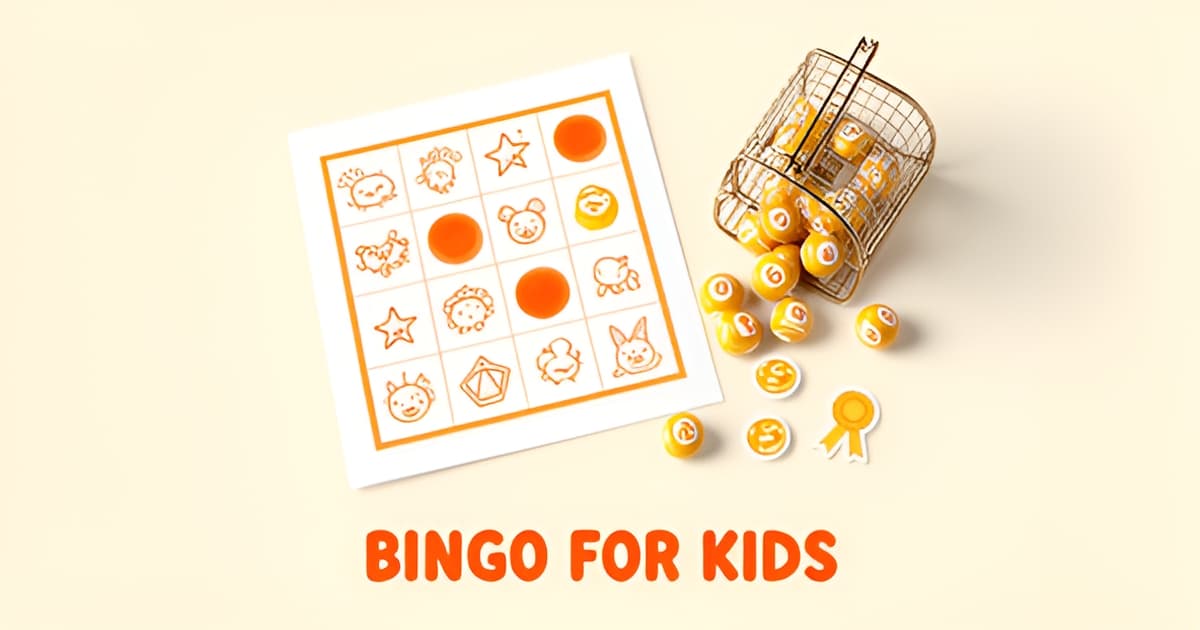
The classic formats are 75-ball and 90-ball bingo, the two traditional structures most people grew up with, as industry analysis notes. For children, you don't need either format in its full form. A simplified 3x3 or 4x4 grid with pictures, animals, or sight words keeps the matching mechanic intact while fitting shorter attention spans.
Bingo's appeal comes from what researchers describe as engaged yet laid-back gameplay that suits both casual and experienced players. That balance is exactly what young children need. There's enough suspense in every call to hold attention, but no pressure to move fast, strategize, or read fluently.
The game also scales beautifully. A three-year-old matches pictures; a seven-year-old tracks two-digit numbers; a classroom of ten-year-olds races for a full card. And when the research on faster formats shows that shorter game cycles are driving growth in bingo's fastest-expanding variant, it's a reasonable inference that quick rounds suit kids too. Shorter games mean everyone gets a turn to win before interest wanders.
Themed variants deserve a mention as well. The same market research highlights holiday specials and fantasy themes as engagement drivers, a finding that translates directly to the playroom: a dinosaur or birthday-themed card set beats a generic one every time.
Here's where the "card already in print" part of that definition becomes a genuine feature. A printed bingo card is tactile, shareable, and completely screen-free. You print a set, hand out markers (dried beans and buttons work fine), and the game runs itself.
Printoodle's bingo generator fits this model naturally: you create themed, print-ready cards in seconds, and reprints are always free, so a classroom of thirty or a birthday party of eight costs you nothing extra to run again. The same logic applies across other printable activities that pair well with a bingo session:
- one minute games for kids for quick energy-burners between rounds
- mazes for kids to keep early finishers busy while others finish their cards
- kids sudoku printable puzzles for kids who want a quieter challenge
That's the quiet power of learning how to play bingo games for kids: the mechanic is simple enough to explain once, and flexible enough to reuse for years. Print the cards, pick a caller, and you're ready.
Building the Kid-Friendly Game
Setting up a bingo round for kids takes about five minutes once you know the rhythm: make the cards, hand them out, call fast, finish before attention drifts. Bingo's core mechanic is simple enough for a four-year-old: players match randomly drawn numbers on a printed card, as the game is commonly defined in industry descriptions of bingo. Everything else is pacing.
Generate and print the cards. With Printoodle, pick a theme your kids actually care about (dinosaurs, a birthday, holiday specials), generate a set of print-ready bingo cards, and download the PDF. Letter size is the default, with an A4 toggle if that's what your printer uses. Print one card per player, plus a spare or two, because someone will spill juice on theirs. Reprints are free forever, so damaged cards cost you nothing.
Distribute and explain. Give each child a card and a handful of small markers: buttons, cereal pieces, or torn paper scraps work fine. Show them the win condition before you start. For young kids, a single line across, down, or diagonal is the right goal. Older groups can play for a full card, or two quick lines in a row.
Run the calling. Cut a copy of the call list into slips, drop them in a bowl, and draw one at a time. Call the number clearly, then hold up the slip so early readers can match it themselves. Kids stay far more engaged when they can check their own cards instead of waiting for an adult to confirm every square.
Keep the rounds short. This is one place where adult-market data actually translates: analysts note that 80-ball bingo is the fastest-growing format precisely because of its faster game cycles and customizable card layouts. That's an inference for kids, not a finding, but it tracks with what any parent knows. Children's attention spans run short, so aim for:
- Rounds of 10 minutes or less, then a break or a new theme
- Smaller grids (4x4 or 5x5) so wins come quickly
- A fresh winner every round, with prizes small and plentiful
- A caller who moves briskly; slow calling is where kids wander off
Themed cards help too. Research on bingo engagement shows that themed variants, from holiday specials to fantasy tie-ins, are a proven way to boost player interest, and kids respond to a dinosaur card far more enthusiastically than a plain grid of numbers.
If you want more quick-hit activities to pair with bingo, Printoodle's one minute games for kids work well as fillers between rounds, and a mazes for kids printout or a kids sudoku printable keeps early finishers busy while the round wraps up. Print it. Doodle it. Done.
Prizes, Themes, and Repeat Play
Bingo’s basic mechanic is simple: players match randomly chosen numbers on a card already in print. This familiar format makes it an ideal activity for children, especially when paired with age-appropriate prize ideas and themed card options that turn a simple game into a memorable activity. According to industry research, themed bingo variants, including holiday specials and fantasy-based formats, are used to boost engagement, a principle that translates well to keeping kids interested in printable versions. A recent study found that 90-ball bingo holds the largest segment share, and faster game cycles are noted as a growing mode, suggesting that shorter rounds suit younger attention spans.
Printoodle’s free reprint feature is what makes multi-round bingo practical for parents and teachers. Once a set of cards is generated, they can be printed again at no extra cost, allowing the game to be reset for future events or repeated rounds during a single session. This is especially useful for classroom settings where a teacher might want to run the activity multiple times across different groups, or for birthday parties where the game is played in stages. The ability to generate fresh cards instantly also means themes can be swapped out quickly, dinosaurs for one round, space for the next, keeping the experience novel without extra planning.
Age-appropriate prize ideas range from small toys and stickers to themed activity packs. For younger children, small erasers, temporary tattoos, or coloring sheets make excellent rewards. Older kids might prefer small gadgets, bookmarks, or printoodle-generated custom coupons for a special activity. The key is to keep prizes tangible and exciting, but not so valuable that they overshadow the fun of the game itself. Printoodle’s library of themed bingo cards supports this by offering options tailored to specific interests, from underwater creatures to favorite storybook characters.
Integrating bingo into birthday parties or classroom settings is straightforward with printable cards. At a birthday party, the game can serve as a structured activity during downtime or as a party favor activity where each child takes home their own card and a small prize. In a classroom, bingo can reinforce vocabulary, math facts, or holiday themes. Teachers can generate cards from their own lesson material, making the game both fun and educational. To get started, one minute games for kids offers quick setup ideas, while mazes for kids and kids sudoku printable provide additional activities for mixed-age groups. Print it. Doodle it. Done.
Frequently Asked Questions
How do you explain bingo to a young child?
What age is bingo appropriate for?
How long should a bingo round last for kids?
Do I need real bingo cards and a cage to play with kids?
What prizes work best for kids' bingo?
How do I keep kids interested round after round?
Bingo Basics for a New Generation
From matching pictures on a 3x3 grid to racing for a full card with older kids, bingo proves that the simplest mechanics often have the most staying power. The game's enduring appeal lies in its unique balance of engaged focus and relaxed pacing, enough suspense to hold attention, but no pressure to perform. Printoodle makes it easy to tap into that appeal: generate themed, print-ready cards in seconds, swap themes between rounds at no extra cost, and rely on free reprints to run the activity again and again. By keeping rounds short, using smaller grids, and pairing the game with complementary printables like mazes or sudoku, you create a complete, screen-free experience that grows with the children playing. Ready to start your own round? Print it. Doodle it. Done.