How to play Halloween bingo?
Key Facts
- Halloween bingo's winning rule is nearly universal: first player to get five in a row, horizontal, vertical, or diagonal, wins per Suncatcher Studio.
- Word-based Halloween bingo cards contain 25 words each, randomly drawn from a 75-word Halloween vocabulary list according to BingoMaker.
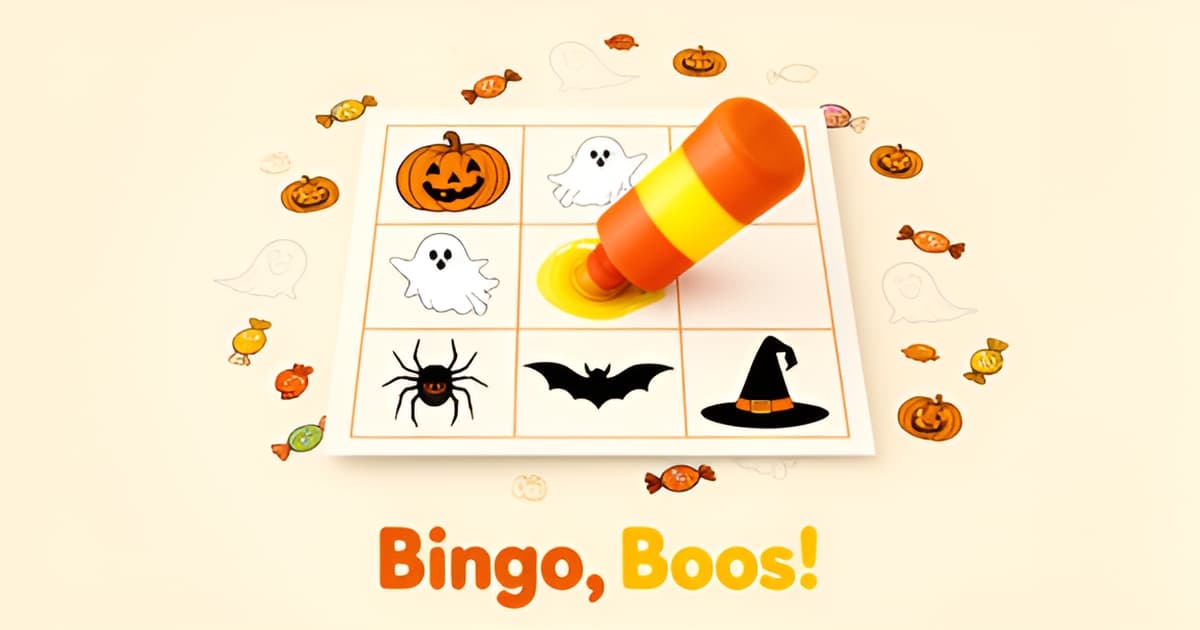
- Preschoolers play a simplified 9-square version where just 3-in-a-row wins, using easier words like pumpkin and candy corn per Yahoo/Parade.
- For classes of 30 or more, putting 2-3 players on each card as teammates keeps everyone in the game recommends Kimberly McLeod at The Best Ideas for Kids.
- Halloween bingo builds word recognition, listening, and turn-taking skills, earning it a spot in lesson plans, not just parties notes Tes.com.
- The Best Ideas for Kids documents 8 marker options: 4 candy choices and 4 non-candy picks like googly eyes and plastic spiders per their printable guide.
- One caution: players may eat candy corn markers before anyone wins, so non-candy options are safer for classrooms warns SignUp.com.
Why Halloween Bingo Is the Easiest Party Game You'll Run All Season
The classroom party clock is ticking, the supply closet is empty, and you need an activity that actually works, fast. Halloween bingo checks every box: it requires no special equipment, scales from a handful of kids to a full classroom, and quietly builds word recognition, listening, and turn-taking skills. Because the rules follow a universal five-step loop, print a unique card per player, draw from a themed container, mark matches, complete a line, call "Bingo!", you can set up a complete game in minutes rather than hours. Tes.com confirms the educational payoff, noting the game helps children practice word recognition, listening, and turn-taking using Halloween vocabulary. SignUp.com adds that bingo needs no special Bingo equipment (cage or caller) and works perfectly as a filler activity at any gathering. The fastest way to get a unique card for every player is Printoodle's halloween bingo cards generator, which produces print-ready PDFs in seconds. halloween maze and halloween trivia make great companion activities if you want to extend the party fun.
Picture-based cards work best for mixed-age groups, with matching words beneath each image so younger children can play alongside older kids. Suncatcher Studio notes their cards are picture-based with matching words, making the game easy to play for children of different ages. For preschoolers, scale down to a 9-square card with 3-in-a-row to win, Yahoo/Parade lists this as a common preschool variant using fewer squares and simpler vocabulary. Older children and adults often prefer spookier word lists featuring vampires, zombies, and witches rather than basic shapes. BingoMaker offers number-based and word-based cards, with word cards called in letter-word format like "I, Carved Jack-O-Lantern!" to keep the pace moving.
A few practical touches turn a simple game into a memorable party moment. Laminate the cards or print on cardstock for reuse year after year, a tip SignUp.com recommends for classroom budgets. Let the first winner become the next caller so the game keeps rolling, and don't stop at the first bingo, keep playing for multiple lines or a full-card win. Thriving Home Blog suggests having kids switch cards between rounds so everyone gets a fresh challenge. For markers, candy corn and themed erasers work, but The Best Ideas for Kids warns players may eat candy markers before someone wins, so non-candy options like googly eyes, pom poms, or plastic spiders are safer for classrooms. Prizes can be Halloween stickers, temporary tattoos, glow sticks, or small toys, keeping the surprise in small paper bags adds to the fun.
The best part? You don't need to invent rules or hunt for printables. Printoodle's generator handles the card creation so you can focus on the celebration. Print it. Doodle it. Done.
How to Play Halloween Bingo: The 5 Rules That Never Change
Once your cards are printed, the actual game takes about two minutes to explain. Across eight independent sources, the rules barely change, so you can teach them once and reuse them every October. Here's the loop, step by step, whether you're running a classroom party or a living room full of sugar-fueled ghosts.
Rule 1: One unique card per player. Every player needs their own card, and each card in the set must be different. Word-based cards typically hold 25 words drawn from a 75-word Halloween list, according to BingoMaker's setup guide. If you're generating your own set, Printoodle's halloween bingo cards tool produces a fresh batch of unique, print-ready cards in seconds. For big groups, some teachers let two or three players share a card.
Rule 2: Cut the calling cards and pick a container. Cut out the calling cards and drop them into a bowl, a paper bag, or, if you're committing to the theme, a plastic witch's cauldron. No fancy equipment required. As SignUp.com's printable guide notes, the game needs no cage or mechanical caller.
Rule 3: Draw and announce one item at a time. Pull a single card, say it clearly, and set it aside in a visible pile so you can verify winners later. With pre-readers, hold the picture up while you say the word. If you printed in black and white, The Best Ideas for Kids recommends adding verbal clues for similar images, like distinguishing between two haunted houses.
Rule 4: Mark matches with something fun. Players cover each matching square with a marker. The documented options are half the fun:
- Candy corn or mini pumpkin candies (expect some to disappear mid-game)
- Googly eyes, pom poms, or buttons
- Plastic spiders and mini erasers for candy-free classrooms
Rule 5: Five in a row wins. The first player to complete five squares in a row, horizontally, vertically, or diagonally, calls Bingo. Or, if you prefer the seasonal version Bingo Card Creator suggests, they shout "Boo!" Either call works; just pick one before the game starts.
Before you hand over the prize, verify the winning card against the drawn calling cards. This is the step everyone skips and later regrets. It takes ten seconds and keeps the game honest.
One last tip from Thriving Home Blog: don't stop at the first bingo. Keep drawing for second and third place, and let the winner call the next round. Pair the game with a halloween maze for early finishers or a halloween trivia round for older kids, and you've got a full party planned on one printer's worth of paper.
Matching the Game to Your Crowd: Age Adaptations and Winning Patterns
Finding the right Halloween bingo setup starts with matching the game to your players. For mixed-age groups, picture-based cards with matching words remove the reading barrier and let younger children join the fun alongside older siblings or adults, a format offered by generators like Suncatcher Studio. Younger kids thrive on gentler vocabulary, words like pumpkin, black cat, and candy corn, while older players often prefer spookier terms like vampire, zombie, and witch, which BingoMaker documents as a standard card option. For the youngest participants, a 9-square, 3-in-a-row preschool variant keeps the pace quick and the frustration low, as noted in Yahoo and Parade coverage of free printable sources. Once a line is completed, the replay-value layer kicks in: alternative winning patterns like Four Corners, X Marks the Spot, Picture Frame, and Blackout keep rounds fresh, and an optional rule where each round’s winner picks the next pattern adds a collaborative twist that SignUp.com highlights as a favorite among party hosts. For kids who finish early, a Halloween maze serves as a perfect companion activity to keep them engaged without disrupting the main game. Print your own customized cards at Printoodle and get the party started.
Pro Tips from People Who've Run This Game a Hundred Times
Anyone can deal cards and call pictures, but the difference between a chaotic Halloween party and a smooth one usually comes down to a handful of facilitation habits. Here's what people who've run this game dozens of times want you to know before you print your first set of halloween bingo cards.
Protect your cards for next year. Tara McAdams at SignUp.com recommends laminating your cards or printing on cardstock so you can reuse them year after year, pairing laminated sets with dry-erase markers. Since Printoodle keeps every generated set in your library with free reprints, a laminated set becomes a permanent fixture of your October party box.
Don't stop at the first bingo. The Thriving Home Blog team, who've hosted this for kids of every age, urges you to keep playing after the first winner so several kids get prizes, and to let the winner become the next caller. Handing off the caller role keeps energy up and gives shy kids a low-pressure moment in the spotlight.
Split big classes. If you're running the game for a classroom of 30 or more, Kimberly McLeod at The Best Ideas for Kids suggests putting 2 to 3 players on each card as teammates. Her printable set includes 30 unique cards plus a full calling sheet, so most classes can pair up without anyone sitting out.
A few more field-tested pointers:
- Give extra verbal clues when your black-and-white prints contain similar images, like two haunted houses or multiple bats, so players mark the right square.
- Offer non-candy prizes in classrooms, such as stickers, pencils, and glow sticks, to accommodate food allergies.
- Keep prizes hidden in small paper bags so the surprise lasts, and have players switch cards between rounds.
One hazard deserves its own warning: candy markers. Candy corn and pumpkin candies make charming markers, but as McAdams notes, players may eat their markers before anyone wins. If you go the candy route, expect a few bare squares by round three, and maybe stash a backup bowl.
If you want companion activities for the same party, a halloween maze keeps early finishers busy while a round of halloween trivia gives older kids something spookier to sink their teeth into. Print it, doodle it, done.
Beyond Bingo: Building a Full Halloween Activity Hour
Once you know how to play Halloween bingo, the natural next question is how to make it the centerpiece of a full party or classroom hour rather than a five-minute filler. Bingo actually works best as the anchor activity in a rotation, and the documented variants give you plenty of ways to stretch it.
Story bingo, for example, turns the caller into a narrator who weaves calling words into a spooky tale, and it's described by Bingo Card Creator as an excellent listening-skills exercise for younger children. Costume bingo has players hunt for items they can spot on other guests' outfits, which makes it a built-in icebreaker for parties. And if your Halloween plans involve a movie night, movie bingo cards keyed to on-screen moments keep everyone watching closely instead of reaching for their phones.
When bingo wraps, keep the momentum going with adjacent activities. A halloween trivia round works well for older kids and adults once the picture-card crowd loses interest, and a halloween maze gives younger kids something quiet to settle into. For classrooms, one Tes.com classroom resource frames the game as practice in word recognition, listening, and turn-taking, so it earns its place in a lesson plan, not just a party.
Your supplies checklist stays short:
- Markers: candy corn, googly eyes, pom poms, buttons, or plastic spiders (The Best Ideas for Kids documents eight options, split between candy and non-candy)
- Prizes: stickers, glow sticks, pencils, and temporary tattoos, kept in small surprise bags
- A container for calling cards: a bowl, a spooky bag, or a "witch's cauldron"
- Cardstock or a laminator if you want the set to survive next October
One practical caution from SignUp.com: candy markers sometimes get eaten before anyone wins, so keep the edible ones out of reach of the youngest players and offer non-candy prizes in classrooms to accommodate food allergies. And don't stop at the first bingo. Facilitators consistently recommend playing through for multiple winners and letting each round's winner call the next one.
That's the whole plan. Generate your halloween bingo cards on Printoodle, print them out, and hand out the markers. Print it. Doodle it. Done. And since reprints are free forever, the same set can come back out of your library every October, no re-buying required.
Frequently Asked Questions
What are the basic rules for how to play Halloween bingo?
Do I need special bingo equipment like a cage or caller machine?
How do you play Halloween bingo with preschoolers or kids who can't read yet?
How can I make Halloween bingo work for a big classroom of 30+ kids?
Should I use candy as bingo markers for Halloween bingo?
How do I keep Halloween bingo fun for more than one round?
Your Halloween Party Plan, Ready in Minutes
That's really all there is to it: one unique card per player, a cauldron of calling cards, fun markers, and five in a row to win. Whether you're running a preschool crowd with a 9-square, 3-in-a-row variant or a classroom of 30 playing in teams of two, the rules never change, and the payoff is real, building word recognition, listening, and turn-taking skills while everyone just thinks they're having fun. Laminate your set and it becomes part of your October party box for years to come. Ready to play? Head to Printoodle, generate your halloween bingo cards in seconds, and pair them with a halloween maze for early finishers or a halloween trivia round for older kids. Since reprints are free forever, the same set comes back out of your library every October. Print it. Doodle it. Done.