How to play reading bingo?
Key Facts
- Reading bingo turns skill practice into play, letting students practice sight words in a way they think is a game according to Christine Reeve
- A Teachers Pay Teachers search returns 270+ literacy bingo resources, most rated 4.5 or higher, spanning PreK through 6th grade from the TPT marketplace
- Sight word bingo moves students from decoding words to recognizing them instantly, which is a key step toward reading fluency according to Twinkl
- According to Scholastic's Kids & Family Reading Report, 80 percent of kids who are frequent readers have someone in their lives who enjoys reading as reported by Scholastic
- A typical genre bingo card exposes students to roughly 25 books from the classroom library per Ms. Cotton's Corner
- Printoodle's reading bingo tool lets teachers paste their own word list and download a print-ready PDF in seconds for custom card creation
- Gameplay runs about 15–20 minutes with minimal prep, making it an easy fit for guided reading warm-ups or Fun Friday slots per Twinkl's kit
Why Reading Bingo Works When Worksheets Don't
Every teacher knows the struggle: hand a reluctant reader another worksheet and watch the shutdown happen in real time. Getting kids to willingly practice sight words or pick up a book at home takes more than repetition. It takes something that feels like play.
That's exactly why learning how to play reading bingo has become a go-to move in so many classrooms. It works like the classic game, except the cards carry reading tasks, prompts, or sight words instead of numbers, so kids practice the same skills a worksheet targets while thinking they're just playing a game. Christine Reeve, a special education expert with 30+ years of experience, puts it simply: bingo lets students practice skills in a way they think is a game.
The format's popularity backs that up. A Teachers Pay Teachers search returns more than 270 literacy bingo resources, most rated 4.5 or higher, spanning PreK through 6th grade. Teachers aren't buying into a gimmick; they're returning to something that works repeatedly.
Why it beats the worksheet for reluctant readers
Sight word bingo in particular targets the exact skill struggling readers need most: moving from slowly decoding words to recognizing them instantly, a key step toward fluency. And because everyone plays at once, there's no waiting for a turn, which removes the pressure that makes some students opt out entirely.
The motivation piece matters just as much. According to Scholastic's Kids & Family Reading Report, 80% of kids who are frequent readers have someone in their life who enjoys reading. Reading bingo builds that role-model dynamic naturally:
- Teachers play caller, modeling fluent word reading aloud with every calling card
- Students take turns as caller, practicing pronunciation with a purpose
- Cards go home for family reading nights, turning parents into reading partners
- Winners pick a book as their prize, keeping the love of reading alive after the game ends
Best of all, it's genuinely low-prep. A typical sight word bingo session runs about 15–20 minutes: print the boards, read the calling cards, mark the squares. Teachers can build custom cards from their own word lists in seconds with Printoodle's reading bingo tool or the bingo card generator, then laminate a class set once and reuse it all year. Print it, doodle it, done.
The Core Game: Sight Word Bingo Rules in 15 Minutes
Once your boards are printed, the game itself takes almost no explaining. That's the quiet genius of reading bingo: kids already know how bingo works, so every minute of the session goes toward reading practice rather than rule-teaching.
Here's the standard setup. Each student gets a 5x5 board filled with sight words from your list. If you're working with CVC word families (cat, pin, mop), teachers on Teachers Pay Teachers typically use simpler 3x3 cards instead, which keeps the word pool small and the game fast for early readers. You'll also need a set of calling cards, one word per card, shuffled into a draw pile.
Gameplay runs like this. The caller, either you or a student leader, draws a calling card and reads the word aloud. Students scan their boards, and if they find a match, they mark that square. The first player to complete a row, up, down, or diagonal, calls bingo and wins the round. According to Twinkl's kindergarten sight word bingo kit, a typical session runs 15 to 20 minutes with minimal prep, which makes it an easy fit for a guided reading warm-up or a Fun Friday slot.
For marking supplies, you have three good options:
- Counters, chips, or small blocks, which are quiet, reusable, and easy for little hands
- Dry-erase markers on laminated boards, so one set of cards lasts all year
- Velcro dots for independent matching work at a literacy center, an adaptation special education teachers use to let students practice without a caller
Laminating your boards is the move most teachers settle on. You print once, wipe clean after each round, and the same boards serve whole-class games, small groups, and student-to-student practice where one child reads the calling cards and a partner finds the words, then they switch roles. You can generate a full class set of unique boards with your own word list using Printoodle's reading bingo tool or the broader bingo card generator, then laminate and reuse.
Why does this simple game work so well for reading? Because it targets instant word recognition. Twinkl's resource notes explain that sight word bingo moves students "from decoding words to recognizing them instantly, which is a key step toward reading fluency." Every time a child hears "said" and has to find it on the board, they're practicing exactly the automatic recall that fluent reading depends on. And because everyone plays at once, there's no waiting for a turn, which special education practitioner Christine Reeve notes makes bingo a gentle way for students still learning to win and lose gracefully.
One practical tip: keep the pace brisk. A round that drags past 20 minutes loses the energy that makes the practice stick. Shuffle, call, mark, celebrate, and play again.
Build Your Cards: From Word List to Print-Ready PDF
Teachers looking to build reading bingo start by picking a theme that clicks with their students, animals, adventure, or fairy tales tend to spark the most engagement, and then choose level-appropriate words or prompts that match the group's current reading stage. Research shows that 5x5 grids work best for sight word games, while 3x3 cards suit younger learners tackling CVC word families, and the most common classroom kits include 30 unique boards plus calling cards ready for a ~15–20 minute session. The creation process involves mixing comprehension questions, common vocabulary, and fun challenges into each square, then personalizing with favorite characters or book quotes to increase relevance; once the cards are generated, printing on card stock and laminating ensures they hold up to repeated use throughout the year, and markers like counters or dry-erase dots let students track their progress without damaging the page. Printoodle’s reading bingo tool and bingo card generator fit directly into this workflow, allowing teachers to paste their own word list and download a print-ready PDF in Letter or A4 format instantly, meaning the heavy lifting of layout and design disappears in seconds. Differentiation is built in: a teacher can swap out high-frequency words for decodable CVC patterns for emerging readers, or swap in genre-based prompts like "read a book about animals" for advanced groups, and special education adaptations note that bingo’s simultaneous play format removes turn-taking pressure, making it a great introductory game for students still learning to navigate winning and losing gracefully. One of the best ways to generalize skills to the real environment is to practice them, which is why many educators send cards home for family reading nights or use them in literacy centers where students draw calling cards and match words independently. Scholastic’s prize model, letting the winner pick a new book, ties directly into the statistic that 80 percent of kids who are frequent readers have someone in their lives who enjoys reading, reinforcing the habit beyond the game board itself. Print it. Doodle it. Done.
Four Ways to Play Beyond the Basic Game
You’ve printed a stack of cards, but one set can launch several different literacy lessons. The documented classroom uses show how a single bingo grid becomes a flexible tool for skill building across different learning settings.
In a small-group setting, the teacher or a student leader reads calling cards aloud while others scan their 5x5 grids for a match. This format works well as a guided reading warm-up or an intervention activity, and research notes the ~15–20 minute gameplay time keeps engagement high without overtaxing attention spans. Laminated cards with Velcro-backed markers turn the activity into independent matching work; students draw a card, find the word, and secure it, building automaticity through repetition. For peer practice, one student reads the calling cards while the other finds and marks the words, then they swap roles, this student-to-student calling card practice reinforces both reading fluency and listening comprehension. To generalize skills beyond the classroom, real-world scavenger hunts in grocery stores, menus, or ads ask students to locate specific words in authentic print, bridging the gap between structured practice and everyday reading.
The three-stage genre bingo progression offers a scaffolded path toward independent reading identity. Stage 1 has the whole class playing with teacher-called genres; Stage 2 shifts to inference-based play where real books sit under a document camera and students identify the genre from cover and blurb clues; Stage 3, often called "Read-a-Bingo," tasks students with reading books and recording titles to complete a row. A key scaffolding tip from classroom practitioners: for the first independent round, limit the requirement to just five picture books. This lowers the affective filter and helps all students feel successful as they build momentum toward longer reading streaks.
Research also highlights that 80 percent of kids who are frequent readers have someone in their lives who enjoys reading, and a typical genre bingo card exposes students to roughly 25 books from the classroom library. These data points underscore how the game structure supports both motivation and exposure. Printoodle’s reading bingo tool and bingo card generator fit directly into this workflow, letting teachers create custom word bingo cards from their own word lists in seconds and download a print-ready PDF for immediate use.
Print it. Doodle it. Done. reading bingo cards with your own word list in seconds. Need a blank template? Use the bingo card generator to design custom cards for any lesson.
Prizes, Family Nights, and Keeping the Momentum
A bingo win only lasts a moment, but the right prize can turn it into a month of reading. That's why the final move in learning how to play reading bingo is choosing what happens after someone shouts "Bingo!"
Scholastic's approach is beautifully simple: the winner picks a book, which keeps a love of reading going beyond the game itself. The prize feeds the habit instead of interrupting it. A sticker or a candy ends the experience; a new book restarts it.
- Let the winner choose the next book for the class library or their own shelf
- Award a "caller" role for the next round, so a strong reader leads the calling cards
- Invite the winner to recommend a title during post-game discussion, building on the comprehension talk that follows each match
Prizes work even better when families are in the loop. Scholastic's Kids and Family Reading Report found that 80 percent of frequent readers have someone in their lives who enjoys reading, a reminder that a reading role model matters as much as any worksheet. Scholastic's book bingo guidance leans on this directly, positioning the game as a way to build reading routines that last all year rather than a one-off activity.
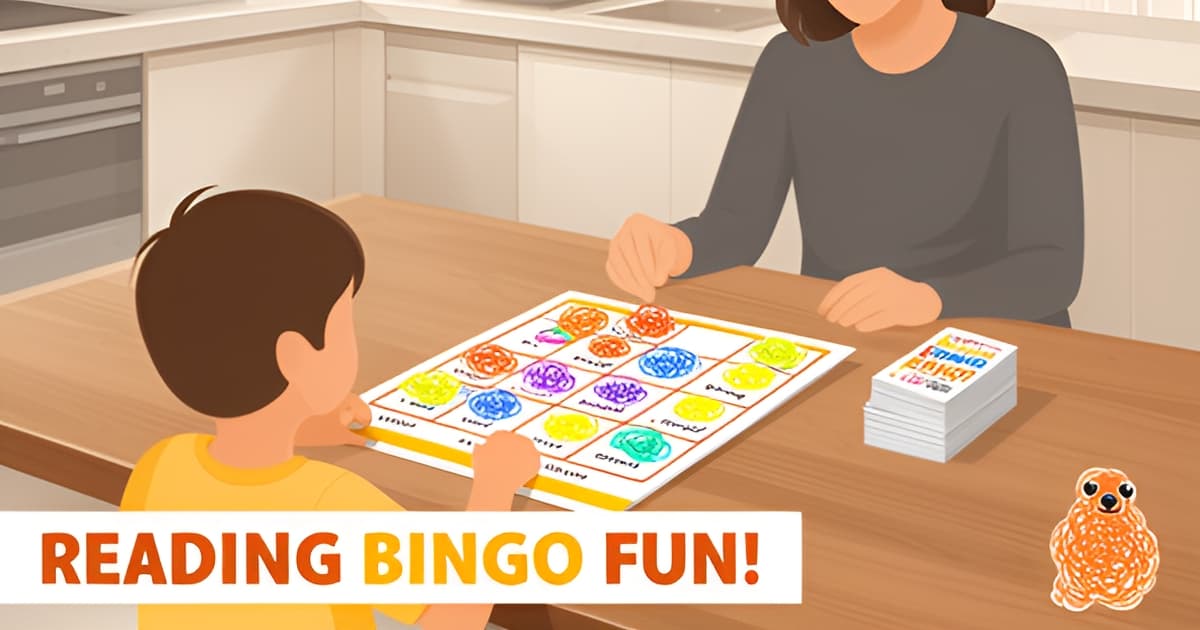
So send cards home. A take-home set turns family reading night into a bingo night, and the mechanics travel well: a parent or sibling reads the calling cards aloud, the child marks the squares, and five in a row wins. Teachers Pay Teachers even suggests reading bingo as a fun alternative to nightly reading logs, so a home round can replace homework friction with genuine enthusiasm. Classroom guides recommend setting goals and small rewards at the start, which works just as well at the kitchen table.
You don't need to buy anything to run this loop. Generate a custom set with Printoodle's reading bingo tool using your own word list, or build any themed variant with the bingo card generator. Your cards live in your library, and reprints are free forever, so every classroom set and every take-home copy costs you nothing extra. Laminate the classroom boards, send the paper ones home, and let the winners pick their books.
Print it. Doodle it. Done.
Frequently Asked Questions
How do you actually play reading bingo in the classroom?
Why is reading bingo better than worksheets for reluctant readers?
What size bingo card should I use for younger readers?
Can reading bingo work at home with families?
What's a good prize for reading bingo winners?
How do I make my own reading bingo cards without buying anything?
Your Next Round of Reading Bingo Starts in Seconds
Learning how to play reading bingo comes down to a simple loop: pick your word list, print the boards, call the words, and celebrate the winner with a book. Behind that loop sits real literacy value, sight word bingo builds the instant word recognition that drives fluency, the simultaneous format removes turn-taking pressure for reluctant learners, and a take-home set turns family reading night into practice that doesn't feel like homework. Remember that 80 percent of frequent readers have someone in their lives who enjoys reading, this game makes you, your students, and their families those role models. Ready to build your set? Paste your own word list into Printoodle's reading bingo tool, or design any themed variant with the bingo card generator, then download a print-ready PDF, laminate a class set, and send the extras home. Reprints stay free forever, so next semester's word list costs you nothing but a few clicks. Print it. Doodle it. Done.