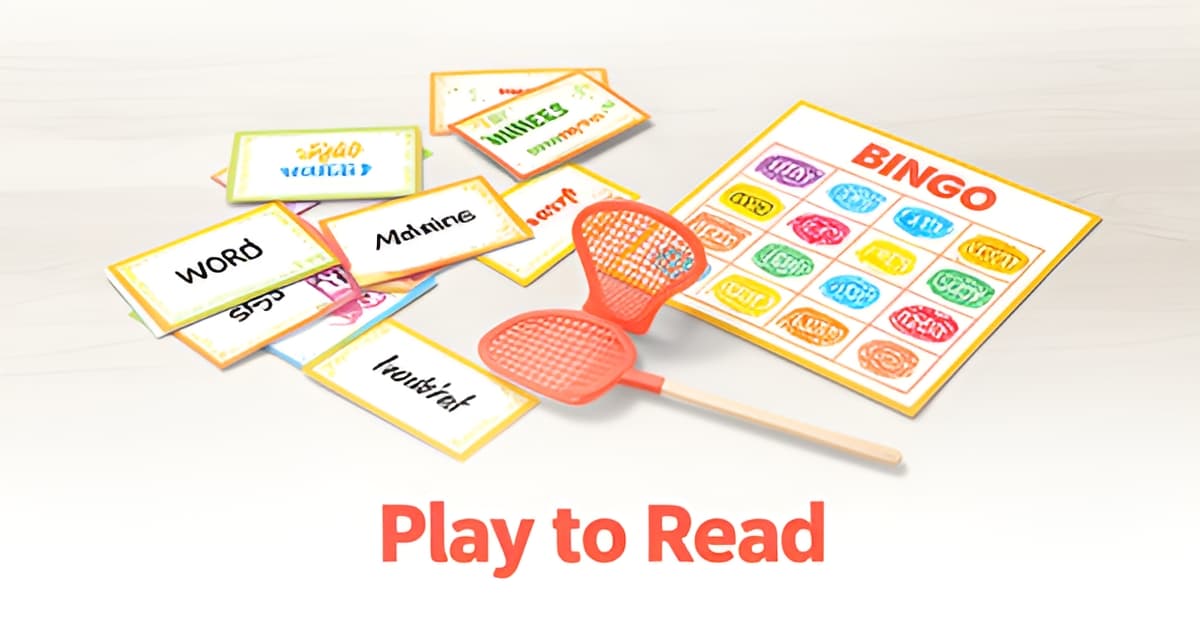
How to play sight word games?
Key Facts
- Most readers need between one and four exposures to commit a word to long-term memory; struggling readers need even more.
- The 100 most frequent words make up roughly 50% of all words kids encounter in any text.
- The 300 most frequent sight words push that coverage to about 75% of all text encountered.
- A Bowling Green State University study found games-based instruction was as effective as structured flashcard intervention for first graders below grade level.
- Literacy researcher Timothy Shanahan states there is 'absolutely no credible evidence' that memorizing words interferes with decoding development.
- Teach Starter's Sight Word Bingo uses the first 100 Fry words as a whole-class activity and is designed for reuse on cardstock.
- Understood.org recommends about 10 minutes of direct sight word instruction daily, with the bulk of reading time going to decoding.
Why Sight Word Games Work (and What the Research Says)
If you've ever tried drilling a five-year-old with flashcards, you know how it ends: about ninety seconds in, the cards are on the floor and your child is under the table. The good news is that learning sight words through play isn't a cop-out. It's a legitimate, research-backed approach, and it might be the answer when you're figuring out how to play sight word games without the tears.
A Bowling Green State University study tested this directly with first graders performing below grade level. Students taught sight words through a Memory game learned just as effectively as students taught with Incremental Rehearsal, a structured, flashcard-based intervention. The study's author concluded that rote memorization is not the only way to provide effective sight word instruction.
Some parents worry that memorizing whole words will somehow interfere with learning to sound out new words. It won't. Literacy researcher Timothy Shanahan puts it plainly: there is no credible evidence that memorizing words interferes with decoding development, according to his analysis of sight vocabulary instruction. In fact, he explicitly endorses games, word ladders, and racetracks as valid drilling methods.
The payoff is worth the effort. Shanahan's research shows the 100 most frequent words make up roughly half of all words kids encounter in any text, and the 300 most frequent push that to about 75%. A child who recognizes those words instantly reads faster and understands more, because automatic word recognition frees up attention for meaning.
Here's where games fit best. You teach the word explicitly first, through sound and spelling patterns, then use games to give it the repeated exposures needed to stick it in long-term memory. Most readers need one to four exposures to lock in a word, and struggling readers need even more, which is exactly what game play delivers without feeling like work.
Keep the dosage modest, though. Shanahan recommends no more than 4–5 minutes a day on directly memorizing individual words, with the bulk of reading time (25–30 minutes) going to decoding instruction. A quick round of bingo or Memory fits that window perfectly.
A few game formats work especially well as that daily repetition:
- Memory pairs, the format validated in the BGSU study itself
- Bingo, the most consistently cited classroom sight word game, playable with any word list
- Card-based games like Fly Swatter, Popcorn, and Kaboom, which reuse one deck many ways
Printoodle's sight word bingo generator fits this model well because you can build cards from your child's actual word list rather than a fixed one, and third grade sight word bingo extends the same mechanic as your reader grows. Print on cardstock, keep the deck in a drawer, and pull it out for four minutes a day. That's the whole routine.
Start with Sight Word Bingo: Rules and Setup
If you're wondering how to play sight word games in a way that actually sticks, start with bingo. It's the most widely used sight word game in classrooms, and for good reason: kids listen, scan, and cover matching words, getting exactly the repeated exposure that moves words into long-term memory. Most readers need between one and four exposures to commit a word to memory, and struggling readers need even more, according to Understood.org.
The rules take two minutes to explain. Here's the full setup:
- Deal one bingo card to each player. Every card shows a grid of sight words drawn from your word list.
- Call words aloud one at a time. Say the word clearly, and repeat it once if you have younger players.
- Players scan their cards and cover any square that matches the word you called.
- First player to complete a horizontal, vertical, or diagonal line wins. For a longer game, play to a full card ("blackout").
Want a built-in challenge? WeAreTeachers suggests an extension where kids write down any called word they don't have on their card. It turns waiting time into writing practice and keeps every child engaged until the round ends.
One practical tip from Teach Starter: print your bingo cards on cardstock. Sturdy cards survive repeated handling, so you can reuse the same set all year instead of reprinting each week. Teach Starter's own classroom version covers the first 100 words on the Fry list and works as a whole-class activity, including a slides format for virtual students.
Bingo flexes to fit your situation. In a classroom, it works whole-class with the teacher calling. In small groups, a confident reader can take the caller role, which gives them extra practice reading the words aloud. At home, a parent and one child can play with a handful of cards, taking turns as caller so your child both hears and reads each word.
The word list matters more than the format. Teachers often want games built around their school's specific list rather than a fixed Dolch or Fry set, and that's where a generator earns its keep. You can build a custom card set in seconds with Printoodle's sight word bingo tool, then reprint it free whenever cards wear out. Teaching older readers? The same mechanic scales up with third grade sight word bingo, which uses grade-appropriate word lists.
Print it, play it, and let the repetition do the teaching.
Six More Games from One Deck of Cards
Once you've printed one deck of sight word cards, you're not limited to a single game. The same stack that powers bingo also runs at least six other classroom-tested games, each with rules simple enough to explain in under a minute. That's the real advantage of learning how to play sight word games from one deck: the prep happens once, and the variety keeps kids engaged week after week.
Here are six variations that work with any printable card set, including a custom deck you generate with your own word list:
- Fly Swatter: Spread cards face-up on a table or floor. Call out a word, and the first player to swat it with a (clean) fly swatter keeps the card. Most cards collected wins.
- Sight Word Popcorn: Put cards in a cup or bowl. Kids draw one at a time and read it aloud to keep it, but a "pop" card ends the turn and sends everything back.
- BOOM (Kaboom!): Same draw-and-read mechanic, but pulling a "BOOM" card wipes out the player's whole pile. Suspense does a lot of the teaching here.
- Memory pairs: Print two of each word, lay them face-down, and flip two at a time to find matches. Players must read a matched pair aloud to claim it. This is the exact format a Bowling Green State University study found worked as well as structured rote practice for first graders reading below grade level.
- Bowling for Sight Words: Arrange cards on the floor like pins, roll a soft ball, and read every card knocked down to score it. The Teach Starter version ships with 52 high-frequency words, but any list works.
- Find the Fish: Attach paper clips to cards, dangle a magnet on a string from a stick, and let kids "catch" words to read aloud. Great for wiggly learners who need movement built in.
One note on the list above: every game adapts to whatever words your child or class is actually working on. That matters more than it sounds. Fixed Dolch and Fry defaults force you to teach words in someone else's order, and the two lists famously overlap on only about 70 of their words, according to literacy researcher Timothy Shanahan. Editable cards let you match your school's scope and sequence exactly, which is why a generator like Printoodle's sight word bingo tool beats a pre-printed box.
The repetition these games provide is the point. Most readers need between one and four exposures to commit a word to long-term memory, and struggling readers need more, so rotating through six games multiplies those exposures without feeling like drill. If your reader is older, third grade sight word bingo extends the same mechanic to a more advanced list, and the card games above scale right along with it.
Make It Stick: Custom Lists, Movement, and a Simple Routine
A game only works if the right words are in it. That's the difference between a fun ten minutes and real reading growth, and it's why the routine you build around your cards matters as much as the cards themselves.
Start with the timing. Understood.org recommends about 10 minutes of direct sight word instruction daily, and most of that should be explicit teaching first: say the word, talk through its sounds, and point out the tricky part that has to be remembered. Then let the game do its real job, which is repetition. Most readers need between one and four exposures to commit a word to long-term memory, and struggling readers need even more. Games supply those exposures without it feeling like drilling.
Once your child or student consistently recognizes a word, Understood.org suggests adding it to your regular word games. That's where a custom deck earns its keep. With Printoodle, you can type in the exact list your school or teacher sent home, whether that's the first 100 Fry words or a district-specific set, and generate a print-ready deck in seconds. If your list changes mid-year, you regenerate. Nothing gets thrown away, and reprints from your library are always free.
A simple weekly rhythm looks like this:
- Monday: explicitly teach 3 to 5 new words, mapping their sounds before any play begins.
- Tuesday through Thursday: 10 minutes of game play using the full deck, old words included.
- Friday: quick check. Words your child reads in under 2 seconds stay in the deck as review; the rest get extra reps.
- Weekend: swap in a movement version to keep it fresh.
Movement matters more than most parents realize. Classroom literacy resources highlight adaptations like sight word hopscotch, where kids jump to the word you call out, and beanbag toss games, where they throw at a target card and read it. Physical engagement gives the brain a second pathway to the same word, which is exactly what you want during the reinforcement stage.
And if you're worried that all this game-based memorizing might crowd out phonics, literacy researcher Timothy Shanahan has addressed that directly: there's "absolutely no credible evidence that memorizing words interferes with or interrupts decoding development." Keep the direct memorization portion short, around 4 to 5 minutes a day by his benchmark, and let games carry the repetition.
One deck covers a surprising number of games. The same cards that power a round of sight word bingo work for Fly Swatter, Popcorn, memory pairs, and Kaboom. For older kids, the same custom-list approach extends to third grade sight word bingo with a harder word set.
Print it. Doodle it. Done. Build your deck tonight, and your ten-minute routine can start tomorrow morning.
Frequently Asked Questions
I tried flashcards with my kid and they refused to engage. Can sight word games actually work better?
Won't memorizing whole words make my child worse at sounding out new words?
How many times does my child actually need to see a word before it sticks?
I don't have a lot of time. How long should we actually spend on sight word games each day?
I wish there were more game options once we've printed our cards. What else can we do with one deck?
My child's school uses a specific word list. Can I use games with those exact words instead of a pre-made set?
One Deck, Ten Minutes, and a Reader in the Making
Learning how to play sight word games isn't about choosing fun over rigor, the research says they're the same thing. A Bowling Green State University study found a simple Memory game taught sight words as effectively as structured rote intervention for struggling first graders, and literacy researcher Timothy Shanahan confirms there's no credible evidence that memorizing words interferes with decoding. Since the 100 most frequent words make up roughly half of all text kids encounter, automatic recognition is a genuine fluency unlock. The formula is simple: teach a few words explicitly first, then let a 4–5 minute daily game supply the repeated exposures that move words into long-term memory. One deck covers bingo, Fly Swatter, Popcorn, Kaboom, memory pairs, and more, and because the words matter more than the format, build yours from your child's actual list. Printoodle's free sight word bingo generator makes that a 30-second job, and third grade sight word bingo scales up as your reader grows. Print it. Doodle it. Done. Your ten-minute routine starts tomorrow morning.