How to teach Sudoku to kids?
Key Facts
- Sudoku requires no math at all, it's a pure logic game, according to peer-reviewed neuroscience research.
- In a neuroscience study, kids solved simplified 3×3 subgrids with 99.29% accuracy and easy 9×9 puzzles at 98.21%, showing the staged approach works.
- A peer-reviewed study recommends three named strategies, Obvious Missing Number, Elimination, and Either This or That, for teaching kids in grades 4–6.
- An educator documented her almost-six-year-old granddaughter mastering 3×3 Sudoku quickly using color-coded tiles and sticky notes, per a hands-on teaching guide.
- Education World calls Sudoku an excellent critical-thinking tool and offers 36 puzzles, one for every week of the school year.
- A 15-year BMJ study of 498 volunteers found late-life Sudoku does not protect against mental decline, so skip the brain-health hype.
- More pre-filled digits mean an easier puzzle and fewer mean harder, per the New York Times beginner guide.
Why Sudoku Trips Up Kids (and Why It's Still Worth Teaching)
You settle your child onto the kitchen table with a fresh printable, only to watch them stare blankly at the towering 9x9 grid. Many parents assume the game is about numbers and math, but the neuroscience is clear: Sudoku requires no math and is based on logic. The real challenge is that a standard 9x9 layout can overwhelm a child's developing mind before they even grasp the goal.
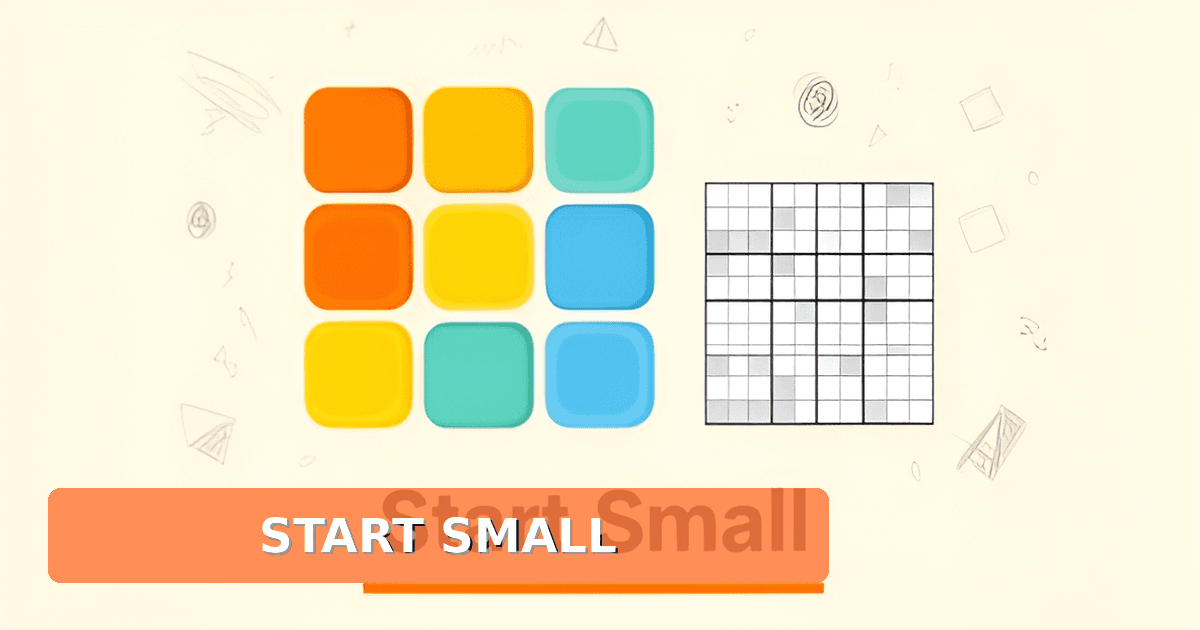
The research shows that starting small is the key to success. A peer-reviewed study on pattern discovery recommends using simplified grids, 3x3 or 4x4, before introducing the full 9x9 structure, targeting children in grades 4–6. Neuroscience research deliberately divided Sudoku into two progressive steps: first solving 3x3 subgrids, then layering in row and column rules for a full easy 9x9 puzzle. Studies using simplified 4x4 versions with 2x2 subgrids have even been used in fMRI research to study problem-solving in beginners. A practical teaching guide documents a successful approach with a child as young as almost six, using color-coded tiles and sticky notes to make the progression incremental and frustration-free.
The benefits are tangible and grounded in how children's brains develop. Sudoku strengthens pattern discovery skills, which cannot be taught directly but can be developed through practice. It exercises working memory, described by one expert as "like chess, while you're making a move, you have to think three or four steps ahead." The game also builds executive function, requiring focus, planning, strategizing, and the flexibility to correct errors, a crucial life skill. Education World notes it is "an excellent tool for building students' critical thinking skills," offering 36 puzzles, one for each week of the school year.
However, it is important to keep expectations realistic. A BMJ longitudinal study of nearly 500 volunteers over 15 years found that late-life brain exercises like Sudoku do not protect against mental decline. While lifelong mentally active individuals may start decline from a higher point, claims that Sudoku prevents dementia need stronger evidence. The goal for kids is not brain-health guarantees but the development of logic, focus, and problem-solving skills.
The good news is that finishing is optional. Kids should learn at their own pace, treating the game as something to enjoy rather than a test of intelligence. For parents ready to start, Printoodle's kids sudoku printable generator offers the perfect entry point, allowing you to create simplified 3x3 and 4x4 puzzles that match your child's current skill level. These can be followed up with mazes for kids and rebus puzzles for kids, which build the same spatial reasoning and pattern-discovery skills in a different format. Print it. Doodle it. Done.
How to Teach Sudoku to Kids: Start Small, Then Grow the Grid
If you've ever handed a child a full 9×9 Sudoku grid, you've probably watched their eyes glaze over within a minute. The fix isn't patience, it's scaling: start with a tiny grid, teach one rule at a time, and grow the puzzle as their confidence grows. That's the core of how to teach sudoku to kids successfully.
The research backs this staged approach from two directions. A peer-reviewed mathematics education study recommends starting with a simplified Sudoku version to explain the aim and reinforce the rules before introducing any solving strategies, with techniques aimed at grades 4 to 6. And a neuroscience study deliberately split the game into two progressive steps: first solving 3×3 subgrids using only the subgrid rule, then moving to a full easy 9×9 puzzle with row and column rules added. Participants performed nearly identically at both stages (99.29% accuracy on subgrids, 98.21% on full puzzles), which suggests the incremental build works rather than overwhelms.
A practical ladder looks like this:
- 3×3 grids first. One educator documented her almost-six-year-old granddaughter catching on quickly and experiencing great success starting here, using color-coded tiles so fixed numbers look different from movable ones.
- 6×6 next. This adds the row-and-column rule on top of the box rule without the intimidation of 81 cells.
- 9×9 last. By now, the full classic puzzle (81 cells, digits 1 through 9 in every row, column, and box) feels like a bigger version of something familiar.
Along the way, teach the vocabulary as you go: row, column, horizontal, vertical. One hands-on trick from the same teaching guide is covering part of the board with sticky notes and revealing one number at a time, so the grid never looks like too much at once.
When kids are ready for strategy, give them names. The peer-reviewed study outlines three: "Obvious Missing Number" (spotting the digit that must fit a cell), "Elimination" (ruling out options based on numbers already placed), and "Either This or That" (deciding between two remaining possibilities). The New York Times' beginner guide calls the first one "Scan for Singles," and notes that beginner puzzles usually contain one or two obvious examples to get kids started.
One more gauge worth knowing: the number of pre-filled digits controls difficulty. More given numbers means an easier puzzle, fewer means harder, so when you generate a kids sudoku printable, pick a dense, generously pre-filled grid for a first-timer and thin it out as they improve. With Printoodle you can generate a fresh puzzle at each rung of the ladder in seconds, print it, and keep reprints free forever.
And once Sudoku clicks, the same reasoning muscles carry over. Mazes build spatial pattern recognition, and rebus puzzles for kids stretch lateral thinking. Print it. Doodle it. Done.
Four Kid-Friendly Sudoku Strategies to Teach Out Loud
Once kids understand the rules, the real teaching begins: naming the thinking moves out loud so your child can borrow them. A peer-reviewed study on simplified Sudoku for grades 4–6 identified three strategies worth teaching explicitly, and they work just as well with younger children on smaller grids.
Strategy 1: Obvious Missing Number. Show your child a row, column, or box that's missing just one digit. Ask, "What's not here?" When only a single cell is empty, the answer is certain, and that early win builds confidence fast. The New York Times calls this "Scan for Singles" and notes that beginner puzzles usually contain one or two obvious ones, so start there every time.
Strategy 2: Elimination. When a cell has several candidates, rule out digits that already appear in the same row, column, or box. This is the workhorse strategy from the simplified Sudoku study, and it strengthens exactly the skills researchers highlight: guess-and-check reasoning, narrowing down choices, and spotting patterns.
Strategy 3: Either This or That. When two options remain, teach your child to hold both in mind and look elsewhere on the grid for a clue that settles it. This is genuine logical reasoning, the kind the study says can't be directly taught but can be developed through play.
A few hands-on tactics make these strategies stick:
- Use color-coded tiles so kids can distinguish fixed numbers from movable ones and fix mistakes without frustration.
- Cover parts of the board with sticky notes, revealing one number at a time to prevent overwhelm.
- Teach the vocabulary alongside the game: row, column, horizontal, vertical.
- Let your child place tiles in a working pattern, then move one tile and ask, "Can this row have two of the same number?"
When choosing puzzles, remember the difficulty gauge: more pre-filled digits means easier, fewer means harder. A kids sudoku printable lets you generate puzzles at exactly the right level for each stage, from a first 3×3 grid up to full 9×9. Once Sudoku clicks, mazes for kids and rebus puzzles for kids build the same spatial reasoning and pattern-discovery muscles from fresh angles.
One last point, and it matters. Three-time World Sudoku Championship winner Thomas Snyder puts it simply: "There's no correct way to solve a puzzle." If your child solves a grid backwards, starts with their favorite number, or abandons a puzzle halfway, that's fine. Finishing is optional; the thinking is the point. Treat each session as something to enjoy at your child's own pace, and the logic skills will follow on their own.
Your First Week of Sudoku Practice: A Printable-Friendly Plan
Your child’s first Sudoku experience sets the tone for a lifelong love of logic puzzles. Starting with oversized grids and too many rules often leads to frustration; a staged approach builds confidence before the full challenge appears.
Research confirms that children progress fastest when instruction begins with tiny grids. A peer-reviewed mathematics education study found that starting with simplified versions allows kids to master the core aim and reinforce rules before strategies are introduced, targeting learners in grades four through six. A practical teaching guide documents a child of almost six quickly catching on to the concept using color-coded tiles and sticky notes for incremental progression. The same guide reports a progression framework of 3x3 to 6x6 to 9x9, mirroring the neuroscience study that deliberately divided Sudoku into two steps, first solving 3x3 subgrids using only the subgrid rule, then adding row and column rules for a full easy 9x9 puzzle.
You can identify beginner puzzles by counting pre-filled digits. The New York Times’ beginner technique, “Scan for Singles,” notes that easier puzzles contain more numbers already placed on the page; fewer starting digits mean a harder challenge. For a first attempt, look for puzzles with plenty of givens so your child experiences quick wins.
Handling mistakes calmly turns a slip of the tile into a life lesson. Karan Carrero, an educator and parent, notes that because tiles might be placed in the wrong spot, the activity encourages flexibility while learning to make decisions and changes as needed, an important life skill. If a number doesn’t fit, simply lift the tile and try again. This error-correction practice builds resilience and shows that adjusting a plan is part of problem-solving, not a failure.
A proven way to keep practice moving forward is to establish a weekly routine. Education World offers 36 Sudoku puzzles, one for each week of the school year, complete with an answer key and teaching tips. Running one puzzle per week creates a consistent habit without overwhelming young learners.
Spatial reasoning and pattern recognition strengthen when Sudoku is cross-trained with other logic activities. Printoodle’s mazes for kids and rebus puzzles for kids build the same skills in different formats, keeping engagement high and reinforcing the brain’s ability to recognize patterns across contexts.
Print it. Doodle it. Done.
kids sudoku printable to start with 3x3 grids and progress at your child’s pace.
Frequently Asked Questions
At what age can kids start learning Sudoku?
Does Sudoku involve math? My child struggles with numbers.
How do I teach Sudoku without overwhelming my child?
What solving strategies should I teach my kid first?
What are the actual benefits of Sudoku for children?
What if my child gives up halfway or solves the puzzle 'wrong'?
Small Grids Today, Sharp Thinkers Tomorrow
Teaching Sudoku to kids isn't about handing them an 81-cell mountain on day one, it's about climbing a ladder. Start with a 3×3 grid, teach one rule at a time, name the strategies out loud (Obvious Missing Number, Elimination, Either This or That), and let color-coded tiles and sticky notes keep frustration at bay. The research is clear that this staged approach works: children in the neuroscience study solved simplified subgrids with over 99% accuracy before moving to full puzzles, proving small starts build real confidence. Along the way, your child develops logic, working memory, and the flexibility to fix mistakes gracefully, skills that matter far beyond the puzzle page. And remember: finishing is optional; the thinking is the point. Ready to begin? Generate a kids sudoku printable at your child's level, then mix in mazes for kids and rebus puzzles for kids to keep those pattern-discovery muscles growing. Print it. Doodle it. Done.