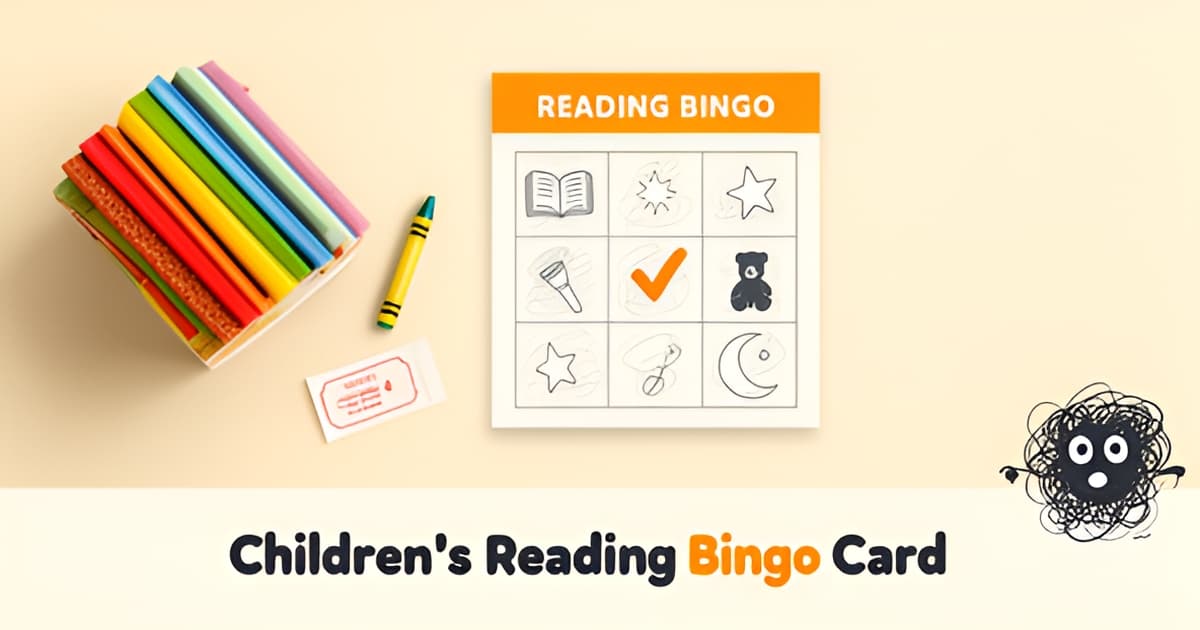
Reading Bingo: Free Printable Reading Challenge Cards for Kids
Key Facts
- A 2012 study found mandatory minute-tracking made students' interest and attitudes toward reading fall dramatically, according to Edutopia.
- 80 percent of frequent readers have someone in their lives who enjoys reading, Scholastic's Kids & Family Reading Report found.
- A K-5 library-media specialist with 30+ years in education concluded reading logs 'do not motivate students to read' and 'cause friction at home' after decades of classroom experience.
- One 4th-grade teacher reported struggling students forged parent signatures, and one mother wrote 'Cats, pages 1-10, 20 minutes' in every log box for a month according to classroom reports.
- At DoDEA's Murray Elementary, parents reported kids asking every morning where they'd read that day after the school swapped logs for bingo per the school's program writeup.
- Students who moved away from Murray Elementary asked to keep playing reading bingo, with their teacher mailing cards and brag tags the school reports.
- Rewards don't need to be educational to work, 'sometimes the reward is popsicles, sometimes it's staying up 15 extra minutes' per one summer reading challenge guide.
Why Reading Logs Backfire (and What Teachers Are Using Instead)
Ask any teacher about reading logs and you'll likely get a sigh. The nightly minute-tracking ritual, where kids record pages and parents sign off, was meant to build reading habits. Instead, it often builds resentment, paperwork, and the occasional creative forgery.
The research backs that frustration up. A 2012 study cited by Edutopia found that when students were required to track minutes read, their interest in and attitudes toward reading fell dramatically. The very tool designed to encourage reading was quietly killing the motivation behind it.
Teachers see the fallout firsthand. One 4th-grade reading teacher reported that struggling students left their logs blank or forged parent signatures, and one mother wrote "Cats, pages 1-10, 20 minutes" in every box for a month straight. A K-5 library-media specialist with more than 30 years in education concluded that logs "do not motivate students to read" and "cause friction at home," and stopped using them entirely. She wasn't alone; she noted that more and more teachers were ditching logs altogether.
What's replacing them? Increasingly, it's reading bingo, a game-based format that swaps minute-tracking for varied, playful challenges. The evidence is anecdotal rather than clinical, but the practitioner reports are consistent and enthusiastic.
The clearest example comes from the Department of Defense Education Activity. A reading interventionist at DoDEA's Murray Elementary created Reading Bingo specifically to transform "the dreaded nightly reading log into an activity that students could look forward to each night." It worked well enough that parents reported their kids asking every morning where they'd read that day, and the school's acting principal credited the format with catering to diverse learning needs while building a sense of belonging.
Why does a bingo card succeed where a log fails? The squares change the experience from accounting to play:
- Location squares like "read under a tree" or "read in a blanket fort" make reading feel like an adventure instead of homework.
- Genre squares push kids toward fantasy, fairytales, or historical fiction they might never pick up on their own.
- Social squares, such as reading to a pet or a stuffed animal, turn reading time into connection time.
- Whimsical squares like "read after picking 10 weeds" add the kind of silliness a spreadsheet never could.
As one educator-blogger put it, the bingo format "feels more like a game and less like an assignment, which can make a huge difference for reluctant readers." Scholastic makes a similar case, noting that playing book bingo as a family can help kids become more enthusiastic and frequent readers.
If you want to try the swap in your own classroom, you can generate free printable reading bingo cards with Printoodle, customize the squares to match your grade level or season, and print in seconds. Print it. Doodle it. Done.
How Reading Bingo Works: Square Ideas You Can Copy Today
The magic of reading bingo is that kids never experience it as homework. As one parent-blogger puts it, the bingo format "feels more like a game and less like an assignment, which can make a huge difference for reluctant readers." That framing matters: a 2012 study found that mandatory minute-tracking caused students' interest and attitudes toward reading to fall dramatically, which is exactly the problem a free printable reading bingo card solves. When a reading interventionist at DoDEA's Murray Elementary redesigned the nightly log as bingo, parents reported kids asking every morning where they'd get to read that day.
So what goes in the squares? The best boards mix five categories, and you can copy any of these today.
Location squares make the where as fun as the what. Try "read under a tree," "read in a blanket fort," "read in the bathtub," or "read with a flashlight." These come straight from real school programs that swapped logs for bingo.
Genre squares stretch kids beyond their comfort zone. Scholastic's family book bingo suggests fantasy, fairytales, adventure, historical fiction, and classics. One square per genre is enough; the goal is variety, not a syllabus.
Social squares turn reading into connection. Kids read to a stuffed animal, a pet, a sibling, or a grandparent on video call. Scholastic notes that playing book bingo as a family "can help kids become more enthusiastic and frequent readers," and their Kids & Family Reading Report found that 80 percent of frequent readers have someone in their lives who enjoys reading.
Whimsical squares are the secret weapon. Murray Elementary's board includes "read after picking 10 weeds" and crab-walking challenges tied to silly holidays. These are the squares kids brag about.
Response squares add light accountability without a log. Ideas from Lucky Little Learners include "write a new ending," "draw your favorite part," and "recite a poem to the family."
- Read in a blanket fort or under a tree
- Read a fantasy, fairytale, or adventure book
- Read to a pet or stuffed animal
- Read after picking 10 weeds
- Draw your favorite part of the story
Grade level changes the squares, not the format. A K-2 framework worth borrowing: kindergarteners get listening and retelling squares with icons instead of written directions, first graders get phonics tasks, and second graders get independent reading with written reflection. Being read to always counts for younger kids, which keeps the board fair across a mixed classroom.
Seasonal themes keep a board fresh month after month. September might feature "read an autumn poem," January "read a book set in winter," and June "read a book with a beach on the cover." Rather than hand-drawing twelve boards, you can generate a full year of reading bingo cards in minutes, or build sight word bingo boards for your earliest readers. Print it. Doodle it. Done.
Prizes, Tracking, and Making It Stick
A popsicle can do more for a reluctant reader than a bookmark ever will. When it comes to prizes for your reading bingo free printable, the research points to one reassuring conclusion: rewards don't need to be educational to work.
The prize spectrum runs wide. Scholastic keeps it simple: when a kid gets bingo, "the prize is to pick a book," making reading itself the reward. At DoDEA's Murray Elementary, completed cards earn brag tags, colorful achievement tokens featuring the school mascot. And for home play, the rewards get even more casual. "Sometimes the reward is popsicles. Sometimes it's staying up 15 extra minutes," according to one summer reading challenge guide. The Lead Learner Mom offers printable wearable medals for each monthly board, with an optional grand prize for kids who earn the medal all 12 months.
Two play modes
Decide upfront how a board gets "won." Most programs use one of two formats:
- Classic Bingo: five squares in a row, in any direction, earns the reward.
- Challenge Mode: a full-board blackout, better for stretching a challenge across a whole month or summer.
- Collective play: younger students can complete one shared board as a class or family.
In classrooms, a set turn-in day keeps the momentum going. Lucky Little Learners recommends an end-of-month turn-in where you check completed spaces, whether that's a full bingo, a single row, or the student's choice, tracked with sticker charts or Seesaw check-ins.
Equity matters
Not every child has someone at home to read with or check off squares. Lucky Little Learners suggests concrete supports: let kids listen to online stories at school, complete one or two challenges during quiet time, or pair up with buddy readers. These small adjustments keep the game open to everyone, not just kids with built-in home support.
Reading bingo also plays nicely with systems you already run. One parent-educator notes it can run alongside Accelerated Reader levels, so you don't have to choose between the game and your existing tracking. And the community effect is real: at Murray Elementary, students who moved away asked to keep playing, with their teacher mailing cards and brag tags to keep them involved.
When you're ready to build your own board, Printoodle's generator lets you create custom reading bingo cards in seconds, and reprints are always free. (If your early readers need a phonics warm-up, sight word bingo works the same way.) Print it. Doodle it. Done.
Make Your Own Cards: Free Printable and Custom Options
The best bingo card is the one your kids actually want to finish, and that's usually the one built for them: their season, their grade, their classroom. You can grab a reading bingo free printable and be playing by Friday, or spend ten minutes customizing squares and get a board that fits your readers exactly. Here's how to do both.
Printoodle's reading bingo cards generator gives you a print-ready board in seconds, and the free tier includes 10 credits just for verifying your email, so you can test a card before spending anything. Reprints stay free forever, which matters if you're running a monthly challenge and need next month's board without paying again.
A stock card covers the proven square types: location challenges like reading under a tree or in a blanket fort, genre variety, and social squares like reading to a pet. Those work. DoDEA's Murray Elementary built its whole program around that mix, turning what one interventionist called "the dreaded nightly reading log" into something students looked forward to each night, according to the school's program writeup.
A generic board gets you started, but a few situations call for custom squares:
- Seasonal themes. Monthly boards sustain engagement, and the best ones tie squares to the calendar: an autumn poem in September, a book set in winter in January, per one monthly bingo program.
- Grade-specific squares. K-2 teachers recommend icons and retelling tasks for kindergartners, phonics tasks for first grade, and written reflection for second, a K-2 differentiation framework shows.
- Classroom identity. Add your school name, mascot, or inside jokes. Murray Elementary's brag tags featured the school mascot, and students who moved away asked to keep playing.
- Early readers. If your kids are pre-readers, swap book squares for word squares using sight word bingo instead.
Pick your reward before you print. Scholastic keeps it simple: when kids hit bingo, the prize is picking a new book. Other educators use popsicles, 15 extra minutes of staying up, or brag tags. None of these require a budget line.
Generate your board, decide between five-in-a-row and full-board blackout, and set an end-of-month turn-in day. That's the whole setup.
Print it. Doodle it. Done.
Frequently Asked Questions
Why are reading logs bad for kids?
What should I put on a reading bingo card?
What are good prizes for a reading bingo challenge?
How does reading bingo work for kindergarten and first grade?
Do kids have to get a full blackout to win reading bingo?
Where can I get a free printable reading bingo card?
Your First Board Is Five Minutes Away
The old reading log asked kids to prove they read. Reading bingo asks them to read under a tree, in a blanket fort, to a very patient dog, and the difference shows up in how kids talk about it. Parents at Murray Elementary reported children asking each morning where they'd get to read that day, and Scholastic found that 80 percent of frequent readers have someone in their lives who enjoys reading, exactly the connection social squares create. You have everything you need now: square ideas by category, grade-level tweaks, a prize ladder, and a turn-in routine. The last step is the easiest one. Generate a reading bingo free printable with Printoodle, customize a few squares to match your season or classroom, and pick your reward before Friday. If your earliest readers need a phonics warm-up first, sight word bingo works the same way. One board, one page, zero cost to try. Print it. Doodle it. Done.