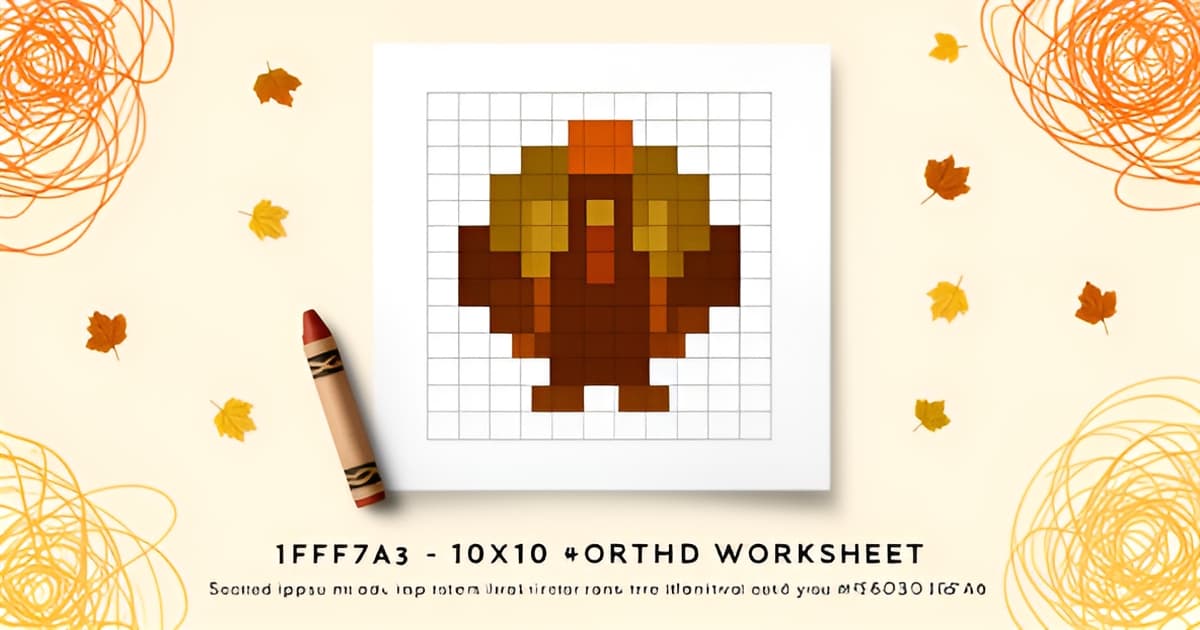
Thanksgiving Mystery Picture Worksheets: Color the Grid to Reveal the Picture
Key Facts
- Each Thanksgiving mystery picture uses a 10×10 grid of numbers 1–100, where a hidden picture slowly appears as kids color.
- The sweet spot is kindergarten through 2nd grade, though older students also enjoy the relaxing aspect.
- Veteran teachers Matt and Tara of Tied 2 Teaching, with 20+ years of classroom and homeschool experience, call these puzzles perfect for early finishers and brain breaks.
- Coloring grids build number recognition, counting, fine motor skills, and pattern recognition, per worksheet catalogs.
- Teachers can laminate pages or use plastic sleeves with dry-erase markers so one grid serves an early finisher bin for weeks.
- Mystery picture pages are no prep, just print and go, fitting morning work, sub plans, and take-home packets.
- Printoodle's free Thanksgiving mystery picture generator makes a brand-new puzzle every press, no signup required.
The Hidden Picture Reveal Mechanic
There's a small moment of magic in every mystery picture worksheet: the instant a child colors the right square and suddenly realizes what they've been drawing all along. That's the whole engine of the format, and it's why kids keep asking for "just one more."
The mechanic itself is beautifully simple. Each worksheet is a 10×10 grid showing the numbers 1 to 100, essentially a hundreds chart. Every number maps to a color in the key, and as a child works through the squares, a hidden picture slowly appears, according to Little Bins for Little Hands. One minute it's an abstract patchwork of orange and brown; a few rows later, it's unmistakably Thanksgiving.
The slow reveal is what makes it stick. Unlike a regular coloring page, where the picture is visible from the start, the grid keeps the outcome hidden until the work is done. Kids stay curious, and that curiosity pulls them through the whole page. Practitioner educators with over 20 years of classroom and homeschool experience note that this kind of puzzle keeps students focused on the holiday theme while quietly building critical thinking skills (Tied 2 Teaching).
While the picture does the motivating, the grid does the teaching. Each square is a small, self-contained task: find the number, match it to the color, color inside the lines. The benefits cited by educators and worksheet catalogs include:
- Number recognition across the 1–100 range, since every square requires a fresh number lookup
- Fine motor practice and pencil control from coloring small, contained squares
- Following directions, because the color key has to be read and applied correctly
- Counting, sequencing, and pattern recognition as the grid fills in
The recommended sweet spot is kindergarten through second grade, though older students enjoy the relaxing aspect too, so don't be surprised if a fourth grader borrows one. A worksheet catalog review confirms the hundreds chart variant is positioned specifically for number recognition and counting skills, and many versions include an answer page so kids can check the finished reveal themselves.
Most Thanksgiving mystery pictures you'll find online are static PDFs: one fixed pack, one fixed set of pictures. That's fine until you've got a classroom of kids comparing identical turkeys. Printoodle's generator takes a different approach: every press produces a brand-new puzzle, free with no signup, so no two printouts have to match. You can try it yourself at the Thanksgiving mystery picture generator.
The reveal works the same way every time, though. Number by number, square by square, the picture earns itself into existence. Print it, doodle it, done.
Skill Building for Kindergarten to Second Grade
A grid of 100 numbered squares looks like math homework. Then a few colors go down, and a turkey starts to appear. That's the quiet magic of a mystery picture worksheet, and it's why educators keep reaching for them with kindergarten through second grade students.
The format is simple: a 10×10 hundreds chart where each number maps to a color, and as kids color squares using the key, a hidden picture slowly appears. That slow reveal is doing more than entertaining. It's the reward that keeps a five-year-old hunting for number 47 long after they'd have abandoned a plain number-recognition drill.
Educational practitioners point to a specific set of skills these grids build, and they map neatly onto what K-2 classrooms are already working on:
- Number recognition from 1 to 100, since kids must locate each number on the chart before they can color it. The hundreds chart variant is widely positioned as a fun way to improve number recognition and counting skills.
- Fine motor skills and pencil control, because coloring inside a single square demands far more precision than coloring a large open shape.
- Following directions, as children work through the color key square by square without skipping steps.
- Counting and sequencing, reinforced every time a child scans rows and columns to find the next number.
- Pattern recognition, which develops naturally as the picture emerges and kids start predicting what the remaining squares will form.
It's worth being honest about the evidence here. These benefits come from practitioner experience and educational activity publishers, not peer-reviewed studies on learning outcomes. But the reasoning holds up: the activity combines math and art, and the visual reward at the end builds math confidence in kids who might otherwise see numbers as dry material. Worksheet catalogs make the same claim, describing coloring grids as a good fit for art and fine motor practice alongside number work.
The K-2 label is a sweet spot, not a ceiling. Older students also enjoy the relaxing aspect of the reveal, which is why teachers in upper elementary grades use puzzle-format Thanksgiving activities as brain breaks during holiday lessons. One teacher team with over 20 years of combined classroom and homeschool experience notes that their kids love puzzles and that they build critical thinking while keeping the class focused on the theme.
For teachers, the classroom logistics are equally appealing. These pages work for morning work, early finisher bins, small group math practice, homework packets, quiet time, and substitute plans, all with no prep beyond printing. A practical tip from practitioners: laminate the pages or slip them into plastic sleeves so kids can color with dry-erase markers and the sheets get reused.
If you want fresh grids without hunting through fixed PDF packs, Printoodle's Thanksgiving mystery picture generator makes a new puzzle every time you press the button, free with no signup, and each one comes with an answer page. Print a fresh grid for your early finisher bin in seconds and let the reveal do the motivating.
Classroom Use Cases for Early Finishers
Every teacher knows the moment: three hands go down, finished, while twenty others are still working. Thanksgiving week makes that idle time even harder to manage, and a mystery picture grid is one of the cleanest solutions you can keep in your back pocket.
Experienced classroom teachers describe Thanksgiving puzzle activities as perfect for early finishers, morning work, or a brain break, precisely because they keep the room quiet and focused on the holiday theme without requiring your attention. The authors behind that advice bring over 20 years of public school and homeschool experience, so it's a recommendation that's been field-tested.
The format works across the whole school day. A 10×10 hundreds chart where each number maps to a color builds number recognition for 1–100 while kids color, so the "filler" time quietly reinforces math. And because the picture only appears square by square, students stay absorbed until the very end.
Here's where a grid mystery picture fits naturally into your week:
- Morning work: a calm, independent warm-up that settles the class as they arrive.
- Early finisher bins: students grab one and stay productive while others finish.
- Brain breaks: a screen-free reset between lessons that still feels like fun.
- Substitute plans: no explanation needed, and the answer page means any sub can check the result.
- Take-home packets for Thanksgiving break.
Practitioners recommend laminating pages or slipping them into plastic sleeves with dry-erase markers, so one printed grid can serve a whole early finisher bin for weeks. That reuse trick pairs well with a generator: rather than a fixed pack everyone solves once, you can create a fresh Thanksgiving mystery picture in seconds whenever the bin runs dry. Every press makes a new one, it's free with no signup, and there's zero prep beyond hitting print.
The age range is flexible, too. Kindergarten through 2nd grade is the sweet spot for the number-recognition and fine motor benefits, but older students enjoy the relaxing reveal, which makes it an easy fit for mixed classrooms and buddy activities. When a fourth grader asks for "another one like the turkey," you'll be glad a new grid is one click away. Just head back to the Thanksgiving mystery picture generator and print.
Why a Generator Beats a Fixed PDF Pack
Most Thanksgiving mystery picture worksheets you'll find online come as fixed PDF packs. You download the file, print it, and every kid in the room colors the exact same grid. That works once. It works less well the third time a fast finisher asks for "the turkey one again."
A generator flips that model. With the free Thanksgiving mystery picture tool from Printoodle, every press of the button produces a brand-new puzzle, complete with its own answer page. No signup, no cost, no digging through a catalog to check whether a theme you want exists. One catalog of mystery picture worksheets, WorksheetZone, has no Thanksgiving-specific content at all, which tells you how thin the on-demand options are.
The practical difference shows up fastest in the classroom. Veteran teachers Matt and Tara of Tied 2 Teaching, who draw on more than 20 years of classroom and homeschool experience, call puzzle activities "perfect for early finishers, morning work, or a brain break." A fixed pack runs dry quickly in those moments. A generator doesn't: when your early finisher bin needs another grid, you print a fresh one in seconds, and nobody has already memorized the answer.
For parents, the appeal is similar. The whole format is no prep, just print and go, and it's an engaging, screen-free way to reinforce number recognition, counting, and fine motor skills. Since the format targets a 10×10 grid with numbers 1 through 100, and the sweet spot is kindergarten through second grade, having unlimited fresh puzzles means you can keep the activity going all November without a child ever coloring the same picture twice.
A few reasons the generator approach wins:
- Every puzzle is unique, so siblings and classmates can't copy each other's grids.
- Each printout includes an answer page, so kids can check the reveal themselves.
- It's free with no signup, so there's nothing between you and a printable PDF.
- You can laminate a fresh grid or slip it into a plastic sleeve with dry-erase markers for reusable classroom use.
None of this means static packs are useless. They're fine for a one-off rainy afternoon. But if you want a supply of Thanksgiving mystery pictures that never repeats, make a new one on demand instead of downloading the same file everyone else has. Print it. Doodle it. Done.
Frequently Asked Questions
What is a Thanksgiving mystery picture worksheet and how does it work?
What grade levels are these mystery picture worksheets best for?
What skills do kids actually practice with a color-by-number grid?
How can teachers use these in the classroom during Thanksgiving week?
Why use a mystery picture generator instead of a fixed PDF pack?
Is there any prep involved, and how do kids check their work?
Print It. Doodle It. Done.
The true value of the mystery picture grid lies in its ability to turn routine number recognition into a moment of discovery. By masking the final image until the last square is colored, these worksheets keep young learners engaged while quietly reinforcing fine motor skills, sequencing, and critical thinking. For educators, this format solves the perennial challenge of keeping early finishers productive without demanding constant supervision. Instead of relying on static PDF packs that quickly lose their novelty, you can generate a unique puzzle on demand. This ensures that no two students in your class color the same grid, preserving the element of surprise and the excitement of the reveal. Whether you are setting up a morning work bin or planning a quiet activity for the holiday break, the goal is simple: provide a screen-free task that is both educational and enjoyable. Head to the Thanksgiving mystery picture generator to create your first free puzzle. It requires no signup, and every press produces a fresh, print-ready design. Stop searching for the same old worksheets and start making new ones. Print it. Doodle it. Done.