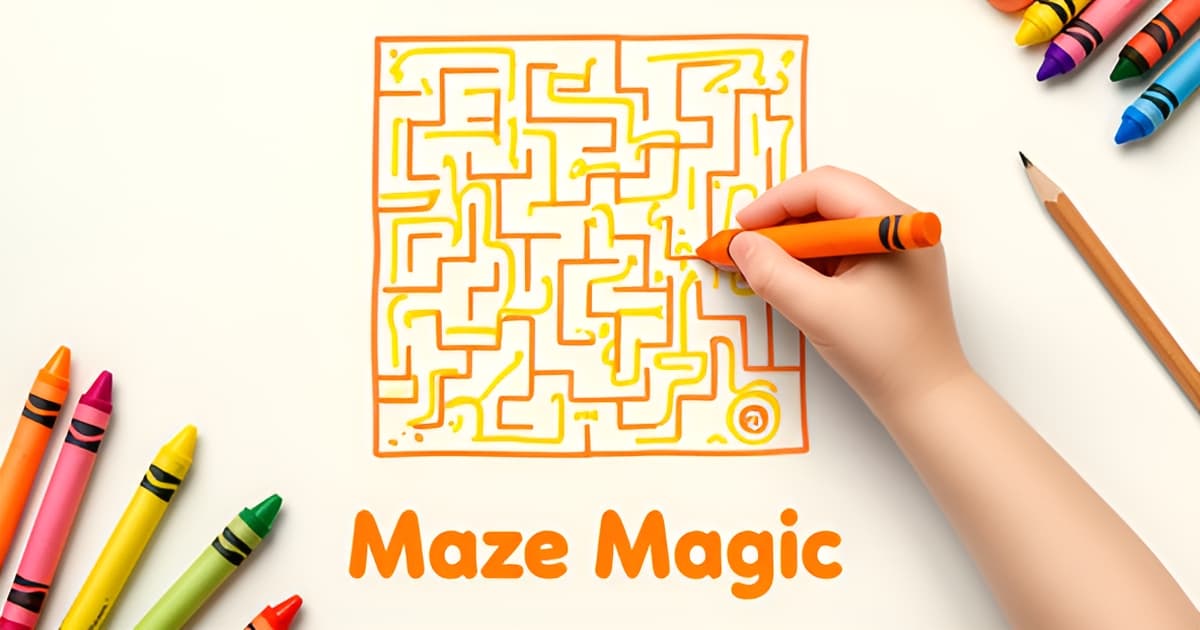
What age do kids like mazes?
Key Facts
- ["Krazydad, operating since 2005, offers 10 difficulty levels with 60 mazes per book across 10 levels, free for personal or institutional use", "https://krazydad.com/mazes/"]
- ["Care.com splits maze enjoyment into three age bands: toddlers ages 1–3, preschoolers 3–5, and grade-schoolers 5–10", "https://www.care.com/c/fun-mazes-for-kids-of-all-ages/"]
- ["Krazydad author notes wide individual variation, stating age suggestions are \"just a ballpark\" with 4-year-olds tackling medium mazes and 13-year-olds finding them challenging", "https://krazydad.com/mazes/"]
- ["Shortform maintains a curated list of \"10+ Best Maze Books for 5-Year-Olds (2024)\" noting challenging tiers require advanced planning uncommon at this age", "https://www.shortform.com/pages/book-lists/books-for-year-olds/maze-books-for-5-year-olds.html"]
- ["Super Teacher Worksheets organizes easy mazes for Kindergarten through 5th grade and hard mazes for 2nd through 6th grades, spanning roughly ages 4–12 overall", "https://www.superteacherworksheets.com/maze.html"]
- ["MyHomeschoolMath offers 52 free printable maze worksheets plus a 53-worksheet downloadable workbook with solutions", "https://www.myhomeschoolmath.com/maze.html"]
Why It's Hard to Pin Down the Right Age for Mazes
You hand a maze to your 4-year-old and it’s either too easy or ends in frustration. You hand one to your 10-year-old and they breezy through it in seconds. This is the real dilemma parents face when searching for age-appropriate activities, and it explains why published age ranges feel so inconsistent.
The confusion starts with the sources themselves. Care.com groups enjoyment into three bands, toddlers ages 1–3, preschoolers 3–5, and grade-schoolers 5–10, while Krazydad, a puzzle site operating since 2005, suggests beginner mazes for ages 4–8, medium for 6–12+, and hard for 9–12+. These are editorial judgments, not research. Super Teacher Worksheets further complicates the picture with easy mazes for Kindergarten through 5th grade, alphabet mazes for Pre-K–1st, and hard mazes for 2nd through 6th grades. Even MyHomeschoolMath tiers content from simple for “younger children” to hard for “older kids and adults.” The result is a landscape of overlapping ranges that prioritize publisher convention over child development.
What the data consistently shows is that difficulty level matters far more than chronological age. Krazydad’s author puts it plainly: “I’ve heard from the parents of 4-year-olds who like the Medium mazes, and from 13-year-olds who find the same mazes challenging. Your mileage will vary.” The age suggestions are described as “just a ballpark” based on limited user feedback. This individual variation is significant. A 5-year-old with strong fine motor skills may tackle complex patterns with ease, while an 8-year-old still developing pencil control may struggle with what the industry labels “beginner.”
Age 5 does emerge as a commercially recognized milestone. Shortform maintains a curated list of “10+ Best Maze Books for 5-Year-Olds (2024),” noting that challenging tiers at this age feature multiple entry and exit points requiring advanced planning and critical thinking uncommon at this stage. Meanwhile, Care.com notes that toddlers may need “a little incentive to complete a maze” and recommends starting with obvious goals, while preschoolers “can truly master the nuances of mazes by attempting more complex patterns.”
The practical takeaway is that free printable options abound across these platforms. Krazydad offers 60 mazes per book across 10 difficulty levels, free for personal or institutional use. MyHomeschoolMath provides 52 free worksheets plus a 53-worksheet workbook with solutions. Super Teacher Worksheets offers printable PDFs, some marked free, others behind a membership. This abundance supports why printable formats remain a go-to for parents and teachers alike, but it also reinforces that a one-size-fits-all age label is impossible to sustain.
The core audience for these activities spans roughly ages 3 through 10, with toddler-friendly styles available for the younger end. Organizing content by difficulty tier, easy, medium, hard, with age brackets as loose guides rather than strict rules aligns with how the most established publishers structure their offerings. For parents navigating this, the best approach is to match the maze’s complexity to the child’s current skill level, not their birth year.
mazes for kids are a great starting point if you’re looking for printable options that can be adjusted by difficulty, and kids sudoku printable offers a similar logic-based challenge for children ready to move beyond paths and grids. For something a little different, rebus puzzles for kids builds problem-solving skills in a format that feels more like a game than a worksheet.
The Age Bands That Actually Work: Toddler to Grade-Schooler
So when do kids actually like mazes? The short answer: if you're asking "what age do kids like mazes," nearly all the practical guidance lands between 1 and 12, with a sweet spot around age 5. The trick is that difficulty, more than age, decides whether a maze delights or frustrates.
Care.com, one of the most widely cited guides, splits maze enjoyment into three clean bands. Their framework starts toddlers at ages 1–3 with simple printable mazes that have an obvious goal, since little ones "may need a little incentive to complete a maze." Preschoolers ages 3–5 come next, and at this stage children "can truly master the nuances of mazes by attempting more complex patterns." Grade-schoolers ages 5–10 round it out with challenging, even life-size mazes.
Krazydad, a puzzle site that has been publishing printable mazes since 2005, takes a tiered approach that skews slightly older. Their suggested ranges look like this:
- Beginner mazes: ages 4–8
- Medium mazes: ages 6–12+
- Hard mazes: ages 9–12+
Notably, the site author describes these as "just a ballpark," having heard from parents of 4-year-olds who tackle medium mazes and 13-year-olds who find the same ones hard. Individual variation is real, so treat any age label as a starting point rather than a rule.
Where the sources converge is the 3–10 core range. Care.com's preschooler and grade-schooler bands cover it, Krazydad's tiers overlap it, and Super Teacher Worksheets spans Pre-K through 6th grade, roughly ages 4–12. If you're building a maze habit at home, that's the window where you'll get the most mileage.
Age 5 deserves special mention. Shortform maintains a curated list of 10+ best maze books for 5-year-olds, complete with a "challenging" tier featuring multiple entry and exit points that demand advanced planning. That a commercial book list exists specifically for this age tells you something: publishers see 5 as the moment maze enthusiasm peaks.
Practically, this means matching the puzzle to the kid, not the birthday. A confident 4-year-old might be ready for medium difficulty, while a 6-year-old new to mazes should start easy. If your child has moved past mazes or wants variety, adjacent formats like kids sudoku printable pages and rebus puzzles for kids stretch the same logic muscles in fresh ways.
Printoodle's mazes for kids generator lets you dial difficulty up or down and reprint favorites free, so the maze grows with your child instead of being outgrown. Print it, doodle it, done.
How to Match Maze Difficulty to Your Kid (Not Just Their Age)
Age tells you where to start, but it's a rough map, not a GPS. As the publisher behind Krazydad puts it, age suggestions are "just a ballpark", he's heard from parents of 4-year-olds who breeze through medium mazes and 13-year-olds who find the same ones challenging. Your mileage will vary.
The clearest way to match a maze to your kid is to follow the difficulty tiers publishers actually use. Super Teacher Worksheets labels its easy mazes for Kindergarten through 5th grade and its hard mazes for 2nd through 6th grades, "for the most advanced maze lovers." MyHomeschoolMath takes a skills-based view instead: simple mazes for "younger children learning to control a pencil," detailed mazes for older children, and hard mazes for skilled youngsters and adults. Pencil control, in other words, is a better signal than a birthday.
So how do you know the maze in front of you is right? Watch how your child works through it:
- Too easy: your child finishes in under a minute, traces the path without pausing, or asks for "a harder one" immediately.
- Too hard: the pencil leaves the lines repeatedly, your child gives up partway, or frustration replaces curiosity.
- Just right: a few wrong turns, some self-correction, and a genuine sense of victory at the end.
That middle zone is where the benefits live. An occupational therapist quoted by Care.com notes that mazes help children practice "planning and brainstorming different strategies," along with visual and fine motor skills. A maze that's too easy exercises none of that.
Gifted learners deserve special mention here. Darleen Claire Wodzenski, a national spokesperson for gifted children, points out that mazes offer an age-appropriate challenge because "maintaining a challenging level of learning can sometimes become tricky" for older children. If your 6-year-old is already solving puzzles aimed at 9-year-olds, that's a reason to move up a tier, not to worry. Krazydad's own ranges stretch hard mazes to ages 9–12+, and plenty of kids run ahead of them.
The practical shortcut: generate mazes at the exact difficulty you need. Printoodle's mazes for kids tool lets you dial the complexity up or down in seconds, so you can print an easy one for Monday and a harder one once your child's pencil control catches up. And when mazes start feeling routine, adjacent puzzles keep the reasoning muscles working: try a kids sudoku printable for logical thinking, or rebus puzzles for kids for a different kind of problem-solving stretch. Print it, doodle it, done.
Why Mazes Are Worth the Printer Ink: The Skills Payoff
A maze page costs pennies to print, but the skills it builds are anything but cheap. Occupational therapist Amanda Mathews of North Shore Pediatric Therapy explains that mazes help children "improve certain skills, like planning and brainstorming different strategies," while also developing visual and fine motor skills. That's a lot of developmental work hiding in one sheet of paper.
The benefit list gets longer the more you look. According to MyHomeschoolMath, mazes support concentration, pencil control, hand-eye coordination, patience, attention to detail, and perseverance. Super Teacher Worksheets adds that mazes and similar brainteasers "can boost reasoning and memory skills." For a five-year-old working through a challenging maze with multiple entry points, that means practicing the kind of advanced planning and critical thinking that's genuinely uncommon at that age.
What makes mazes especially parent-friendly is how the printable model has already proven itself. Krazydad has been publishing free maze books since 2005, with 60 mazes per book across every difficulty level, free for personal, school, and institutional use. MyHomeschoolMath offers 52 free printable worksheets. The delivery model is simple and battle-tested: download a PDF, print it, hand over a pencil.
Printoodle takes that same proven model and adds personalization. Instead of generic clip-art mazes, you can generate mazes themed around whatever your kid is currently obsessed with, print them instantly, and reprint any page from your library free forever. New users get 10 free credits to try it, and the difficulty tiers (easy, medium, hard) mirror the structure used by the major puzzle publishers, so you can match the maze to your child rather than the other way around.
Here's what a regular maze habit quietly builds:
- Planning and strategy: choosing a path before committing to it
- Fine motor control and pencil grip, which carry over into handwriting
- Visual tracking and hand-eye coordination
- Perseverance, since a dead end means backtracking, not giving up
If your child outgrows mazes or wants variety, the same print-and-solve format works for a kids sudoku printable or rebus puzzles for kids, keeping the puzzle routine fresh without a new learning curve.
The bottom line: whether your kid is 3 or 10, a well-matched maze is one of the cheapest, most skill-dense activities you can put in front of them. Print it. Doodle it. Done.
Frequently Asked Questions
At what age should I start introducing mazes to my toddler?
My 5-year-old finds mazes too easy or too hard, how do I choose the right difficulty?
Are age ranges for mazes accurate, or do they vary too much between sources?
Where can I find free printable mazes that adjust to my child's skill level?
My 6-year-old is gifted and solves easy mazes instantly, what should I do?
The Real Answer: Match the Maze, Not the Birthday
So, what age do kids like mazes? The honest answer is roughly 3 to 10, with a sweet spot around age 5, but the number that matters most isn't on a birth certificate. It's the difficulty tier. Every major publisher, from Krazydad (whose author calls age ranges "just a ballpark") to Super Teacher Worksheets, organizes mazes by skill level, not age, because a confident 4-year-old can out-solve a hesitant 8-year-old. Watch for the sweet spot: a few wrong turns, some self-correction, and a real sense of victory. That's where the planning, pencil control, and perseverance benefits actually kick in. Ready to put it into practice? Generate a maze at your child's exact level with Printoodle's mazes for kids tool, reprint favorites free forever, and when paths get routine, try a kids sudoku printable or rebus puzzles for kids to keep the logic growing. Print it. Doodle it. Done.