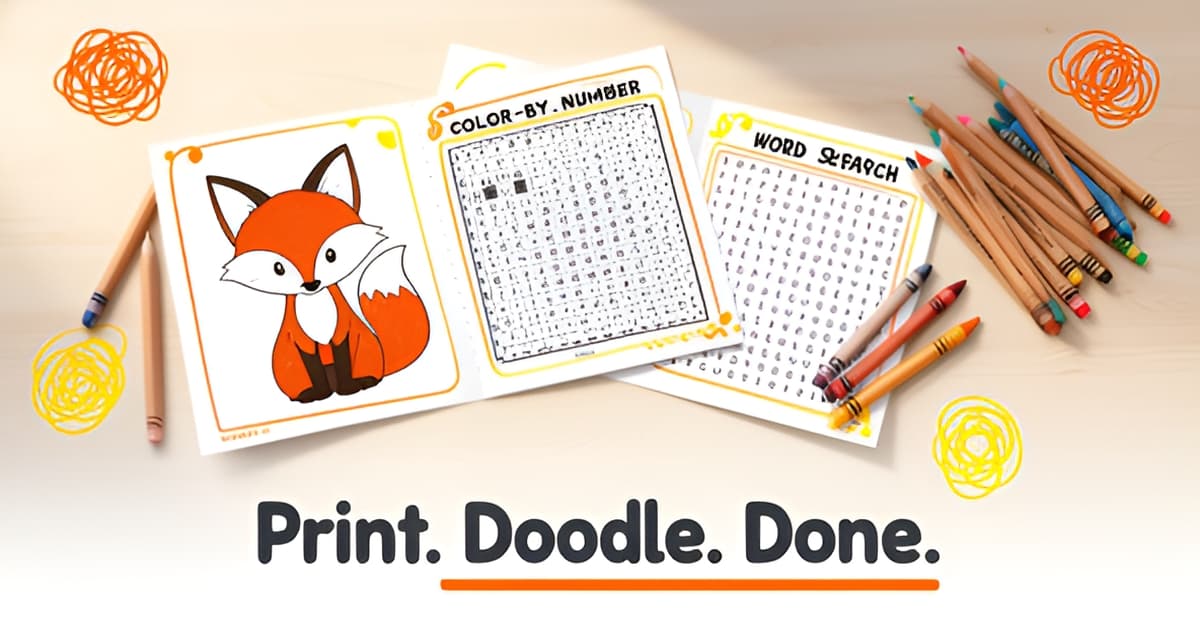
What are some creative animal projects for kids?
Key Facts
- Kids crafts make up 10% of the entire arts and crafts market, according to market research.
- Parents choosing craft activities prioritize safety, non-toxic materials, age suitability, educational value, and mess management per industry data.
- The global arts and crafts market is projected to grow from $56.26 billion in 2026 to $91.95 billion by 2035, research shows.
- 70% of arts and crafts use is personal rather than commercial, according to market analysis.
- Character-themed activity sets increase kids' engagement by combining entertainment with creativity, market research finds.
- North America leads the arts and crafts market with 34% of global share, per industry data.
- Social media platforms like Instagram and Pinterest play a crucial role in motivating people to pick up creative hobbies, research shows.
Why Animal Craft Time Feels Harder Than It Should
If you've ever typed "what are some creative animal projects for kids" into a search bar at 4 p.m. on a rainy afternoon, you already know the real problem isn't a shortage of ideas. It's everything wrapped around the idea: the prep, the shopping trip, the glue that ends up on the ceiling.
Parents want craft time that checks a lot of boxes at once. According to market research on how families choose craft products, the priorities that come up again and again are safety, non-toxic materials, age suitability, educational value, and mess management. That's a tall order for a Tuesday, especially when the "simple" paper-plate lion on Pinterest turns out to need felt, googly eyes, and a hot glue gun you keep on the top shelf.
The friction is real, and it shows up in the numbers. Kids crafts make up about 10% of the entire arts and crafts market, a segment the same research describes as strategically important because it connects creativity with education, play, skill development, and family participation. In other words, millions of households are trying to solve the exact problem you're facing right now. It's common, and it's solvable.
Part of the difficulty is that traditional craft projects demand a supply run before anything can happen. When a project needs ten materials and a cleanup plan, the barrier to starting often beats the payoff. That's one reason manufacturers have pushed toward coordinated activity kits that combine compatible materials and instructions in a single package, because beginners (and busy parents) respond to anything that simplifies preparation.
Printable projects attack the same problem from a different angle. Instead of gathering supplies, you start from something you already have: a printer and paper. A quick animal word search or an animal crossword puzzle can be ready in the time it takes to find a pencil, and there's no glue involved. Even a animal mystery picture only asks kids to match numbers to colors.
The mess-management priority also explains why paper-based activities keep winning with parents. There's nothing to store, nothing to dry overnight, and nothing toxic to check against a label. The research also notes a rising preference for eco-friendly, non-toxic craft materials, and plain paper projects sidestep that concern entirely.
So if animal craft time feels harder than it should, it's not because you're doing it wrong. The structure of most craft projects works against a busy household. Choosing formats with near-zero prep, built-in educational value, and a cleanup that takes thirty seconds changes the math. Print it, doodle it, done.
What Makes a Creative Animal Project Actually Work for Kids
Not every craft idea survives contact with a real Tuesday afternoon. If you've ever wondered what are some creative animal projects for kids that actually get finished (instead of abandoned halfway through), the answer starts with how the project is packaged, not how cute the finished panda looks.
The best projects share three research-backed traits, and they map neatly onto what parents already care about.
First, coordinated kits beat loose supplies. According to market research on the arts and crafts industry, manufacturers are responding to demand with coordinated activity sets that simplify project preparation, and convenient kits attract beginners by combining compatible materials and instructions in a single package. A printable animal project is the purest version of this: everything arrives together, themed and ready.
Second, digital inspiration drives physical crafting. The same research shows that short-form videos, tutorials, and downloadable patterns let beginners learn a technique before committing materials. Kids craft trends now flow from screen to table, which is exactly why instantly downloadable projects fit how families actually plan activities.
Third, character-adjacent themes boost engagement. Character-themed activity sets increase engagement for kids, per the same market analysis. Original animal characters capture that appeal without trademark headaches, and they give kids a story to attach to the craft.
When you weigh what parents actually evaluate (safety, age suitability, educational value, and mess management, per industry data), printable animal projects score well on all four:
- Instant: download and print in seconds, no shopping trip for missing supplies
- Reusable: reprint the same page as many times as your toddler demands
- Low-mess: paper and crayons, not glitter glue on the ceiling
- Educational: puzzles and coloring build vocabulary and fine motor skills together
Kids crafts represent 10% of the arts and crafts market, and the segment stays strategically important because it connects creativity with education, play, and family participation, as the research puts it. Printable formats slot into that participation easily: a parent prints, a child creates, nobody spends 40 minutes prepping.
Printoodle's approach leans into this model. An animal word search, an animal crossword puzzle, or an animal mystery picture each arrive as a coordinated, print-ready page, which is precisely the "simplify project preparation" formula the market data describes.
The takeaway is simple. A creative animal project works when the barrier to starting is nearly zero, and printable activities get you there faster than any craft-store run. Print it, doodle it, done.
5 Creative Animal Projects You Can Print Today
Ready for five animal projects you can print in minutes? All you need is a printer, some crayons, and a kid who loves animals. According to market research, kids crafts account for 10% of the arts and crafts market, and parents consistently prioritize safety, educational value, and mess management when choosing activities. Printables score well on all three.
1. A Pet-Photo Coloring Page (Ages 3–7)
Upload a photo of your family dog, cat, or hamster and turn it into line art the kids can color themselves. It's a sweet twist on standard coloring pages because the subject is personal. Preschoolers work on fine motor control while big kids experiment with realistic fur colors or rainbow alternatives.
2. An Animal Word Search (Ages 5–9)
Generate an animal word search with your own vocabulary list, so you can match it to what your child is learning. Try farm animals for a five-year-old, or rainforest species for a third grader ready for "capuchin" and "jaguar." Word searches quietly build spelling recognition and pattern scanning.
3. An Animal Mystery Picture (Ages 6–12)
A animal mystery picture is pixel color-by-number: kids fill in numbered squares until a hidden animal reveals itself. The reveal moment keeps older kids engaged far longer than a standard coloring sheet. It also builds number-matching patience, which makes it a favorite for quiet afternoons.
4. An Animal Crossword Puzzle (Ages 8–12)
An animal crossword puzzle works best once kids read confidently. Write clues that mix easy wins ("It says 'moo'") with trickier facts ("Largest land animal"). Crosswords stretch vocabulary and reward persistence, and industry analysis notes that kids crafts remain strategically important precisely because they connect creativity with education, play, and skill development.
5. A Personalized Animal Birthday Activity Pack (Ages 3–12)
Build a themed pack with the birthday child's name woven into every page: a lion coloring sheet with "Happy Birthday, Maya," a safari word search, and a mystery animal reveal for the party table. Coordinated activity sets simplify party prep, and research shows that convenient kits are exactly what attracts beginners to crafting in the first place.
Quick tips for any of these:
- Print a few extras; reprints stay free in your Printoodle library, so the "again, again" crowd is covered.
- Switch to A4 if you're outside the US with one toggle.
- Pair a puzzle with a coloring page for a two-part activity that fills a full rainy afternoon.
Every project above downloads as a print-ready PDF in seconds. Print it, doodle it, done.
Turning One Printout Into a Full Afternoon (and a Keepsake)
A single printed page can carry more weight than you'd expect. Pair it with a second and third activity, and you've turned fifteen minutes of prep into an afternoon of focused, screen-free fun.
Start by pairing a word search with a puzzle that uses the same animal vocabulary. Generate an animal word search to introduce the terms, then follow with an animal crossword puzzle that asks kids to recall them. This mirrors what market research identifies as a major trend: coordinated activity sets that simplify project preparation and attract beginners by combining compatible materials in one package.
A animal mystery picture makes a natural finale. Kids color by number, and an animal image slowly appears. The sequence feels like a mini lesson, which matters: kids crafts remain strategically important precisely because they connect creativity with education, play, and family participation.
One download should serve the whole household. On Printoodle, everything you generate lives in a library where reprints are always free, so a second-grader and a kindergartner can each get a fresh copy without spending extra credits. Teachers can run the same page for a full class.
This reusability matters at scale. Kids crafts account for 10% of the arts and crafts market, and schools and households generate recurring demand through classroom assignments and children's projects. A printable you can reprint indefinitely fits that rhythm better than any single-use kit.
The afternoon doesn't end when the crayons go down. Research on the craft retail market notes that platforms like Instagram and Pinterest play a crucial role in sharing DIY ideas, motivating a broad demographic to pick up creative hobbies. Your child's finished mystery picture can be part of that exchange.
A few ways to turn finished pages into keepsakes:
- Laminate the best page and start a yearly animal-art binder
- Photograph completed puzzles and build a family Pinterest board
- Mail a finished page to grandparents as a low-cost, high-smile gift
- Date each page so siblings can compare their versions side by side
One printout, reused and shared, becomes something bigger than the paper it's printed on. The same research found that 70% of arts and crafts use is personal, and home use has grown strongly as families reach for creative pursuits during leisure time. That's the real case for planning ahead: a five-minute download today buys you a repeatable activity for rainy days, classroom units, and quiet weekends alike.
Print it. Doodle it. Done.
Frequently Asked Questions
What are some creative animal projects for kids that don't require a craft-store run?
Why do animal craft projects always feel like so much work to set up?
Are printable animal projects actually educational, or just busywork?
What animal projects work for different ages, from preschoolers to older kids?
How can I turn one printed animal activity into a full afternoon?
Are paper-based animal crafts really better than messier hands-on projects?
Key Takeaways
{ "title": "Your Next Rainy Afternoon Starts With One Click", "content": "So, what are some creative animal projects for kids? The answer, it turns out, isn't a bigger craft bin, it's a smaller barrier to starting. The best projects are the ones with near-zero prep, real educational value, and