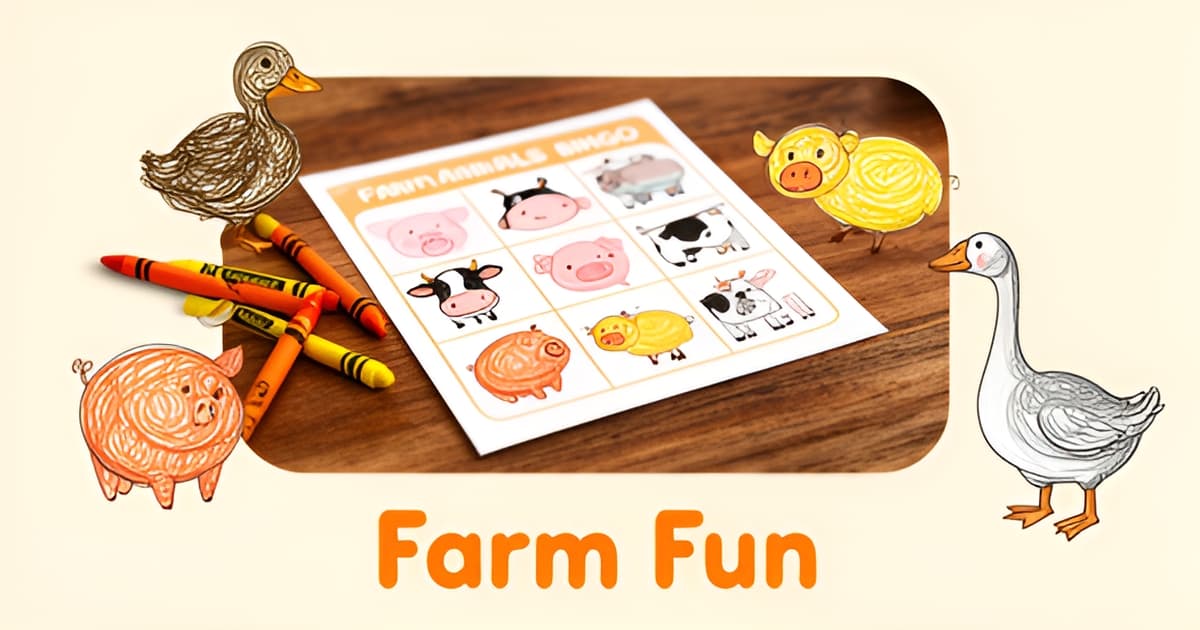
What are some easy farm animal games for preschoolers?
Key Facts
- Duck Duck Goose appears in all three major farm game roundups, Tinybeans, Scary Mommy, and How Wee Learn, making it the most recommended preschool farm game, per Tinybeans' list of 22 games.
- How Wee Learn catalogs 45 farm-themed activities for preschoolers, the broadest single collection in the research.
- Preschool Play and Learn offers 15 free farm printables requiring only basic supplies like crayons, markers, or colored pencils according to its activity pack.
- Donkey River Farm's hands-on farm activities for ages 3–5 take just 15–30 minutes and use common household items per the farm's guide.
- Scary Mommy rates Duck Duck Goose and animal sounds matching as clearly preschool-friendly while flagging wheelbarrow races as better for older kids in its roundup of 21 farm games.
- Farm animal bingo builds listening and vocabulary skills through progressive clues, from direct naming to sound clues like 'Which animal says oink?', according to ChildCareEd.
- In The Playroom's Farm Animals Busy Book covers 7 farm animals with paired activities you can 'just print out and you're ready to go' per the printable pack.
Why Farm Animal Games Are a Preschool Win (and What Makes One 'Easy')
If you've ever promised a preschooler a "fun farm game" and then watched their attention evaporate mid-explanation of the rules, you already know the real challenge. Finding an activity that holds a 3 to 5 year old's focus without demanding an hour of prep or a trip to the craft store is genuinely hard. That's exactly why so many parents and teachers keep searching for easy farm animal games for preschoolers and landing on the same answer: print it, play it, done.
The research backs this up. Across the activity guides surveyed, printable and DIY formats dominate the recommendations. In The Playroom's popular Farm Animals Busy Book covers 7 farm animals and promises you can "just print them out and you're ready to go." Preschool Play and Learn's free farm pack includes 15 printables that require only basic supplies like crayons, markers, or colored pencils. Donkey River Farm's hands-on activities for ages 3 to 5 take about 15–30 minutes and use common household items.
So what does "easy" actually mean when it comes to a preschool game? Based on the patterns in the research, three criteria keep coming up:
- Printable or household-item formats. Paper, crayons, pool noodles, or plastic bottles. No specialty purchases required.
- 15–30 minute play sessions. Long enough to feel like a real activity, short enough to end before the meltdown.
- Rules a preschooler can grasp in one round. Duck Duck Goose and Pin the Tail on the Pig work because kids learn them by playing, not listening.
Age-appropriateness matters too. Scary Mommy's roundup of 21 farm games rates Duck Duck Goose and animal sounds matching as "clearly preschool-friendly," while flagging games like Wheelbarrow Races as better suited to older kids. The lesson: a farm theme alone doesn't make a game preschool-ready.
There's a genuine payoff for getting this right. ChildCareEd notes that farm animal games build listening and vocabulary skills when the play stays purposeful and conversational. A simple bingo round with sound clues ("Which animal says oink?") quietly builds phonemic awareness while your preschooler just thinks they're winning.
That's the sweet spot Printoodle was built for. Instead of hunting for the right printable, you can generate one yourself in seconds, whether that's an animal word search, an animal mystery picture for color-by-number reveals, or a simple animal crossword puzzle scaled to preschool vocabulary. Print it, doodle it, done.
Movement Games: Adapted Classics That Preschoolers Already Know
The easiest games to run are the ones your preschooler already knows how to play. That's the strongest pattern in the research on easy farm animal games for preschoolers: classic childhood games with a farm twist appear again and again across parenting and education sources, because the rules are already familiar and the theme does the rest.
Duck Duck Goose is the clearest example. It shows up in Tinybeans' roundup of 22 farm games, in Scary Mommy's list of 21, and again in How Wee Learn's catalog of 45 farm activities. Scary Mommy rates it as clearly preschool-friendly, which matters: not every farm game is. The same source flags wheelbarrow races and corn shucking as better suited to older kids.
Here's how the adapted classics break down:
- Duck Duck Goose: No changes needed except a barnyard playlist. Preschoolers know the circle, the tap, and the chase.
- Farmer, May I?: The classic "Mother, May I?" with the child asking the farmer for permission to move. Tinybeans notes it works specifically for preschoolers.
- Pin the Tail on the Pig: A blindfold and a paper pig. Tinybeans lists a retail version at $16, but a hand-drawn pig works just as well.
- Barnyard Tag: Scary Mommy includes it among the active, energy-burning options. Better for mixed-age groups than solo threes.
- Farm Animal Bowling: How Wee Learn features it as a gentler movement game, ideal for smaller preschool crowds.
The age distinction is worth taking seriously. Scary Mommy's guidance separates games that are clearly preschool-friendly from ones that suit a broader crowd, and Tinybeans similarly notes that its $19 Chickapig board game is "perfect for older siblings or friends" rather than preschoolers themselves. If your three-year-old is playing solo, lean on Duck Duck Goose, Farmer May I, and bowling. Save Barnyard Tag for family game night when bigger kids can absorb the rough-and-tumble.
Movement games pair nicely with quieter table activities, too. After a round of bowling or tag, a calm-down page like an animal word search or an animal mystery picture keeps the farm theme going while little legs rest. Preschoolers who aren't reading yet can still enjoy an animal crossword puzzle done as a read-aloud, with you supplying the clues and them shouting the animal names.
The pattern holds across every source: take a game they already know, swap in a pig or a farmer, and you've got a preschool hit with almost zero prep.
Sound and Word Games That Sneak in Learning
Moo. Oink. Baa. If you've spent any time around a preschooler, you know those sounds come up constantly, and that's actually a good thing. When you're wondering what are some easy farm animal games for preschoolers, sound-based word games are where the real learning hides.
According to ChildCareEd's guidance for early educators, farm animal games build listening and vocabulary when the play stays purposeful, conversational, and accessible. That's why "What Does the Animal Say?" activities show up so often in preschool plans. In The Playroom's printable farm pack builds phonemic awareness activities around exactly this question for its seven featured farm animals.
The most useful structure is a progressive clue game. ChildCareEd recommends starting with the easiest clue and working up in difficulty:
- Name it directly: "Point to the cow."
- Give a sound clue: "Which animal says 'oink'?"
- Offer a description: "This animal gives us milk and says 'moo'."
Because the clues get harder as you go, a three-year-old can stay in the game while a five-year-old stays challenged. You can play it in the car, at snack time, or while waiting at the doctor's office with zero materials.
For children ready to connect sounds with letters, beginning-sounds matching is the natural next step. How Wee Learn's catalog of 45 farm-themed activities includes a Farm Animals Beginning Sounds Game, and Pre-K Printable Fun offers beginning-sounds clip cards that ask children to match "pig" to the letter P. The skill is small, but it's a genuine step toward reading.
Quiet afternoons are a good moment to extend this learning onto paper. A personalized animal word search with your child's favorite farm animals turns vocabulary into a hunting game, while an animal mystery picture reveals a hidden animal square by square as they work. For pre-readers who know their letters, a simple animal crossword puzzle with sound-based clues ("This animal says 'baa'") bridges the gap between what they hear and what they see in print. All three take minutes to generate and print at home.
Print it. Doodle it. Done.
Printable Games: Bingo, Sorting, and Match-Ups You Can Make in Minutes
Some of the best farm games need nothing more than a printer and a few minutes of your time. Research across popular parenting and teaching sites shows printables dominate precisely because they're "simple, low-prep, and easy to use," as In The Playroom puts it: just print and play.
With Printoodle, you can generate all three of the classics below as print-ready PDFs, and every file stays in your library so reprints are always free. That matters when a bingo card gets decorated with juice.
Farm Animal Bingo with Tiered Clues
Bingo is the most consistently recommended printable for this age group, and for good reason: childcare educators note it builds listening and vocabulary when the clues get purposeful. The trick is tiering. Start with direct naming ("Find the cow"), then move to sound clues ("Which animal says 'oink'?"), then action and descriptive clues ("This animal gives us milk and says moo").
You can prompt Printoodle to build a bingo set around your child's favorite eight animals, then write three clue levels for each one. Younger preschoolers stay in the game with level-one clues while an older sibling takes the descriptive ones. For kids ready for letters, an animal word search makes a nice follow-up activity on the same theme.
Sorting Flashcards
Sorting is a foundational skill, and it's flexible. Generate a flashcard set and sort three ways:
- By legs: two (chicken, duck) versus four (cow, pig, horse)
- By habitat: barn, pond, or field
- By product: milk, eggs, or wool
This mirrors the sorting activities that Pre-K Printable Fun organizes by size, habitat, and diet, but you control the animals and the categories. A set of ten cards takes seconds to generate and works for a 15-minute window, which matches the 15 to 30 minute activity range that Donkey River Farm recommends for ages 3 to 5.
Mama-and-Baby Match-Ups
Matching cow to calf and hen to chick teaches animal vocabulary and classification at the same time. Ask for a two-column matching page with dotted lines to cut, and you've added scissors practice too. Donkey River Farm's "Mama and Baby Match" is a proven version of this format for preschoolers.
Once matching feels easy, level up to an animal mystery picture for color-by-number fun, or an animal crossword puzzle with picture clues for pre-readers. Print it. Doodle it. Done.
Putting Together a Farm Game Session That Actually Works
Knowing a stack of easy farm animal games for preschoolers is one thing; sequencing them so the session doesn't dissolve into chaos is another. The order you play matters as much as what you play.
Start with movement. Preschoolers arrive with energy to burn, and energy-burning games like Barnyard Tag or Wheelbarrow Races work best when attention is still fresh. Games like "Farmer, May I?" are explicitly suited to preschoolers and give every child a turn at following directions, according to Tinybeans' roundup of 22 farm games. Ten to fifteen minutes of big movement settles most groups nicely.
Once the wiggles are out, shift to focused play. A sound-matching or bingo game brings the energy down while keeping everyone engaged. Farm-animal bingo builds listening and vocabulary skills when you use progressive clues: start by naming the animal, then advance to sound clues ("Which animal says oink?") and finally descriptive clues. That progression is your built-in difficulty dial, and it's what makes one bingo set work for a mixed-age group.
Close with something quiet and hands-on. A maze, dot-to-dot, or coloring printable works as a wind-down because it requires only basic supplies like crayons or markers, and kids can finish at their own pace. In The Playroom's farm busy book covers 7 animals across paired activities and is designed so you "just print them out and you're ready to go," which is exactly the low-prep quality you want at the end of a session when you're tired too.
Adjust the session by age:
- Three-year-olds: keep rules to one step, use direct naming in bingo, and skip anything with elimination.
- Four-year-olds: add sound clues and simple charades; short movement games still come first.
- Five-year-olds: introduce descriptive clues and letter-sound games, like matching animals to their beginning sounds.
For the printable portion, Printoodle lets you generate a whole wind-down stack in minutes: an animal word search for kids who've started letter recognition, an animal mystery picture for a calm color-by-number reveal, or an animal crossword puzzle with picture clues for older preschoolers. Everything saves to your library, so reprints for the next session are free.
Ready to build your own farm afternoon? Print it. Doodle it. Done. Generate a personalized farm activity pack in minutes and spend less time prepping and more time playing.
Key Takeaways
{ "title": "From Moos to Minutes: Building Preschool Skills Through Simple Farm Play", "content": "Finding easy farm animal games for preschoolers doesn't have to mean hours of hunting or expensive supplies. Across the research, the clear winners share three traits: they use printable or househo