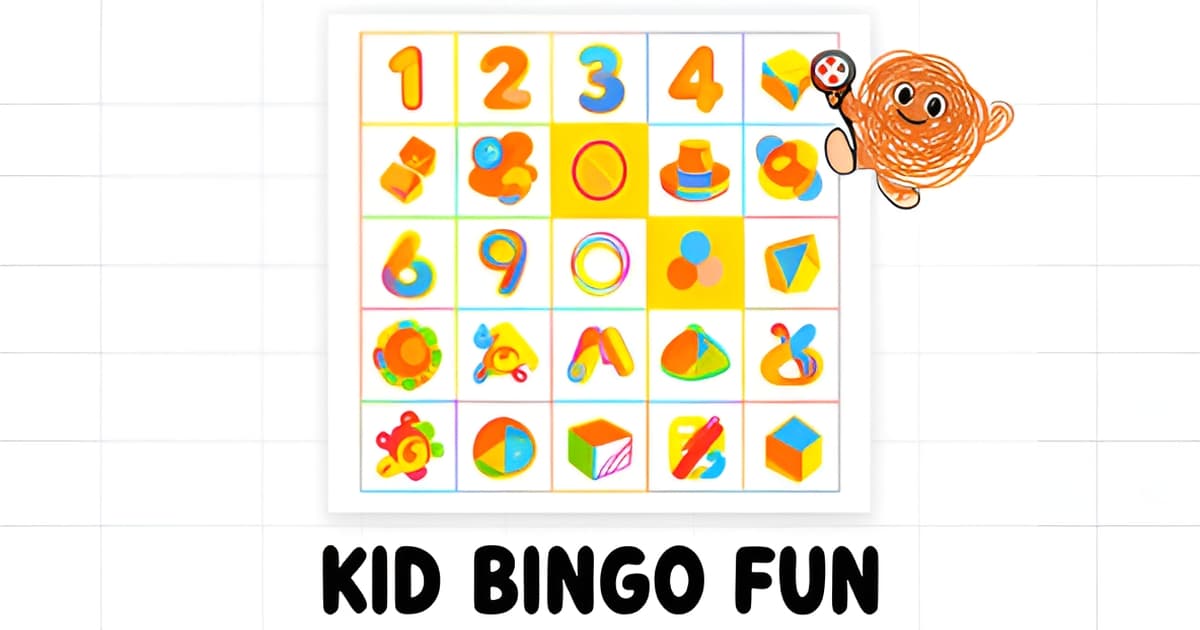
What are some fun bingo games for kids?
Key Facts
- Bingo's simple rules let kids "quickly grasp the game and start playing with minimal instruction," according to educational game experts source
- A peer-reviewed study found ~90% of participants found bingo-based learning engaging and enjoyable source
- A kids' educational bingo app targets ages 2-7 and offers 3x3, 4x4, and 5x5 board sizes, with only "Shapes & Colors" free and the other 5 lesson types behind an in-app purchase source
- Top-grossing bingo apps like Bingo Blitz target adult audiences, not children, with one "Bingo Classic" app categorized under Casino with ads and in-app purchases source
- Bingo builds attention to detail, memory, pattern recognition, turn-taking, cooperation, and sportsmanship, with its random nature promoting fairness and helping kids "celebrate others' successes and handle disappointment gracefully" source
- Printable bingo solves the paywall and data-sharing problems of digital apps, letting parents print once and the game be theirs forever with no ads or third-party data sharing source
- The same study found exam scores on bingo-covered topics were significantly higher (92.7 ± 4.96) than non-covered topics (83.75 ± 7.74), though it involved 145 medical students source
Why Bingo Beats Screen Time When You Need a Quick Kids' Activity
It's 3 p.m. on a rainy Saturday, the kids are bouncing off the walls, and you've got twenty minutes of patience left. If you're wondering what are some fun bingo games for kids that don't involve handing over your tablet, you're in the right place, because the answer is simpler than the app store makes it look.
Most parents reach for a bingo app first, and the frustration starts fast. The popular freemium options lock most content behind paywalls: one widely downloaded kids' bingo app offers six lesson types but only "Shapes & Colors" for free, with the other five behind an in-app purchase, according to its Google Play listing. Parents also complain the instructions confuse children: "it tells you to pick a letter or a word or a number, but it doesn't tell you what one to pick."
Worse, many of the top-grossing bingo apps aren't designed for children at all. One "Bingo Classic" app is categorized under Casino, with ads, in-app purchases, and third-party data sharing, per its store listing. That's not an activity, that's a slot machine with a cartoon skin.
Printable bingo solves all of this in one sheet of paper. According to educational game experts, bingo's simple rules let kids "quickly grasp the game and start playing with minimal instruction," and the game adapts to any theme, age group, or setting: classroom, birthday party, or family game night.
Here's what printable bingo gives you that apps don't:
- No paywalls, no ads, no data sharing. You print once and the game is yours, forever.
- Instant setup. A generator like Printoodle creates themed bingo cards in seconds, ready for dinosaurs, animals, letters, or your birthday kid's favorite things.
- Real developmental value: memory, pattern recognition, turn-taking, and sportsmanship, all documented benefits of the game.
- Screen-free engagement. The anticipation of completing a row keeps kids genuinely absorbed rather than pacified.
And when the bingo round wraps up, the same printer keeps the momentum going. Pair your bingo cards with one minute games for kids for quick energy-burners, mazes for kids for quiet focus time, or a kids sudoku printable for the puzzle-lovers in the group. One rainy afternoon, handled. Print it. Doodle it. Done.
7 Fun Bingo Games for Kids That Actually Teach Something
The best part about bingo is how easily it bends to whatever your child is learning. A well-established range of themed bingo formats covers numbers, letters, shapes, animals, and geography, and each one teaches something real while still feeling like pure play. Here are seven variations worth printing for your next game night.
1. Number Recognition Bingo (ages 3–6) The caller pulls a number and says it aloud; kids scan their cards for the match. It's the classic format, and it builds number recognition faster than most worksheets because kids want to find the match. Use a 3x3 grid for preschoolers and a 5x5 grid once they're confident, the same board sizes popular kids' bingo apps use for the 2–7 age range.
2. Addition Bingo (ages 6–8) Instead of calling "seven," the caller says "three plus four." Kids solve the problem, then hunt for the answer. It turns mental math into a race, and the suspense of one square left on a diagonal keeps them leaning in.
3. Alphabet Bingo (ages 3–5) Call out letters or letter sounds and have pre-readers mark the match. This is the format where popular educational bingo apps lean on voice narration so kids can play without an adult reading to them; with printed cards, you simply say the sound and let them find the letter.
4. Sight-Word Bingo (ages 5–7) Swap letters for common words like "the," "and," and "said." Each round doubles as reading practice, and the fast pace means kids see each word several times before the game ends. Repetition without boredom is the whole trick.
5. Shape and Color Bingo (ages 2–4) The gentlest entry point. Kids mark circles, squares, triangles, and color patches as you call them. It's ideal for toddlers because matching by sight requires no counting or reading at all.
6. Animal Bingo (ages 3–7) Call an animal name; kids find the picture. Add a sound component ("who says moo?") for younger players, or a fact component ("which animal has a trunk?") for older ones. One popular kids' bingo app has drawn over 100,000 downloads largely on formats like this.
7. Geography Bingo (ages 7–12) Call a state, country, or continent and have kids find it on illustrated cards. It works beautifully as a classroom warm-up or a rainy-day family challenge.
A few tips that make any of these run smoothly:
- Keep instructions to one sentence; kids grasp bingo quickly, and unclear directions are the most common complaint parents raise about kids' bingo products.
- Celebrate wins with a sticker or a silly cheer; small rewards keep the energy high.
- Rotate themes so the game stays fresh; pair bingo rounds with one minute games for kids, mazes for kids, or a kids sudoku printable for a full activity hour.
Printoodle's themed bingo card sets cover every format above, with print-ready cards sized for little hands and themes matched to your child's age. Pick a format, print a set, and let the calling begin.
The Skills Kids Pick Up Without Noticing
Here's the quiet thing about bingo: kids think they're playing a game, and while they're daubing squares and scanning their cards, they're actually practicing a whole set of skills. Educational toy maker eeBoo notes that bingo builds attention to detail, memory, and pattern recognition, along with social skills like turn-taking and cooperation source. None of it feels like a lesson, which is exactly why it works.
The social side deserves its own mention. Because bingo's outcome is random, every player has an equal shot, and eeBoo points out that this promotes fairness and sportsmanship: kids learn to celebrate others' successes and handle disappointment gracefully source. Anyone who's watched a four-year-old lose a race knows how valuable that practice is. A game where losing is nobody's fault makes those moments easier to absorb.
There's also some evidence, with a caveat worth stating plainly. A peer-reviewed study in the Journal of Education and Health Promotion found that about 90% of participants found bingo-based learning engaging and enjoyable, and exam scores on bingo-covered topics were significantly higher than on topics taught without it source. The honest catch: that study involved 145 medical students, not children. So treat it as suggestive rather than proof, though it does reinforce the broader point that bingo holds people's attention while they learn.
What this looks like in practice, whether you're playing themed cards from Printoodle or a homemade set:
- Memory and matching: kids hold the called item in mind while scanning their card for it.
- Pattern recognition: spotting a row, column, or diagonal before anyone else does.
- Attention to detail: telling the difference between a shark and a dolphin on a crowded card.
- Turn-taking and patience: waiting for the caller, waiting your turn to check a win.
If your kids take to this kind of focused play, it pairs well with other quiet-table activities like mazes for kids or a kids sudoku printable, both of which stretch the same attention muscles in a different way. And when you want something faster and louder, one minute games for kids keep the energy going between rounds. Print it. Doodle it. Done.
How to Set Up a Bingo Game in Under Five Minutes
Setting up a bingo game for kids is faster than most people expect, especially when you have the right tools ready. The first step is choosing a board size that matches the attention span and skill level of the age group: a 3x3 grid works best for little ones ages 3 to 5, while older kids typically enjoy the slightly more strategic 5x5 layout. For pre-readers, the calling process is where a little prep goes a long way, using picture cards or voice narration instead of written clues lets every child participate independently, turning the caller into a storyteller rather than a reader. Win mechanics also shape the pace; a "four corners" finish takes seconds and is perfect for short attention spans, while a "full card" win provides a satisfying goal for a longer session. Printoodle’s print-ready PDFs remove the design guesswork entirely, generate, download, and print in seconds, and because every creation lives in your library, reprints are always free, meaning you can print fresh cards for every birthday party or classroom session without extra cost. Once the bingo rounds wrap up, keep the momentum going with complementary activities like one minute games for kids, mazes for kids, or kids sudoku printable, all just a click away in the Printoodle library.
Bingo for Every Occasion: Parties, Classrooms, and Rainy Days
Bingo transforms any room into a playground of learning and laughter, whether you are hosting a birthday bash, running a classroom review, or battling boredom on a rainy afternoon. Themed variations, number, alphabet, shape, animal, and color bingo, turn familiar concepts into interactive challenges that kids can grasp in minutes. Research shows that bingo’s simple rules let children "quickly grasp the game and start playing with minimal instructions," while its random nature promotes fairness and sportsmanship, helping kids "celebrate others' successes and handle disappointment gracefully." A peer-reviewed study on bingo as a learning tool found that post-test scores improved significantly, and roughly 90% of participants found the activity engaging and enjoyable, confirming its power to make learning feel like play rather than work.
For a child’s birthday, the theme can center on their name or favorite interests, turning the card into a personalized party favor. In the classroom, teachers can pull vocabulary words, math problems, or science facts directly from their lesson plans to generate custom cards in seconds, turning a standard review session into a game the whole class can join. On a rainy day at home, a themed round keeps screens off and hands busy, especially when paired with other screen-free activities like mazes for kids or kids sudoku printable to extend the fun.
Printoodle’s themed bingo cards are designed specifically for these moments, offering print-ready PDFs that feature the child’s name or a chosen topic right on the grid. With a few clicks, a teacher can upload a list of review terms and receive a full set of randomized cards ready to print, or a parent can generate a birthday set that doubles as a keepsake. The platform’s free tier gives 10 credits upon sign-up, and every creation lives in a personal library where reprints are free forever, making it easy to revisit a favorite theme or try a new one without extra cost.
Whether you are planning a classroom quiz, a birthday activity, or just a way to keep the kids entertained, bingo offers a flexible, screen-free solution that adapts to any occasion. Print it. Doodle it. Done.
one minute games for kids, mazes for kids, and kids sudoku printable for more screen-free play ideas.
Frequently Asked Questions
What are some fun bingo games for kids that actually teach something?
Is bingo actually educational for kids, or is it just a time-filler?
Why not just use a bingo app instead of printing cards?
What's the right bingo board size for my child's age?
Can kids play bingo if they can't read yet?
Does bingo help kids learn to lose gracefully?
Your Next Rainy Day Is One Print Away
So, what are some fun bingo games for kids? As we've seen, the answer spans seven flexible formats, number, addition, alphabet, sight-word, shape and color, animal, and geography bingo, each one teaching real skills like memory, pattern recognition, and turn-taking while kids think they're just playing. And because bingo's simple rules let children grasp the game with minimal instruction, setup takes minutes, not naptime-length negotiations. The next step is easy: pick the format that matches your child's age and what they're learning, whether that's a classroom review, a birthday party favor, or a screen-free rainy afternoon. Printoodle's themed bingo cards are print-ready in seconds, sized for little hands and matched to your child's age, and every set lives in your library with free reprints forever. When the last round wraps up, keep the momentum going with one minute games for kids, mazes for kids, or a kids sudoku printable, a full hour of focused fun, handled. Print it. Doodle it. Done.