What are some fun facts about Valentine's Day for kids?
Key Facts
- Candy tops the Valentine's gift list at 56% of shoppers, beating both flowers and cards at 41% each, according to the National Retail Federation's annual survey.
- A record 35% of people now buy Valentine's gifts for their pets, spending about $2.1 billion, per NRF survey data.
- 27% of consumers buy Valentine's gifts for kids' classmates and teachers, totaling $2.2 billion, the National Retail Federation reports.
- Conversation hearts were first created in 1866 by Daniel Chase, who invented a machine to print messages on candy.
- About 114 million greeting cards are exchanged every Valentine's Day, making it the second most popular card-giving holiday after Christmas, per Learning Liftoff.
- Around 1,000 valentines addressed simply to 'Juliet' arrive in Verona, Italy each year, and volunteers write back, according to Between Us Parents.
- Spending at U.S. florists jumps nearly 1,000% around February 14, Mastercard's spending insights show.
Why Kids Love Valentine's Day (And Why It's Bigger Than You Think)
If you've ever wondered what some fun facts about Valentine's Day for kids are, you've probably noticed something surprising first: the holiday your child cares most about has very little to do with romance. For kids, February 14 is about decorated shoeboxes, paper cards, and a classroom full of candy. And the numbers back that up.
According to the National Retail Federation's annual survey, 27% of consumers buy Valentine's gifts specifically for their kids' classmates and teachers, spending a combined $2.2 billion on that tradition alone. Many schools even encourage children to give a card to every classmate so nobody feels left out, a norm that turns one afternoon into a mini card-making factory in kitchens across the country.
The family side of the holiday is just as big. The same NRF data shows 58% of consumers plan to buy gifts for family members like kids, parents, or siblings, totaling $4.5 billion. And what tops the gift list? Not jewelry, not flowers first: candy, at 56% of shoppers, ahead of flowers and greeting cards at 41% each. Valentine's Day, in practice, is a family and classroom holiday before it's anything else.
That's exactly why parents and teachers end up hunting for kid-friendly facts and activities every February. You need something for the class party, something for the exchange, and ideally something that sneaks in a little learning. A few directions that work well:
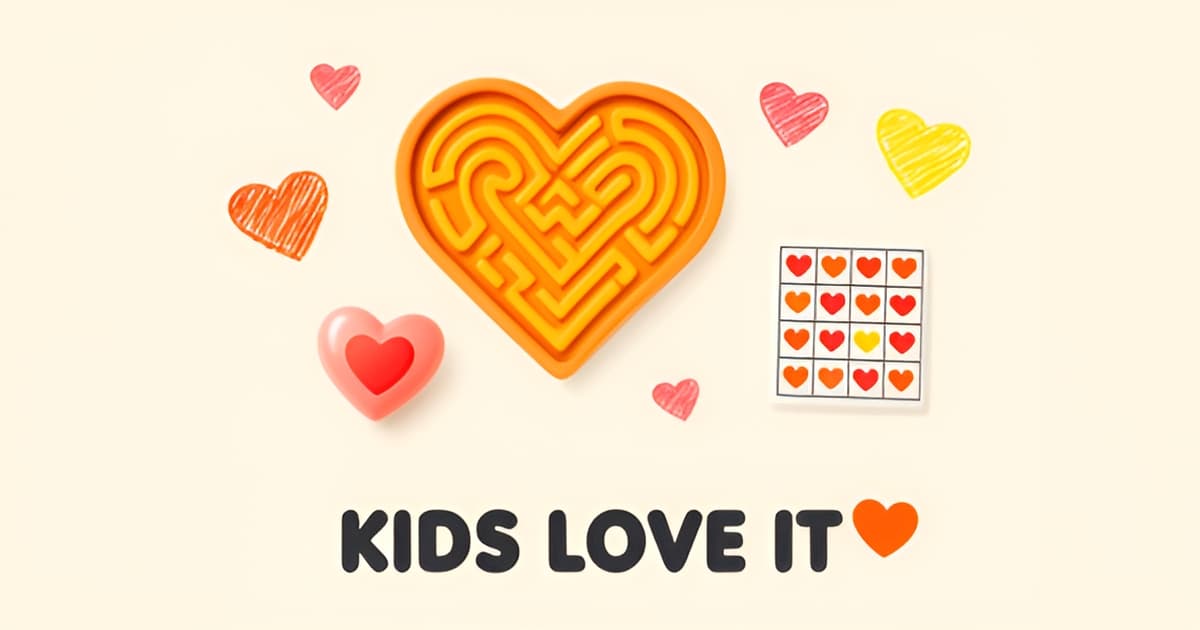
- Puzzle pages that double as valentines, like heart-themed mazes for kids that kids can solve and swap.
- Quiet-time activities such as a kids sudoku printable for classroom centers or early finishers.
- Wordplay fun like rebus puzzles for kids, which fit a Valentine theme surprisingly well since the holiday is already full of symbols: hearts, doves, Cupid, roses.
There's also a case for making rather than buying. Statista's consumer research notes that most shoppers say thoughtfulness matters most, meaning people want gifts that feel personal and meaningful. A store-bought multipack gets the job done; a printable fact sheet or puzzle card with a personal touch tends to stick in a classmate's memory a bit longer.
The classroom tradition itself has deep roots. Valentine's Day became popular with school children in the 1930s, when cheap multipack paper valentines and mass-produced candy made it easy for every child to participate. Nearly a century later, the tradition is going strong, and Printoodle's printable activity sheets are one modern way to keep it fresh, whether you're a parent prepping a shoebox stash or a teacher planning a party.
Valentine's Day is full of sweet surprises that kids love to explore. From the first conversation hearts to heart-shaped chocolate boxes, the holiday has a playful past that feels like a treasure hunt.
Conversation hearts were first created in 1866 by Daniel Chase, who invented a machine to print messages on candy. Richard Cadbury created the first heart-shaped chocolate boxes in the 19th century, making sweet gifts a Valentine's staple. Hallmark first offered Valentine's Day cards in 1913 and now produces over 1,500 card varieties, proving that a simple card can say so much. It is estimated that about 114 million greeting cards are exchanged annually, excluding classroom Valentines for kids, making it the second most popular card-giving holiday after Christmas. In the 1930s, cheap multipack valentines made the holiday a school tradition, encouraging children to give a card to every classmate so nobody feels left out.
The legend of "From Your Valentine" traces back to a story about Saint Valentine, though sources note it is believed rather than verified. Geoffrey Chaucer's 14th-century poem first linked the day with lovebirds, framing the holiday's romantic association in verse. Verona, Italy, receives around 1,000 valentines addressed to Juliet each year, showing how stories capture our imagination.
Ready to add some fun to your celebration? Printoodle makes it easy to create personalized activity pages that kids will love. Print it. Doodle it. Done.
Wow-Facts Around the World: Numbers and Traditions That Surprise Kids
Ready for some jaw-droppers? These Valentine's Day facts from around the world are the ones kids love to share at the lunch table, and they're all true.
Start in Verona, Italy, the city where Shakespeare's Romeo and Juliet takes place. Every year, roughly 1,000 letters addressed simply to "Juliet" arrive in the city, and teams of volunteers actually write back. That's a lot of pen pals for a character who never existed.
Then there's the coincidence hiding in your pocket. On February 14, 1876, both Alexander Graham Bell and Elisha Gray filed patent applications for the telephone on the very same day, according to historical accounts. So every time you call your grandma to say "Happy Valentine's Day," you're using an invention that shares a birthday with the holiday.
How the world says "I like you"
Kids in different countries celebrate in wildly different ways, and these traditions make great show-and-tell material:
- In Japan, girls give chocolate on February 14, and boys return the favor a month later on "White Day."
- In Wales, sweethearts exchange hand-carved wooden spoons called lovespoons.
- In the U.S., classroom card exchanges boomed in the 1930s, when cheap multipack valentines made it easy for every kid to give one to every classmate.
The numbers are just as surprising as the traditions. A record 35% of people now buy Valentine's gifts for their pets, adding up to about $2.1 billion. As one retail analyst put it, the connection people share with their pets is a relationship worth celebrating too. Florists feel the love as well: spending at U.S. florists jumps nearly 1,000% around February 14. That's a lot of roses.
Want to turn these facts into an activity? Printoodle lets you build a themed fact sheet or puzzle page in seconds, so you can pair a trivia card with mazes for kids, a kids sudoku printable, or rebus puzzles for kids for a full classroom Valentine's activity pack. Print it, doodle it, done.
Turn the Facts Into Fun: Printable Valentine Activities Kids Can Share
Facts are fun, but activities are where the party actually starts. Once your kids know that conversation hearts date back to 1866 or that Verona receives around 1,000 valentines addressed to Juliet each year, they'll want to do something with all that trivia. That's where printable activities earn their keep.
The classroom angle matters here. According to NRF survey data, 27% of consumers buy Valentine's gifts for their children's classmates and teachers, and many schools encourage kids to bring a card for every classmate so nobody feels left out. That's a lot of cards. A Statista report adds that most shoppers say thoughtfulness matters most, which is exactly why a personalized activity page beats a store-bought multipack every time.
Printoodle makes this easy. Instead of 24 identical cards from a box, your child can hand each classmate something with a little puzzle worked in. Try pairing your fact sheet with:
- mazes for kids, themed with hearts and arrows, as a quick "help Cupid find his target" card
- kids sudoku printable sheets using heart and flower symbols instead of numbers for younger solvers
- rebus puzzles for kids that decode into messages like "You rule" or "Valentine"
Each format works double duty. It's a card and an activity in one, which keeps a classroom party from dissolving into a sugar rush. There's precedent for this kind of thing, too: historians note that Valentine's Day became popular with school children in the 1930s thanks to cheap paper valentines and mass-produced candy. The tradition has always adapted to whatever kids could affordably share.
For party stations, print three or four puzzle types at different difficulty levels and let kids rotate. Faster finishers can trade sheets with friends, which turns the activity into a social game rather than a quiet worksheet. Add a fun fact to the bottom of each page and kids absorb the trivia without even noticing.
The best part is the personalization. A maze with a classmate's name woven into the path, or a rebus spelling out an inside joke, delivers exactly what thoughtful gifting looks like to a seven-year-old. Print it, doodle on it, and it's done.
Frequently Asked Questions
What are some fun facts about Valentine's Day that kids will actually enjoy learning?
Why do kids exchange Valentine's cards in classrooms, and when did that start?
What are the most popular Valentine's Day gifts for kids and families?
Why does the U.S. spend so much on pets for Valentine's Day, and how common is it?
What is the story behind "From Your Valentine," and is it true?
How can I make Valentine's Day cards more fun and personal for my child's classmates?
Key Takeaways
{ "title": "From Classroom Cards to Creative Fun", "content": "Valentine's Day is more than just a date on the calendar, it's a beloved tradition that brings kids together through paper cards, sweet treats, and shared history. From the 1930s boom in classroom exchanges to the surprising origins o