What are some fun games I can play at home with kids?
Key Facts
- U.S. kids ages 8 to 12 spend nearly 6 hours a day on screens, and teens log almost 9, according to Common Sense Media research.
- Just one hour of daily screen-free play delivers real developmental benefits for young children, child development experts note.
- One family resource site alone offers 25 themed printable bingo sets, each with six unique cards and a caller's card.
- Research cited by Gobet and Retschitzki found kids who play with older role models learn to win and lose with grace, according to child psychologist Dr. Bob Myers.
- The indoor soft playground market has surpassed $100 billion and is projected to reach about $200 billion by 2026, industry trend data shows.
- Families want variety packs, not one-off sheets: one site bundles 50 maze puzzles and 25 cryptograms alongside its 25 themed bingo sets.
- Experts recommend devices off at least 2 hours before bedtime, per screen-free activity guidance.
Why Screen-Free Game Time Feels Like a Battle (and Why One Hour Is Enough)
If you've ever asked yourself "what are some fun games I can play at home with kids," chances are you weren't really hunting for games. You were hunting for screen-free time, and the numbers explain why. According to Common Sense Media research, U.S. kids ages 8 to 12 spend nearly 6 hours a day on screens, and teens log almost 9 hours. That's a lot of hours to claw back, and it can feel like a daily battle.
Here's the part most parents don't realize: you don't have to win the whole war. Child development experts note that just one hour a day of screen-free play delivers real developmental benefits for young children. One hour. Not a screen-free weekend, not a device purge, just a reliable pocket of time where the tablet is off and something else is on the table.
That reframing matters, because a perfect plan always collapses by Tuesday. A reliable one survives. The trick is having go-to activities that take almost no prep, so the hour happens even on your worst days. A few formats work especially well:
- Quick-play games that fit into spare minutes, like the kind found in Printoodle's one minute games for kids collection.
- Printable puzzles such as mazes for kids or a kids sudoku printable, which kids can start the moment the page hits the table.
- Bingo, scavenger hunts, and other all-ages games that let siblings of different ages play together instead of splitting off to separate devices.
The developmental payoff goes beyond keeping kids busy. Licensed child and adolescent psychologist Dr. Bob Myers points out that family games teach sportsmanship, communication, and frustration tolerance, and research cited alongside his commentary shows kids who play with older role models learn to win and lose with grace. School counselor Monica Foley adds that moderate media use opens up more of the face-to-face interaction kids need for healthy development.
So if the screen-time fight feels relentless, shrink the goal. You're not trying to eliminate six hours of screens in one stroke. You're claiming one hour, most days, with something your kids actually want to do. Print it, doodle it, done.
10 Fun Games to Play at Home With Kids, From Bingo to One-Minute Challenges
If you're wondering what are some fun games you can play at home with kids, the answer is simpler than you'd think: a stack of printables, a little music, and a timer. Here are ten ideas that work for rainy afternoons, birthday parties, and everything in between.
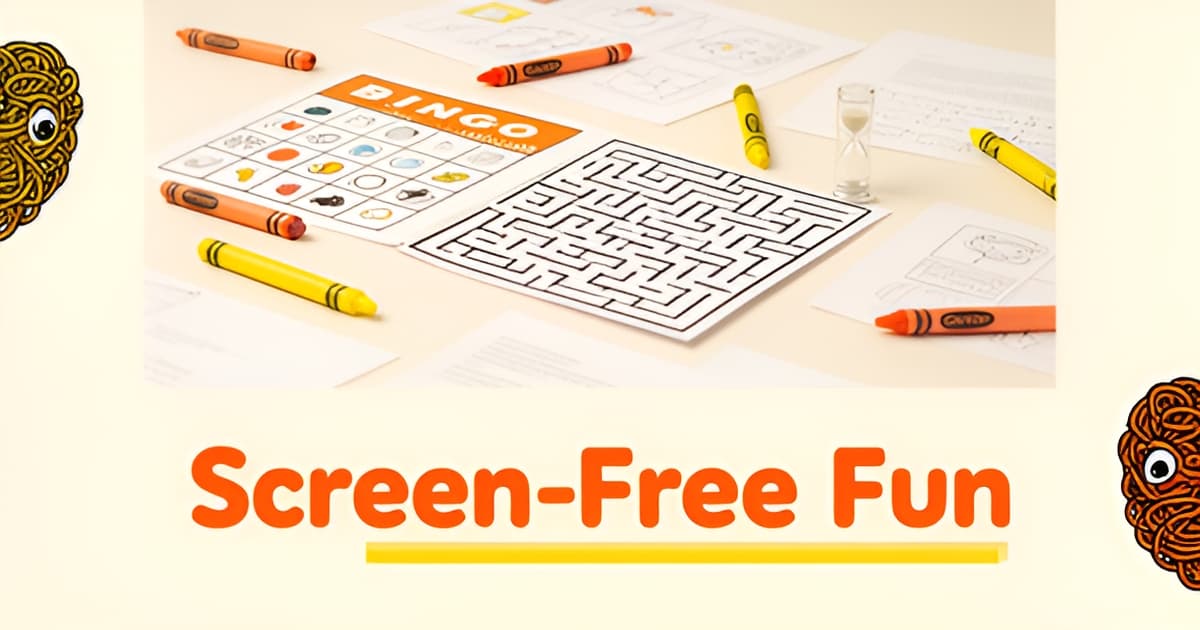
1. Printable bingo. It's the hero of at-home game night for good reason. One family resource site alone offers 25 themed printable bingo sets, and another lists 20 more, from Halloween to Under the Sea. Bingo is simple enough for all ages, and it quietly builds vocabulary and pattern recognition. With Printoodle, you can generate a set around any theme your child loves, even one built around their own name for a birthday game.
2. One-minute challenges. Quick timed games, like stacking cups or moving pom-poms with a spoon, fit into the smallest windows of the day. Printoodle's one minute games for kids give you ready-to-print challenge cards, so the fun starts in seconds.
3. Freeze dance. Hit play, everyone dances, pause the music and freeze. Zero prep, maximum giggles, and a reliable energy burner.
4. Indoor scavenger hunt. Give kids a list: something red, something round, something that starts with B. It works for one child or a whole crew.
5. Movement obstacle course. Cushion hops, painter's-tape balance lines, a crawl under the table. Experts suggest matching the activity to what your child needs that day, whether that's movement, connection, or calm, quiet focus.
6. Block bowling. Stack blocks or empty containers, roll a soft ball, and let the demolition begin.
7. Printable mazes. Quiet-time winners. The same sites offering bingo also promote 50 maze puzzles as companion activities, which tells you something: families want variety packs. Printoodle's mazes for kids let you print fresh ones at any difficulty level.
8. Kids sudoku. A gentle logic puzzle that builds concentration without a screen in sight. Try a kids sudoku printable with picture symbols for younger players and numbers for older ones.
9. Shape hunt. Pick a shape and hunt for it around the house. Great for preschoolers learning circles, triangles, and squares.
10. Classic board games. Jenga, Connect 4, Scrabble, and Clue all make recommended family game night picks, and child psychologist Dr. Bob Myers notes that games teach kids to win and lose with grace, a skill that serves them long after the pieces are boxed up.
A few tips to keep it all running smoothly:
- Keep a rainy-day kit stocked with painter's tape, crayons, blank paper, and a deck of cards.
- Rotate familiar materials often; a game shelved for a month feels brand new.
- Choose games with a wide age range so they stay fun as kids grow.
- Aim for one hour of screen-free play daily; experts say that's enough to deliver real developmental benefits.
That last point matters more than parents sometimes realize. Kids ages 8 to 12 average nearly six hours a day on devices, and teens approach nine, according to Common Sense Media data. An hour of bingo, mazes, and freeze dance is easy to swap in, and it's the hour they'll remember.
The Hidden Benefits: What Kids Actually Learn From Family Game Night
The dice hit the table, someone groans, someone cheers, and quietly, your kids are learning more than you'd expect. Family game night looks like entertainment, but it doubles as a low-stakes rehearsal for the trickier moments of childhood: losing, waiting, trying again.
Licensed child psychologist Dr. Bob Myers points out that board games help parents teach social skills and frustration tolerance, while also facilitating bonding and communication. When your six-year-old has to sit through Dad's painfully slow turn in Connect 4, that's frustration tolerance being built in real time, at your kitchen table.
Learning to win and lose with grace may be the biggest payoff. Research cited by Gobet and Retschitzki found that playing with older role models teaches kids "how to win, and lose, with grace and good manners." There's no substitute for watching an older sibling or parent lose a round, take a breath, and say "good game." Kids copy what they see, and game night gives them something worth copying.
Even the simplest games carry hidden lessons. Bingo, often dismissed as pure luck, actually supports vocabulary building, pattern recognition, and social skills, according to family activity resources. When you call out "under the sea" or "birthday," younger kids are matching words to pictures and scanning grids for patterns, which is genuine cognitive work dressed up as fun. That's part of why bingo shows up everywhere in family printables, from 25 themed sets on one site to 20 more on another.
Game time also gives kids a safe place to practice the emotional basics. As one parenting resource puts it, game time is "a gentle opportunity to practice losing, trying again, and celebrating someone else's success." Those reps add up, especially when screens claim so much of the day. Kids ages 8 to 12 average nearly six hours daily on digital devices, and teens log close to nine, according to a Common Sense Media study. Experts suggest just one hour of screen-free engagement a day is enough to deliver real developmental benefits for young children.
If you want to build that hour into your routine, you don't need a shelf full of boxes. A printable bingo set, a stack of mazes for kids, or a kids sudoku printable from Printoodle covers a range of ages and skill levels, and reprints are free whenever a page gets loved to death. For faster evenings, try one minute games for kids when attention spans run short.
The point isn't the game itself. It's the practice, disguised as play, in the skills your kids will use long after the cards are put away.
How to Build a Rainy-Day Game Kit That's Always Ready
The best answer to "what are some fun games I can play at home with kids" isn't a single game. It's a bin by the door that's ready before the boredom hits. Experts who study screen-free play note that kids ages 8 to 12 already average nearly six hours a day on devices, so having an instant offline option removes the negotiation entirely.
Start with a container you can grab one-handed. Fill it with the basics that rainy-day guides recommend: painter's tape, crayons, blank paper, and a deck of cards. Add a folder of printed pages. The printable angle matters here. One family activity site alone offers 25 themed bingo sets, and companion resources bundle 50 mazes and 25 cryptograms alongside them, which tells you families want variety packs, not one-off sheets.
Your kit works best when it covers four moods. Match the activity to what your child actually needs that day:
- Movement: freeze dance, balloon toss, or a tape-line obstacle course for kids with energy to burn.
- Connection: bingo or a card game, where the win is the conversation around the table.
- Creativity: coloring pages, dot-to-dot, or a build-anything challenge with tape and paper.
- Calm: a quiet puzzle page for winding down, especially before that recommended screen-free window before bed.
Rotation is the trick most parents miss. The same sources note that rotating familiar materials often makes them feel fresh again, so pull three sheets from the folder each week and tuck the rest out of sight. A maze your kid forgot about last month plays like a brand-new activity.
This is where a personal touch pays off. Printoodle lets you generate print-ready pages in seconds, so you can stock the folder with a bingo set built around your child's name, a birthday theme, or their current dinosaur obsession, plus matching mazes for kids and a kids sudoku printable for the calm slot. Everything you've made stays in your library, and reprints are always free, so refilling the kit costs you nothing but paper.
Keep a few one minute games for kids in the lid pocket for emergencies. And remember that game time does double duty: child psychologists point out it's a gentle way for kids to practice losing, trying again, and celebrating someone else's win. Print it, doodle it, done.
Frequently Asked Questions
What are some easy games I can play at home with my kids that don't need a lot of setup?
How can I get my kids to play together without them fighting over different activities?
I'm worried about too much screen time, how much screen-free play do kids actually need?
What are some quiet activities my kids can do alone or together that aren't boring?
Can family games really help my kids learn important skills?
What should I keep in a rainy-day kit so we're never stuck without something to do?
One Hour, One Table, One Happy Family
So, what are some fun games you can play at home with kids? The honest answer is: whatever's within reach when boredom strikes. You don't need to reclaim all six hours kids ages 8 to 12 spend on screens each day, experts say just one hour of screen-free play delivers real developmental benefits, teaching sportsmanship, frustration tolerance, and how to win and lose with grace. Keep a rainy-day kit stocked, rotate activities so old favorites feel new, and match the game to your child's mood: movement, connection, creativity, or calm. Printable games make that hour effortless, a themed bingo set, mazes for kids, or a kids sudoku printable can be on the table in seconds, and quick one minute games for kids fill the smallest windows of the day. With Printoodle, every page you create lives in your library with free reprints forever, so the fun never runs out. Print it. Doodle it. Done.