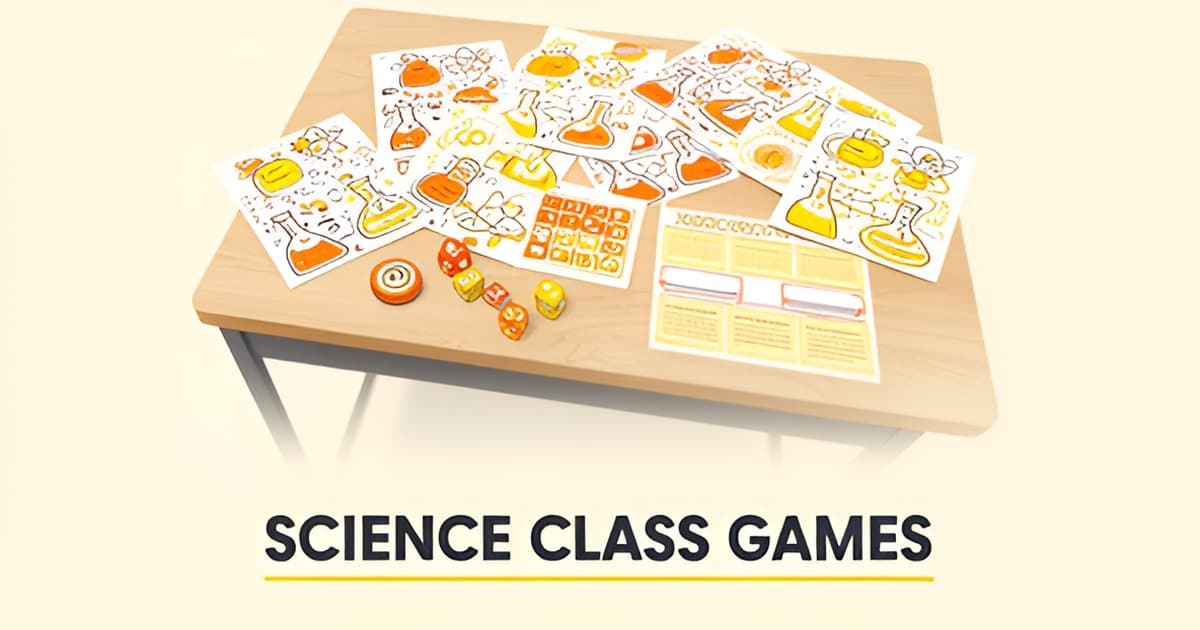
What are some fun games to play in science class?
Key Facts
- 72% of young learners show higher engagement with game-based formats versus traditional instruction according to market research
- Student failure rates drop to 7% with game-based learning, a 67% reduction from conventional teaching per educational games data
- 88% of teachers using digital games report higher student engagement as noted in research findings
- 93% of class time is productively utilized when structured games are integrated into lesson plans research confirms
- Nearly 41% of rural institutions face internet connectivity challenges that limit cloud-based game access according to market data
- Science bingo replaces numbers with terms like photosynthesis and Newton's laws as described in themed game guides
- AI-enhanced educational games improve learning outcomes by 30% to 45% compared to non-adaptive alternatives per market research
Why Science Class Needs Games (And Why It's Hard to Find Good Ones)
Ask a room of students what they think of a science lecture, and you'll rarely hear "fun." Yet when teachers ask what are some fun games to play in science class, the answer matters more than it might seem: game-based formats lift engagement dramatically, and the numbers behind that are hard to ignore.
Research on educational games found that young learners show 72% higher engagement when lessons use game formats instead of traditional instruction. The same report noted student failure rates dropping from nearly 20% under conventional teaching to 7% among game-based learners. That's a two-thirds reduction, simply by changing how material gets delivered.
Teachers see it firsthand, too. More than 88% of teachers using digital games report higher student engagement and better classroom participation. When roughly nine in ten educators agree on anything, it's worth paying attention to.
So why doesn't every science class run on games? Two practical problems keep coming up:
- Around 38% of educators report difficulty aligning game content with academic standards and assessment frameworks, so a fun activity can feel disconnected from what students are actually tested on.
- Nearly 41% of rural educational institutions face internet connectivity challenges, which rules out cloud-based games that assume every student has a reliable connection.
- Many digital games aren't built for a specific unit, so teachers spend hours adapting generic content to match their lesson plans.
That second point is a big reason printable games have stuck around. A paper-based format works whether the Wi-Fi is cooperating or not, and it travels easily to field trips, labs, and substitute days. Bingo in particular has become a science classroom favorite because the squares can hold scientific terms, concepts, or illustrations instead of numbers, turning review into a game. Teachers who use it often add a validation rule: before claiming a win, the student has to correctly explain one of the terms in their row. It's a pop quiz and a game in one, and students don't seem to mind.
The good news is that building these games no longer requires design skills or a laminator marathon. Tools like Printoodle's bingo card generator let you turn your own unit vocabulary into a print-ready set of science bingo cards in seconds, and a science quiz board game works the same way. You supply the terms from your lesson; the tool handles the formatting. Since roughly 93% of class time gets productively used when structured games are built into lesson plans, that small prep investment tends to pay for itself.
Games aren't a gimmick in science class. With the engagement data behind them and printable options that sidestep the connectivity and alignment problems, they're one of the more practical tools a science teacher can keep in the drawer.
Science Bingo: The Workhorse Game That Actually Teaches
Science bingo swaps the traditional number grid for a classroom-ready format where every square holds a scientific concept, term, or illustration. Instead of shouting "Bingo!" based on called numbers, students mark off items like "photosynthesis," "Newton's laws," or a diagram of the water cycle. This simple swap transforms a familiar pastime into a targeted review session that meets you where your lesson plans are.
The real instructional power comes from two built-in validation rules. The first is the explanation requirement: before a student can claim a winning row, they must correctly explain one of the terms in that line to the class. The second is the definition twist, where the winner must define every term in their completed row before the prize is awarded. These mechanics turn a game of chance into a low-stakes formative assessment you can stand behind, giving every student a reason to engage with the material deeply.
Research backs up why this works. Studies show that 72% of young learners exhibit higher engagement when lessons use game-based formats compared to traditional methods, and structured educational games can utilize up to 93% of class time productively. Because students are motivated by the competitive element but must demonstrate understanding to win, the format naturally differentiates instruction, emoji support can add visual hints next to tougher terms for mixed-ability classrooms, ensuring the game remains accessible without sacrificing rigor.
Science bingo also scales across units. Themed variations, food chain bingo, scientific method bingo, or historical figures in science bingo, let you align the card content directly with your current curriculum. Platforms like Virtual Science Teachers offer 79 games across Physical Science, Life Science, and Earth Science categories, while tools like ClassTools provide a free generator for creating custom cards from your own term lists. For outdoor lessons, the format adapts to help students formalize observations, giving purpose to field work and connecting background experience to the topic at hand.
Ready to try it out? Printoodle’s bingo card generator lets you create customized, print-ready science bingo cards in seconds, turning your lesson terms into a reusable classroom resource. You can also explore the science quiz board game option for a different style of interactive review. Print it. Doodle it. Done.
Four More Games to Rotate Through Your Unit
Finding the right games transforms a science lesson from a lecture into an experience. Bingo remains one of the most versatile formats because it scales across grade levels and subject matter without requiring expensive tech. Research shows that 72% of young learners exhibit higher engagement when lessons use game formats compared to traditional instruction, making the effort to rotate activities worthwhile. For teachers managing outdoor lessons or field trips, observational bingo offers a structured way to focus student attention. As Project Learning Tree notes, adapting the bingo format helps students formalize and organize their observations during science activities, providing purpose to time spent outside; educator Terry Howie explicitly endorses this technique as a practical and effective classroom strategy.
When reviewing key terms before a quiz, a science quiz board game can turn repetitive drills into a competitive challenge. Printoodle’s science quiz board game tool lets teachers input their own unit vocabulary and generate a ready-to-print game board in seconds, eliminating prep time while keeping the focus on the material. For vocabulary-heavy units, flashcard bingo combines recognition with recall. Teachers create cards filled with terms or definitions, and students must identify the matching concept to mark their square, a mechanic that reinforces retention more effectively than simple matching.
Mixed-ability classrooms benefit from pair-and-share variations, where students work together to identify terms, allowing stronger readers to support peers without slowing the pace of the activity. A practical differentiation tip involves adding emoji hints next to challenging scientific terms; this supports struggling readers by giving them a visual anchor without simplifying the actual vocabulary. The winner still has to explain the term to the class, maintaining the accountability and depth of understanding that research identifies as best practice.
Rotating these formats keeps science class dynamic and gives students multiple entry points into the same concepts. Whether played indoors at a desk or outdoors on a campus stroll, these games leverage the proven engagement boost of 72% higher participation rates to make every lesson stick.
science quiz board game and bingo card generator are two Printoodle tools that make it easy to create customized cards for any unit.
Make Your Own Science Bingo Cards in Minutes
Transforming vocabulary review into a quick competition is easier than ever with Printoodle’s bingo card generator. Pick your unit’s key terms, 15 to 24 words works perfectly for a 5x5 grid, and let the tool shuffle them into unique cards for every student in seconds. Print the PDFs and you’re ready to play; these printed cards work completely offline, which matters for the 41% of schools facing connectivity challenges. To keep students engaged, use the validation rule: before a player can call “Bingo,” they must correctly explain one of the terms in their winning row to the class. And the best part? Reprints from your Printoodle library are always free, so you can rerun the game next year or with a substitute without any extra cost.
72% of young learners show higher engagement when lessons use game formats versus traditional methods, making science bingo a proven way to boost participation. 93% of class time is productively utilized when structured educational games are integrated into lesson plans, and student failure rates decline to just 7% among game-based learners, a 67% reduction compared to conventional instruction. These statistics show why incorporating a quick round of bingo can transform a standard review session into a high-energy learning moment.
Start designing your cards today, it only takes a few minutes to generate a full class set, print the PDFs, and run the game. bingo card generator to create your first set, or explore the science quiz board game for more classroom ideas. Print it. Doodle it. Done.
Frequently Asked Questions
What are some fun games to play in science class that actually teach something?
Does playing games in science class really improve learning, or is it just a time-filler?
How do I make sure a science game matches what students are actually tested on?
What if my school has unreliable internet, can I still use science games?
How can I support struggling readers in a science bingo game without making it too easy?
Can science bingo work outside the classroom, like on field trips?
Turn Your Next Review Session Into the Class Everyone Talks About
So, what are some fun games to play in science class? The answer comes down to formats that combine proven engagement with real accountability: science bingo with its validation rules, quiz board games built from your own vocabulary, flashcard bingo for recall, and observational bingo for outdoor lessons. The numbers make the case on their own, 72% of young learners show higher engagement with game-based lessons, and failure rates drop from nearly 20% to just 7%. The best part is that none of this requires design skills, laminating marathons, or reliable Wi-Fi. Printable games sidestep the connectivity problems that rule out cloud-based tools, and since reprints from your Printoodle library are always free, a card set you build this semester is a resource you'll reuse for years. Your next step is simple: pull 15 to 24 terms from your current unit, generate a class set with the bingo card generator, and add the explanation rule so every win doubles as a formative assessment. Print it. Doodle it. Done.