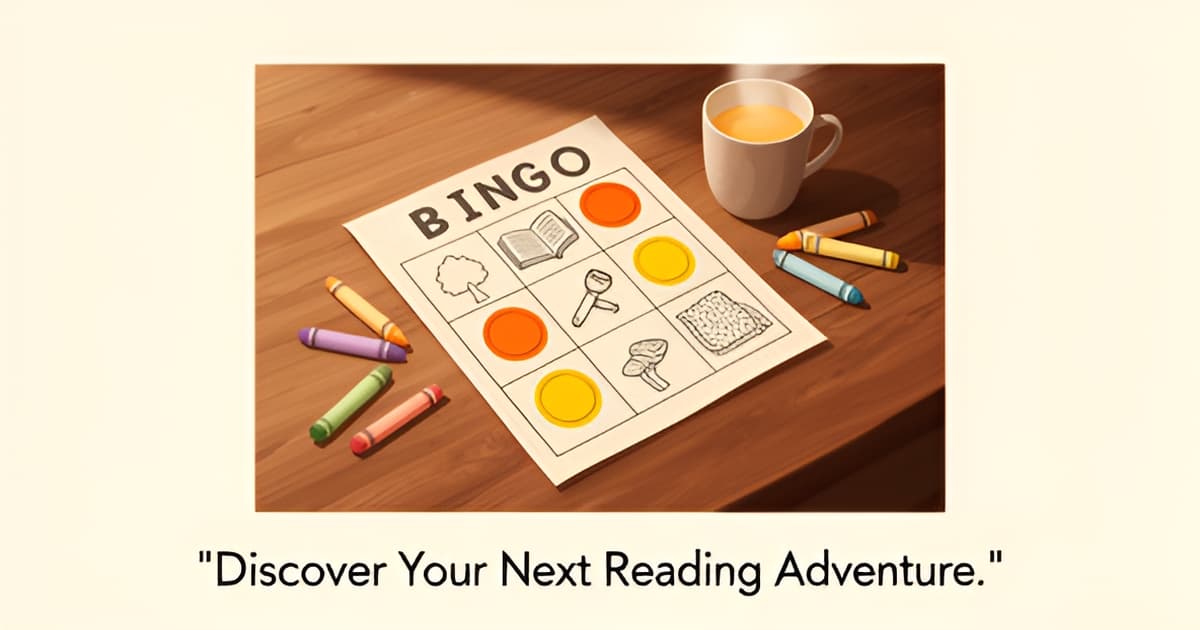
What are some fun reading bingo games?
Key Facts
- Free bingo tools can generate up to 28 unique shuffled boards per print run with no account required, according to Tools for Educators.
- A DoDEA school reading bingo program replaced nightly reading logs with squares like 'reading under a tree' and 'reading after walking like a crab,' per the DoDEA news article.
- Parents in the DoDEA program reported kids 'ask every morning where we are reading today,' according to official program coverage.
- Board sizes scale from 3x3 (four boards per page) to 5x5 with an optional FREE center space, per the bingo maker documentation.
- Word bingo generators accept any custom list, adapting reading bingo for ESL learners, early elementary students, and mixed-ability classrooms, per edu-games.org's tool documentation.
- ChildCareEd recommends starting beginners with a 3x3 board and keeping rounds short because 'a shorter round is a successful round,' per early childhood research.
- Book bingo platforms support online games for up to 2,000 players with unlimited randomized PDF generation, per Bingo Card Creator.
Why Reading Bingo Beats the Nightly Log
The nightly reading log has long been the standard way to track home reading, but for many kids, it feels like homework before the book is even opened. Reading bingo transforms this routine by replacing static checkboxes with location-based and activity-driven squares that turn every page into an adventure. Research from the DoDEA school program shows exactly why this shift works: when creative squares like "reading under a tree," "reading after picking 10 weeds," or "reading in the bathtub" replace the standard log, kids begin to anticipate the experience. One parent shared on the Murray PTO Facebook page that her kids "love picking a new spot to read instead of just at the table," and another noted her children "ask every morning where we are reading today." This simple change from passive logging to active exploration taps into a child's natural curiosity, making the act of reading feel like a game rather than a chore.
The mechanics behind this engagement are surprisingly accessible. A word bingo generator can accept any custom list, allowing parents and teachers to instantly create cards using book titles, author names, or genre prompts without any sign-up or prep work. Studies confirm that board sizes can range from 3x3 for younger readers to 5x5 for a classic experience, and the generator can produce up to 28 unique shuffled boards per print run. For those looking to mix in genre exploration, pre-made square packs can include challenges like "read a book made into a movie," "read a book under 100 pages," or "read a book by a new-to-you author." These formats don't just track reading, they encourage children to try new topics, visit different settings, and engage with books in ways a simple log never could.
Ready to swap the log for a game? Printoodle’s reading bingo generator lets you create custom cards in seconds, choosing from location prompts, activity squares, or genre challenges. Generate your first reading bingo card today, or try the bingo card generator for full customization options.
Instant Bingo Cards from Your Book List
If you've been wondering what are some fun reading bingo games you can put together in the next five minutes, the answer is surprisingly simple: your own bookshelf. The same word bingo generators teachers use for sight words accept any custom list you type in, which means book titles, author names, and genres work just as well as vocabulary words, according to edu-games.org's bingo tool documentation.
The appeal is speed. Tools for Educators, for example, offers a completely free bingo card maker that requires no account or login and can generate up to 28 unique, shuffled boards instantly from your browser. That's a full classroom set in the time it takes to print. Board sizes range from 3x3 (four boards per page, good for young readers and short games) up to 5x5 with an optional FREE center space for the classic experience.
Printoodle's reading bingo tool works the same way for families and classrooms: paste in your list, and the bingo card generator produces print-ready PDFs you can reprint from your library anytime at no extra cost. A few list ideas that translate well into cards:
- Book titles from this month's read-aloud stack, with the caller reading a one-line plot summary instead of the title
- Author names for a genre study, so kids match authors to books they've finished
- Genre labels like mystery, fantasy, biography, and poetry, checked off as each reader tries something new
- Reading challenge prompts such as "a book set in a country you've never visited" or "a book recommended by a librarian," a format book bingo platforms recommend for pushing readers toward new authors and genres
The custom-list approach also solves a real classroom problem: mixed reading levels. Because you control every square, one game can stretch from picture book titles for early readers to chapter book prompts for stronger students, all on the same printed sheet. The edu-games generator is explicitly noted as adaptable for ESL learners, early elementary students, and mixed-ability classrooms.
For home use, the same mechanic turns a summer reading list into a game board. Kids mark squares as they finish each title, and the win condition stays familiar: a row, column, or diagonal. It's the structure reading interventionist Joni Smith used at a DoDEA school to replace "the dreaded nightly reading log" with something students looked forward to, and parents there reported their kids asking every morning where they'd read that day.
You don't need design skills or a paid subscription to start. Type your list, generate, print, and play. Print it. Doodle it. Done.
Square Packs That Turn Reading into an Adventure
Some of the best reading bingo games don't ask kids to read more, they ask kids to read somewhere new. When a bingo square says "read under a table with a lamp" instead of "read for 20 minutes," the whole dynamic changes.
That's the insight behind a program run by reading interventionist Joni Smith at a DoDEA school, where she wanted to turn "the dreaded nightly reading log into an activity that students could look forward to each night." Her square packs feature prompts like:
- Reading under a tree
- Reading in the bathtub
- Reading in the closet
- Reading to a stuffed animal
- Reading after walking like a crab
The results were striking. One parent reported, "My kids ask every morning where we are reading today," while another posted that her kids "LOVE picking a new spot to read instead of just at the table." Smith herself became known as the "Reading Bingo Teacher," and says the program makes her heart full. That's qualitative evidence, not a controlled study, but it's hard to argue with kids who voluntarily choose a new reading spot every day.
What makes these square packs work is the element of novelty. A generic "read a book" square produces a generic response, but "read after picking 10 weeds" turns the whole evening into a small quest. The reading itself becomes the reward at the end of a silly physical challenge, and kids stay invested because the next square is always something unexpected.
You can build your own version of this with Printoodle's reading bingo tool, typing in location and activity prompts straight from your own home and yard. A bingo card generator lets you shuffle those squares into unique boards, so siblings each get a different card and the daily "where do we read?" question stays fresh for weeks. Start with a 3x3 board for younger readers and work up to 5x5 once the habit sticks.
The beauty of the format is that it keeps working after the first win. Once a child completes a row, they'll usually push for a blackout just to cross off that one square they haven't earned yet, and that's when reading stops feeling like homework and starts feeling like a game they chose themselves.
Game Modes for Solo, Sibling, or Classroom Play
Bingo works beautifully with one child and a caller, but some of the best fun reading bingo games happen when two or more kids share the cards. According to early childhood education research from ChildCareEd, bingo's greatest social value comes from the interaction surrounding the cards, not just the marking itself.
Partner bingo splits the work in half. One child calls out the sight word, the other finds it on their board, and then they switch roles. This format naturally builds turn-taking, and it works well for mixed-ability classrooms because a stronger reader can model the words first.
Cooperative bingo flips the competitive script entirely. Instead of racing to a line, the group completes one large card together. This suits sibling play where an age gap would otherwise make a competitive round feel unfair, and it works for whole-classroom celebrations too.
Turn-token mechanics keep everyone engaged on every turn. The child holding a token selects the next card, and a pass-and-mark variation has children share one container of markers, passing it each turn. These small rituals keep restless readers anchored to the game.
ChildCareEd offers two practical design rules worth copying:
- Start with a 3x3 board for beginners and increase complexity gradually.
- Keep rounds short, because "a shorter round is a successful round."
- Swap in social-action squares like "helping" or "inviting someone to play" for a social-skills twist.
Board size matters more than you'd expect when multiple kids play. A free bingo card maker can print up to 28 unique shuffled boards per run, with 3x3 boards for short games and 5x5 for the classic experience. That range makes differentiation easy: younger readers get the 3x3, confident readers get the full grid, and everyone plays the same round together.
For teachers and party hosts, generating a mixed set is the practical move. You can create a batch of reading bingo cards instantly with a bingo card generator, print as many copies as your group needs, and reprint the favorites for free whenever a rematch gets requested. Print it, doodle it, done.
Pick Your Board Size and Print Free Reprints
Board size customization transforms a simple bingo card into a tool that fits any age group or reading goal. The tools for educators data confirms that board dimensions range from 3x3 for young learners up to 5x5 for extended challenges, with each size offering a different number of cards per page. A 3x3 grid provides four boards per page, making it ideal for short sessions or classroom groups, while a 5x5 layout delivers the classic experience with a single card per page, perfect for longer reading marathons. This flexibility ensures that a 5-year-old can tackle a manageable grid while an older student engages with a more complex layout, all without needing to redesign the activity from scratch.
The optional FREE center space adds another layer of strategic choice. Research from the DoDEA school program highlights how creative square prompts, like "reading under a tree" or "reading after walking like a crab", turn a routine task into an adventure. When that FREE spot is included, it often becomes a wild card or a "bonus" square, giving players a guaranteed win condition and shifting the focus from luck to exploration. This small design detail keeps the game moving and encourages readers to try spots they might otherwise skip.
Printoodle’s free forever reprints remove the cost barrier for repeated use, a feature that educators and parents alike will appreciate. The tools for educators source notes that the bingo maker can generate up to 28 unique, shuffled boards per print run, but the real value lies in the ability to print fresh copies anytime without purchasing new packs. Because every creation lives in a library where reprints are always free, a bingo card that gets lost or a square that needs refreshing costs nothing to reproduce. This model supports the "no-prep" instant generation that multiple sources identify as the primary value proposition for home and classroom use.
Reading bingo ideas that can be generated instantly on Printoodle range from location-based prompts to genre explorations, all customizable through the word bingo generator’s ability to accept any custom list. Whether you are filling a 3x3 grid for a rainy day or a 5x5 board for a summer challenge, the platform adapts to your needs. Reading bingo cards can be created in seconds, or use the bingo card generator to customize every detail. Print it. Doodle it. Done.
Frequently Asked Questions
What are some fun reading bingo games I can set up quickly without signing up for anything?
What are some creative location-based squares I can use for a reading bingo card?
Can reading bingo work for kids of different ages and reading levels at the same time?
How does reading bingo differ from a traditional nightly reading log?
Can I use reading bingo to encourage my kids to try new genres or authors?
What board sizes are available for reading bingo, and which one should I choose?
From Logs to Adventures: Making Reading Fun Again
Reading bingo transforms the dreaded nightly log into an adventure by replacing static checkboxes with creative squares that spark curiosity. Whether using location prompts like "reading under a tree" or genre challenges like "read a book made into a movie," this format taps into a child's natural sense of exploration, making every page feel like a new discovery. The mechanics are delightfully accessible, custom word bingo generators accept any list, allowing parents and teachers to create cards from book titles, author names, or genre prompts in seconds, with board sizes ranging from manageable 3x3 grids for young readers to classic 5x5 layouts for extended challenges. Research from the DoDEA school program highlights how these simple shifts, such as swapping a standard log for activity-driven squares, can lead to children asking every morning where they will read next, proving that a small change in format can ignite a lifelong love of stories. Ready to try it? Printoodle’s reading bingo generator lets you create custom cards in seconds, or use the bingo card generator for full customization options. Print it. Doodle it. Done.