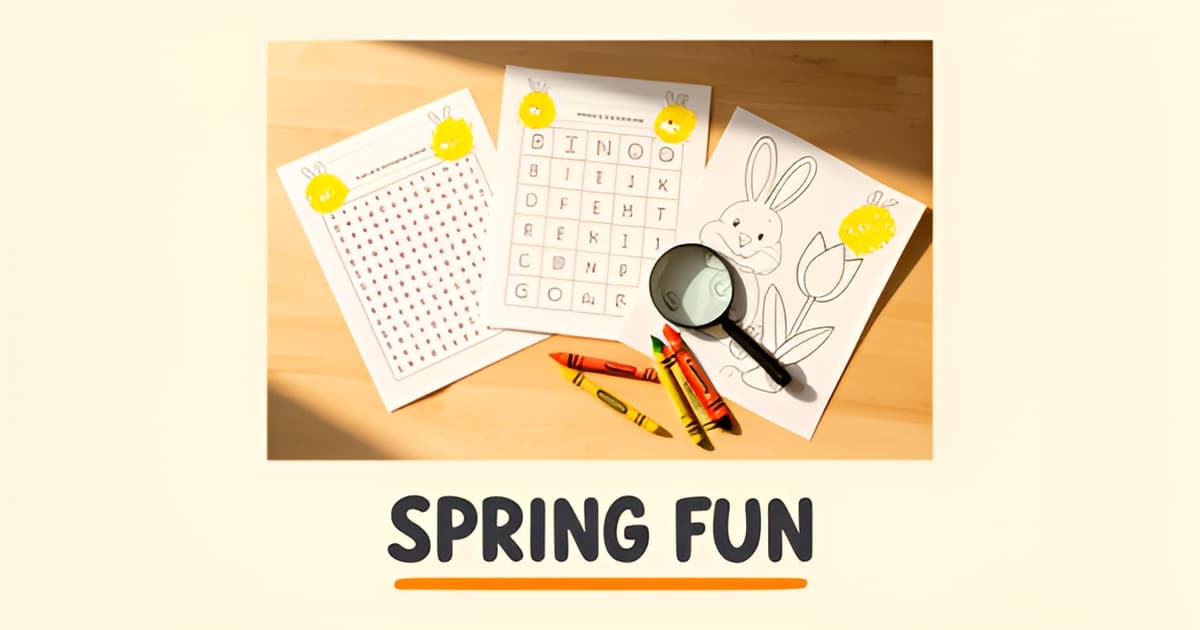
What are some fun spring projects for kids?
Key Facts
- The AAP recommends no more than 1 hour of daily screen time for kids over age 2, per Good Morning America's guide.
- A meta-analysis of 54 studies covering 171,000+ participants found print beats screens for kids' comprehension, with the gap largest for ages 9–12.
- Screen readers comprehended less than print readers yet overestimated how well they understood, research on digital reading shows.
- Print's comprehension advantage carries an effect size of d = 0.21 across 54 studies from 2000–2017, a meta-analysis found.
- One popular spring bingo set includes 10 unique boards and 16 calling card items, with every board reaching blackout, according to Made With Happy.
- A single roundup catalogs 30 spring printables from Edventures with Kids plus 35 more from Totschooling, spanning puzzles, counting mats, and emergent readers.
- Spring spans 5 holidays from St. Patrick's Day to Father's Day, each an easy theme for a custom activity pack, activity creators note.
Why Kids Need Screen-free Spring Play Right Now
If you've ever watched your kid zone out in front of a tablet on a beautiful spring afternoon, you know the quiet guilt that follows. Before we get into what are some fun spring projects for kids, it helps to understand why hands-on, screen-free play deserves a spot on your calendar this season.
The American Academy of Pediatrics recommends that children over age two get no more than one hour of high-quality screen time per day, according to Good Morning America's screen-free activity guide. That guidance exists for a reason: research has linked excess screen time to sleep disturbances and reduced physical activity in children. One hour goes fast, especially on rainy spring days when the tablet is the easiest babysitter in the house.
Here's the part most parents haven't heard. When it comes to reading and comprehension, paper genuinely outperforms screens for kids. A meta-analysis of 54 studies covering more than 171,000 participants found a measurable comprehension advantage for print over digital, with the gap most reliably documented for developing readers ages 9–12 and substantial benefits for foundational literacy at ages 5–8. Researchers attribute part of this to the "tactile-haptic" feedback of paper: kids literally feel where they are on the page, and that spatial awareness supports understanding.
Print activities also sidestep a problem the research flags. Screen readers comprehended less than print readers and overestimated how well they understood what they'd read. A child who finishes a puzzle on paper has a real, finished thing in their hands, and that sense of completion builds confidence in a way a closed app doesn't.
So what does screen-free spring play actually look like? The good news is that it doesn't require elaborate planning:
- Printable games like a spring word search or a spring crossword puzzle for rainy afternoons and classroom parties
- Group games such as spring bingo cards, which work for mixed ages at once, per Made With Happy's spring bingo set
- Life-cycle crafts, flower templates, and butterfly art built around a simple "print, create, learn" model
- Nature collages and recycled-material projects, like egg-carton caterpillars, that ECR4Kids notes help children observe their environment while building fine motor strength
As one parenting guide on screen-free play puts it, "screen-free doesn't mean learning-free." Real, hands-on experiences are how young children build curiosity, language, attention, and problem-solving skills. Templates simply remove the preparation barrier so a ready-to-use creative activity lands on your table in minutes, which is exactly the gap Printoodle's printable generator fills for busy families and teachers.
Spring offers the perfect window for this shift. The season practically hands you the curriculum: blossoms, bugs, rain showers, and new growth. All you need is a printer and an hour.
Spring Crafts That Build Skills Without the Prep Headache
The best spring crafts share a secret: they're simple. When you're hunting for fun spring projects for kids, you don't need a 12-step tutorial and a trip to the craft store. You need paper, glue, and an idea that leaves room for your kid to make it their own.
That's the process-over-product philosophy that early childhood educators keep returning to. As ECR4Kids puts it, spring crafts don't need to be complicated to be meaningful. Open-ended activities let kids experiment, make choices, and take pride in what they create.
Life-cycle crafts are the spring heavyweight. Frogs, butterflies, and plants go through visible transformations that kids find genuinely fascinating. A Life Cycles Booklet from 7 Days of Play has kids color, cut, and fold their way through frog, butterfly, and plant life cycles, and the whole thing follows a "download, print, and play in minutes" model. Little Bins for Little Hands offers similar life cycle diagrams for frogs, butterflies, ladybugs, and earthworms, all built on a "print, create, learn" rhythm.
Flower and rainbow art templates are the second reliable category. These aren't just cute; they're versatile. The same flower template can become a dot-painting project, a Matisse-style cut-out, or a Monet-inspired sunflower painting. Rainbow templates pair beautifully with puffy paint. One template, many afternoons.
Nature-based collages round out the trio. ECR4Kids notes that nature collages help children observe their environment and connect creativity with the outdoors. Egg carton caterpillars show kids that everyday materials can be reused in imaginative ways. A quick walk around the block becomes the supply run.
Templates work because they remove the prep headache. Research from Little Bins for Little Hands describes printable templates as tools that remove preparation barriers and provide structured, ready-to-use creative opportunities. That matters more than it sounds. The American Academy of Pediatrics recommends no more than one hour of daily screen time for kids over 2, and print materials have a documented edge: a meta-analysis of 54 studies found print beats digital for comprehension, especially for developing readers ages 9 to 12.
Printable games count too. A good spring word search works for rainy days and classroom parties alike, while spring bingo cards shine with groups: Made With Happy's free set includes 10 unique boards and 16 calling card items, and every board reaches blackout. For older kids, a spring crossword puzzle sits comfortably alongside the puzzle-style printables that fill roundups like From ABCs to ACTs, which catalogs dozens of free spring activities spanning puzzles, play dough mats, and counting mats.
The sweet spot is structure without over-structuring. As one screen-free parenting guide reminds us, boredom is where creativity starts. Print the template, set out the supplies, and let your kid take it from there. Printoodle's generator tools make that first step take seconds instead of an evening of Pinterest scrolling.
Printable Games That Turn Downtime Into Creative Time
When a rainy April afternoon traps everyone indoors, printable games are the fastest way to turn "I'm bored" into genuine engagement. If you're asking what are some fun spring projects for kids that don't require a craft-store run, bingo and word searches are the two formats that deliver every time.
Bingo deserves its reputation as the group-play workhorse. A popular free set from Made With Happy includes 10 unique boards and 16 calling card items, and the format works for classroom parties, rainy days, and spring break alike. Roundups of spring printables confirm the breadth of demand: one collection alone catalogs 30 spring and Easter printables from Edventures with Kids plus 35 more from Totschooling, spanning puzzles, counting mats, and emergent readers.
The real barrier to these projects has never been the ideas. It's the preparation. As Little Bins for Little Hands puts it, templates exist to remove preparation barriers and provide structured, ready-to-use creative opportunities. That's exactly where a generator tool changes the math: instead of hunting for the right puzzle and hoping it matches your child's reading level, you can create a custom spring word search or spring crossword puzzle in seconds, print it, and be playing within minutes.
There's also a research-backed reason to prefer paper over an app for these games. A meta-analysis of 54 studies covering more than 171,000 participants found print comprehension outperformed digital, with the gap most reliable for developing readers ages 9 to 12. Paper gives kids tactile feedback and a sense of place within the activity that a screen simply doesn't replicate.
A quick spring game station comes together with:
- A set of spring bingo cards for siblings, cousins, or a classroom party
- A themed word search for quiet solo time or car rides
- A crossword for older kids ready for a bigger challenge
The best part is the flexibility. Because Printoodle generates each page on demand, you can scale the difficulty up or down for different ages, and reprints from your library are always free. You're not stocking a closet with activity books; you're printing exactly what today's afternoon needs.
How Printoodle Generates Spring Projects In Seconds
Every spring, parents and teachers hunt for fresh activity ideas, and the research points one direction: print. A meta-analysis of 54 studies found print materials outperform screens for children's comprehension, with the gap largest for developing readers ages 9–12. That's where Printoodle comes in, turning the demand for printable spring projects into something you can generate in seconds.
The best spring activities follow what educators call a "print, create, learn" model, where templates remove preparation barriers and give kids structured, ready-to-use creative opportunities. Traditionally, that meant scrolling through blogs and hoping a freebie matched your theme. Printoodle flips the process: you describe what you want, and the generator builds a print-ready PDF around it.
Personalization is the difference. Instead of a generic puzzle, you can build a spring word search featuring your child's name, your classroom vocabulary list, or the flowers you just planted together. A spring bingo cards set can carry your family's inside jokes as calling items, ready for a rainy afternoon. Printable bingo already works for "kids of all ages," according to activity creators, and custom boards make it even more engaging.
Here's how the on-demand model fits real spring situations:
- Rainy days: generate a spring crossword puzzle in minutes, matching the "download, print, and play" speed parents expect from printable activity hubs.
- Classroom parties: create themed bingo boards and word searches from your own lesson material.
- Holidays: spring spans five celebrations, from St. Patrick's Day to Mother's Day, each an easy theme for a custom activity pack.
- Gifts: a puzzle built around a child's name or favorite animal feels personal, not mass-produced.
The timing matters, too. The American Academy of Pediatrics recommends no more than one hour of daily screen time for kids over age 2, and hands-on print projects are one of the simplest ways to fill an afternoon without a device. As one parenting guide puts it, screen-free doesn't mean learning-free.
Printoodle keeps the whole loop simple: generate, print, and keep every activity in a library where reprints stay free. You handle the glue sticks and giggles. The prep work takes seconds.
Frequently Asked Questions
What are some fun spring projects for kids that don't take forever to set up?
Why should my kid do paper activities instead of just using a tablet?
Does print really help kids learn better than screens?
What spring crafts work for a group of kids of different ages?
Do spring crafts need to be complicated to be worthwhile?
Is screen-free play actually educational, or just a way to keep kids busy?
Key Takeaways
{ "title": "Spring Play That Sticks: From Rainy Days to Proud Creations", "content": "Spring is the perfect season to swap screens for hands-on creation, and the research makes a compelling case for why. With the American Academy of Pediatrics recommending no more than one hour of daily screen t