What are some fun tracing activities for children?
Key Facts
- Kids who traced letters showed 74% better letter recognition than kids who only watched or typed them, per a study in Psychological Science.
- Tracing follows three developmental stages, pincer grasp, shape recognition, then tool-based writing, according to early childhood educators at Lillio.
- Sand tracing is sensory play that strengthens neurological functions while building fine motor control, educators note.
- Wet-Dry-Try, sponge, towel, then chalk, builds letter formation for kids ages 3 to 7, per Simply Write.
- Practicing their own name is the most motivating letter work a child can do, the Simply Write team finds.
- Tracing especially benefits tactile learners, who retain information best when physically touching what they learn, says educator Samantha Engel.
- Start with simple shapes, lines, and patterns before letters to build confidence, advise Nanda Learning Center practitioners.
Why Tracing Feels Hard (and Why It's Worth It Anyway)
If you've ever asked yourself what are some fun tracing activities for children after watching your kid fling a pencil across the room, you're not alone. Most parents hit the same wall: tracing sounds simple, until a four-year-old with zero patience meets a dotted line.
Here's the thing that makes resistance worth pushing through. A study published in Psychological Science, cited by the Educational App Store, found that children who traced letters showed 74% better letter recognition than kids who only watched or typed them. Watching a screen doesn't build the same brain. As the Simply Write team puts it, "The screen can show and cheer, but only the pencil can teach."
That's why so many parents land on printable tracing pages, like Printoodle's letter tracing and number tracing templates, instead of another app. The pencil does the teaching, and the paper keeps it off the glass.
Tracing isn't just pre-writing busywork. Each pass along a dotted line strengthens a cluster of skills your child will use for years:
- Fine motor skills and the pincer grasp, the physical foundation for holding a pencil correctly.
- Hand-eye coordination, as eyes lead and the hand follows the line.
- Spatial awareness, or understanding how shapes and letters fit together on a page.
- Confidence, which grows as traced shapes turn into independent drawings.
Early childhood educator Samantha Engel adds that tracing especially benefits tactile learners, who retain information best when they're physically touching something. Pairing the activity with conversation, like asking "see how we make these sharp corners when drawing a square?", deepens the learning.
If tracing feels like a battle, your expectations may be the problem. TJ Borile, a registered Early Childhood Educator, reminds parents that tracing is a complex skill for a developing preschooler. It requires spatial awareness, sustained concentration, and tool use, all at once. A wobbly line isn't failure; it's a preschooler doing three hard things simultaneously.
The fix is to start small. Practitioners at the Nanda Learning Center recommend beginning with simple shapes, lines, and patterns to build confidence before moving to letters. And when you do move on, make it personal: name-writing practice is widely considered the most motivating letter work there is.
So when your child resists, don't scrap the tracing. Scrap the pressure, swap in something playful, and let the pencil do its quiet work.
Match the Activity to Your Child's Stage
Here's the good news: you don't need to guess whether your child is "ready" for tracing. Early childhood educators, including the team at Lillio, describe tracing as a three-stage progression, and matching activities to your child's current stage makes the whole experience more fun and less frustrating.
The first stage is all about fine motor work. Before a child can control a pencil, they need to build the pincer grasp, the finger strength that lets them pinch and hold small objects. Registered early childhood educator TJ Borile points out that tracing is genuinely complex for preschoolers because it demands spatial awareness, concentration, and tool use all at once. So for the youngest kids, skip the pencil entirely. Try sand tracing, where little fingers draw shapes in a tray of sand (sensory play that strengthens neurological functions), or a marshmallow name craft, where children place marshmallows along the outline of each letter. No writing tools required.
The second stage builds the cognitive side: recognizing shapes, lines, and patterns. This is where simple shapes, lines, and patterns build confidence before letters ever enter the picture. Cookie-cutter tracing works beautifully here because the cutters are easy for small hands to hold flat while a child draws around them. Scribbling counts too. It's the start of early writing skills, so don't rush past it.
The third stage is tracing with actual tools, and it's where printables shine. A Simply Write analysis puts it plainly: "The screen can show and cheer, but only the pencil can teach." Paper tracing pages, like a number tracing or letter tracing generator, let children practice with a real pencil while you customize the content to match their stage. And personalization matters: practicing your own name is described as the most motivating letter work there is.
Two expert tips tie it all together. First, talk while you trace. Samantha Engel, who holds a Master of Arts in Teaching, suggests narrating as you go: "See how we make these sharp corners when drawing a square?" Pairing tracing with conversation builds language skills alongside motor ones. Second, lean into touch. Engel notes that tracing especially benefits tactile learners, who retain information best when physically touching what they're learning.
Match the activity to the stage, and tracing stops being a worksheet chore. It becomes play that happens to build writing skills.
ctaText: Print it. Doodle it. Done.
10 Fun Tracing Activities Kids Actually Ask to Do
Ask any parent what makes tracing stick, and the answer is rarely a worksheet. It's sand under little fingers, a cookie cutter held steady, or a child tracing their own name because it matters to them. When parents search for what are some fun tracing activities for children, the best answers share one trait: they feel like play first.
A study cited in Psychological Science found children who practiced handwriting, including tracing, showed 74% better letter recognition than kids who only watched or typed letters. The pencil does the teaching. Here are ten activities that keep kids asking for more.
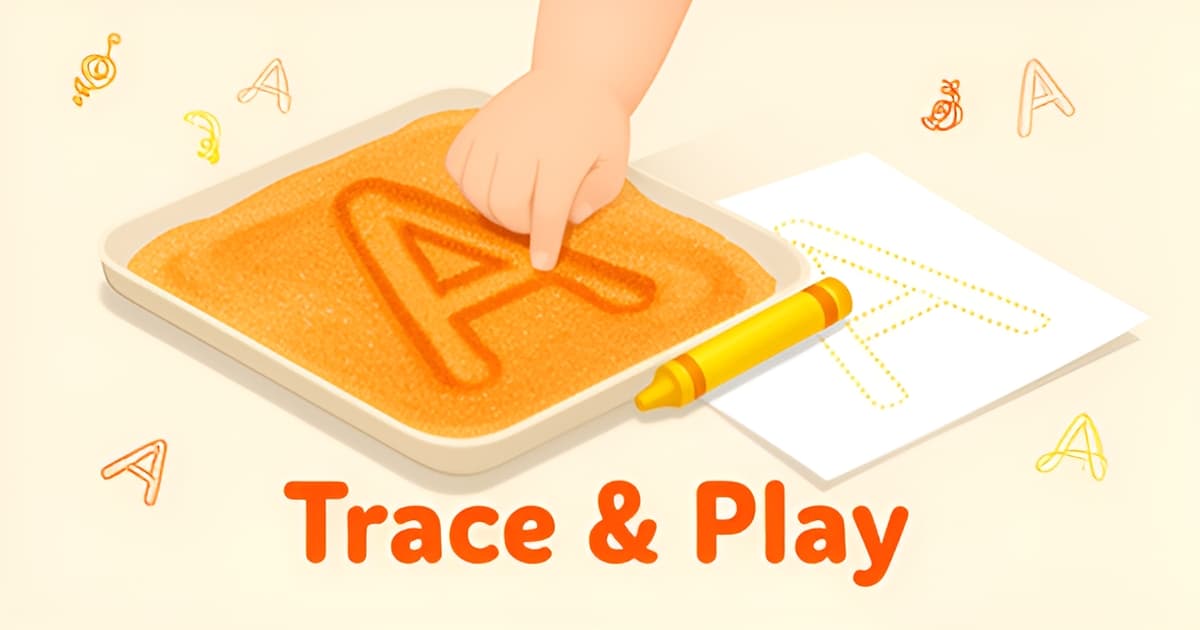
1. Sand letter tracing. Pour a shallow tray of sand and have your child trace letters with a finger. Early childhood educators note this kind of sensory play strengthens neurological functions while building the fine motor control writing demands. Best for ages 2 to 5.
2. Cookie-cutter tracing. Cookie cutters are easy for small hands to hold flat while a pencil traces around the edge, teaching shape structure without frustration. Ages 3 to 5.
3. Homemade stencils from leaves. Head outside, collect a few leaves, and trace their outlines. Practitioners recommend everyday objects like this to build confidence before formal letters. Ages 3 to 6.
4. Trace-and-decorate body outlines. Trace a child lying on butcher paper, then let them decorate their silhouette. Low difficulty, high novelty. Ages 3 to 6.
5. Shadow drawing. Set a toy near a lamp and trace its shadow. It's open-ended and follows whatever your child is currently obsessed with. Ages 4 to 7.
6. Marshmallow name crafts. Write a name in large letters, then have your child place marshmallows along the lines. No pencil grip required, which makes it perfect for ages 2 to 4.
7. Wet-Dry-Try. On a small chalkboard, your child traces a letter with a wet sponge, dries it with a towel, then writes it in chalk. This method suits ages 3 to 7 and builds real letter formation through repetition.
8. Name-writing practice. The Simply Write team puts it plainly: practicing your own name is the most motivating letter work there is. Personalized templates, like the ones you can generate at Printoodle, let you print your child's exact name in traceable form. Ages 3 to 6.
9. Tracing with varied materials. Rotate chalk, crayons, and finger paints, and pair tracing with songs or storytelling to keep it fresh. Ages 2 to 6.
10. Number and letter tracing pages. For structured practice, printable letter tracing and number tracing templates give you fresh sheets whenever your child is ready, since screens "can show and cheer, but only the pencil can teach." Ages 3 to 7, with cursive tracing typically starting around age six or seven.
Whichever activity you pick, talk while you trace: "See how we make these sharp corners on a square?" That conversation, educators note, is where the language learning happens alongside the motor skills.
Printable Tracing Pages: The Best of Both Worlds
The tension between screen time and hands-on learning is real, but the solution doesn't have to be an either/or choice. Research shows that children who practiced handwriting, including tracing, showed 74% better letter recognition than those who only watched or typed letters. This statistic underscores why the best tracing tools leverage the unique benefits of paper, sending kids back to pencil work rather than trapping them on glass.
Printoodle’s printable tracing templates bridge this gap perfectly. By offering customizable number tracing and letter tracing pages, Printoodle lets parents and teachers print exactly what a child needs, when they need it. As Simply Write notes, "the screen can show and cheer, but only the pencil can teach," making printable templates the ideal medium for skill-building.
Personalization is the secret ingredient that turns a chore into a challenge a child wants to accept. Studies confirm that practicing one's own name is the most motivating letter work there is. With Printoodle, you can generate custom name tracing pages in seconds, turning a generic worksheet into something uniquely theirs. Print it. Doodle it. Done.
Sand letter tracing adds a sensory dimension that strengthens neurological functions, while cookie-cutter stencils teach shape structure in a way small hands can easily manage. Other engaging options include homemade stencils from everyday objects like leaves, "trace and decorate" games using body outlines, and shadow drawing that aligns with a child's current interests.
Wet-Dry-Try is another favorite: trace letters on a chalkboard with a wet sponge, dry with a towel, then write with chalk. This multi-step process builds concentration and tool use simultaneously. Whether your child is at the pincer grasp stage or ready to write with tools, these activities meet them where they are.
Frequently Asked Questions
What are some fun tracing activities for children that don't feel like worksheets?
Does tracing actually help kids learn letters, or is it just busywork?
Is tracing on a tablet just as good as tracing on paper?
My preschooler gets frustrated tracing, is that normal?
At what age should kids start tracing, and what should they start with?
What's the best tracing activity for a child who resists practicing?
Ready, Set, Trace: Where the Fun Meets the Foundation
So, what are some fun tracing activities for children? The answer is whatever matches their stage: sand trays and marshmallow names for little fingers still building the pincer grasp, cookie cutters and shadow drawing for shape explorers, and pencil-on-paper practice once tools enter the picture. The payoff is real, children who traced letters showed 74% better letter recognition than kids who only watched or typed them, because the screen can cheer, but only the pencil can teach. Start small, talk while you trace, and make it personal, nothing motivates like practicing your own name. When you're ready for structured practice, Printoodle's letter tracing and number tracing generators let you print fresh, customized pages in seconds, so the pencil always has something new to teach. Print it. Doodle it. Done.