What are some fun Valentine's Day ideas for classroom parties?
Key Facts
- A teacher-authored classroom party guide has been shared over 40,000 times, making it one of the most popular party-planning resources according to teachmama.com.
- Mini-Stained Glass Hearts craft sets cost under $10 and supply materials for 18-20 students, per an elementary teacher's party guide.
- Dividing a class into 3-4 small groups for station rotations prevents the chaos of 25 kids descending on one mailbox pile, teachmama.com recommends.
- A Pinterest board with 128 curated pins shows how much time parents spend hunting for the right Valentine's classroom party ideas according to Joy in the Works.
- Friendship bracelet stations are 'all the rage recently, thanks Taylor Swift,' according to The Bash's party editors.
- Roughly 6 of The Bash's 20 party ideas promote paid vendor services like magicians that don't fit classroom budgets, the guide shows.
- Experts recommend Freeze Dance as the no-supply filler for the dreaded extra 10 minutes of any classroom party per teachmama.com.
Why Card Delivery Is the Main Event
Here's a secret seasoned room parents know: the card exchange itself is the party. Ask any teacher and they'll tell you that delivering Valentine cards is "the big crazy fun event" in most schools, so it deserves more than five minutes squeezed between crafts and cupcakes. When you're brainstorming what are some fun Valentine's Day ideas for classroom parties, start by building the schedule backward from card delivery.
The best structure comes from elementary teacher and reading specialist Patricia of teachmama.com, whose party-planning guide has been shared more than 40,000 times. Her model is simple: divide the class into 3-4 small groups, then rotate them through stations with card delivery as one anchor stop. Groups can be assigned with heart stickers, foam shapes, or number draws, which prevents the chaos of 25 kids descending on one mailbox pile at once.
Treat the exchange as a station, not a free-for-all. Pair it with a snack station where eating happens in shifts handled by parent volunteers, since Patricia warns against letting snacks become a "kids' choice free-for-all." The other rotations can be a printable game like Heart Bingo and one dead-simple craft. Her rule for crafts: they "have to be SO EASY IT'S NUTS," especially for younger grades. No-glue kits work best, and a good benchmark is a set that costs under $10 while covering 18-20 kids.
A sample rotation might look like this:
- Station 1: Card delivery, with kids reading names and sorting into labeled bags or mailboxes
- Station 2: Standardized snack pack (cupcake, juicebox, fruit) eaten in shifts
- Station 3: A printable game such as Heart Bingo or a fill-in-the-blank Valentine card game
- Station 4: A no-glue craft, with supplies pre-bagged per child to prevent fumbling
Printables make the rotation painless because there's nothing to assemble the morning of. With a tool like Printoodle, a room parent can generate a class-sized stack of bingo cards or game sheets in seconds, and reprints stay free forever if a station needs extras. That's the "Print it. Doodle it. Done." workflow: type a brief, download the PDF, run copies.
One more tip from the same teacher: plan a fallback for the dreaded extra 10 minutes. Freeze Dance works well, and so do quick one minute games for kids you can print ahead. Skip elaborate decorations entirely; as Patricia puts it, kids don't care about streamers and would rather have more games and goodies. Put your energy where the cards are.
Station Rotation: The Low-Chaos Blueprint
The single biggest party-day mistake is letting 25 kids loose at once. The fix, according to an elementary teacher and reading specialist who's planned her share of classroom celebrations, is simple: split the class into 3-4 small groups and rotate them through stations. Every child stays engaged, and every parent volunteer knows exactly what they're running.
If you're wondering what are some fun Valentine's Day ideas for classroom parties that actually run on schedule, station rotation is the blueprint. Set up one game station, one craft station, and one snack-and-card-delivery station, then move groups every 8-10 minutes. Assign kids to groups with heart stickers, foam shapes, or number draws so there's no arguing over who goes where.
A few rules make the difference between smooth and chaotic:
- Keep crafts no-glue and dead simple. One craft set costing under $10 covered materials for 18-20 kids, so simplicity and budget can coexist.
- Standardize snacks. Store-bought cupcakes, a cookie, a juicebox, and fruit, handed out by volunteers. As the teachmama.com expert puts it, "Do not let it be a kids' choice free-for-all."
- Give each station one parent volunteer with a printed instruction sheet so nobody has to improvise mid-party.
- Skip elaborate decorations. Kids "don't care," and the money is better spent on games and goodies.
Printables shine here because they cost almost nothing and require zero supply fumbling. Heart Bingo and fill-in-the-blank Valentine card games show up as favorites across party planning guides, and you can generate a full set of personalized game sheets in seconds with Printoodle, then print copies for each station. Reprints are free forever, so a lost sheet costs you nothing.
Build in a buffer, too. Every party has the dreaded extra 10 minutes, and Freeze Dance is the expert-recommended filler. If you want more options, printable one minute games for kids work well as a fifth mini-station or an emergency backup. With candy races, keep choking safety in mind: choose candy wisely and reward unwrapping speed rather than eating speed.
Send each child home with a goodie bag that doubles as the landing spot for crafts and sweets from the stations. That way you skip in-party prizes entirely, and every rotation ends with something to take home.
Printable Games That Save You Time
When you're hunting for fun Valentine's Day ideas for classroom parties, printable games keep appearing for a reason: they're the fastest route to an activity that 25 kids can start playing in minutes. Two formats show up again and again across party-planning guides: Heart Bingo and fill-in-the-blank Valentine card games. An experienced elementary teacher recommends Heart Bingo as a go-to classroom game, while another guide highlights a free printable fill-in-the-blank card game, a family-friendly spin on Apples to Apples, as a party favorite.
Why do these two formats dominate? Both work with mixed reading levels, need almost no supplies, and hold a group's attention without adult micromanagement. That matters because the teacher-authored guide behind one of the most-shared classroom party posts, with over 40,000 shares, is blunt about what actually works: simple, structured activities beat elaborate productions every time. Her rule for crafts is that they "have to be SO EASY IT'S NUTS," and the same logic applies to games.
The catch has always been the prep. Traditionally, a room parent spends an evening hunting down a printable, checking the formatting, adjusting it for the class list, and printing 25 copies. That's hours of work for a 15-minute station. A curated Pinterest board with 128 pins dedicated to Valentine's classroom parties shows just how much time parents spend browsing for the "right" printable, often without finding one that fits their specific class.
This is where instant generation changes the math. With Printoodle, a room parent types a short brief, and the tool produces a print-ready game in seconds. You get professional-quality bingo cards, word searches, or fill-in-the-blank games sized for your class, and reprints are always free from your library. Instead of hours of prep, the station is ready before the coffee gets cold.
A printable game station slots neatly into the rotation model that experienced teachers recommend:
- Divide the class into 3–4 small groups so everyone gets a turn without chaos.
- Run one game station, one craft station, snack, and card delivery in shifts.
- Keep a filler activity ready for the "dreaded extra 10 minutes," like Freeze Dance or quick one minute games for kids.
- Use goodie bags as the landing spot for prizes, so you skip in-party rewards entirely.
Cost is another quiet advantage. A well-regarded craft example runs under $10 for materials covering 18–20 kids, and printable games cost roughly the price of paper and ink. One guide even advises skipping fancy decorations because kids "don't care" and would rather have more games and goodies.
So if you're planning this year's party, lean into printables. Pick your two formats, generate them, print a stack, and drop them in the goodie bag bin. Print it. Doodle it. Done.
Snacks, Safety, and the 10-Minute Filler
Snacks trip up more classroom parties than games ever do, mostly because someone forgets the allergy list. The simplest fix, according to an elementary teacher and reading specialist who's planned her share of these events, is a standardized snack pack for every student: a store-bought cupcake or cookie, a juicebox, and a piece of fruit. Identical packs mean no kid feels left out, and parent volunteers can hand them out in shifts while the other half of the class delivers valentines. Her rule is blunt: do not let snack time become a kids'-choice free-for-all.
If you want a themed touch without the fuss, heart-shaped sandwiches work well. As one party editor puts it, "Sometimes the best party ideas are the most simple!" source. A dollar-store tablecloth and pink napkins go further than you'd think, since kids genuinely care more about games and goodies than decorations.
A quick word on candy safety. If any game involves racing with candy, choose the candy wisely and watch for choking risks. A smart tweak: make the contest about unwrapping speed rather than eating speed, so nobody's gulping sweets under pressure. Goodie bags pull double duty here, giving kids a landing spot for crafts and sweets during the party and a take-home treat, which means you can skip in-party prizes entirely.
Then there's the dreaded extra 10 minutes. Every room parent knows the panic when an activity wraps early and you've got a room full of sugared-up kids and dead air. Veteran party planners keep a fallback ready, and the classic choice is Freeze Dance: play music, kids dance, music stops, everyone freezes. No supplies, no setup, works for any age.
If Freeze Dance wears thin, keep a few one minute games for kids printed and tucked in your party folder. These are quick challenges that need almost nothing in the way of materials, and Printoodle can generate a fresh set in seconds if you want themed versions. When you're asking what are some fun Valentine's Day ideas for classroom parties that rescue a schedule, fast fillers like these are the honest answer.
Here's a quick filler-game checklist to keep in your back pocket:
- Freeze Dance with any kid-friendly playlist
- One-minute challenges (stack the candy hearts, sort the pom-poms)
- Heart Bingo as a calm-down round before dismissal
- A printable fill-in-the-blank card game for table groups
The pattern across experienced planners is consistent: simple beats elaborate. Standardize the snacks, plan for the safety stuff before it happens, and stash a no-prep game for the gaps. Your future self, standing in front of 24 kids with nine minutes to spare, will be glad you did.
Low-Cost Crafts and Goodie Bag Hacks
The best classroom Valentine's party advice sounds almost lazy, and that's exactly why it works. A veteran elementary teacher and reading specialist who has run more of these parties than she can count puts it bluntly: crafts "have to be SO EASY IT'S NUTS," especially for the little ones, and no-glue is the gold standard source. Glue means drying time, sticky desks, and twenty kids asking for help at once. Skip it.
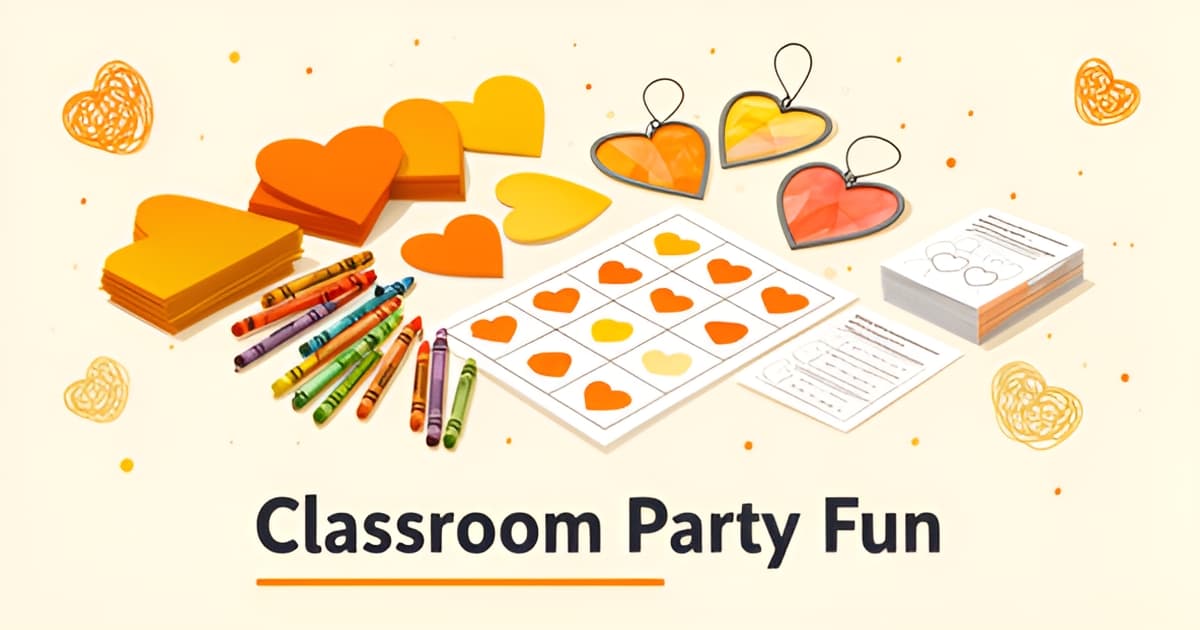
The budget math is friendlier than most room parents expect. The same teacher points to Mini-Stained Glass Hearts craft sets that cost under $10 and cover 18 to 20 students, which is roughly the size of a typical class source. Her trick for keeping things smooth: pre-portion supplies into individual bags so nobody fumbles through a shared pile, and buy a few extra pieces to cover whatever goes missing. A little prep on the front end saves ten minutes of chaos mid-party.
Here's where you might expect a decorating budget. Don't build one. Streamers, a dollar store tablecloth, and pink napkins are plenty, and her reasoning is refreshingly honest: kids don't care about permanent decorations, and the money is better spent on games and goodies source. A giant Valentine's Tic Tac Toe board is one of the few decorations worth buying, since it doubles as an actual activity and keeps working as February decor afterward source.
Goodie bags pull double duty, too. Use them as the landing spot for everything kids make and collect during the party, then send them home as the take-home treat. That structure eliminates the need for separate in-party prizes entirely source.
Printable activity pages are the quiet MVP here, because one printed sheet can serve as a station activity and a valentine at the same time. A Valentine's word search, maze, or color-by-number page keeps early finishers busy, then slides straight into the goodie bag as a personalized take-home. That's how you stretch a small budget across craft, game, and gift all at once. Printoodle's generator fits this workflow neatly: you describe the theme, get a print-ready PDF in seconds, and reprints are free forever, so a class set costs pennies.
A quick checklist for the under-$10 craft station:
- Choose a no-glue kit rated for 18 to 20 crafts, with a couple of spares.
- Pre-sort supplies into individual bags before party day.
- Add a printable activity page as the backup for fast finishers.
- Skip permanent decorations and put that money toward games and goodies.
And if a station wraps up early and you're staring down the dreaded extra ten minutes, keep a stack of quick one minute games for kids on hand. Fast, equipment-light fillers save the day more reliably than anything else you'll pack.
Frequently Asked Questions
What's the best way to structure a Valentine's Day classroom party without chaos?
Why should the Valentine card exchange be the main event at a class party?
What are the easiest Valentine games for a classroom of 25 kids?
How much should I budget for a classroom Valentine's party?
How do I handle snacks safely when some kids have allergies?
What do I do with the extra 10 minutes at the end of a class party?
The Low-Chaos Valentine's Blueprint
The secret seasoned room parents know is that the card exchange is the real party, and with a little structure, it doesn't have to be chaotic. By dividing the class into small groups and rotating through stations, every child stays engaged while parent volunteers know exactly what they're running. Whether it's Heart Bingo, a simple no-glue craft, or a standardized snack pack, the magic is in keeping things easy, affordable, and focused on what kids actually care about: games, goodies, and connecting with classmates. Printoodle makes the prep painless, turning minutes of browsing into seconds of generating, with reprints always free. When you build your schedule backward from card delivery and keep a few quick fillers like Freeze Dance on standby, you'll spend less time managing the party and more time enjoying it. Print it. Doodle it. Done.