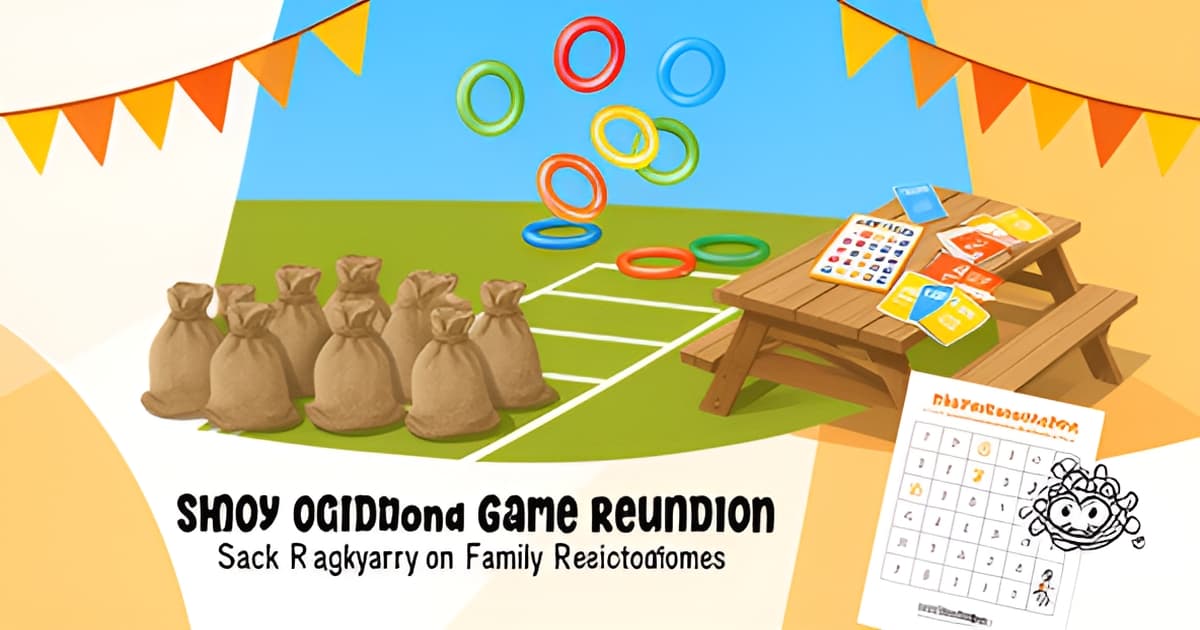
What are some good games to play at a family reunion?
Key Facts
- More than 57% of family reunions host 50–149 guests, according to recent reunion statistics.
- 44% of reunion groups prefer simple recreational activities like sack races over serious structured sports, reunion research finds.
- 32% of reunions happen in public parks, so games that run on paper and pens beat anything needing outlets, per reunion stats.
- Board games rank as a top-four activity for both kids and grandparents, making them ideal reunion entertainment.
- A family of 32, including 19 kids aged 1 to 19, played 'Piles!' for an entire afternoon, a documented case study.
- The first sixty minutes decide whether your reunion stays four separate conversations or becomes one gathering, according to reunion planning advice.
- Kids who know their family history are more resilient, more confident, and better equipped to handle adversity, according to family reunion veterans.
The Reunion Game Problem: Big Crowds, Big Age Gaps, and Guests Who Barely Know Each Other
If you've ever asked yourself "what are some good games to play at a family reunion," you already know the real problem isn't a shortage of games. It's that your reunion is big, multi-generational, and full of relatives who are technically family but practically strangers.
The numbers explain why this feels hard. According to recent reunion statistics, more than 57% of reunions host between 50 and 149 guests, and 32% take place in public parks where you can't rely on built-in entertainment. That's a lot of people, across three or four generations, standing around a picnic shelter hoping someone else starts the fun.
Game selection goes wrong in predictable ways. Pick something too structured and half the crowd checks out; research on reunion preferences found that 44% of groups prefer simple recreational activities like sack races over serious organized sports. Pick something too quiet and the teenagers drift back to their phones, a complaint that shows up in nearly every family gathering debrief. And pick anything that requires teams, and you'll watch everyone cluster with the relatives they arrived with.
The fix is choosing games that do the mixing for you. When everyone is related and half of them are strangers, the right game creates conversations that wouldn't happen otherwise. That's why customizable formats dominate expert recommendations:
- Family trivia built from family history and inside jokes, which helps pass memories to younger generations and can even include relatives joining remotely
- "Get to Know You" bingo with custom squares like "find someone who has been to another country"
- Guess the Baby, where guests match submitted baby photos to the adults in the room
- Low-equipment classics like charades, Pictionary, and scavenger hunts that run on what's already in the house
Timing matters as much as the game itself. The first sixty minutes set the tone: without an arrival icebreaker, your reunion stays as four separate conversations instead of becoming one gathering. One experienced reunion family puts it plainly: the best activities give different age groups a reason to be in the same place without forcing everyone to do the same thing.
There's also a budget reality. Most reunion planners are feeding and lodging dozens of people, so games need to be nearly free. That's the thinking behind Printoodle's approach: generate a personalized family trivia game, custom family trivia questions, or even a family trivia board game from your own family stories, then print copies for pennies. Reprints are always free, so a rain-soaked answer sheet costs you nothing.
One last rule before you pick anything: draw teams at random, never by family group. Birthday-month teams or a blind bandana draw put a 15-year-old and an 80-year-old on the same side, and that single decision does most of the mixing work for you.
What Makes a Reunion Game Actually Work: The Research-Backed Formula
The difference between a reunion people remember and one they endure usually comes down to a handful of planning decisions, not the games themselves. When you're deciding what are some good games to play at a family reunion, the research points to a formula that works almost every time.
First, the game has to span generations. The best activities, as one planning guide puts it, give different age groups a reason to be in the same place without forcing everyone to do the same thing. That's why a game like "Piles!" can hold a 6-year-old and an 86-year-old great-grandma at the same table, and why board games rank as a top-four activity for both kids and grandparents.
Second, customization is the quiet superpower. Games built from your family's own history, inside jokes, and baby photos consistently outperform generic ones, because they turn trivia into memory-sharing. A personalized family trivia game built from your own stories, or a ready-made set of family trivia questions you adapt, does double duty: it entertains and it passes family history to kids who, research suggests, grow more resilient and confident when they know it. Want something with more structure? A custom family trivia board game can even pull in remote relatives who couldn't make the trip.
Third, keep equipment minimal. With 44% of reunion groups preferring simple recreational activities over serious structured sports, and 32% of reunions happening in public parks, games that run on paper and pens beat anything requiring a projector or a waiver. Charades, Pictionary, sack races, and photo guessing games all qualify.
Fourth, schedule around the event's phases:
- Icebreakers during the first hour, before guests drift into familiar clusters
- Active outdoor games after lunch, when energy peaks
- Quieter board and card games in the evening
- A few anchor events, with protected downtime between them
The research keeps circling two rules that do most of the heavy lifting. The first: pick games that do the mixing for you. Trivia, bingo, and photo matching force conversation between relatives who'd otherwise never talk. The second: form teams at random, never by family group. Birthday-month teams or blind bandana draws mix ages automatically, and one planner notes that this single rule does most of the work.
The first hour deserves special attention. Those sixty minutes decide whether the reunion stays four separate conversations or becomes one gathering, so have your arrival icebreaker ready before the first car pulls in.
And know when to stop. The counterpoint to all this structure is what planners call minimal forced fun: a few anchor events, then space. The best reunion, as one veteran put it, is the one where people leave feeling closer than when they arrived. Games are just the excuse.
10 Family Reunion Games That Mix Generations (Including a Custom Family Trivia Game)
The best reunion games do the mixing for you, especially when everyone is related and half of them feel like strangers. Think of this list as a buffet of fun, not a schedule: with 44% of reunion groups preferring simple recreational activities over structured sports, options beat a rigid agenda every time.
Family trivia shows up in four independent sources as a top reunion game, and for good reason. Questions built from family history and inside jokes help pass memories to younger generations, and remote relatives can even play along, as LDS Living readers report. You can build your own family trivia game from scratch, or start with ready-made family trivia questions and swap in your family's stories. If you want something sturdier for the dinner table, a printable family trivia board game turns the whole thing into an event.
Collect baby photos beforehand and have teams match each photo to the right relative. It works for every age because nobody needs to read rules, and the "who is that?!" moments spark stories older relatives love to tell.
Custom squares like "find someone who has traveled to another country" force conversations between cousins who've never met. A printable card per person keeps it running without a host hovering.
Both need almost nothing: Pictionary runs on paper and pens, according to Cozymeal's game roundup. Grandparents guess while kids act, which flips the usual dynamic in the best way.
A photo scavenger hunt means teens finally use their phones for something, per reunion planners at Heritage. A printed list of items keeps teams on track.
Classic, cheap, and loud. Egg-and-spoon races date back to 1890s England, so you're joining a long tradition.
Families who've run reunions for 20+ years swear this one keeps kids and adults engaged at the same time. Dice, candy bars, and stolen prizes: what's not to love?
One family of 32 (19 kids aged 1 to 19) played it for an entire afternoon. A six-year-old and an 86-year-old great-grandma can genuinely play together.
Board games rank as a top-four activity for both kids and grandparents. Team Ludo lets a large group share one board.
One rule ties it all together:
- Draw teams at random, never by family group
- Try birthday-month teams or blind bandana draws
- Print cards and lists ahead so games run themselves
The goal is participation, not perfection. A game succeeds if people laugh their heads off. Print it. Doodle it. Done.
Your Reunion Game Plan: A Simple Timeline from Arrival to Evening
The first sixty minutes decide whether your reunion stays as four separate conversations or turns into one gathering, according to reunion planning advice from Feel Good Times. So put your games to work immediately, and let the day's natural rhythm carry the rest.
Hour one: icebreakers at the door. Hand everyone a custom "Get to Know You" bingo card as they arrive, with squares like "find someone who has been to another country." Pair it with a Guess the Baby photo matching game, which Cozymeal ranks among the best reunion openers. Both get cousins talking to great-aunts before the familiar clusters can form.
Midday: feed people, then move them. After lunch, energy dips unless you redirect it. This is the slot for active outdoor games, and low-equipment matters here: reunion statistics show 32% of reunions happen in public parks, where you can't count on outlets, tables, or storage. Sack races, charades, and egg-and-spoon relays need almost nothing. The same research found 44% of reunion groups prefer simple recreational activities over structured sports, so keep it loose.
Evening: wind down together. Board games rank as a top-four activity for both kids and grandparents, making them the natural end-of-day choice. A family trivia board game built from your own history and inside jokes works especially well, since trivia passes family memories to younger generations and can even include remote relatives. If trivia night isn't your format, try a family trivia game in quick-round style, or pull from ready-made family trivia questions and add your own.
A few rules of thumb that make any timeline work better:
- Draw teams at random, never by family group. Planners swear this one rule does most of the mixing work.
- Bend official rules freely. If a rule slows the fun, change it, especially for wide age gaps.
- Schedule a few anchor events, not a packed lineup. Protect unstructured downtime.
- Repeat your winners yearly. Traditions kids beg for are worth more than any new game.
That last point deserves emphasis. Families who run the same signature game every year, like one family's much-anticipated "Fear Factor" challenge documented on 71toes, build anticipation that starts weeks before the reunion. Kids ask about it. That's the real payoff.
You don't need to hand-build any of this, either. Printoodle can generate your bingo cards, trivia, and matching games as print-ready pages in minutes, so the prep takes an evening instead of a week.
Print it. Doodle it. Done. Verify your email and get 10 free credits to build your personalized reunion game pack tonight.
Frequently Asked Questions
What are some good games to play at a family reunion when there's a huge age gap?
How do I keep teenagers off their phones during a family reunion?
What's the best way to split teams at a family reunion?
Do I need a packed schedule of games for the reunion to be fun?
What games work at a reunion in a public park with no equipment?
How can relatives who can't travel still join the reunion games?
The Games Are Just the Excuse, The Connection Is the Point
So, what are some good games to play at a family reunion? The answer isn't one perfect game, it's a smart mix: icebreakers in the first hour, active low-equipment games after lunch, and quieter trivia or board games in the evening. Choose games that do the mixing for you, like trivia, bingo, and photo matching, and always draw teams at random instead of by family group. Remember that 44% of reunion groups prefer simple recreational activities over structured sports, so keep things loose and bend any rule that slows the fun. The best reunion isn't the one with the most activities, it's the one where people leave feeling closer than when they arrived. If you want an easy head start, Printoodle can turn your family's own stories and inside jokes into a personalized family trivia game, custom trivia questions, or a printable family trivia board game in minutes, with free reprints forever. Verify your email to get 10 free credits and build your reunion game pack tonight. Print it. Doodle it. Done.