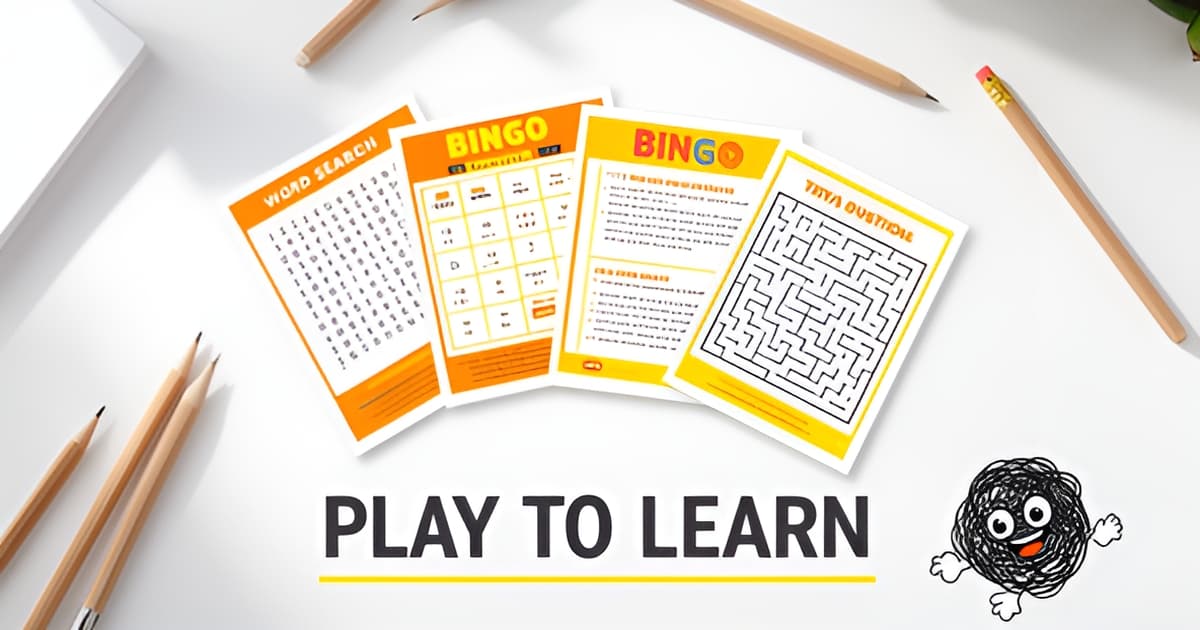
What are some good teaching activities games?
Key Facts
- ["88% of teachers using digital games report increased student engagement according to recent research", "Meta-analysis of 57 studies found teaching with a game was more effective than other instructional tools (SD .33) according to meta-analysis", "Students in game-based formats show 45% higher knowledge retention according to research", "70% of statistically significant studies show game-based learning raises grades/test scores by roughly one letter grade according to research", "60% of teachers say gamification is the most effective engagement strategy according to Clever Classroom of the Future Report 2025", "A five-year study of over 1,000 engineering students found consistency of weekly participation, not speed or competitiveness, was the strongest predictor of exam success according to University of Madrid study", "92% of U.S. educators say game-based learning is necessary, with 54% calling it indispensable according to recent research"]
The Engagement Problem: Why Worksheets Alone Aren't Cutting It
The data tells a familiar story: 46% of teachers report engagement has declined since 2019, and 1 in 3 students in grades 5 through 12 admit they are "always" bored. Meanwhile, 92% of U.S. educators say game-based learning is necessary, with 54% calling it indispensable. The disconnect is clear, teachers know games work, but many lack the time and budget to build them from scratch.
Research confirms that games outperform traditional worksheets across multiple metrics. A meta-analysis of 57 studies found teaching with a game was more effective than other instructional tools, and students in game-based formats show 45% higher knowledge retention. Games activate active retrieval, emotional engagement, and spaced repetition simultaneously, while worksheets rely on delayed grading and passive completion. Even more compelling, 88% of teachers using digital games report increased student engagement, and 70% of statistically significant studies show game-based learning raises grades or test scores by roughly one letter grade.
The good news is that you don't need complex designs to see results. Practitioners note that kids will play with almost anything, and the most effective formats share simple, familiar mechanics, short rounds, built-in competition, and immediate feedback. Printable, low-prep formats like word searches, bingo, trivia cards, and flashcards align directly with these evidence-backed design principles. Tools like Printoodle let teachers generate print-ready activities from their own lesson material in seconds, turning existing worksheets into engaging games without hours of prep work.
Print it. Doodle it. Done.
Ready to bring more engagement into your classroom? one minute games for kids lets you generate printable activities from your own material in seconds. Print a free sample and see the difference game-based learning can make.
What Makes a Teaching Game Actually Work: The Evidence
A 57-study meta-analysis found teaching with a game was more effective than other instructional tools (SD .33), and 70% of significant studies show roughly a letter-grade improvement. Gamified learning also boosts retention by 45%, making the case that format matters as much as content.
The difference between a game that clicks and one that falls flat comes down to a few evidence-backed traits. Simple, familiar mechanics top the list, students don't need to learn a new system to benefit. Short rounds keep engagement high and give teachers space to reset, while a clear winner adds purpose without tipping into cutthroat competition. Immediate feedback loops are non-negotiable; they turn a round of play into a learning moment. Perhaps most importantly, the gameplay itself must be the target skill. When the mechanics and the lesson are one and the same, students practice more and complain less.
The research also offers a crucial caveat. A five-year study of over 1,000 engineering students at the Polytechnic University of Madrid found that consistency of weekly participation, not speed or competitiveness, was the strongest predictor of exam success. This suggests that regular, low-stakes engagement matters more than high-pressure rivalry.
For teachers looking to apply these findings, Printoodle generates printable teacher tool activities designed around these exact mechanics. One-minute games for kids can be created from lesson material in seconds, turning familiar formats like word searches, bingo, and trivia cards into structured practice that aligns with the evidence. Print it. Doodle it. Done.
Six Good Teaching Activity Games You Can Run Tomorrow
You don't need a game design degree to run a great classroom game tomorrow. The research points to formats you can print in minutes, each matching the design principles that make games work: simple mechanics, short rounds, clear winners, and gameplay that is the skill being taught.
Word searches and crosswords build vocabulary through active retrieval. That matters because research on recall shows students retain 50–80% of material after a week with active retrieval versus 10–15% with passive reading. The mechanic is the skill: finding "photosynthesis" in a grid forces the brain to recognize and reconstruct the word.
Bingo trains fast concept recognition. A chemistry teacher's CHeMgO ionic formula bingo, where students match ion cards to formula squares on their boards, shows how this works even for hard content. As one veteran science teacher put it, "kids will play with almost anything," so a familiar mechanic like bingo carries the learning load.
Trivia and quiz cards give you built-in formative assessment. Games provide immediate, continual feedback while worksheets wait for grading, and that instant feedback loop is where the learning happens. Short rounds also let you regroup off-task students between games.
Flashcards support spaced repetition, one of the three mechanisms (alongside retrieval and emotional engagement) that games activate simultaneously.
Mazes and color-by-number suit younger learners who need fine-motor work alongside content, and they keep the structured-scenario approach that effective games require.
Race-style games like Scrabble Relay add the competition students create on their own anyway. Students race to build words from letter tiles, scoring 1 point for 2–4 letter words, 2 points for 5–9, and 3 points for 10-plus. One caveat: a five-year study of 1,000+ engineering students found consistent weekly participation, not speed, predicted exam success. Race for fun, but run games weekly for results.
If you want zero prep, Printoodle generates each of these formats from your own lesson material, and its one minute games for kids cover quick filler rounds between lessons. Print it, doodle it, done.
Turn Your Own Lesson Material Into Games (Without Losing Your Prep Time)
The best teaching activities games are often hiding in your filing cabinet. As one veteran science teacher put it, "kids will play with almost anything. And if I could make a worksheet, I just might be able to turn it into a game." His advice after 20+ years in the classroom: don't sweat the polish, because "ugly is OK" when the alternative is losing play time to prep time (Stoichdecks).
The mechanics matter more than the looks. Students will turn a worksheet into a race anyway, so give them a clear winner, keep rounds short, and stick to familiar formats students already know: bingo, matching, guessing games, trivia. When gameplay and the target skill are the same thing, students argue about the content itself, which deepens understanding. That's why a meta-analysis of 57 studies found teaching with a game outperformed other instructional tools (SD .33) (Gerstein, Ed.D.).
Here's where your own material comes in. Printoodle lets you paste your lesson content, the vocabulary list, the quiz questions, the unit facts, and get a print-ready PDF in seconds. No design work, no formatting rabbit hole. The formats map directly onto what the research says works:
- Word searches built from your own vocabulary list
- Bingo cards generated from your unit content
- Trivia cards pulled straight from your quiz material
- Flashcards for pairing, matching, and quick rounds
Everything lands in your library, and reprints are free forever. Next year's class needs the same bingo set? Print it again at no cost. Short on time before a Friday afternoon? Try one minute games for kids for something you can run between lessons. The point is that the game gets played, not perfected.
One caveat worth remembering: the research is clear that games supplement the teacher, they don't replace them. As University of Georgia researcher Georgia Hodges put it, "Don't take the teacher out but have them there to facilitate learning" (US News). You're still the one scaffolding, regrouping, and turning a card game argument into a teaching moment. The game just gets them to the table.
Print it. Doodle it. Done.
Frequently Asked Questions
Do classroom games actually help students learn better than worksheets?
What makes a teaching game actually work instead of just being fun?
What are some good teaching activity games I can run with no prep?
Is competition in classroom games a good idea?
Why do games improve retention so much compared to reading or worksheets?
Do games replace the teacher's role in the classroom?
The Game Gets Played, Not Perfected
So, what are some good teaching activities games? The answer turns out to be simpler than the research made it look: word searches, bingo, trivia cards, flashcards, mazes, and race-style games, formats your students already know, built around short rounds, clear winners, and gameplay that doubles as the skill you're teaching. The evidence is on your side: 70% of statistically significant studies show game-based learning raises grades by roughly one letter grade, and consistency matters more than polish. You don't need a game design degree or a weekend of prep, you need your own lesson material in a format kids will actually play. That's exactly what Printoodle was built for: paste in your vocabulary list or quiz questions, get a print-ready PDF in seconds, and reprint it free forever when next year's class needs the same bingo set. Pick one lesson from next week, turn it into a game, and run it. Print it. Doodle it. Done.