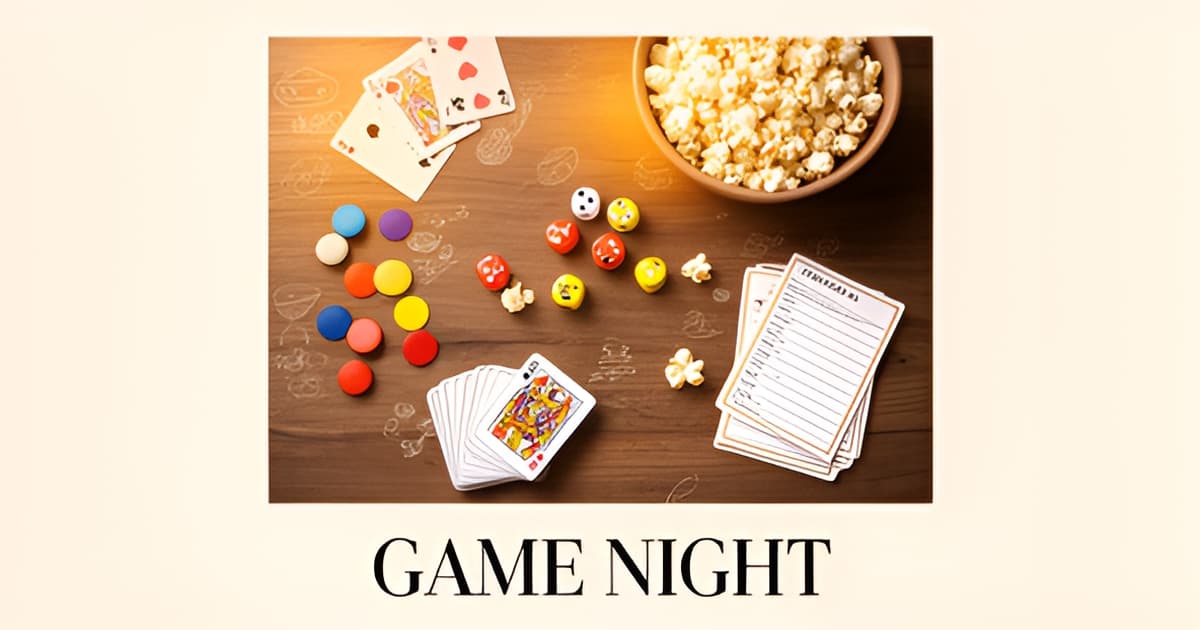
What are some must-haves for a family game night?
Key Facts
- The average American spends over 7 hours daily on screens, while kids log up to 9 hours according to screen-time research.
- Preschoolers who played a simple number game for just one hour showed measurable gains in counting skills per Carnegie Mellon research.
- Expert game designers say the best family games are learnable in 10-15 minutes with a 30-45 minute play session The Guardian reports.
- A solid family trivia set needs 3-5 categories, mixed difficulty, and enough questions for 2-3 games without repeats according to ParentsTogether.
- Homemade family trivia sets on Etsy sell for less than $13 for parents who skip the DIY route ParentsTogether notes.
- In ParentMap's review of 26 family games, every single writeup included a food pairing suggestion per ParentMap.
- A 2023 Frontiers in Psychology study found time with parents is crucial to children's growth and academic performance research shows.
Why Family Game Night Needs a Comeback (and What Gets in the Way)
The average American now spends over seven hours a day staring at screens, and children aren't far behind, often logging up to nine hours daily. This constant connection makes the idea of unplugging feel impossible, yet research consistently shows that stepping away from devices creates space for something more meaningful. A Carnegie Mellon study found that preschoolers who engaged in just one hour of simple game play over two weeks demonstrated measurable gains in number skills, while a 2023 Frontiers in Psychology study highlighted that time spent with parents is a crucial factor in children's growth and academic performance. These findings explain why family game night is framed as the ultimate screen-time antidote, but the reality for most parents is that planning the event feels like another task on an already overflowing to-do list.
The research reveals a clear component checklist that successful game nights rely on: category-labeled question cards, three to five starter categories, a mix of easy and tough questions, and enough content for two or three rounds without repetition. ParentsTogether notes that when the DIY workload feels too heavy, many simply purchase ready-made sets, with homemade family trivia packs on Etsy selling for less than $13. The Guardian’s expert panel emphasizes that the best games are learnable in ten to fifteen minutes and offer a play session lasting thirty to forty-five minutes, the "sweet spot" for keeping attention without exhaustion. Portability and flexible player ranges also rank high, allowing a game to move from the kitchen table to the living room couch without missing a beat.
Personalization emerges as the true differentiator that transforms a generic round of trivia into a bonding experience. Waterford.org recommends that each family member craft questions about themselves, while ParentsTogether advises building categories unique to your household, such as "Weird Habits of the Family Pet" or favorite "Road Trip Songs." These inside references invite everyone to the table, including remote participants joining over Zoom. Printoodle’s family trivia game, family trivia board game, and family trivia questions tools are designed to deliver exactly this kind of customized content in seconds, turning a brief prompt into print-ready cards that families can doodle on, color, and play with immediately.
Every roll of the dice and shuffle of the cards is more than just movement, it is development in action. PBS Parents notes that handling game components builds hand-eye coordination and fine motor skills in younger children, while the same academic research ties regular family game time to improved classroom results and vocabulary growth. With the planning logistics, consistent night, rotating game choice, snacks, and supplies ready, covered by printable components, the barrier to entry falls away. The result is a simple, unplugged ritual that meets families where they are: looking for connection in a world that never stops scrolling.
family trivia game, family trivia board game, and family trivia questions generators provide the print-ready components modern families need.
Print it. Doodle it. Done.
The Must-Have Checklist: What Every Game Night Needs
The difference between a game night that fizzles and one the kids beg to repeat usually comes down to preparation. Ask any family that hosts regularly what makes it work, and you'll hear the same core items: the right games, a trivia set worth playing, and a space set up for actual play.
Game selection comes first, and experts are surprisingly specific about it. Starla Fitch of Our Family Plays Games told The Guardian that "most people are not going to sit around and read a rule book for an hour," recommending games learnable in 10 to 15 minutes. Game designer Mandi Hutchinson adds that 30 to 45 minutes is "the sweet spot" for session length, long enough to feel satisfying, short enough to hold young attention. Flexibility matters too: the best family games adapt to different ages, player counts, and even travel.
Trivia deserves its own checklist, because a weak trivia set dies fast. According to ParentsTogether, a solid family trivia game needs:
- Question cards with the category clearly marked
- Three to five categories to start with
- A mix of easy-to-tough questions so mixed ages can all compete
- Enough questions for two or three consecutive games without repeats
Personalization is what turns a generic quiz into a bonding experience. ParentsTogether suggests categories like "Weird Habits of the Family Pet" or "Family Vacations," and Waterford.org recommends having each family member write questions about themselves. If building a deck from scratch sounds like a project, a family trivia game generator can produce category-labeled, print-ready question sets in seconds, and a family trivia board game or custom family trivia questions set works the same way for parents who'd rather print than DIY.
Logistics round out the list. Successful game nights need a comfortable play space, good lighting, minimal distractions, and supplies ready before anyone sits down, according to Play World Game. Snacks are non-negotiable: ParentMap's review of 26 family games found that every single review included a food pairing suggestion. And as ParentMap's Malia Jacobson reminds tired parents, game night "doesn't need to last for hours or drain every last bit of your energy."
One bonus worth knowing: those dice rolls and card shuffles build real skills. PBS Parents notes that handling game pieces develops hand-eye coordination and fine motor skills, and Carnegie Mellon research found preschoolers who played a simple number game for just one hour showed measurable gains in counting and number skills. Print the games, set the snacks out, dim the overheads, and you're ready.
Printable Trivia: The Easiest Must-Have to Check Off
If you're building your list of what are some must-haves for a family game night, start with printable trivia. It's the one item you can have in hand within minutes, it works for every age at the table, and it costs almost nothing compared with a $40 board game.
The experts' own benchmarks make the case. Game designers say a good family game should be learnable in 10 to 15 minutes, with play sessions of 30 to 45 minutes. Trivia fits both numbers perfectly: everyone already knows the rules, and you can play as many or as few rounds as your evening allows.
The real differentiator, though, is personalization. A ParentsTogether guide recommends building categories unique to your family, like "Weird Habits of the Family Pet," "Family Vacations," or "Road Trip Songs." Generic trivia tests what kids know about the ocean. Personalized trivia tests what they know about you, and that's what turns a quiz into a bonding game.
If you're making your own set, the research points to a short checklist:
- Question cards with the category marked on the back
- 3–5 categories to start, mixing easy and tough questions
- Enough questions for 2–3 games without repeats
- Optional extras: dice, a host, and answer sheets
Here's the honest part: that checklist takes real time to build by hand. The same guide notes that parents who are "not exactly a DIY kind of parent" end up hunting for free printables or Etsy sets under $13. There's a faster route. Printoodle's family trivia game generator turns a short brief about your crew into a print-ready set in seconds, and the family trivia questions tool handles the category mix and difficulty tiers for you.
Want something with more structure? The family trivia board game option adds the board-and-dice format kids love, and PBS Parents notes that rolling dice and shuffling cards builds fine motor skills along the way. You print it once, and reprints stay free in your library for the next rainy Friday.
Print it. Doodle it. Done.
Your First Personalized Game Night: A 15-Minute Setup
If you can pick a night, you can run a personalized game night. The setup takes about 15 minutes, and the payoff lasts far longer than the game itself.
Start by claiming a consistent slot on the calendar. Game night logistics matter as much as the game: a convenient date, a comfortable play space, good lighting, and minimal distractions. Successful nights are "less about winning and more about creating memorable family interactions," according to Play World Game. Pick Friday or Sunday, whichever your family actually protects, and keep it.
Next, generate your trivia set. This is where most DIY guides lose people, because building a good game by hand takes an evening you don't have. ParentsTogether's step-by-step guide lays out what a proper set needs, and notes that parents who aren't "exactly a DIY kind of parent" turn to ready-made printables instead. With Printoodle, you type a short brief (your kids' names, inside jokes, categories like "Family Vacations" or "Weird Habits of the Family Pet") and download a print-ready PDF in seconds. The checklist to aim for:
- Question cards with the category marked on the back
- 3–5 categories to start, so the game stays fresh
- A mix of easy-to-tough questions for mixed ages
- Enough questions for 2–3 consecutive games without repeats
The family trivia game generator handles all of that for you, and the family trivia board game option adds a board path if your kids like moving pieces around a track. Want to go deeper? The family trivia questions tool lets you build a bigger question bank from your own family stories. Every set you make lives in your library, so reprints are always free when the cards get spaghetti-sauced.
Add the optional extras only if your crew wants them: a die for movement, a rotating "host" role so each kid gets a turn running the show, and simple answer sheets for scoring. Keep sessions to the 30–45 minute sweet spot that game retailers recommend, and put snacks on the table. In ParentMap's review of 26 family games, every single writeup included a food pairing, which tells you something about how families actually play.
The quiet benefit is developmental. PBS Parents notes that every dice roll and card shuffle builds hand-eye coordination and fine motor skills, and Carnegie Mellon research found preschoolers who played a simple dice-and-token number game for just one hour over two weeks showed measurable gains in counting and number skills. Trivia rounds quietly stretch vocabulary, too.
So pick your night, print your set, and let the kids doodle the score sheet while you deal the cards. Print it. Doodle it. Done.
Frequently Asked Questions
What are some must-haves for a family game night?
How long should a family game night actually last?
What makes a good family trivia set?
Do I really have to build my own trivia cards, or can I just buy printable ones?
Does family game night actually benefit kids, or is it just fun?
How do I make game night feel special instead of just another quiz?
What logistics do I need to plan for game night to go smoothly?
Your Table Is Set: Game Night Starts Tonight
So, what are some must-haves for a family game night? The answer comes down to a short, proven list: games that are learnable in 10–15 minutes and last 30–45 minutes, a trivia set with category-labeled cards, 3–5 categories mixing easy and tough questions, enough content for two or three rounds without repeats, a comfortable space with minimal distractions, and snacks on the table. Personalization is what transforms that checklist from a quiz into a bonding experience, categories like "Weird Habits of the Family Pet" invite everyone to play, including remote family over Zoom. And the payoff is real: PBS Parents notes that every dice roll and card shuffle builds hand-eye coordination and fine motor skills, while Carnegie Mellon research found preschoolers showed measurable number-skill gains from just one hour of play. Your next step is simple: pick a night, protect it on the calendar, and print your set. Printoodle's family trivia game generator turns a short brief about your crew into print-ready cards in seconds, and every set stays in your library with free reprints for the next rainy Friday. Print it. Doodle it. Done.