What are some printable bingo games for kids?
Key Facts
- Image-based boards significantly boost engagement for pre-readers and early elementary kids, with some generators offering 2,000+ images across 50+ vocabulary categories Tools for Educators
- A standard 5x5 bingo card can generate 15,511,210,043,330,985,984,000,000 unique combinations, while even a simple 3x3 card produces 362,880 variations Bingo Baker
- Print on cardstock and laminate them if you plan to reuse the set; laminated cards work beautifully with dry-erase markers for repeated classroom or home use bingo card generator guidance
- Use 30 to 50 items in your word or image list rather than the bare minimum to create more variety between cards and ensure each round offers a unique challenge generator documentation
- A 3x3 grid works best for preschoolers keeping the game short and manageable with just nine unique items, while 4x4 suits early elementary students with sixteen squares Tools for Educators
Why Bingo Beats Boredom (and Screens) at Home and in Class
Finding a go-to activity that keeps kids engaged without begging for a tablet is a win for any parent or teacher. Bingo checks that box instantly because it scales from a 3x3 grid for preschoolers to a 5x5 format for older kids, and it doubles as vocabulary or math practice without feeling like a lesson. Research shows that 5x5 grids with a FREE space are the standard for kids' bingo, but 3x3 and 4x4 options better suit younger players, making it easy to match the game to any age group. Image-based cards significantly increase engagement for pre-readers and early elementary students, especially when words are replaced with pictures or paired together. Printing on cardstock and laminating extends card life for repeated use, which is particularly valuable for classroom settings and home reuse. Mixing common and rare items in a custom word list balances difficulty across multiple cards, ensuring each round offers a unique challenge.一步步 Using Printoodle to make printable bingo games for kids is straightforward: start by choosing your grid size and theme, then let the tool auto-populate the cards from your brief or word list. Add a FREE space in the center for the classic 5x5 format, print on cardstock for durability, and you are ready to play.一步步 Printoodle users can generate personalized, print-ready bingo cards in seconds, customizing everything from the grid layout to the images or words on each square. The platform supports image-based boards that auto-populate word labels, making it accessible for pre-readers, and offers options for text-only cards focused on sight words or math problems. Once the cards are generated, they download as PDFs ready for printing on Letter or A4 paper, and because the tool lives in a library, reprints are always free.一步步 Whether you are a parent looking for a rainy-day activity or a teacher creating a custom vocabulary review, Printoodle removes the prep time so you can focus on the fun. Ready to try it yourself? Generate your first set of printable bingo cards and see how quickly the kids dive in.
7 Printable Bingo Game Ideas Kids Actually Love
So you're hunting for printable bingo games for kids, and you want ones that actually hold attention past round two. The good news: bingo is one of the most adaptable kids' games out there. As the team at BookWidgets puts it, bingo can "help rehearse anything from language vocabulary to math and historical facts," and everyone plays together regardless of level.
Here are the formats that consistently work, whether you generate them with a tool like Printoodle or build them by hand.
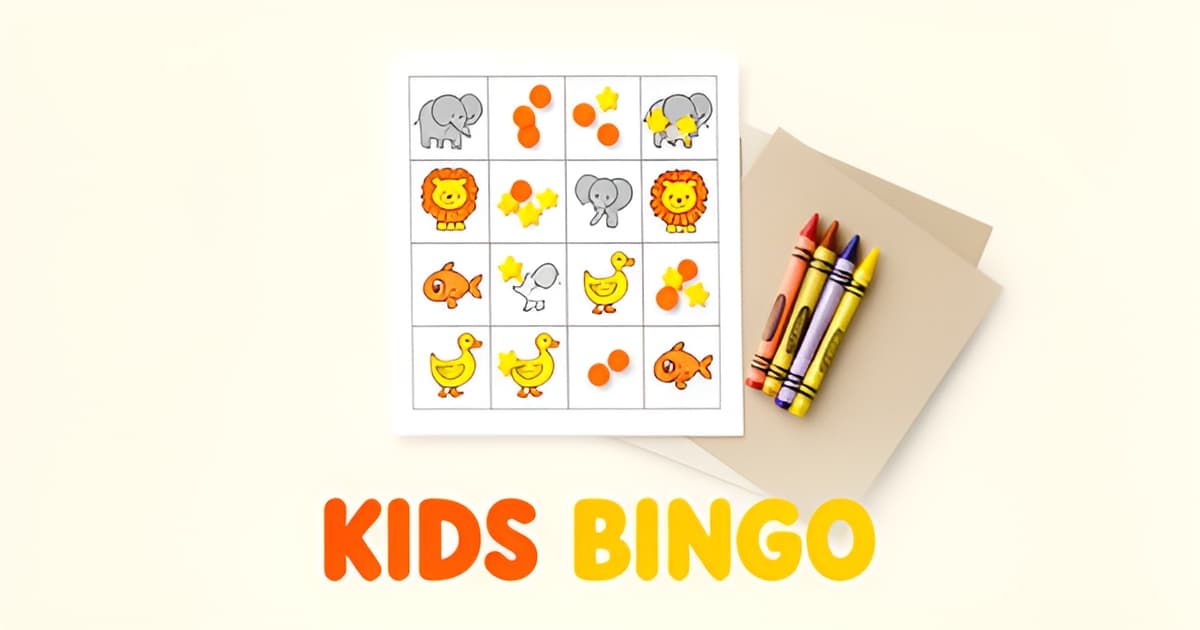
1. Animal and picture bingo. For pre-readers, swap words for pictures. Research shows that image-based boards significantly boost engagement for pre-readers and early elementary kids, and some generators offer 2,000+ images across 50+ vocabulary categories, with word labels auto-populated underneath (Tools for Educators). A 3x3 grid keeps games short for preschoolers; 4x4 suits early elementary.
2. Number bingo 1-20. Classic number bingo follows the 75-ball structure (B: 1-15, I: 16-30, and so on), but you can type a custom range like 1-20 for younger players into most generators (JigsawMake). It's a sneaky way to build number recognition.
3. Alphabet and sight-words bingo. Sight Words Bingo, CVC Words Bingo, and Alphabet Bingo rank among the most popular elementary resources, with 1st and 2nd grade teachers downloading them most heavily (Teach Starter). Teachers use custom cards for vocabulary review, math practice, and science terms.
4. Themed party bingo. Birthday Party Bingo and Halloween Bingo are staples of ready-made free packs, and a themed set with your child's name on it makes a birthday activity feel personal. Pair it with quick one minute games for kids to keep the party moving between rounds.
5. Movement and exercise bingo. Instead of marking squares, kids do lunges, jumping jacks, or sit-ups (BookWidgets). It turns a table game into a burn-off-some-energy game, which makes it perfect for rainy days alongside mazes for kids or a kids sudoku printable.
6. Question and answer quiz bingo. Put content on card fronts and clues on backs, so calling a clue sends kids hunting for the answer (Bingo Baker). Great for reviewing anything from spelling to history facts.
A few quick tips that make any of these better:
- Match grid size to age: 3x3 for preschool, 4x4 for early elementary, 5x5 with a FREE space for older kids.
- Use 30-50 items in your list so cards vary meaningfully between players.
- Print on cardstock and laminate, then mark with dry-erase markers for reusable sets.
- Give hints instead of calling words directly, and let winners be the next caller.
One more reason to keep playing: variety never runs out. A standard 5x5 card can generate over 15 quintillion unique combinations (15,511,210,043,330,985,984,000,000, to be exact), while even a simple 3x3 card produces 362,880 variations (Bingo Baker). Every game genuinely feels fresh.
Print it. Doodle it. Done.
How to Make Printable Bingo Cards with Printoodle, Step by Step
Creating printable bingo games for kids starts with choosing the right grid size for the age group you are working with. For preschoolers, a 3x3 grid works best, keeping the game short and manageable with just nine unique items. Early elementary students do well with a 4x4 grid, which offers sixteen squares and a slightly longer play session. Older kids are ready for the classic 5x5 format, which includes a FREE space in the center and provides the most variety for extended gameplay. Research into grid options shows that matching the card complexity to the child's developmental level keeps them engaged without causing frustration.
Once the grid size is set, the next step is deciding between images and text. Image-based cards auto-populate word labels and are a significant engagement driver for pre-readers and early elementary students who may not yet read fluently. Text-only cards are ideal for practicing sight words, math facts, or vocabulary words. A helpful tip from production research is to print cards on cardstock and laminate them; this extends their life for repeated use, making them durable enough for classroom centers or multiple rounds at home. Studies also note that including 30 to 50 items when generating cards creates more variety between printed boards, ensuring each child has a unique experience.
After customizing the content and grid, the final step is downloading a print-ready PDF. Most platforms offer a Letter or A4 format toggle, allowing you to select the paper size that fits your printer. Once the PDF is downloaded, the cards are ready to cut and play. And the best part? Any cards you generate are saved to your library, where reprints are always free, so if a game becomes a favorite, you can print it again and again without extra cost.
Ready to start? Printoodle makes it easy to generate a themed bingo set from a short brief, choose the perfect grid size, and download a print-ready PDF in seconds. One minute games for kids provide quick, fun setups, while mazes for kids and kids sudoku printable offer great companion activities for rainy days or quiet time. Print it. Doodle it. Done.
Pro Tips: Printing, Durability, and Keeping Kids Engaged
The difference between a bingo set that survives one rainy afternoon and one that lasts the whole school year comes down to a handful of small choices at the printer. If you've already learned how to make printable bingo games for kids, these finishing touches turn a good activity into a great one.
Print for durability. The research is unanimous here: print your cards on cardstock rather than standard paper, and laminate them if you plan to reuse the set. According to bingo card generator guidance, laminated cards work beautifully with dry-erase markers, so kids can mark their squares and you can wipe the boards clean for the next round. For classrooms and repeated home play, this one step can stretch a single print run across an entire semester. Since Printoodle keeps every generated page in your library with free reprints, you can always print a fresh batch later without starting over.
Build in variety. When you're generating a custom set, aim for 30 to 50 items in your word or image list rather than the bare minimum. A standard 5x5 card needs at least 24 items plus the free space, but generator documentation recommends the larger pool specifically because it creates more variety between cards. That means no two kids mark the same five squares in the same order, and the game stays unpredictable.
Keep everyone playing. The best bingo rounds keep every child engaged until the end. Classroom activity ideas from BookWidgets suggest a few tactics that work especially well with mixed-age groups:
- Give hints instead of calling words outright, so kids have to think before they mark.
- Pair kids in teams of two so different skill levels can play together and help each other.
- Let the winner be the caller for the next round, which keeps the role exciting.
- Ask winners to use their five words in sentences as a bonus challenge.
The team-of-two trick deserves special mention. As the BookWidgets guide puts it, everyone can play together regardless of level, which makes bingo one of the easiest games to run with a sibling group or a mixed classroom. A confident reader paired with a pre-reader gets practice on both sides: one reads the board, the other spots the pictures.
If you want to keep the momentum going after the final round, bingo pairs nicely with other quick printable activities. A round of one minute games for kids makes a great between-rounds filler, while mazes for kids or a kids sudoku printable gives early finishers something quiet to do while the rest of the table finishes their cards. Print them on the same cardstock and your whole activity kit lasts just as long as the bingo boards.
Frequently Asked Questions
What are some printable bingo games for kids that work for preschoolers?
How do I make printable bingo cards that keep kids engaged without screens?
What grid size should I use for kids' bingo games?
Can I use images instead of words on bingo cards for young children?
How can I make bingo cards last longer for repeated use at home or in the classroom?
What are some fun bingo game ideas for kids beyond just numbers?
Your Next Rainy-Day Win Is One Print Away
From animal picture boards for pre-readers to sight-word and math bingo for older kids, printable bingo games for kids prove that the best activities don't need batteries or Wi-Fi. The formula is simple: match the grid to the age group, use 30-50 items for real variety between cards, print on cardstock, and laminate for endless replay. With a standard 5x5 card generating over 15 quintillion unique combinations, according to Bingo Baker's card generator, the game never gets old. Printoodle takes the prep work off your plate: type a short brief, pick your grid and theme, and download a print-ready PDF in seconds, saved to your library so reprints are always free. Your next steps are easy. Choose a theme your kids love, generate your first set, and stock up on cardstock. Round out your activity kit with one minute games for kids for between rounds, mazes for kids for quiet time, and a kids sudoku printable for early finishers. Print it. Doodle it. Done.