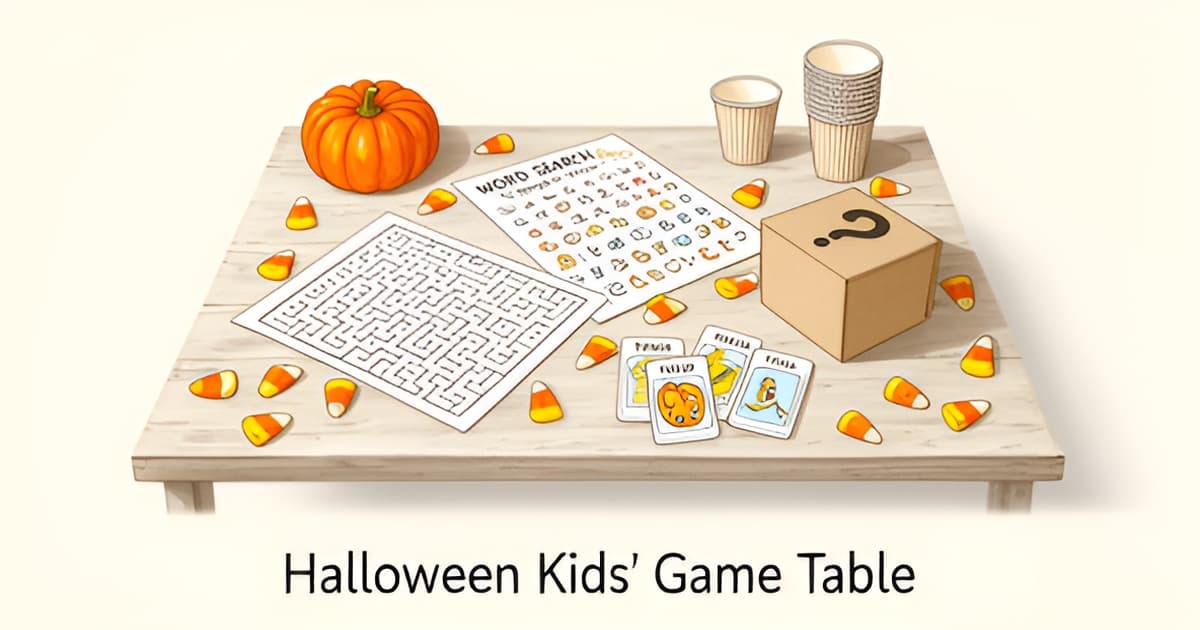
What are some unique Halloween games for kids?
Key Facts
- One collection curates 50+ free printable Halloween games, according to Pineapple Paper Co.
- Great Wolf Lodge publishes 16 one-minute Halloween games designed for everyone from toddlers to grandmas.
- Mystery box games span ages 2 to 10, while word searches best fit the 6-to-10 crowd, per Paperless Post's age guidance.
- Happiness is Homemade lists 12 free Halloween games that are simply print and play.
- Featured kids' Halloween games typically cost $3-$25, with most printables priced $3-$5, PureWow reports.
- San Diego Family warns slime games pose choking hazards for small children and bobbing for apples may be best for teens.
- A Man vs. Clock format with rotating stations of about five kids works really well for classroom parties.
Why the Same Old Halloween Games Fall Flat
If you've ever searched for what are some unique Halloween games for kids, you already know the problem: the same five ideas show up everywhere. Bobbing for apples, musical chairs, and pin-the-tail variants are classics for a reason, but by the time October 31st rolls around, most kids have played them all. Parents, teachers, and party hosts want something that feels fresh this year, not a rerun of last year's party.
The bigger issue is that one-size-fits-all games quietly fail across age groups. Paperless Post's age guidance makes the gaps obvious: bobbing for apples suits kids 5 and up at best, mystery box games run ages 2 to 10, and a Halloween word search fits the 6 to 10 crowd. A game that thrills a seven-year-old can bore a tween or overwhelm a toddler. As Paperless Post puts it, "for toddlers, it's best to keep the monsters to a minimum," with mild spookiness reserved for ages 5 to 8 and scarier décor for tweens.
Safety flags matter just as much as novelty. San Diego Family warns that slime games can pose choking hazards for small children, and notes that apple bobbing "may be best for teens." If your guest list spans preschoolers and fourth graders, the old standbys leave you improvising on the fly.
So what does work? The strongest ideas share a few traits:
- Age-tailored scare levels, so toddlers, elementary kids, and tweens each get a version they can actually enjoy.
- Low-prep formats like Minute-to-Win-It challenges, which rely on household supplies like toilet paper, balloons, and glow sticks.
- Print-and-play convenience, which is why printable games dominate the category. One collection alone curates 50+ free printable Halloween games, and Happiness is Homemade lists 12 more described as "just print and play."
Printables also solve the age-matching problem elegantly, because you can generate different difficulty levels for the same room. A quick halloween maze keeps younger kids busy while older ones tackle halloween trivia, which Happiness is Homemade notes works best for upper elementary ages and up. A halloween word search slots neatly into the 6 to 10 range that Paperless Post recommends, and it doubles as a quiet classroom station.
The takeaway is simple: the classic games aren't bad, they're just overexposed and rarely matched to the kids in front of you. Pick formats you can scale by age and scare tolerance, lean on printables for zero-prep filler, and your party stops feeling like a repeat. Print it, doodle it, done.
Six Unique Halloween Games Kids Haven't Played Yet
If your guests have already done the mummy wrap three years running, it's time for a fresh lineup. Here are six unique Halloween games for kids, each labeled by age, that go beyond the usual suspects.
1. Pin the Nose on the Pumpkin (Ages 5-10). Pin the Tail on the Donkey "never goes out of style," and it adapts to any character you like, from pumpkin noses to monster eyeballs, according to San Diego Family. Blindfold, spin, giggle, repeat.
2. Zombie Musical Chairs (Ages 5-12). Kids shuffle and lurch around the chairs like zombies instead of walking. Paperless Post lists this alongside pass-the-pumpkin (a Hot Potato variant) as a favorite for the 5-12 crowd. Play "Thriller" and the adults will join in.
3. Minute-to-Win-It Spooky Circuit (Ages 3+, honestly). These one-minute challenges use supplies you already own. Great Wolf Lodge publishes 16 of them, built for "people of all ages, from toddlers to grandmas," using toilet paper, glow sticks, straws, and candy. For classroom parties, My Life and Kids recommends a Man vs. Clock format with rotating stations of about five kids each.
4. Mystery Sensory Boxes (Ages 2-10). Fill shoeboxes with peeled grapes ("eyeballs"), cooked spaghetti ("brains"), and cold oatmeal ("ghoul guts"). Guests reach in and guess. Keep the slime away from toddlers, since San Diego Family warns about chokable pieces for small children.
5. Candy Corn Toothpick Towers (Ages 6+). PureWow features this STEM challenge: teams race to build the tallest freestanding tower using only candy corn and toothpicks. It sneaks in engineering thinking while they think they're just playing with candy.
6. Printable Puzzle Stations (Ages 4-12). Printable games dominate Halloween roundups: one collection curates 50+ free printables, and Happiness is Homemade lists 12 "simply print and play" options. As one blogger put it, "I love printable games! In just a few clicks, you are on your way to fun." Printoodle lets you go one step further and personalize them. Generate a halloween maze with your child's name woven into the design, whip up a halloween trivia set matched to your group's ages (trivia works best for upper elementary and older), or print a halloween word search for the 6-10 crowd. Each takes seconds, and reprints are always free.
A few quick rules for picking well:
- Keep monsters minimal for toddlers; save the scary décor for tweens.
- Match complexity to your youngest guest, then let older kids take bonus turns.
- Watch for chokable pieces in sensory games under age 3.
- Skip bobbing for apples for little ones; sources suggest it's best saved for teens.
Most of these cost next to nothing, since featured Halloween games typically run $3-$25 and many of the best ones need only paper and pantry supplies. Pick two or three, label your stations, and let the party run itself.
How to Match Games to Ages and Group Sizes
Choosing the right game starts with knowing who is playing. Paperless Post notes that simple options like the mystery box work for a wide range of 2 to 10 year olds, while word searches are generally best suited for kids aged 6 to 10, and trivia is most engaging for upper elementary aged children and older. PureWow adds an important practical note: many boxed games are designed for only 2 to 4 players, making them a poor fit for larger group gatherings.
For classroom settings or larger parties, a station format tends to work well. My Life and Kids describes a "Man vs. Clock" structure where rotating groups of about 5 kids compete simultaneously at different desks or tables, keeping energy high and wait times low. This approach is ideal for adapting minute-to-win-it challenges or word search races, allowing every child to stay engaged without needing one-on-one supervision for every round.
When planning for mixed ages, consider scaling the complexity. A Halloween maze can be simplified for younger participants by removing tight dead ends, while older kids might enjoy a version with more twists. Similarly, trivia questions can be adjusted by swapping general facts for more specific lore based on the group's age range. Printoodle’s generators, including the halloween maze, halloween trivia, and halloween word search tools, make it easy to customize these activities instantly, printing as many copies as needed for the size of your group.
Quick tips for matching games to your group:
- Mystery box games are inclusive for ages 2 through 10, making them a safe bet for toddlers through early elementary.
- Word searches work best for readers aged 6 to 10, perfect for classroom quiet time or party downtime.
- Trivia is most engaging for upper elementary aged children and older, especially when questions can be customized.
- Boxed games often limit player count to 2-4, so check the box before planning for a larger crowd.
- Station formats with rotating groups of 5 work well for classroom parties and keep the pace moving.
Print it. Doodle it. Done.
Build Your Halloween Game Plan in Minutes with Printables
You've found your game ideas, so now comes the part most parents dread: actually pulling the lineup together before Friday. It doesn't have to be a weekend project. With a generator like Printoodle, you can build a full party or classroom plan in minutes, and the free tier gives you 10 credits just for verifying your email, which covers a starter set with nothing to pay.
Start with three printed anchors: a halloween maze for quiet table time (great for ages 6–10, per Paperless Post's age guidance), a halloween word search that Happiness is Homemade calls "great for teachers and classroom Halloween parties", and a halloween trivia set for upper elementary and older kids. Every page you generate lands in a library where reprints are free forever, so a smeared copy or a surprise extra guest never costs you another credit.
Then fill the gaps with zero-prep activities that need only household supplies. Research shows minute-to-win-it games run on toilet paper, candy, balloons, and glow sticks, and the Man vs. Clock format works well for classroom parties with rotating stations of about five kids each. A balanced hour might look like this:
- Opening: word search sheets at every seat while guests arrive
- Main event: three rotating minute-to-win-it stations
- Wind-down: maze pages and trivia cards for seated play
- Send-off: mini piñatas, which San Diego Family notes double as take-home party favors
Keep inclusivity in the plan from the start. The Teal Pumpkin Project is the standard move for kids with food allergies: offer non-candy prizes like stickers, glow sticks, or small toys alongside the treat bowl. Printable game sheets fit neatly into this approach since they double as skill-builders for visual scanning, writing, and memory, according to one collection of 50+ printable games.
One last tip: print more than you think you need. Reprints are free, but so is grabbing a few extras the first time. Print it, doodle it, done.
Frequently Asked Questions
What are some unique Halloween games for kids that aren't the same old apple bobbing?
What Halloween games work for a mixed-age group of toddlers and bigger kids?
Are Minute-to-Win-It Halloween games hard to set up?
How do I run Halloween games for a whole classroom without chaos?
Is bobbing for apples safe for young kids?
How can I make a Halloween word search or maze personalized for my party?
Game On: Making Every Halloween Memorable
From classic twists like Pin the Nose on the Pumpkin to zero-prep Minute-to-Win-It challenges, the best Halloween games aren't about reinventing the wheel, they're about matching the activity to the kids in front of you. Age-tailored scare levels ensure toddlers stay engaged without overwhelm, while printable formats like mazes and word searches solve the tricky problem of keeping multiple age groups happily occupied in the same room. When you pair these scaled activities with household supplies and rotating stations, the party flows naturally from arrival to wind-down without the usual host stress. The result? A celebration that feels fresh, inclusive, and totally doable, even on a tight budget. Print it. Doodle it. Done.