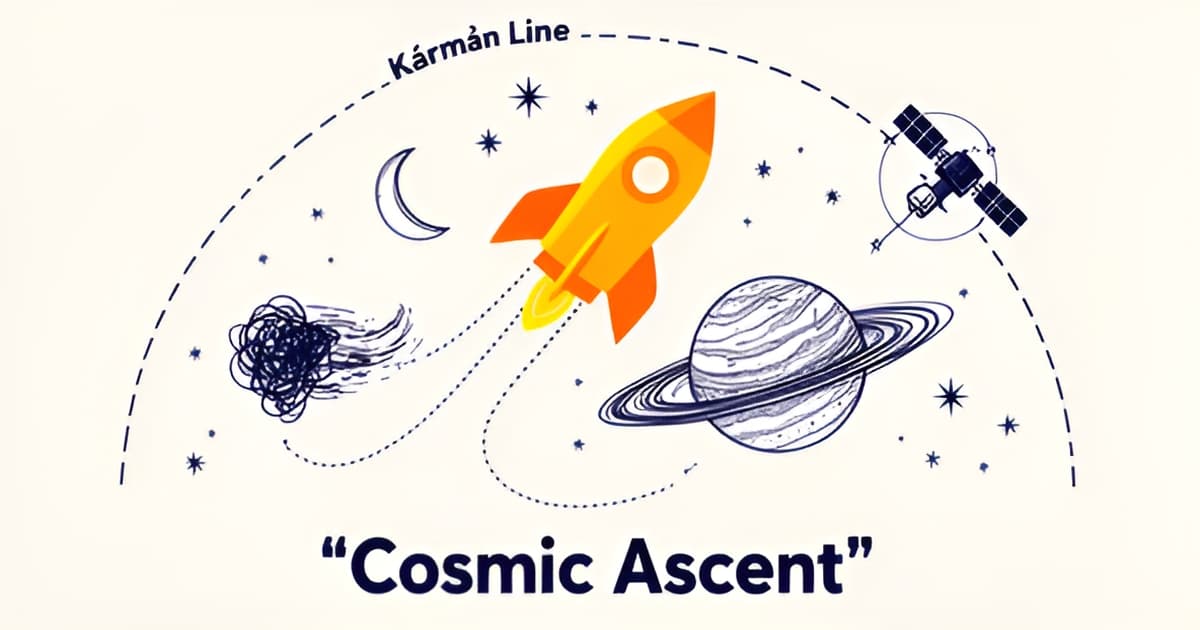
What are space themed things?
Key Facts
- The human spaceflight market grew from $4.69 billion in 2024 to $5.28 billion in 2025, per industry reporting.
- The human spaceflight market is projected to reach $8.40 billion by 2029, growing at a 12.3% compound annual rate according to market research.
- 55% of Americans expect space tourism to become a common activity by 2073, market analysis shows.
- The Fram2 mission in April 2025 was the first human spaceflight to orbit over Earth's polar regions, industry reporting confirms.
- Fram2 ran 22 experiments in space, including microgravity x-ray imaging and mushroom farming, according to reporting.
- Sub-orbital tourism held the largest revenue share at 45.3% in 2024, driven by short trips offering weightlessness and Earth views, per market data.
- Rockets, astronauts, planets, stars, moons, and spacecraft remain the most universally recognized space themed things across research.
Space Themed Things: The Full List, From Rockets to the Kármán Line
So what are space themed things? At the most basic level, they're the icons everyone recognizes instantly: rockets, astronauts, planets, stars, moons, and spacecraft. But the theme has grown well beyond those classics. Recent missions have added a whole new vocabulary, from polar orbits and microgravity experiments to the Kármán line, the boundary marking where space begins.
The universally recognized basics
Any solid space theme starts with the fundamentals. Rockets, astronauts, planets, and spacecraft appear consistently across research as the most recognized elements, the ones kids can name before they can read. Stars, moons, and space stations round out the core set. If you're building a space word search for a classroom or a rainy afternoon, these terms belong in every word bank.
The newer, more specific elements
What's changed recently is the depth of the theme. The Fram2 mission in April 2025, the first human spaceflight to orbit over Earth's polar regions, ran 22 experiments including microgravity x-ray imaging, muscle and bone health studies, and even mushroom farming, according to industry reporting. Terms like "polar orbit," "weightlessness," and "microgravity" are now part of the mainstream space conversation, and they make great advanced vocabulary for older kids. A space maze or space crossword puzzle can work these harder terms in as a stretch challenge.
Why space is having a moment
The numbers explain the cultural shift. The human spaceflight market sat at $4.69 billion in 2024, climbed to $5.28 billion in 2025, and is projected to reach $8.40 billion by 2029 at a 12.3% compound annual growth rate. Space tourism, once exclusive to the wealthy, is moving toward a broader audience as costs come down, and market analysis notes this is creating a new consumer category for space-themed content.
Public sentiment backs it up: 55% of Americans expect space tourism to become a common activity by 2073. Meanwhile, sub-orbital tourism already holds the largest revenue share at 45.3% in 2024, driven by short trips offering weightlessness and Earth views, per market data.
A quick inventory of space themed things
- The classics: rockets, astronauts, planets, stars, moons, and spacecraft
- Mission vocabulary: orbital, sub-orbital, spaceplanes, space stations, and the Kármán line
- Experience terms: weightlessness, microgravity, Earth views, and the overview effect astronauts report
- Cutting-edge concepts: polar orbits, microgravity experiments, and even space farming
That mix of familiar and fresh is exactly what makes the theme so workable for printable activities. Printoodle's generators let you drop any of these terms into a custom puzzle in seconds, so a five-year-old gets rockets and moons while a ten-year-old hunts for "microgravity" and "polar orbit." Print it, doodle it, done.
Why Space Themes Work So Well for Kids' Activities
Every parent and teacher knows the struggle: you need an activity that actually holds a child's attention for more than five minutes, and ideally one that sneaks in some learning while it does. Space themes deliver on both counts, and the data explains why.
When you're exploring what are space themed things, you're tapping into a theme that's becoming genuinely mainstream. According to market research, 55% of Americans expect space tourism to be a common activity by 2073. That means today's kids are growing up hearing about rockets, astronauts, and orbital flights on a regular basis. The vocabulary feels aspirational and familiar at the same time.
The same research identifies an "educational tourist" segment: people who want to learn about space, not just watch it happen. Kids fit this profile naturally. A puzzle that teaches them the word "microgravity" alongside "rocket" gives them something to show off at the dinner table.
The industry's growth backs this up. The human spaceflight market grew from $4.69 billion in 2024 to $5.28 billion in 2025, and real missions keep feeding the news cycle. The Fram2 mission in April 2025, for example, was the first human spaceflight to orbit over Earth's polar regions, running 22 experiments along the way. Kids who follow these stories arrive at your activity table already curious.
Here's where parents and teachers face a genuine balancing act. Easy, recognizable terms keep kids from getting frustrated, but stretch vocabulary is where real learning happens. A well-designed activity does both:
- Anchor words every child knows: rocket, astronaut, planet, spacecraft
- Mid-level terms that build knowledge: orbit, space station, launch
- Stretch terms that spark questions: microgravity, Kármán line, polar orbit
Printoodle builds this tiering into its space puzzles. A space word search can stick to the familiar tier for younger kids, while a space crossword puzzle naturally introduces definitions for harder terms. A space maze keeps reluctant readers engaged without any vocabulary pressure at all.
The best space activities meet kids where they are and stretch them one level further. That's the sweet spot: familiar enough to start, challenging enough to finish proud.
Matching Space Vocabulary to the Right Activity and Age
Finding the right space vocabulary for kids starts with matching terms to their developmental stage. For ages three to six, the focus should be on bold, familiar concepts that spark immediate recognition. A word search featuring rocket, moon, star, and astronaut introduces basic printable engagement through large, easy-to-spot words and simple shapes. These foundational terms appear across market research as the most universally recognized elements of space exploration, making them perfect entry points for young learners.
As children grow into the seven to twelve age range, their vocabulary expands and their interest deepens. This is the ideal window to introduce mid-level concepts like orbit, gravity, shuttle, and telescope. At this stage, crossword puzzles and trivia cards work well, challenging them to recall definitions and apply logic. Research into the human spaceflight market shows that concepts like orbital mechanics and spacecraft components are becoming more familiar to the public, with the orbital segment projected as the fastest-growing category. Crossword formats allow you to weave these terms into clues that feel educational rather than academic.
For older kids and teens ready for expert-level challenges, the vocabulary can shift to specific mission terminology drawn from real spaceflight data. Terms like microgravity, the Kármán line, and polar orbit provide a sophisticated edge. The Fram2 mission, which conducted 22 experiments including microgravity x-ray imaging and mushroom farming, offers a rich source of advanced vocabulary. Expert-level word searches and puzzle generators can incorporate these terms alongside concepts like suborbital flight paths, creating a challenging experience that feels authentic to current space exploration.
Turning this vocabulary into printables is straightforward with the right tools. A space word search generator handles the beginner and intermediate tiers, allowing you to input word lists and adjust grid difficulty. For maze activities targeting the youngest learners, a space maze tool provides simple path-building options that complement rocket and star themes. When you are ready to tackle advanced terms like gravity and orbital mechanics, the space crossword puzzle generator offers customizable clue formats that match the complexity of the vocabulary.
Printoodle’s platform makes it easy to bridge the gap between concept and printable. Whether you are a parent looking for a rainy-day activity, a teacher building a solar system unit, or a party host preparing a space-themed celebration, the tools adapt to your needs. You can generate a free sample in seconds, then download a Letter or A4-ready PDF for immediate use. Every activity lives in your library, so reprints are always free, perfect for classroom worksheets or birthday kits you want to reuse.
Build Your Space Activity Pack in Five Minutes
Building a space activity pack takes about five minutes, and the hardest part is choosing where to start. Once you know what are space themed things your child or class actually cares about (rockets and astronauts for younger kids, microgravity and polar orbits for older ones), you can generate a puzzle that matches their level in a couple of clicks.
Start by picking a tier. For preschool and early elementary, stick with the universally recognized elements: rockets, astronauts, planets, and spacecraft. For kids ready for a challenge, pull in real mission vocabulary. The April 2025 Fram2 mission, the first human spaceflight to orbit over Earth's polar regions, ran 22 experiments including microgravity x-ray imaging and mushroom farming, which makes terms like "microgravity" and "polar orbit" genuinely fun additions to an advanced puzzle.
Here's the quick build process:
- Pick your difficulty tier: beginner (rockets, planets, astronauts), intermediate (spacecraft, orbit, weightlessness), or advanced (Kármán line, microgravity, polar orbit).
- Generate a personalized puzzle with a child's name or your lesson vocabulary baked into the grid.
- Choose your format: a space word search for vocabulary practice, a space maze for younger problem-solvers, or a space crossword puzzle for definitions and recall.
- Download the print-ready PDF (Letter by default, with an A4 toggle) and reprint free anytime from your library.
Pairing puzzles with a coloring page turns a single activity into a full set. That's the move for a rainy afternoon at home or a classroom packet: one page to color while everyone settles in, then a puzzle to follow. Teachers can paste their own lesson material straight into the generator, so the word bank matches exactly what the class is studying.
One more idea worth printing alongside the puzzles: the overview effect. It's the cognitive shift astronauts report when they see Earth from space, and it makes a surprisingly good conversation starter for kids. Ask what they think they'd notice first looking down at the planet. Interest in space is clearly growing, too. The human spaceflight market is projected to grow from $4.69 billion in 2024 to $8.40 billion by 2029, and 55% of Americans anticipate space tourism becoming a common activity by 2073, according to market research. Kids asking big questions about space today are riding a real wave.
Printoodle's generator handles the formatting so you don't have to, and every puzzle you make stays in your library for free reprints. Print it. Doodle it. Done.
Frequently Asked Questions
What are the best space words for younger kids versus older kids?
Why is space such a popular theme for kids' activities right now?
How big is the space tourism market, and does that matter for space-themed content?
What is the Kármán line?
Which space activity format works best for kids who don't like reading?
What was the Fram2 mission, and why do people mention it with space themes?
Ready for Liftoff? Your Space Adventure Starts on Paper
So, what are space themed things? They're the classics every kid can name, rockets, astronauts, planets, and moons, plus a growing vocabulary of real mission terms like microgravity, the Kármán line, and polar orbit, straight from headlines like the Fram2 mission. With the human spaceflight market projected to climb from $4.69 billion in 2024 to $8.40 billion by 2029, and 55% of Americans expecting space tourism to go mainstream, per market research, space isn't just a theme, it's a moment. The best activities layer easy anchor words with stretch vocabulary, meeting kids where they are and pushing one level further. Your next step is simple: pick a difficulty tier, whether that's a space word search for beginners, a space maze for little problem-solvers, or a space crossword puzzle for advanced explorers. Printoodle's generators turn any word list into a print-ready PDF in seconds, with free reprints from your library. Print it. Doodle it. Done.