What are the best at-home mystery games?
Key Facts
- Night of Mystery has sold over 128,000 downloadable party kits across 20+ years of business according to the vendor.
- DIY murder mystery kits typically cost $40–$80, while free options support 6–30 players per a pricing breakdown.
- Masters of Mystery holds a 4.7/5 rating from 12,079 reviews, with kits starting at $36 per customer data.
- Most mystery kits target ages 10 and up, with 8-year-olds needing reading help, leaving younger kids underserved per family guidance.
- Mystery games for ages 9–12 are surprisingly hard to find, with no one-size-fits-all solution per Red Herring Games.
- Structured printable mystery games run roughly 95–155 minutes across six phases and support 2–20+ players per an industry guide.
- Printing friction is a documented pain point, with reviewers admitting they 'struggled a little with printing' their kits per customer reviews.
The Family Mystery Gap: Why Quality Options Are Hard To Find
Ask any parent hunting for the best at-home mystery games and you'll hear the same frustration: the market is full of murder, and light on kids. The mystery game industry has boomed around downloadable whodunit kits, but almost all of it was built for adults and older children, leaving families with younger kids stuck on the sidelines.
The numbers tell the story. Night of Mystery alone has sold over 128,000 party kits across 20 years of business, with popular titles starting at $35, while DIY kits elsewhere run $40–$80 according to Playing With Murder's pricing breakdown. That's a mature, thriving market. It's just not one designed for a six-year-old.
Age guidance confirms the gap. Whodunnit Mysteries, one of the few vendors actively designing for families, recommends its games for ages 10 and up, with children as young as 8 needing help reading clues, as explained in their guide to kid-friendly mystery games. Even then, the content still centers on murder, with gentler alternatives like stolen heirlooms and "a missing miniature pony" offered as exceptions rather than the rule.
The tween years don't fare much better. Red Herring Games notes that mystery games for ages 9–12 are surprisingly hard to find, and that no single format works for every child in that range. If 9-to-12 is underserved, the 3-to-8 crowd is essentially invisible.
What families with younger kids actually need looks like this:
- No murder, violence, or adult themes, just puzzle-solving fun
- No host required, no costumes, no prep-heavy role-playing
- Screen-free play that works on a rainy afternoon
- Short sessions, since young attention spans won't survive a 95–155 minute structured game
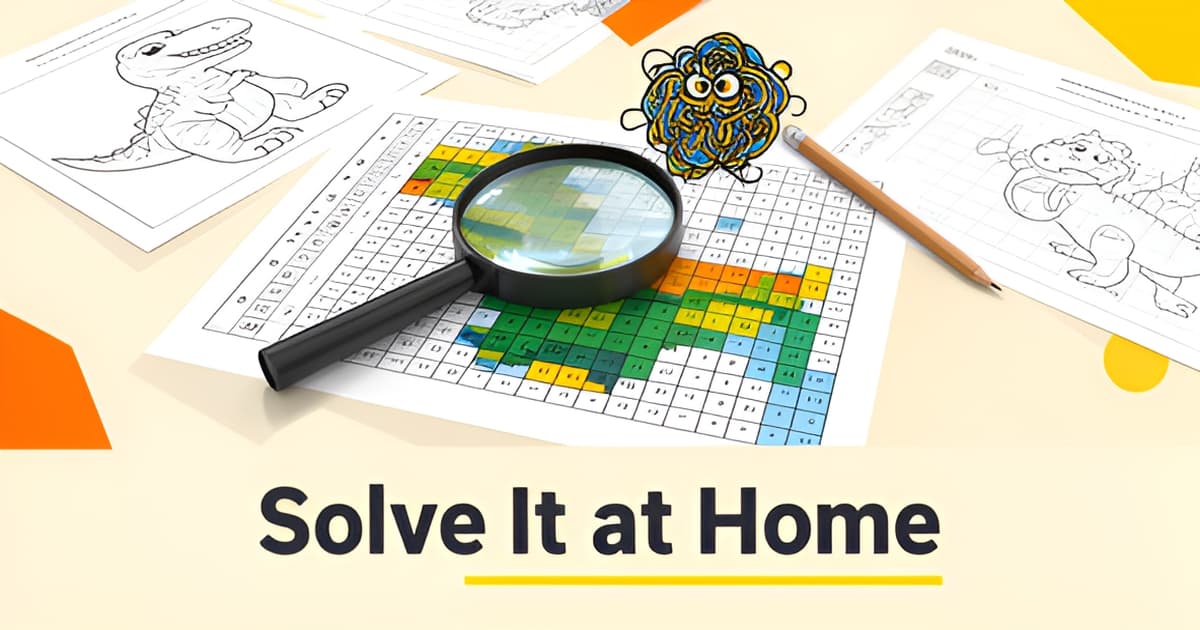
This is where a different approach helps. Printoodle generates print-ready mystery activities as instant PDFs, built around pixel color-by-number pictures where the hidden image reveals itself square by square. Kids get the same "solve it and see what appears" satisfaction, minus the detective-work reading load that stops younger players cold.
Because the puzzles are seasonal and themed, you can match them to the calendar: a winter mystery picture for a snowed-in Saturday, an easter mystery picture for basket-stuffers that aren't candy, or an animal mystery picture for the kid who narrates every zoo trip. Print once or reprint forever, which matters when a marker meets the wrong square.
The mystery game market has proven families want printable, at-home fun. It just hasn't built much for the youngest players yet. Print it, doodle it, done is exactly the level of effort family game night can handle.
Printable PDFs Meet Family Needs: Solving Cost And Convenience Pain Points
Here's the math most families run into: the best-reviewed printable mystery kits start around $35 and climb to $80. Night of Mystery, a vendor with 128,000+ parties sold over 20+ years, lists popular games from $35, while a DIY kit price range of $40–$80 is typical. For a single game night, that's a real investment, especially if you're not sure your crew will love the format.
The PDF model itself is genuinely family-friendly. Printable kits deliver instantly with no shipping delay, support 2 to 20+ players, and require no props or costumes. But cost isn't the only friction point. In customer reviews on Masters of Mystery, buyers report that printing was a struggle, and that's before you factor in reprinting lost clue sheets or running the same game twice for different groups.
That's where a generate-and-print approach changes the economics. Tools like Printoodle let you create print-ready mystery activities as PDFs in seconds, with Letter or A4 formatting, and everything you make stays in a library where reprints are free forever. If a page gets spilled on or your second child wants to solve the same puzzle, you just print it again. There's no $60 kit to repurchase.
For families weighing what are the best at-home mystery games on a budget, it helps to compare what you're actually paying for:
- Full murder mystery kits ($35–$80): scripted characters, host guides, and professional production, usually aimed at ages 8–10 and up
- Free downloadable kits: simpler and easier to set up, often accommodating 6–30 players, but with lighter production value
- Generated print-ready PDFs: instant download, personalized to your family, and free to reprint anytime
One more consideration: most established mystery kits lean on murder themes, and vendor guidance suggests kids around 10 and up get the most out of them, with 8-year-olds needing reading help. Younger kids in the 3–12 range often need something gentler. That's the gap mystery picture puzzles fill. A winter mystery picture or an easter mystery picture works like color-by-number detective work: kids reveal a hidden image square by square, no host, no acting, no body count. An animal mystery picture makes a solid rainy-day or party-station activity for mixed ages.
If your budget allows one premium kit a year, the paid options deliver polished experiences that reviewers consistently rate highly. But for regular family game nights, seasonal printables and free reprints stretch a lot further. Print it. Doodle it. Done.
Customization And Seasonal Themes: Making Mystery Games Your Own
The best at-home mystery games aren't static products anymore. They're starting points you can reshape around your family, your guests, and the season on the calendar.
Customization has become a genuine differentiator in this market. Industry guides note that hosts increasingly expect to customize character names to match their guests and adjust difficulty on the fly. Red Herring Games goes as far as emailing materials in MS Word specifically so buyers can edit them, and adapts games for a fee for the underserved 9–12 age group, where it insists there's no one-size-fits-all solution.
That demand for editable, personalized materials is exactly where generator tools change the equation. Instead of editing a Word document or paying a vendor to adapt a kit, Printoodle lets you build a mystery activity around your own brief: your child's name, your preferred difficulty, your family's comfort level. Because everything generates as a print-ready PDF, you also sidestep a documented pain point. One Masters of Mystery reviewer admitted, "We also struggled a little with printing", which is a problem print-ready files with free reprints are built to solve.
Getting difficulty right matters more than most hosts realize. As one game night guide puts it, too easy ends the discussion, and too hard loses half the group. The best mystery game isn't the most complicated one; it's the one that keeps everyone talking. Adjustable difficulty lets you tune for a mixed-age table instead of gambling on a fixed kit.
Seasonal themes are the second big shift. Holiday-specific games are named among the emerging mystery trends for 2026, alongside cold case formats and historical settings. Generators make seasonal play practical because you're not stocking a shelf with holiday kits you'll use once a year:
- A winter mystery picture for snow-day afternoons and holiday break weekends
- An easter mystery picture to slip into baskets or spring party stations
- An animal mystery picture that works year-round for younger solvers
This seasonal angle also fills a real gap. Most established kits target ages 8–10+ and lean on murder themes, while family-focused vendors deliberately curate out graphic content for sensitive households. Editable, no-murder, holiday-themed mystery activities give the 3–12 crowd a format the traditional market largely skips.
Print it, doodle it, done.
From Print To Play: A Quick-Start Guide For Family Game Night
When you ask what are the best at-home mystery games for young kids, the answer usually involves a lot of prep: costumes, character sheets, and a parent stuck playing host instead of playing along. Pixel color-by-number mystery pictures flip that around. The kids do the detecting, and you just print the pages.
Printoodle's mystery picture generators work like this: pick a theme, generate a page, and download a print-ready PDF in seconds. The image starts as a grid of numbered pixels. As your kids color each number the right shade, a hidden picture slowly emerges, so the "mystery" is solved through simple deduction rather than reading scripts or acting out roles. That puts it in the same no-host, investigation-style camp that's gaining traction in the wider mystery game market, where players examine clues instead of pretending to be suspects, according to a game night industry overview.
Here's how to run one at your next family game night:
- Pick a theme that fits the moment: an animal mystery picture for a rainy Saturday, or seasonal pages around holidays.
- Print one page per player (or one per team if you've got siblings pairing up).
- Hand out crayons or markers and let everyone guess what the picture is as it fills in.
- Compare finished pages and reveal the answer together.
The format works especially well for the 3-12 age range. Most established mystery kits target ages 8-10 and up, with kids around 8 needing help reading clues, per family mystery game guidance. Color-by-number needs no reading at all, so a four-year-old and a ten-year-old can play side by side. And because the deduction is visual rather than verbal, nobody gets left out of the "who done it" moment.
It's also the budget-friendly end of a market where DIY mystery kits typically run $40-$80, according to playingwithmurder.com. Printoodle reprints are always free, so once a page is in your library you can run the same mystery again for a second family, a classroom, or a birthday party without paying twice.
One more practical note: printing friction is a real complaint in mystery game reviews, with customers reporting they "struggled a little with printing" their kits. Printoodle's PDFs come out print-ready on Letter (with an A4 toggle), so the only prep involved is pressing print.
If you want to try the format before committing to anything, the free tier gives you 10 credits after email verification. Generate a page, print it, and see how fast your kids start guessing. Print it. Doodle it. Done.
Frequently Asked Questions
What are the best at-home mystery games for young kids?
How much do printable mystery games cost?
Are murder mystery games kid-friendly?
Can I host a mystery game night without a host or costumes?
How long should a family mystery game last?
Are printable mystery games hard to print and set up?
The Case Is Closed: Your Family's Next Mystery Night Starts With One Print
So, what are the best at-home mystery games? For adults and older kids, the $35–$80 printable kit market is thriving, Night of Mystery alone has sold more than 128,000 party kits over two decades. But for families with kids aged 3–12, the pickings get thin fast: most kits assume strong readers, a willing host, and a tolerance for murder themes. That's the gap mystery picture puzzles fill, no host, no scripts, no body count, just the same solve-it satisfaction scaled to small attention spans. Your next step is simple: pick a theme that matches your season or your child's obsession, print one page per player, and let the guessing begin. Printoodle's free tier gives you 10 credits after email verification, so you can test a page before committing to anything. Print it. Doodle it. Done.