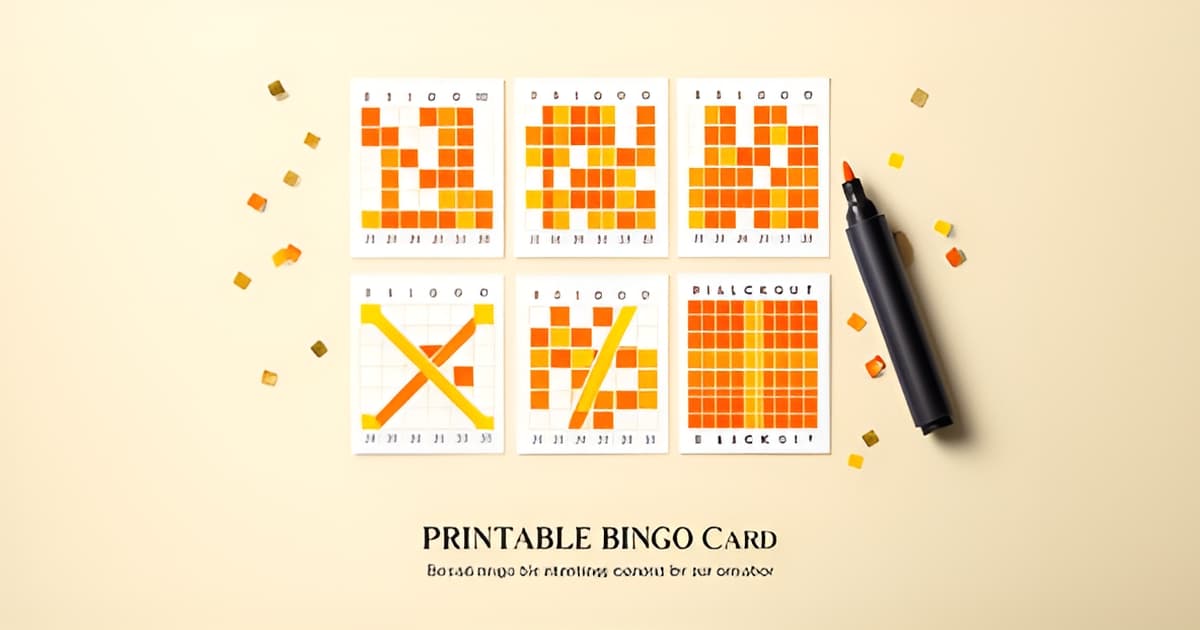
What are the most common bingo patterns?
Key Facts
- The six most common bingo patterns are straight line, Four Corners, Postage Stamp, Letter X, Picture Frame, and Coverall/Blackout, according to bingo pattern guides.
- A straight-line bingo win takes just 5 marks, or only 4 if the line runs through the free center square, per Bingo Innovation.
- Coverall and Blackout are interchangeable names for the same full-card pattern, not two different games, Triple Crown Bingo confirms.
- A standard 75-ball bingo card is a 5×5 grid with 25 spaces and one free center square, per Triple Crown Bingo's pattern guide.
- A single bingo game typically runs 10–15 minutes, so three to five rotating patterns fill an evening, per Lucky Eagle's beginner guide.
- A horizontal line alone gives bingo players five different ways to win, according to Arrow International.
- In 90-ball bingo, 'two lines' must be on the same ticket, one row on each of two tickets doesn't count, bingo rules guides explain.
Why Bingo Patterns Confuse New Players (and Hosts)
You've printed 30 bingo cards, arranged the snacks, and then it hits you: which pattern are you actually calling, and how long will this game take? If you're wondering what are the most common bingo patterns and which one fits your crowd, you're not alone. Pattern confusion is the single biggest stumbling block for first-time hosts, whether it's a birthday party, a classroom review game, or a family game night.
Most home and classroom games use 75-ball bingo, the format most common in North America. Each card is a 5×5 grid with 25 spaces, and the center square is a free space that every player marks automatically, according to Triple Crown Bingo's pattern guide. That free square matters more than you'd think: a straight line through the middle of the card only requires 4 marks instead of 5.
The other common format, 90-ball bingo, uses a 9×3 ticket and runs prizes in three stages: one line, two lines, then a full house. It's mostly played in the UK and Australia, so if you're hosting in North America, the 5×5 card is your default.
Here's the rule that trips up new hosts: the winning pattern must be announced before play begins. This isn't just hall etiquette; it's standard practice at every established venue, per beginner guides from established bingo operators. Even something as simple as "a line" needs clarification. Does it mean horizontal only? Any direction? Does the free center count?
A single game typically runs 10–15 minutes, so a session of three to five rotating patterns fills an evening nicely. Most hosts pace it like this:
- Early games: straight line, Four Corners, or Postage Stamp (each needs only 4–5 squares)
- Middle games: Letter X, Picture Frame, or themed shapes
- Final game: Coverall or Blackout, saved for the big prize
That pacing works because difficulty varies enormously. Four Corners needs just four marks, while a Coverall requires every square on the card, which is why it's traditionally the jackpot round.
The good news is that the card side is easy. Printoodle's bingo card generator creates themed, print-ready 5×5 cards in seconds, and teachers running literacy games can do the same with reading bingo cards built around their own book lists. Generate once, print as many copies as you need, and spend your energy on the part that actually requires judgment: picking patterns your crowd can win.
The Six Most Common Bingo Patterns, Ranked From Easiest to Hardest
If you're wondering what the most common bingo patterns are, you're in luck: the list is short, and it starts easy before it gets ambitious. Cross-referencing guides from bingo operators, the same six patterns appear again and again, and they happen to line up neatly by difficulty.
1. Straight Line. One line is "the bread and butter of bingo," as Bingo Card Creator puts it. It takes 5 marks, or just 4 if your line runs through the free center space. A horizontal line alone gives players five different ways to win, which is why hosts open with it. One tip worth passing along: bingo rules guides recommend clarifying up front whether "a line" means horizontal, vertical, or diagonal, and how the free center counts.
2. Four Corners. Mark the four corner squares and you win. It's one of the fastest patterns to explain, though Bingo Innovation notes it doesn't always finish quickly, since those four numbers can be spread across the full range of calls.
3. Postage Stamp. A 2x2 block of four squares tucked into one corner. Same square count as Four Corners, but you need the specific cluster, so it plays slightly harder.
4. Letter X. Four corners plus the center square. It's a popular step up from Four Corners, and a natural middle-of-session pattern.
5. Picture Frame. Every square along the outer border of the 5x5 grid. This one is particularly popular in 75-ball bingo and takes noticeably longer than a single line.
6. Coverall/Blackout. Every square on the card. Here's the point of confusion worth clearing up: Coverall and Blackout are interchangeable terms for the same full-card pattern, not two different games. It's the hardest standard pattern and is traditionally reserved for the jackpot or final round.
For planning your own session, the recommended pacing is:
- Early games: straight line, Four Corners, or Postage Stamp
- Middle of session: Letter X or Picture Frame
- Final round: Coverall/Blackout for the jackpot
A typical session rotates 3–5 patterns with the hardest saved for last, and each game runs about 10–15 minutes. If you're hosting at home or in a classroom, Printoodle's bingo card generator lets you print cards for any of these patterns, and the reading bingo tool applies the same patterns to a literacy twist. Print it, doodle it, done.
Choosing Patterns for Your Audience: Kids, Classrooms, and Parties
Knowing the most common bingo patterns is one thing. Picking the right ones for the people in front of you is where a good game becomes a great one, whether that's a classroom of seven-year-olds or a holiday party full of adults.
Start by matching difficulty to your players. A straight line needs just 5 marks (or 4 if it runs through the free space), and Four Corners and Postage Stamp each require only 4 squares, which makes them ideal for kids and first-timers, according to pattern guides from Bingo Innovation. Letter X and Picture Frame sit comfortably in the middle of a session, and Coverall (also called Blackout) makes a satisfying finale because it's the hardest standard pattern, traditionally saved for the jackpot round.
Rotate 3–5 patterns per session and save the hardest for last. That pacing advice comes straight from bingo session guidance, and it works just as well at a birthday party as in a bingo hall. A typical game runs 10–15 minutes, per Lucky Eagle's beginner guide, so a four-pattern session fills an hour nicely.
Here's a session structure you can reuse:
- Round 1: Straight line or Four Corners, so everyone gets an early win
- Rounds 2–3: Postage Stamp, then Letter X or Picture Frame to raise the stakes
- Final round: Coverall for the big prize
Always announce the winning pattern before play begins; that's a firm rule across bingo guides, and it prevents tears at the end. One nuance worth knowing: Four Corners is quick to explain, but it doesn't always finish fast, since the four numbers can be spread across the full range of calls.
Themed patterns add seasonal fun for classrooms and parties. A heart for Valentine's Day, a Christmas tree in December, a kite for spring, or letters T and L tie the game to your occasion, as Arrow International recommends for event-matched play. Teachers running literacy activities can take the same idea further with reading bingo, where the squares become reading challenges instead of numbers. If you're setting up any of these, a bingo card generator like Printoodle's lets you print a full set in minutes, so you can spend your energy on the fun part: calling the numbers.
How to Set Up Your Patterns in Printoodle
Knowing the most common bingo patterns is only half the battle. The other half is getting them onto cards your group can actually play with, and that's where a little prep work pays off.
Start by picking your theme. A classroom review session, a holiday party, or a baby shower each call for a different mood, and themed patterns are a popular way to add seasonal variety, from hearts for Valentine's Day to Christmas trees and kites in spring, according to bingo suppliers. Printoodle lets you name that theme in plain language, so a single brief covers both the words on the squares and the vibe of the page.
Next, choose your winning pattern, and build your session around pacing. The research is clear that easy patterns like straight lines, Four Corners, and Postage Stamp belong in early games, while harder ones like Picture Frame and Letter X fit the middle, and Coverall or Blackout works best as your final jackpot round. A good session rotates 3–5 patterns, saving the hardest for last, per bingo experts.
Once you've decided, generate your cards. Printoodle's bingo card generator turns your theme and pattern choice into print-ready PDFs in seconds, sized for Letter or A4. Because every card set lives in your library, reprints are always free, so a miscounted headcount never costs you another credit. Teachers running a reading bingo challenge can pull last month's set again for a new group without starting over.
A few prep habits make the printed cards work harder:
- Announce the pattern before play begins. This is a firm rule in bingo, and it prevents disputes mid-game.
- Spell out what "a line" means. Specify whether horizontal, vertical, or diagonal counts, and how the free center square is treated.
- Print a pattern sheet for the caller. Pre-printed pattern paper with the winning shape outlined is how most halls and fundraisers run special games.
- Budget your time. A single game typically runs 10–15 minutes, so three to four patterns fills an hour comfortably.
With your pattern rotation printed, announced, and tucked into the caller's hand, you've done the part most hosts skip. Print it, doodle it, done.
Frequently Asked Questions
What are the most common bingo patterns?
Is Coverall different from Blackout in bingo?
Which bingo patterns are easiest for kids and beginners?
How many bingo patterns should I use in one game night?
Do I have to announce the bingo pattern before the game starts?
Is Four Corners always the fastest bingo game to finish?
Ready to Call It? Your Pattern Plan Starts Here
So, what are the most common bingo patterns? Six shapes carry most of the game: straight lines, Four Corners, Postage Stamp, Letter X, Picture Frame, and Coverall (also called Blackout). The winning strategy for hosts is pacing, open with patterns that need only 4–5 marks so everyone gets an early win, build through the middle rounds, and save the full-card Coverall for the jackpot finale. Since each game runs about 10–15 minutes, three to five patterns fills a session comfortably. Announce the pattern before every game, clarify whether lines count in any direction, and print a pattern sheet for your caller. Then let Printoodle's bingo card generator handle the cards, or turn the same patterns into a literacy game with reading bingo built from your own book list. Print it, doodle it, done.