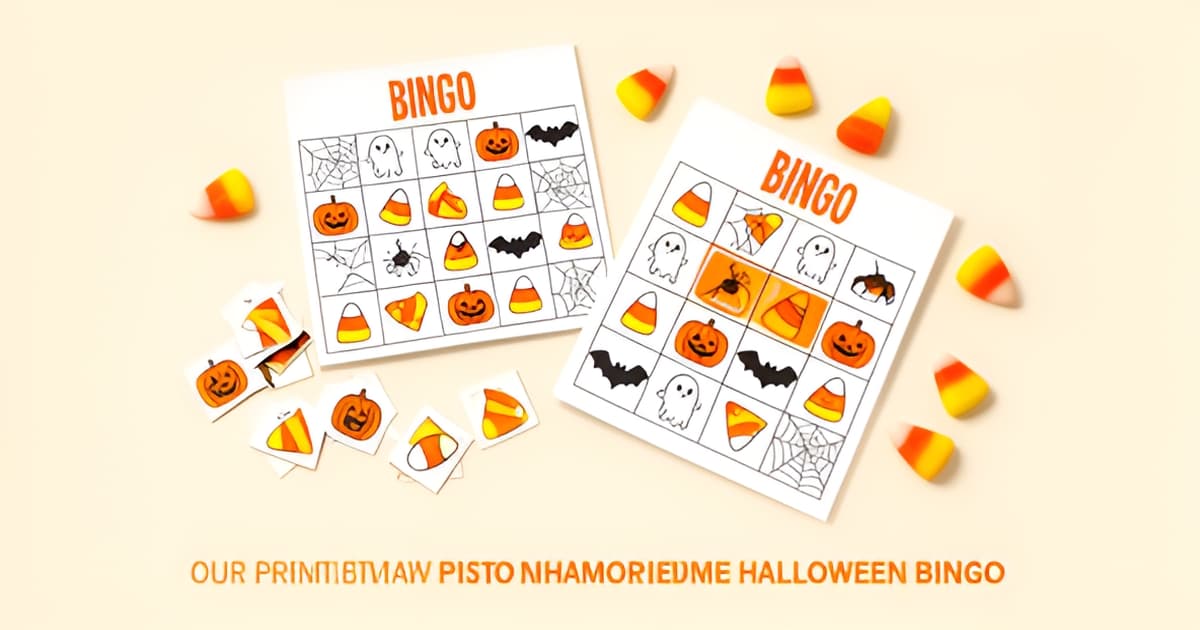
What are the rules for playing Halloween bingo?
Key Facts
- Halloween bingo winners shout a spooky 'Boo!' instead of 'Bingo!' to keep the holiday theme alive, according to Bingo Card Creator's rules guide.
- Setup takes just 5 steps: cut one card into a draw pile, deal cards and candy-corn markers, draw icons one at a time, and first to five in a row wins, per Studio DIY's step-by-step guide.
- There are 6 popular Halloween bingo variants, Story, Memory, Costume, Movie, Candy, and Human Bingo, each suited to different ages, Bingo Card Creator documents.
- A complete multi-game prize table can cost under $10 using favor packs of 4–8 items at about $1.00 each, one budget blogger demonstrated.
- Groups larger than 10 players should pair up or play in teams, since Studio DIY's free printable set includes just 10 different cards, per the setup guide.
- The golden fairness rule: once you win, you sit out until everyone has claimed a prize, keeping kids from sweeping the prize table, per Bingo Card Creator.
- Color-bordered cards let kids switch cards between rounds for a fresh chance to win, a trick from a former teacher's classroom set.
Why Halloween Bingo Rules Confuse First-Time Hosts
Hosting a first Halloween bingo game often turns into a scramble when online rules don’t line up. Some sources say the winner needs five icons in a horizontal, vertical, or diagonal line, while others frame it as any straight line, or sometimes just filling a specific shape. The caller’s role also shifts depending on the version: some call out numbers, others announce themed symbols like pumpkins or ghosts, and a few even swap the traditional “Bingo!” shout for a festive “Boo!” to match the holiday spirit. The good news is that once the core loop clicks, themed cards, a caller drawing icons, players marking matches, and the first to complete a line claiming the prize, the rest of the game flows naturally from there.
The most detailed step-by-step setup comes from craft blogs, which outline a simple five-step process: cut up one card to create a draw pile, give each player a card plus markers like candy corn or stickers, place the icons in a bowl, draw one at a time, and mark the match. The first player to get five Halloween icons in a row wins. Fairness matters just as much as the fun, which is why many organizers adopt a “sit out until everyone wins” rule or offer multiple prize tiers so no player leaves empty-handed. Inclusivity also plays a big role; using picture-based cards for younger children and pairing beginners with older players ensures the game stays accessible for every age group.
Printoodle’s bingo templates let you generate custom cards that match your group’s age and theme in seconds. With a few clicks, you can create halloween bingo cards featuring the symbols your guests will actually recognize, then pair the game with a halloween maze or halloween trivia station for a full party lineup. The platform’s library saves your creations, so reprints are always free if you want to run the game again next year.
First-time hosts should pick a winning pattern before the game starts, announce it clearly, and agree on a “call Bingo before the next draw” rule to avoid any late-game disputes. Prizes can range from glow sticks and Halloween stationery to themed candy, and for groups larger than ten, pairing kids up or running the game as a station keeps the pace brisk and gives everyone multiple chances to win.
The Core Rules of Halloween Bingo, Step by Step
Ready to host a howling good time? Halloween bingo swaps traditional numbers for spooky symbols, but the basic play loop remains familiar: cards, a caller, and a race to complete a line.
The heart of the game is simple setup. Print a set of themed cards and cut one card apart to create your draw pile. Each player receives a card and a handful of markers, think candy corn, chocolate pumpkins, or festive stickers. The caller draws an icon from the pile and shows it to the group; everyone marks their card if the symbol matches. The first player to complete a horizontal, vertical, or diagonal line of five icons calls out "Boo!" instead of "Bingo!" to keep the theme alive.
Fair play depends on a few standard rules established before the first draw. The caller should announce the winning pattern at the start of each game, common options include a single line, the four corners, or a full card blackout. Players must call their win before the next icon is drawn; if the card is checked and the pattern isn’t met, play simply resumes. In group settings, it’s common practice for a winner to sit out the next round so everyone has a chance to claim a prize, or prize categories are set in advance to handle multiple simultaneous winners.
For larger groups or mixed ages, a few practical tweaks keep things running smoothly. Groups larger than ten players benefit from pairing up or dividing into small stations, a method echoed in classroom party guides. Picture-based cards work well for younger children, while older players might enjoy themed variants like story bingo or costume bingo. And a simple color-coded border on each card allows players to swap cards between rounds, giving them a fresh chance to win without needing a whole new printout.
Whether you’re planning a classroom party or a family game night, the rules are flexible enough to adapt to your group while keeping the Halloween spirit front and center.
Print it. Doodle it. Done.
halloween bingo cards and halloween maze or halloween trivia for station-style parties
Six Rule Variants for Every Age and Setting
Once you know the basic loop of Halloween bingo, the real fun begins: you can reshape the rules to fit any crowd, from preschoolers to a room full of costumed adults. Bingo Card Creator documents six popular variants, each with its own twist on the classic format.
Story Bingo works best for younger children. You read a Halloween story aloud and players mark off elements as they hear them, which doubles as listening practice. Memory Bingo flips the format: Halloween image cards sit face down and players take turns flipping them to find matches on their cards, a version better suited to older kids and adults.
Costume Bingo turns your guest list into the draw pile. Cards list common costume themes, and players mark squares when they spot a guest wearing that costume. Movie Bingo works the same way with a film: mark the themes, characters, and items as they appear on screen.
Candy Bingo swaps numbers for candy types, uses candy as markers, and pays out candy prizes, so the game and the treat bag merge into one. Human Bingo is the best icebreaker of the six. Cards contain Halloween-themed questions like "Have you ever seen a ghost?", and players mingle to find guests who answer yes and sign the square. First to complete a row, column, diagonal, or special pattern wins.
A few fairness mechanics keep everyone happy across multiple rounds:
- Winner-sits-out rule: once you win, you sit out until everyone has won a prize, which keeps kids from sweeping the prize table.
- Color-bordered cards: give each card a different color border so players can switch cards between games for a fresh shot at winning, a trick from Typically Simple's classroom set.
- Pairing up: with a set of 10 printable cards, groups larger than 10 kids should pair up or play in teams, per Studio DIY's setup guide.
If you're hosting a bigger party, run it station-style: teachers who use this structure find kids play multiple activities in small groups and get several turns within a few minutes. Bingo makes a natural station alongside quieter activities, and you can generate matching sets of halloween bingo cards, a halloween maze, and halloween trivia at Printoodle so every station shares one theme. Print it, doodle it, done.
Prizes, Fairness, and Hosting Without Tears
The best Halloween bingo games are won and lost at the prize table, long before anyone yells "Boo!" Get the prizes and fairness rules right, and even the kids who never win a single round leave happy.
Start with the golden rule of kids' bingo: once you win, you sit out until everyone has won a prize. Party planners also recommend giving each card a different color border so kids can switch cards after every game, which keeps the losing streaks from feeling permanent.
Candy is the obvious prize, but it's not the only one. One popular printable bingo guide suggests light-up Halloween rings, glow sticks, spooky socks, pop-it keychains, mini Squishmallows, glow-in-the-dark tattoos, and bath bombs. Stationery and small pumpkins work too, and in Candy Bingo, the candy markers double as the prize.
Budget-conscious hosts have this figured out. One blogger documented how buying prize packs of 4 to 8 items for about $1.00 each and sale gift bags for $0.50 kept an entire multi-game prize table under $10 total. Her advice: shop the week of the party when Halloween merchandise goes on clearance, and keep a pack of bubbles on hand for the youngest players so everyone has something to win.
Allergy-friendly prizes deserve a real mention here. Halloween bingo is often recommended specifically for kids with food allergies who can't fully participate in traditional trick-or-treating, so non-food prizes like glow sticks and tattoos aren't just a nice-to-have. They're how you make sure no child sits out the fun.
A few hosting touches go a long way:
- Set the scene with cobwebs, jack-o'-lanterns, and eerie lighting, plus a spooky soundtrack while the caller works
- Announce the winning pattern before each round so nobody argues about what "five in a row" means
- For groups larger than 10 kids, pair players up or run the game as one station among several, rotating small groups every few minutes
That station approach is a favorite of former classroom teachers, who point out that bingo rounds move fast enough that kids can cycle through a maze, trivia cards, and bingo within one party. If you want to build a full station kit, you can generate halloween bingo cards alongside a halloween maze or halloween trivia with Printoodle, all print-ready in one session.
One legal note worth knowing: public or fundraising bingo events can trigger charitable-gaming and licensing regulations in some areas. Home games and classroom parties with candy-corn prizes don't, which is exactly where most Halloween bingo happens anyway. Print your cards, set out the markers, dim the lights, and let the calling begin.
Set Up Your Game in Minutes with Printoodle
Now that you know the rules for playing Halloween bingo, you're minutes away from a game that's ready to play. The traditional setup calls for printable cards, scissors, and markers like candy corn or stickers, according to Studio DIY's step-by-step guide. Printoodle can handle the card part for you.
Just describe your theme, your group, and the vibe you want, and the generator produces a full set of print-ready halloween bingo cards in seconds. Every card set lives in your library, so reprints are always free. When the kids want another round, you reprint instead of rebuilding. That matters for repeat play: one popular trick is giving each card a different color border so players can switch cards between games and get another shot at winning.
Your pre-party checklist takes five minutes:
- A full set of bingo cards, plus one extra card to cut up as your draw pile
- Markers: candy corn, candy pumpkins, or Halloween stickers work best
- A bowl or plastic jack-o'-lantern to hold the drawn icons
- Prizes: glow sticks, spooky socks, or a "Witch's Cauldron" prize pool
- A clear pattern announcement before each game, since "the pattern is the rule of the game," as bingo guides put it
If you're hosting a station-style party, as many teachers do for classroom celebrations, you can round out the rotation with a halloween maze or a round of halloween trivia. Small groups rotate through each activity, so everyone gets multiple turns within a few minutes.
One practical note on group size: if you have more players than cards, pair them up or play in teams. And keep the fairness rule handy: once someone wins, they sit out until everyone has claimed a prize. It keeps the little goblins happy.
Print it. Doodle it. Done.
Frequently Asked Questions
What are the rules for playing Halloween bingo?
How do I set up Halloween bingo for a party?
How do I keep the game fair when kids of different ages are playing?
What should the winning pattern be, and when do I announce it?
What are some fun variations on regular Halloween bingo?
What prizes should I give out, and can I do it on a budget?
Ready, Set, Boo! Your Halloween Bingo Game Awaits
So, what are the rules for playing Halloween bingo? As you've seen, they're delightfully simple: print themed cards, cut one up for the draw pile, hand out candy corn markers, and let the first player to shout "Boo!" claim the prize. The real magic is in the details that keep everyone happy, announcing the winning pattern before each round, letting winners sit out until everyone scores, and pairing up groups larger than ten. Whether you run a classic five-in-a-row game or a themed variant like Story Bingo or Costume Bingo, the rules flex to fit every age and setting. With Printoodle, you can generate custom halloween bingo cards in seconds, then round out a station-style party with a halloween maze or halloween trivia, and your saved sets mean free reprints for next year's spooky season. Print it. Doodle it. Done.