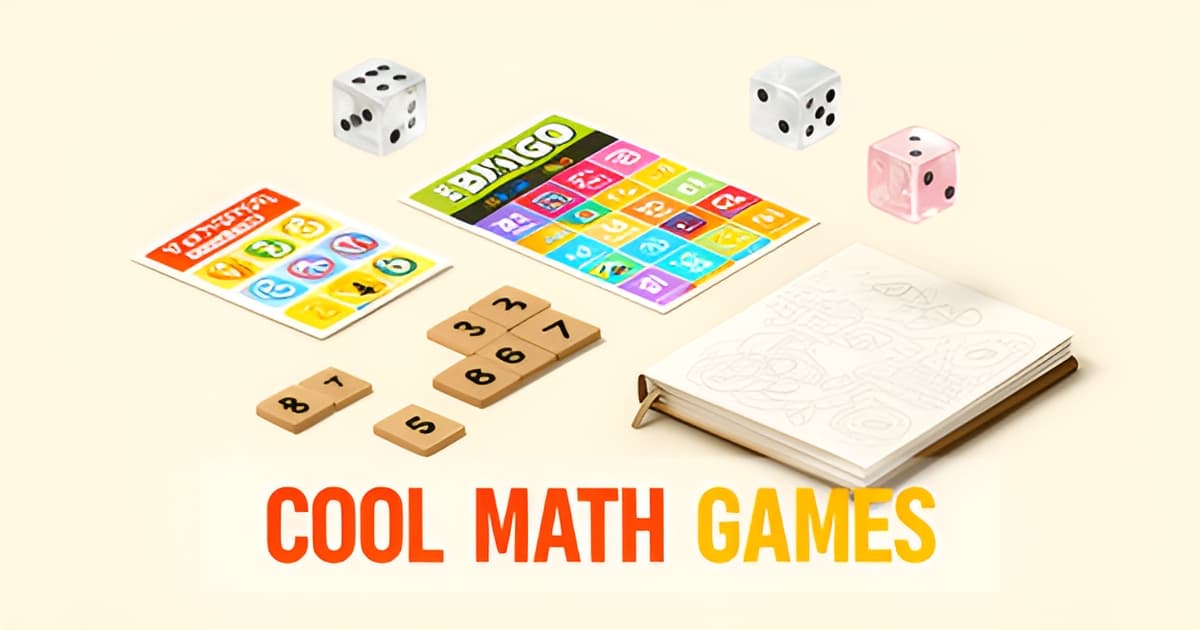
What are the top 10 cool math games?
Key Facts
- Cool Math Games has been the site kids ask for by name for over 20 years, yet offers no printable worksheets, according to a platform comparison.
- A side-by-side comparison found Coolmath Games has no formal grade range, no records, and no reporting features.
- One competitor platform claims over 14,000 free printable PDFs and 600 wall charts, per a vendor comparison.
- Student favorites like Run 1 and 2, Parking Fury, and 60 Second Burger Run are fun but not math instruction, a school newspaper ranking shows.
- Printable games beat screen-based ones because you set the numbers yourself, nothing is too easy or too hard for your child's level.
- Printoodle's free tier gives 10 credits on email verification, with credit packs from $5 and reprints free forever.
- The best printable math games target one skill, set up in under ten minutes, and can be reprinted free for a new class each year.
The Screen-Time Problem Behind 'Cool Math Games'
Type "what are the top 10 cool math games" into a search bar and you'll get millions of results, but the answer probably isn't what parents and teachers are hoping for. The famous Cool Math Games site, despite the name, is mostly a library of logic, strategy, and arcade games rather than actual math instruction. If you're looking for printable worksheets or structured practice, you won't find them there.
That mismatch creates a real problem for anyone searching in good faith. According to a side-by-side comparison of learning platforms, Coolmath Games offers "no printable worksheets; no formal grade range (roughly Grade 2 upward); no records/reporting features." In other words, the site children have asked for by name for over 20 years is great for voluntary play, but it won't tell you whether your student has actually mastered their times tables.
The games themselves reinforce this. Student opinion pieces ranking the platform's most popular titles, like a school newspaper's ranking of Cool Math Games, highlight games such as Run 1 and 2, Parking Fury, and 60 Second Burger Run. Fun? Absolutely. Math practice? Not really. As the comparison source puts it plainly: the catalogue "builds reasoning but is not a maths curriculum."
So what actually works when you want kids off screens and doing real math? Printable games. They work in classrooms without device carts, at kitchen tables on rainy afternoons, and in waiting rooms where a tablet isn't an option. And the demand is clearly there: one competitor platform alone claims over 14,000 free printable PDFs, 2,160 authored off-screen school days, and 600 printable wall charts. That's a lot of paper devoted to exactly the gap Cool Math Games leaves open.
The best printable math games share a few traits:
- They target a specific skill, like addition bingo for fluency or multiplication flashcards for recall.
- They're quick to set up, so a teacher can fill ten spare minutes without prep.
- They're reusable, because reprinting a lost bingo card shouldn't cost anything.
- They can be tailored to what the child is actually studying that week.
That last point matters most. Generic worksheets only go so far; kids engage when the material matches their lesson, their reading level, even their interests. Tools like Printoodle's math drills generator let you build print-ready practice pages in seconds, and its one minute games for kids collection covers the quick-hit activities that fill transition time in class. Everything generates as a PDF, and reprints stay free, which is the difference between a resource teachers actually use and one that sits in a folder.
The takeaway isn't that Cool Math Games is bad. It's a genuinely fun site with two decades of staying power. It's just answering a different question than the one parents and teachers are asking. When the goal is measurable math practice on paper, printable games are the better fit, and the rest of this guide ranks the ten worth printing first.
The Top 10 Cool Math Games You Can Print and Play
Finding quality math practice that feels like play rather than a worksheet is a challenge many parents and teachers know well. While digital platforms have long dominated the conversation, the demand for printable resources that can be tailored to specific learning goals continues to grow. Printoodle’s toolset bridges this gap, offering generators that transform standard math practice into engaging, printable activities designed for classroom use or rainy-day fun at home.
The research landscape reveals a significant distinction between digital entertainment and printable instruction. Coolmath Games, a platform established in schools for over 20 years, functions primarily as a logic and strategy gaming site rather than a math instruction tool; it offers no printable worksheets and covers a grade range roughly starting at second grade. In contrast, competitor platforms like LittleActivity report offering 14,198+ free printable PDFs, though specific math game rankings remain absent from independent sources. This gap highlights why customizable printable options are valuable: they allow educators and parents to target exact skill areas, from addition fluency to subtraction mastery, without being limited by a pre-set digital catalogue.
Printoodle’s capabilities are purpose-built for this kind of tailored practice. The platform’s generators can produce the specific game types needed for math reinforcement, including addition bingo, multiplication flashcard memory, subtraction mazes, math word searches, color-by-number sums, trivia cards, dot-to-dot counting, crosswords with number clues, bingo variants, and quick math drills. Each of these targets a distinct skill set, allowing a teacher to focus on multiplication tables one day and subtraction mazes the next. Because every game is generated through Printoodle’s customization tools, the content can be adapted to match a specific lesson plan, a child’s current level, or a thematic unit being studied in class.
The practical benefit of this approach extends beyond simple engagement. With Printoodle’s free tier offering 10 credits upon email verification and reprints available free forever, the barrier to entry is low for both home and classroom use. A parent can generate a set of math trivia cards tailored to their child’s current curriculum, or a teacher can create a crossword using vocabulary from the week’s lessons, all without specialized design software. The ability to reprint means activities can be reused for practice or sent home for additional reinforcement without additional cost.
For those ready to try it, Printoodle provides a straightforward path from concept to printed page. Whether the goal is reinforcing basic addition facts through bingo or building speed with quick math drills, the generators handle the formatting so the focus stays on the math. one minute games for kids offers a selection of timed challenges, while math drills provides structured practice for building fact fluency. Print it. Doodle it. Done.
How to Customize Each Game for Your Kids or Class
The best math game is the one your child actually wants to play. That's why customization matters more than the game list itself, and it's where printable games beat screen-based ones hands down.
Here's the practical part. Start by matching difficulty to grade level. A kindergarten class might play addition bingo with sums under 10, while fourth graders tackle multiplication flashcards or two-step subtraction mazes. Because you generate each page yourself, you set the numbers, so nothing is too easy or too hard.
Then theme the game around what your child already loves. A dinosaur fan will happily solve subtraction problems to escape a T-rex maze. A pet lover will race through a pixel color-by-number mystery picture where the answers reveal a dog. For birthdays, put the child's name right in the game: a personalized word search or bingo card turns math practice into a party activity.
Speed matters too. When you generate a page with a tool like Printoodle, you upload a photo or a short brief, spend a credit, and download a print-ready PDF in seconds, with Letter as the default and an A4 toggle if your printer needs it. No formatting, no margins to fight with.
To build a routine that sticks, pair your main game with short warm-ups and targeted practice:
- Open with one minute games for kids as a fast, low-pressure warm-up before the main activity.
- Follow with math drills when a specific skill, like carrying in subtraction, needs focused repetition.
- Save bingo and trivia cards for group play, since they work well for a whole class or a family game night.
- Use mazes and dot-to-dot pages as the reward round after drill work is done.
One honest note on the "cool math games" label: the famous digital site of that name is mostly logic and strategy play rather than math instruction. A comparison of printable math platforms points out it offers no printable worksheets and no formal grade range, sitting roughly at Grade 2 and up. It has been the site kids ask for by name for 20 years, but if you want pages you can print, grade, and send home, generated printables fill that gap.
Budget-wise, the math works for classrooms. Printoodle's free tier gives you 10 credits after email verification, credit packs start at $5, and every page you create lives in your library with reprints free forever. Print a bingo set once, reprint it every year for a new class, and never pay twice.
Print it. Doodle it. Done.
Making Printable Math Games a Weekly Routine
A printable game only works if it actually gets played, and that takes a routine rather than good intentions. Once you know what are the top 10 cool math games for your household or classroom, the next step is deciding when each one appears on the calendar. Even a site kids have loved for two decades, like the digital Coolmath Games platform, works best when play is expected rather than negotiated.
The simplest structure is rotation. Pick three or four games and cycle them through a weekly slot: addition bingo on Tuesday, a maze that hides subtraction problems on Thursday, flashcards before Friday's quiz. Rotating keeps novelty alive without forcing you to invent something new every week. Since Coolmath's catalogue is mostly logic and strategy play rather than maths teaching, as one side-by-side comparison notes, printed games carry the actual practice load while screen time stays recreational.
Consider these three placement ideas:
- Math centers: run one printed game per small group so the teacher can rotate between tables instead of managing one whole-class activity.
- Homework alternatives: swap a worksheet night for a two-player game with a parent or sibling once a week. Same skills, better buy-in.
- Family game nights: let kids beat adults at trivia cards or bingo built from their current math unit. Winning at math feels very different from being assigned it.
Storage matters more than most people expect. Every game you generate in Printoodle lives in your library, and reprints are always free, so a lost bingo board or a second copy for a sibling costs you nothing but paper. That reprint policy is the reason classroom adoption actually sticks: teachers can refresh a worn-out set before a unit without re-purchasing anything. If you need something quick to fill a spare five minutes, the one minute games for kids tool slots neatly between longer sessions, and the math drills generator handles the repetition-heavy practice that games alone can't cover.
The routine itself can be loose. A fridge-parked game page, a Friday folder, a laminated set in the car: any of these counts. What matters is that the games reappear on a rhythm kids can predict, because familiarity is what turns a printable from a one-time craft into a genuine practice habit.
Print it. Doodle it. Done.
Frequently Asked Questions
Does Cool Math Games actually teach math?
Can you print worksheets from the Cool Math Games website?
What are the most popular games on Cool Math Games?
How long has Cool Math Games been around, and is it free?
What's a good screen-free alternative for real math practice?
How do I fit math games into a busy classroom or family schedule?
Print, Play, and Watch the Math Stick
So, what are the top 10 cool math games? The honest answer is that the famous digital site kids love isn't really math instruction at all, as one side-by-side platform comparison notes, its catalogue builds reasoning but isn't a maths curriculum, and it offers no printable worksheets. The games that actually move the needle are the ones you can put on paper: addition bingo, multiplication flashcards, subtraction mazes, and quick drills tailored to exactly what your child or class is studying this week. Your next step is simple. Pick one game, set the difficulty to match your learner, and slot it into a weekly rhythm, a math center, a homework swap, or a Friday game night. Warm up with Printoodle's one minute games for kids, then follow with focused math drills for the skills that need repetition. Every page you generate lives in your library with reprints free forever, so a lost bingo card costs nothing but paper. Print it. Doodle it. Done.