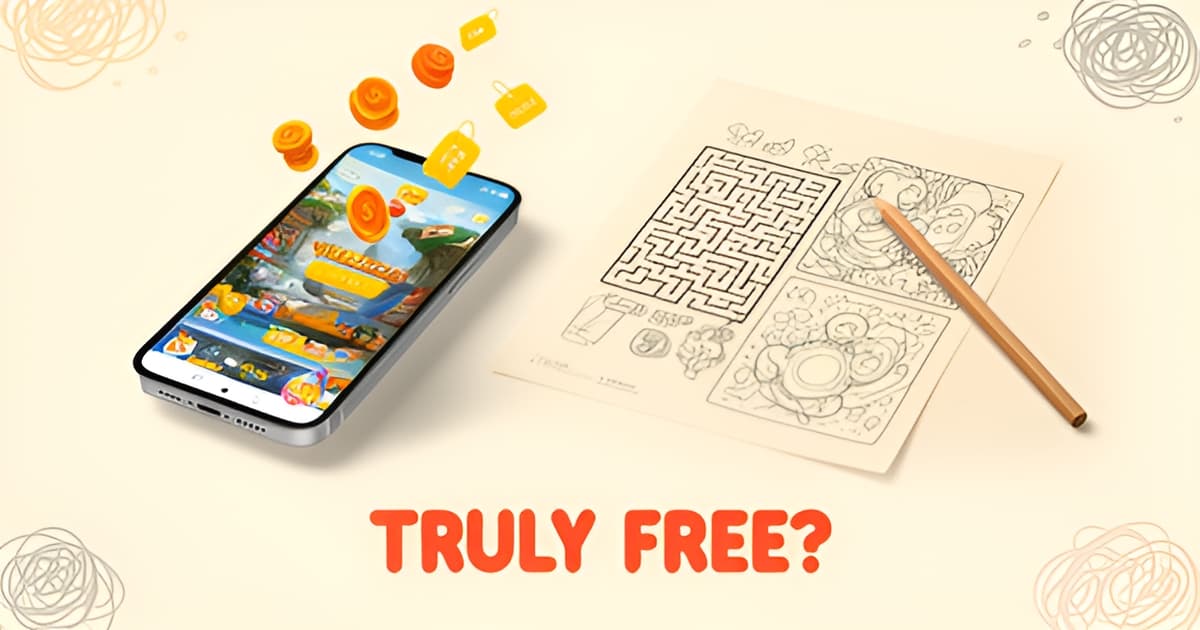
What games are completely free?
Key Facts
- Mobile gaming hit $139.4 billion in 2024 and is projected to reach $256.2 billion by 2030, per Grand View Research.
- In-app purchases for cosmetics, skins, and boosts are "the cornerstone of mobile gaming monetization," keeping the core experience free.
- Free-to-play is "redistributing, not disappearing," with revenue concentrating in fewer titles and gacha mechanics rising, according to Newzoo.
- Clash Royale and Genshin Impact are genuinely playable without spending, but both are monetized through optional purchases per industry analysis.
- Asia Pacific held 52.3% of mobile gaming revenue in 2024, with North America the fastest-growing region.
- Printoodle gives users 10 free starter credits on email verification, with reprints from their library free forever.
- One founder caps free accounts at "3 proposed trades max" before a $5 monthly plan, showing how free tiers act as funnels, per a Reddit discussion.
Free-to-Play vs. Truly Free: What the Data Shows
When you ask what games are completely free, the honest answer is complicated. Most games labeled "free" are free to download, then carefully designed to earn money after you start playing.
Market research makes the distinction clear. According to Grand View Research, the free-to-play model "has revolutionized mobile gaming by removing the upfront cost barrier, significantly broadening its audience." That's the free-to-start half. The same analysis notes that in-app purchases for cosmetics, skins, boosts, and currency are "the cornerstone of mobile gaming monetization, enabling developers to generate revenue while keeping the core experience free." That's the catch: the core loop is free, but the game is built to sell to you inside it.
The scale explains why. Mobile gaming was a $139.4 billion market in 2024, projected to reach $256.2 billion by 2030, per the same industry analysis. Nobody gives away access to a market that size out of generosity. Newzoo's industry reporting describes free-to-play as "redistributing, not disappearing," with revenue concentrating in fewer titles and gacha mechanics on the rise. Big names like Clash Royale and Genshin Impact fit the pattern perfectly: genuinely playable without spending, monetized through optional purchases.
So when you're evaluating whether a game is truly free, look past the price tag on the download button. A few questions tell you most of what you need:
- Does the game sell in-game currency, skins, or boosts that affect progression?
- Are there timers, energy systems, or wait walls that purchases remove?
- Does the experience pressure kids or adults to spend to keep enjoying it?
- Is the free tier a complete experience, or a funnel into a subscription?
Printable games sidestep most of this. A printed word search or maze has no in-app purchase waiting inside it. Printoodle takes a similar approach to its own free tier: you get 10 starter credits on email verification, and anything you create stays in your library where reprints are free forever. There's no conversion loop built into the activity itself. If you want something kids can start playing in the next five minutes, the one minute games for kids tool generates quick, print-ready games with no purchase screen attached.
The takeaway is simple: free-to-start is the industry norm; free-to-finish is rare. Read the monetization model before you hand a device to a child, and lean toward formats, like printables, where free actually means free.
Where Printoodle Fits: A Actually Free Alternative
If you've ever downloaded a "free" game only to watch your kid hit a paywall ten minutes in, you already know the catch: free-to-play usually means free-to-start. Industry analysis from Grand View Research describes in-app purchases for cosmetics, skins, boosts, and currency as "the cornerstone of mobile gaming monetization," keeping the core experience free while revenue flows from everything around it. The model works so well that mobile gaming reached $139.4 billion in 2024, with projections climbing to $256.2 billion by 2030.
That's the honest answer when someone asks what games are completely free. Titles like Clash Royale and Genshin Impact cost nothing to download, but the design nudges players toward spending. Newzoo's industry reporting frames free-to-play as "redistributing, not disappearing," with revenue concentrating in fewer titles and gacha mechanics on the rise. Even free tiers elsewhere tend to act as funnels: one marketplace founder on Reddit describes capping free accounts at "3 proposed trades max" before pushing a $5 monthly plan.
Printoodle takes a different approach to free. When you verify your email, you get 10 starter credits, and each one generates a print-ready activity page: a themed coloring sheet, a word search, a maze, a bingo card, whatever your rainy afternoon calls for. There's no engagement loop, no daily login streak, no countdown timer pressuring you to spend. You make the page, you download the PDF, and you print it.
The part that really matters for families and classrooms: reprints are free forever. Everything you generate lives in your library, so the dinosaur word search you made in March costs nothing to print again in October. Compare that to a digital game where the "free" experience is deliberately engineered to feel incomplete until you buy in.
Here's what a genuinely free entry point looks like in practice:
- 10 credits the moment you verify your email, no card required
- Instant, print-ready PDFs in Letter or A4, sized for any home printer
- Unlimited reprints from your library, permanently, at zero cost
- Optional credit packs from $5 only if you want more, never as a gate
If you want to test the waters with something quick, try the one minute games for kids tool: short, printable games designed for exactly those moments when you need an activity on the table in the next sixty seconds. Print it. Doodle it. Done. No ads, no upsell screen, no waiting for the energy bar to refill.
Free Instant Games You Can Print Right Now
Printoodle opens the door to genuinely free instant activities with 10 starter credits on email verification, letting anyone generate printable games and puzzles without an immediate cost. Unlike many digital platforms that rely on in-app purchases to unlock core features, Printoodle’s free tier provides a complete entry point, users design themed coloring pages, word searches, or mazes and download a print-ready PDF, with reprints free forever from their personal library.
The research on what games are completely free highlights a key industry distinction: most free-to-play titles remove the upfront cost barrier but monetize the experience afterward through in-app purchases for cosmetics, skins, or boosts. This model dominates the mobile gaming market, which reached $139.4 billion in 2024 and is projected to grow to $256.2 billion by 2030, but it differs sharply from Printoodle’s approach. While many "free" games require ongoing spending to access the full experience, Printoodle’s 10 free credits plus permanently free reprints mean the initial creation and printing process carries no hidden fees or conversion prompts.
For parents and educators seeking immediate engagement, one minute games for kids offer a quick, printable solution that requires no setup beyond a few clicks. These timed activities are ideal for rainy days, classroom transitions, or keeping young minds occupied during travel. The instant generation model means a new set of challenges can be ready in seconds, ready to be printed and played wherever needed.
Print it. Doodle it. Done.
How to Get Started Without Spending a Cent
Finding games and activities that cost nothing upfront used to mean hunting through sketchy sites or sifting through low-effort printables. Today, the landscape offers two distinct paths: free-to-play digital titles that keep the core experience accessible but often lock progression behind in-app purchases, and platforms designed from the ground up to remain free for the activities parents and teachers actually need. Printoodle enters this space with a genuinely free entry point, 10 starter credits are added the moment a user verifies their email, with no trial period and no hidden subscription required. From there, every creation lives in a personal library where reprints are free forever, meaning a word search or coloring page generated today can be printed again and again at no additional cost.
For parents planning a rainy-day activity or teachers assembling a classroom worksheet, the process is straightforward. After signing up, the 10 free credits are applied instantly, ready to be spent on any of Printoodle’s activity types, coloring pages, mazes, bingo cards, or themed trivia. A single credit generates a print-ready PDF, and because every file is saved to the user’s library, there is no limit on how many times a design can be reprinted. This structure removes the typical friction of "free" trials that expire or require payment details upfront, offering a low-risk way to stock a home or classroom with customized activities.
One of the most immediate ways to put those free credits to use is with a set of one minute games for kids, which can be generated and downloaded in seconds. These quick-to-print activities are ideal for birthday parties, classroom transitions, or keeping hands busy during a long car ride, and they cost nothing to start. The library model means that if a particular game becomes a favorite, it can be reprinted for siblings, classmates, or future events without spending another cent. It is a practical alternative to subscription-based design tools or paid printable bundles, offering real, permanent freedom from cost barriers.
Because the free tier is tied to an email account rather than a time-limited trial, the risk is minimal for anyone curious about what the platform offers. A parent can generate a custom coloring page featuring their child’s name, or a teacher can create a word search using current lesson vocabulary, and both experiences carry the same zero-cost guarantee. Once the design is saved, it stays available indefinitely, and every future print is free. This model supports the kind of spontaneous, budget-friendly creativity that families and educators rely on, without the pressure to upgrade or the anxiety of hidden fees creeping in later.
Print it. Doodle it. Done.
Frequently Asked Questions
Are there any games that are actually completely free?
How big is the free-to-play gaming market, really?
Are games like Clash Royale and Genshin Impact truly free to play?
How can I tell if a "free" game will pressure my kid to spend money?
Is free-to-play going away, or are free games just changing?
Is there a free option that doesn't push in-app purchases at all?
The Real Answer: Free-to-Start Is Everywhere, Free-to-Finish Is Rare
So, what games are completely free? The honest answer is that most aren't, at least not the way the download button implies. Free-to-play is a $139.4 billion industry built on keeping the core experience free while selling everything around it, as Grand View Research's mobile gaming analysis makes clear. Before handing a device to a child, check the monetization model: look for in-game currency, energy timers, and progression gated behind purchases. If those exist, the game is free-to-start, not free-to-finish. The simplest next step is to test formats that sidestep the problem entirely. Printables have no purchase screen hiding inside them, and Printoodle's free tier, 10 starter credits on email verification, with reprints free forever from your library, carries no conversion loop. Try the one minute games for kids tool when you need an activity on the table in the next sixty seconds, and see the difference for yourself. Print it. Doodle it. Done.