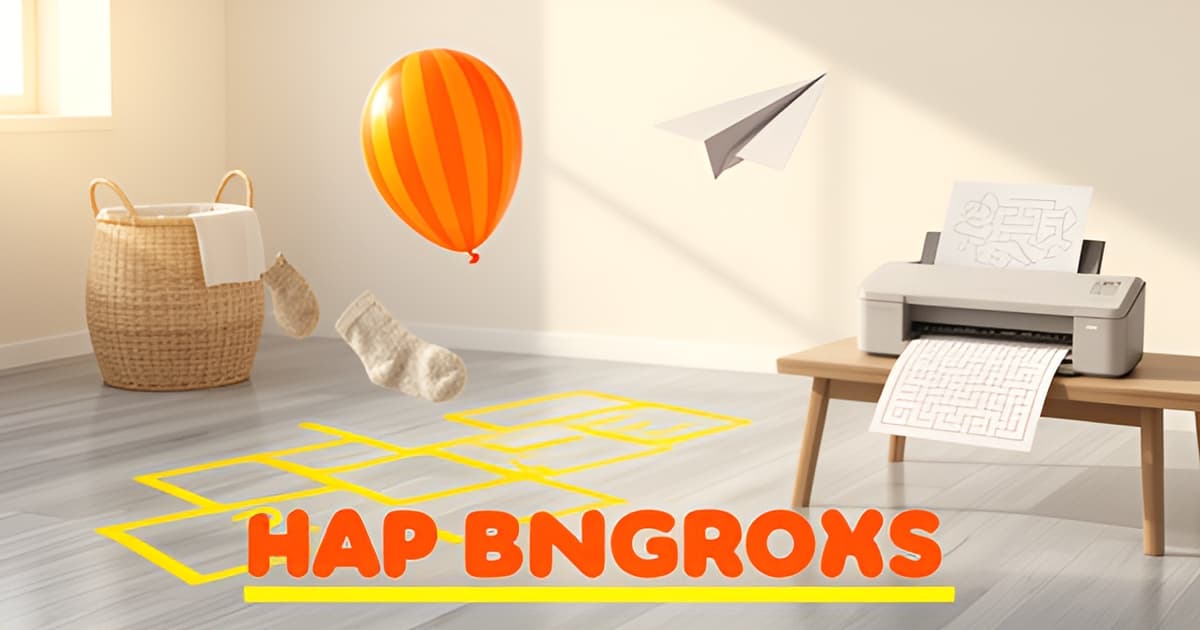
What games can I play in a house?
Key Facts
- A bag of balloons costs less than $10 and offers hours of family fun Family Fun Twin Cities
- Active for Life frames all activities within physical literacy, skills, confidence, and love of movement for life Active for Life
- The NHS recommends 60 minutes of daily physical activity for kids, achievable indoors with free games NHS Healthier Families
- Printoodle's 25 free printable games roundup earned roughly 9.5k shares on Pinterest Happiness is Homemade
- 30 active indoor games organized by group size: 8 solo, 7 partner, 7 group, 6 imagination, 2 cool-down Vivo Kinetics
- 7 free scavenger hunts offered as a newsletter bundle Active for Life
- Over 50 free Disney-themed indoor games available from the NHS NHS Healthier Families
Why Indoor Games Matter for Kids
When rain traps everyone indoors, it's tempting to hand over a tablet. But active play at home does real developmental work, and it doesn't take much space or equipment to make it happen.
The health case is straightforward. The NHS recommends that children get at least 60 minutes of physical activity every day, including three sessions a week that strengthen bones and muscles, and its Healthier Families team notes that free indoor games can help kids hit that target even when they can't get outside. On wet afternoons, the living room becomes the gym.
Movement games also build what educators call physical literacy. As Active for Life puts it, the more kids move, the closer they get to developing the skills, confidence, and love of movement they need to stay active for life. Games like balloon volleyball or a painter's-tape balance beam quietly train coordination, balance, and strength while kids think they're just playing.
Quieter games carry their own benefits. Research summarized by Family Fun Twin Cities, drawing on Dr. Rachel E. White's "The Power of Play," links play to fine motor skills, problem-solving, and creativity, alongside physical and social development. Printable games add educational practice on top: counting and math, sight words, even emotion processing, according to a roundup of 25 free printable games that most families can run with nothing more than a printer and paper.
A few of the biggest wins from indoor play:
- Daily activity targets met indoors, using games that need no more than balloons, socks, or cushions.
- Physical literacy built through repeated movement skills like balancing, throwing, and dodging.
- Fine motor and problem-solving practice from puzzles, mazes, and tabletop games.
- Screen-free time that still holds kids' attention, even for classic parlor games that need little space or energy.
The good news is that none of this requires a Pinterest-perfect setup. Children's movement coaches at Vivo Kinetics, who work with kids aged 20 months to 12 years, point out that keeping kids active at home just takes creativity and a handful of ideas that actually work. If you want a fast starting point, try a round of quick one minute games for kids; Printoodle's generator turns out print-ready game sheets you can download free, reprint anytime, and keep in a binder for the next rainy day. When your child plays actively at home, they're not just passing time. They're growing.
Printable Games You Can Download and Play Today
Sometimes the best answer to "what games can I play in a house" is already sitting in your printer tray. A curated roundup from Happiness is Homemade collects 25 free printable games for kids, and as craft author Heidi Kundin points out, most of them only require a printer and some paper, no store run required.
That's the real appeal of printable games: they're instant, they're free, and they stack up fast. Kundin's roundup alone has earned roughly 9.5k shares on Pinterest, which tells you plenty of parents have discovered the same shortcut. Her advice is practical too: print a batch and save them in a binder for rainy days, so you're never scrambling for a last-minute activity.
Printables aren't just busywork, either. Done well, they pull double duty as learning tools. Kundin notes that her printable games support counting and math practice, sight-word learning, and even emotion processing, alongside plain old fun. A few formats tend to show up across the best collections:
- Word searches, bingo sheets, and trivia cards for quiet table play
- Scavenger hunts, like the seven free themed versions offered by Active for Life
- Activity dice and fortune tellers that get kids moving without screens
- Challenge-based games, such as a 30-prompt LEGO building game
If you want something even faster, one minute games for kids pair nicely with printables for those moments when attention spans are short. Quick rounds of Freeze Dance or Hot Potato fill the gap between calmer paper activities.
You can also personalize what you print. Printoodle lets you generate your own print-ready pages, from word searches and bingo to mazes and flashcards, so the game on the table features your child's name or their current obsession rather than a generic template. It's the same binder-and-printer approach, just tailored to your family.
The best part is that once a game is printed, it's yours to reuse. Keep a small stack in a drawer, and the next "I'm bored" has an answer that costs you nothing but paper.
DIY Games Using Items Already at Home
Some of the best house games are already sitting in your junk drawer. A bag of balloons, a roll of painter's tape, and the socks in your laundry basket can fill an entire afternoon, and you don't need a store run to make it happen. As one parenting guide puts it, "a bag of balloons can cost less than $10 and offers hours of family fun" (Family Fun Twin Cities).
The same guide points out that for sock games, "you probably have one sitting in that laundry basket next to you." That's the whole philosophy here: if you're wondering what games can I play in a house without buying anything, the answer is usually within arm's reach.
Balloon games are the fastest win. Keep the Balloon Up works for any age and any number of players, solo included. Balloon Tennis just adds paper plates or flyswatters as rackets. Movement specialists who work with children from 20 months to 12 years note that active play at home doesn't require "a big space, expensive equipment, or a Pinterest-perfect setup" (Vivo Kinetics).
Painter's tape games turn your floor into a game board. Try these:
- Balance beam: a straight tape line for toddlers to walk heel-to-toe
- Tape maze: hallways become crawling courses for ages 5 and up
- Driving course: roads for toy cars, scaled to whatever floor space you have
- Sock basketball: rolled socks plus a laundry bin, safe for ages 1 to 4
Cushions and pillows open up more options. The NHS suggests building indoor sports from whatever's on hand: bin-hoop basketball, frying-pan cricket, or penalty shoot-outs using the sofa as the goal (NHS Healthier Families). Their advice: "With a little imagination you can make up a weatherproof version of just about anything!"
Match the game to your crew. Ages 2 to 4 need simpler rules, while ages 6 to 12 can handle strategy and scoring. For short attention spans, quick rounds of Freeze Dance or Hot Potato work well, and you can grab ready-made one minute games for kids to keep on hand. Printoodle's library means once you've downloaded a game, reprints are free forever, so your rainy-day binder never runs dry.
Age-Appropriate Game Ideas for Every Kid
A three-year-old and a ten-year-old don't want the same game, and honestly, neither do you when you're the one refereeing. The good news: once you sort indoor games by age and by how many kids are playing, picking the right one gets simple.
For toddlers and preschoolers (roughly ages 1 to 4), keep the rules light. According to children's movement coaches who work with kids from 20 months to 12 years, the youngest players need simpler rules while older kids can handle real strategy. Balloon keep-up, sock basketball, and tape balance beams work beautifully here, and a bag of balloons costs under $10 for hours of play. Sensory play at this age also supports physical, social, and cognitive development, including fine motor skills, according to research summarized by Dr. Rachel E. White on play and learning.
Ages 5 to 8 can manage scavenger hunts, printable bingo, and quick movement games like Freeze Dance and Hot Potato. The NHS offers more than 50 free indoor games and reminds parents that kids still need their 60 minutes of daily activity even when they're stuck inside. If you want zero prep, try a set of one minute games for kids you can print and pull out on demand.
For ages 9 to 12, bring in strategy and creativity. A LEGO challenge game with 30 prompts keeps builders busy solo, and indoor DIY sports like frying-pan cricket or sofa-goal penalty shootouts burn real energy. One of the 25 printable game roundups curated by craft author Heidi Kundin has drawn 9.5k shares on Pinterest, so these clearly resonate with parents.
Matching the game to your player count matters just as much as age:
- Solo play: mazes, dot-to-dot, LEGO challenges, and indoor putting with a bouncy ball and a mug.
- Partner play: balloon tennis, sock hockey, and printable tic-tac-toe variants for siblings.
- Group play: hot potato, family bingo, scavenger hunts, and parlor classics that need no technology at all.
One practical tip from parents who've done this for years: print games ahead and save them in a binder so you always have something ready for a rainy day. Printoodle's free printable library works the same way, since anything you generate can be reprinted anytime at no extra cost. Whatever you choose, match the game to the kid in front of you and the afternoon takes care of itself.
Frequently Asked Questions
What games can I play in a house without buying anything?
Can indoor games really count toward my child's daily exercise?
What are good indoor games for toddlers versus older kids?
Are there free printable games I can download instead of buying board games?
Do indoor games actually help child development, or are they just a way to pass time?
How do I keep indoor games safe in a small space?
Key Takeaways
{ "title": "Rainy-Day Ready: Games That Grow With Your Kids", "content": "From quick movement games that turn the living room into a gym to printable downloads that double as learning tools, the best indoor games need no special budget, just a little creativity and what's already at home. Active