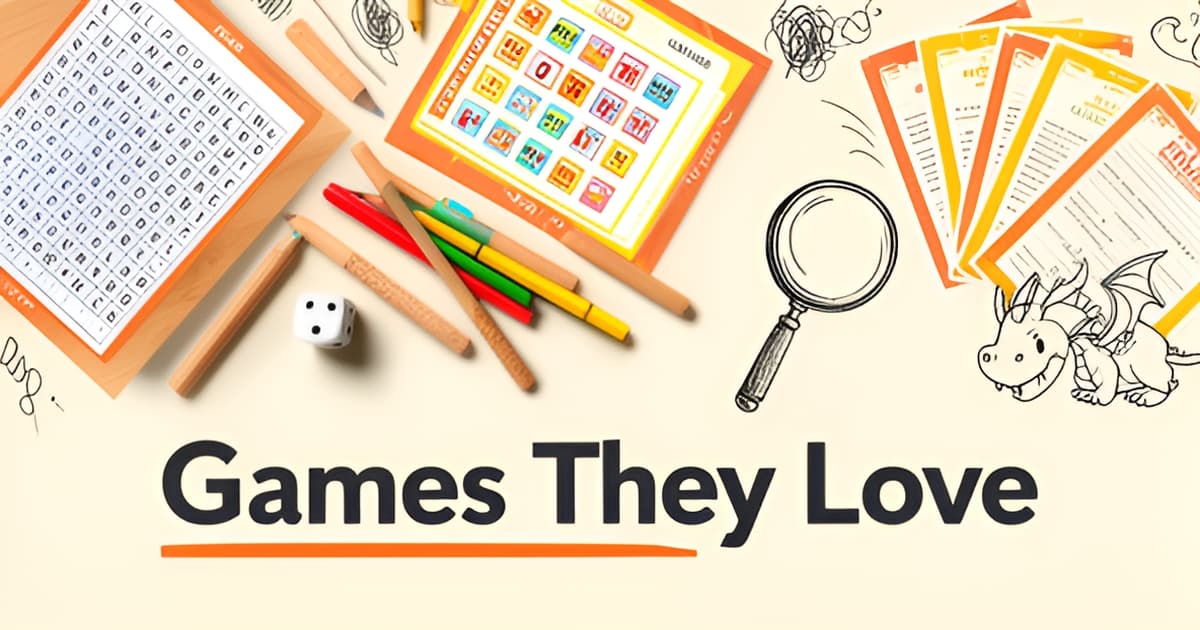
What games do ten year olds like?
Key Facts
- Ten year olds often refuse to play games unless they love the theme, with popular draws including zombies, dragons, and mystery source
- The best games for this age have rules teachable in under 5 minutes and 20-45 minute play sessions source
- Board game market expected to hit $39.34 billion by 2034, with a large share aimed at kids ages 5-12 source
- Puzzle games make up 27.7% of the most popular board games source
- Parents increasingly seek screen-free games that build skills without heavy rulebooks source
- Creative prompt games let a ten-year-old's quirky answer outshine an adult's because there's no single right answer source
- Peer influence drives game adoption, as a child first wanted to play after seeing another kid play because it looked cool source
The Ten-Year-Old Game Sweet Spot (and Why It's Tricky)
If you've ever watched a ten-year-old roll a die, move a plastic pawn, and sigh with pure boredom, you already know the problem. They've outgrown the simple games of early childhood, but a box with a 15-page rulebook will lose them before the first turn.
Game retailers and parent reviewers describe age ten as something of a magical age for games: kids are sharp enough to handle real strategy but still young enough to embrace the silliness that makes family game night fun. The trick is finding games that live in that narrow window.
The good news is that the window has a fairly clear formula. The best games for ten year olds share four traits:
- Theme is the hook. A parent-run review site found that between ages 7 and 10, kids often refused to play games unless they loved the theme. Zombies, dragons, mystery, cute animals, and superheroes all reliably pull kids in.
- Rules teachable in under 5 minutes. Anything requiring a long rulebook or full deck-building from randomized packs tends to sit above this age level.
- Play time between 20 and 45 minutes. Long enough to feel like a real game, short enough to finish before attention drifts.
- Choices that make kids feel clever. Creative prompt games work especially well because there's no single right answer, so a ten-year-old's quirky response can outshine an adult's. Reviewers call this a genuine confidence booster.
Replayability matters too. The games that stick are the ones that "feel different each play," the ones that earn a "can we play again?" rather than a shrug. And since peer influence drives adoption at this age (one kid wants a game because another kid made it look cool), group formats tend to win over solo ones.
There's also a timing element to all this. Parents are increasingly hunting for screen-free games that build skills without heavy rulebooks, and at least one games journalist has noticed his own kids playing video games less than they did a year earlier. Print-and-play formats answer both demands at once: a printable mystery word search or a round of personalized bingo has essentially zero rule-learning time, fits neatly inside the 20-45 minute window, and gets everyone looking at each other instead of a screen.
That's where printable games quietly shine for this age. With a tool like Printoodle, you can generate a themed word search, bingo set, or trivia deck around whatever your ten-year-old is currently obsessed with, then print it in seconds. Because the theme changes with the kid, the game never goes stale, and reprints cost nothing when "one more round" inevitably gets requested.
Print it. Doodle it. Done.
Theme First: The Games That Actually Get Played
Ten year olds sit at a unique crossroads: old enough to crave genuine strategy but young enough to get swept up in a good theme. Research confirms that for kids aged seven to ten, the theme isn't just a nice-to-have, it is the deciding factor in whether a game gets picked up at all. Parents consistently report that children in this age group will simply refuse to play unless the concept hooks them, with popular draws ranging from mystery and detective work to animals, monsters, cute food, and fantasy worlds.
This theme-first preference maps naturally onto printable formats, which offer a screen-free path into the activities ten year olds actually want to play. A themed word search transforms vocabulary practice into a search for hidden clues; a maze becomes a rescue mission; bingo cards filled with quirky prompts spark laughter and friendly competition; trivia questions let a child show off what they know; and pixel color-by-number activities turn math into art. Each format leverages the proven engagement drivers, simple rules learned in under five minutes, play sessions lasting twenty to forty-five minutes, and the confidence boost that comes from being the "expert" at the table.
For families looking to start a new tradition, Printoodle makes it easy to generate custom activities built around the themes ten year olds love most. A new year word search can be customized with spooky monsters or favorite animals, while new year bingo cards let every player mark off prompts that match their unique personality. These printable options turn any family game night into a personalized experience without the need to hunt for the perfect boxed game off a store shelf.
Print it. Doodle it. Done.
Simple Rules, Clever Choices: Why Printables Fit the Formula
Ten is the sweet spot where kids trade simple roll-and-move for games that actually mean something. Research confirms this "golden age" is defined by easy-to-learn rules and genuinely interesting choices, light strategy, clever deduction, or hilarious wordplay, that keep ten year olds engaged without the frustration of a fifteen-page rulebook. Theme is the hook; parents report kids aged seven to ten often refuse to play unless they love the subject, whether it’s mystery, animals, monsters, or cute food.
The best games for this age hit that "easy to learn, interesting to play" formula naturally. Printable formats like bingo, trivia, and scavenger-style games fit perfectly because there is no rulebook friction. A child can start a new year word search or new year bingo cards in under five minutes, and the focus stays on the fun, not the fine print. Creative prompt games are especially powerful; they let a ten year old’s quirky answer outshine an adult’s because there is no single "right" answer, turning every round into a confidence booster.
Social formats shine here. Group games like bingo build camaraderie and lighthearted competition, while themed word searches give kids a chance to shine individually. The replayability factor is a game-changer too, regenerated puzzles feel different each play, so the activity never feels stale. Whether it’s a family game night or a classroom rainy-day activity, these printable experiences deliver the short attention-span-friendly fun ten year olds crave.
new year word search and new year bingo cards are ready-to-print options that put this formula into action instantly.
Print it. Doodle it. Done.
Build Your Game Night: 5 Printable Games You Can Make Tonight
The best game night doesn't start at the game store. It starts with whatever your ten year old is currently obsessed with, and a printer. Research on what games do ten year olds like keeps landing on the same insight: kids this age often refuse to play "unless they loved the theme," so a personalized game beats a generic one every time.
Here's how to build your night in four steps, using Printoodle's generators.
Step 1: Pick the theme, not the format. Ask your kid. Dragons, zombies, mystery, cute animals, or their favorite school subject all work. The winning formula for this age is rules you can teach in under 5 minutes with play sessions of 20 to 45 minutes, and printable games fit that sweet spot with no rulebook at all.
Step 2: Generate something personal. A word search hiding their name and inside jokes hits differently than a store-bought one. Try a new year word search built around your family's resolutions, or a trivia deck pulled from a topic they know cold, so they get to be the expert at the table. Feeling clever in front of family is, according to game night experts, a genuine confidence booster.
Step 3: Print and play. Download the PDF, hit print, and you're playing within minutes. Puzzle games make up 27.7% of the most popular board games, so you're in well-charted territory.
Step 4: Build rituals around it. The same experts recommend a few traditions that turn one good night into a standing family event:
- Special snacks that only appear on game night
- The winner picks the next game
- A running scoreboard on the fridge
- Celebrating the funniest moment, not just the winner
For a bigger crowd, print a set of new year bingo cards and let grandparents and cousins join in. Bingo needs zero explanation, which matters when attention spans run short.
The real goal, as one game night guide puts it, is "the shared laughter, the new inside jokes, and the act of putting our phones away to actually look at each other." A printable game is just the excuse.
Want to try it tonight? Printoodle's free tier gives you 10 credits just for verifying your email, and reprints are free forever, so next month's game night costs nothing extra. Print it. Doodle it. Done.
Frequently Asked Questions
What kind of games do 10-year-olds actually want to play, and why do they seem so picky?
How long should a game take to hold a 10-year-old's attention, and what are the rules like?
Do 10-year-olds prefer playing alone or with friends and family?
Can printable games really compete with boxed games for this age group?
Why do some 10-year-olds stop playing video games or lose interest quickly?
What makes a game feel 'fun' for a 10-year-old rather than like homework?
The Winning Formula for Game Night Success
So, what games do ten year olds like? The answer comes down to a simple formula: a theme they're obsessed with, rules they can learn in under five minutes, play sessions between 20 and 45 minutes, and choices that let them feel genuinely clever in front of the people they love. Age ten is that rare window where real strategy meets real silliness, and the games that win are the ones built around the kid, not the box. That's exactly why printable games fit the moment: they cost nothing to reprint, they refresh with whatever your child is into this month, and they pull everyone away from screens and toward each other. As one game night guide puts it, the real win is the shared laughter and new inside jokes, not who finishes first. Ready to start tonight? Generate a themed word search or bingo set with Printoodle, add a special snack, and let the tradition build itself. Print it. Doodle it. Done.