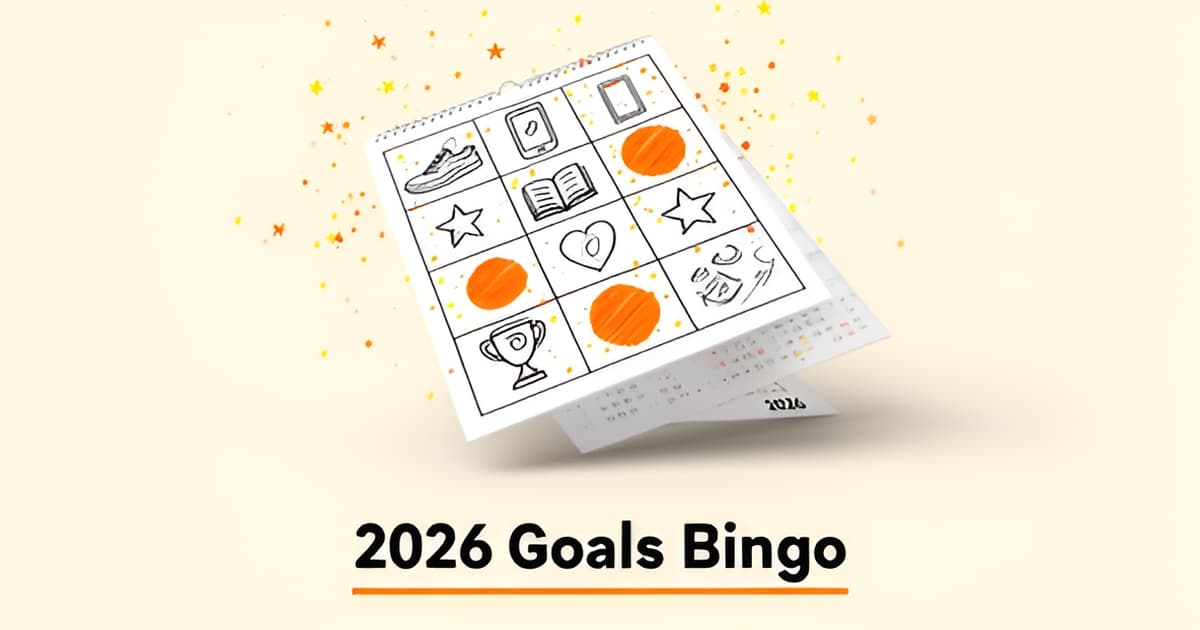
What is a bingo card for 2026?
Key Facts
- A 5x5 bingo card supports over 15.5 octillion unique combinations, ensuring every 2026 card is one-of-a-kind
- Bingo Baker reports a 5x5 card can generate 15511210043330985984000000 unique cards
- Almost half of people abandon New Year's resolutions by January's end, making the bingo format's chunked goals a strategic alternative
- Pitch Consulting cites research that almost half abandon resolutions by end of January
- Users can generate unlimited 2026 bingo cards completely free with no sign-up required, removing adoption barriers entirely
- icebreaker-games.org reports 2026 bingo generator is completely free with no cost or sign-up required
- A balanced mix of ambitious goals like 'Run a 5K' and achievable wins like 'Drink More Water' maintains motivation throughout the year
Why 2026 Bingo Cards Have Evolved Beyond Chance
If you asked someone in 1990 to describe a bingo card, they'd talk about numbers, daubers, and a community hall. Ask the same question heading into 2026, and the answer looks completely different: the squares now hold goals, habits, and small wins instead of B-7 and O-68.
That shift is the core of what a bingo card for 2026 actually is. Rather than a chance-based game, the modern version works as a gamified goal-tracking system, what some creators call "vision board bingo." You fill each square with something you want to do or achieve during the year, then mark squares off as you go. Lauren Brownstein of Pitch Consulting describes the format as a gamified alternative to traditional New Year's resolutions, where users fill a card with small, achievable goals across life areas and reward themselves for completing five in a row. That reward structure matters, because research cited by Pitch Consulting found that almost half of people abandon their New Year's resolutions by the end of January. A bingo card breaks a year of good intentions into visible, winnable chunks.
The format has spread well beyond personal development. Teachers use 2026 bingo cards for classroom activities, and offices use them for team-building, since the content on every square is fully customizable. According to 2026 bingo card guides, customization is central to the experience: you can select grid size, edit card content, add custom titles, include or exclude free spaces, and personalize colors and aesthetics. The same flexibility adapts the format to everything from personal bucket lists to "Class of 2026" graduation events.
The structure also builds in more than one way to succeed:
- A standard "Bingo" win means completing five squares in a row, a reachable milestone within weeks.
- A "Blackout" means filling every square on the card, a year-long challenge for bigger commitments.
- Grid size is your choice, from compact 3x3 layouts to larger boards, so the card matches your ambition level.
Content balance is the other design principle worth borrowing. The same guidance recommends mixing ambitious objectives like "Run a 5K" or "Learn a New Language" with achievable wins like "Drink More Water" or "Call Parents Weekly" to maintain motivation. A card stacked only with stretch goals tends to stall out by February, which defeats the purpose.
Making your own is straightforward. A tool like Printoodle's bingo card generator turns your list of goals, classroom prompts, or party questions into a print-ready PDF in seconds, and everything you create stays in a library for free reprints. If you're planning your card around the year itself, pairing it with a 2026 calendar printable makes it easy to schedule when you'll actually tackle each square.
The numbers behind card variety are genuinely staggering, too. A 5x5 bingo card supports over 15 million trillion trillion unique combinations, according to Bingo Baker, while a 3x3 card still allows 362,880 possibilities. Your 2026 card will be yours alone, which is rather the point.
Customization and Structure Options for Every Goal
The best part of building a bingo card for 2026 isn't filling in the squares. It's shaping the card itself so it actually fits your life, your classroom, or your party. Customization, as bingo resource guides note, is central to the 2026 bingo experience: you choose the grid size, edit every square, add a custom title, include or skip the free space, and adjust colors to match your theme.
Grid size matters more than you might think. A 5x5 card can generate 15,511,210,043,330,985,984,000,000 unique combinations, which means no two goal cards will ever look alike. Prefer something lighter? A 3x3 grid still produces 362,880 possible cards, and some generators support up to 350 squares for truly comprehensive year-long tracking. A compact card keeps things approachable; a bigger grid suits ambitious bucket lists.
Then there's the question of how you win. The dual-goal structure gives you two paths: call "Bingo" when you complete five squares in a row, or go for a full "Blackout" by finishing every square on the card. This flexibility matters because it accommodates different motivations and time commitments, offering multiple pathways to success and sustained engagement across the whole year.
Whichever structure you pick, balance is what keeps you playing. Research on resolutions suggests almost half of people abandon their New Year's goals by the end of January, so a card stacked with only hard goals sets you up to quit. Mix the ambitious with the achievable:
- Big goals like "Run a 5K" or "Learn a new language"
- Mid-range wins such as "Try a new recipe every month" or "Go camping"
- Quick victories like "Drink more water" or "Unsubscribe from unwanted emails"
That blend of stretch goals and easy wins keeps motivation alive. Early checkmarks build momentum, and the harder squares give you something to work toward all year. Experts recommend balancing ambitious objectives with achievable wins precisely because the small wins keep you returning to the card when the big goals feel distant.
Once your card looks right on screen, you want it to look right on paper. Generators like Printoodle's bingo card generator produce clean, printer-ready PDFs automatically, and pairing your finished card with a 2026 calendar printable gives you a natural spot to track progress month by month. Print it, pin it somewhere visible, and let the grid do the nagging for you.
How to Generate a Free, Printer-Ready 2026 Bingo Card
Creating a custom 2026 bingo card is easier than ever with tools designed for instant printer-ready output. Whether you are tracking personal goals, running a classroom activity, or planning a party theme, a structured bingo grid turns abstract intentions into tangible progress. The research highlights that 2026 bingo cards have evolved into gamified goal-tracking systems, commonly used for personal development and office team-building, moving far beyond traditional chance-based games.
A key advantage of modern generators is the ability to produce unlimited cards at no cost. According to industry research, the 2026 bingo generator offers 100% free access with no sign-up required, allowing users to create and print unlimited cards without account creation, which lowers the friction for widespread adoption. This accessibility means anyone can start tracking their year immediately without navigating subscription barriers.
Printoodle’s platform supports this seamless workflow by enabling digital generation and printing as a low-barrier tool. The service allows users to generate as many 2026 vision board bingo cards as desired, print them, or share them digitally without any cost or sign-up. Since Printoodle outputs clean, printer-ready versions automatically, facilitating physical distribution and display, the cards are ready to use the moment they are generated. The platform also supports dual-goal structures, offering both "Bingo" (5 in a row) and "Blackout" (completing every square) objectives, providing multiple pathways to success and sustained engagement throughout the year.
When customizing card content, balancing ambitious objectives with achievable wins is essential for maintaining motivation. Research suggests balancing ambitious goals, such as "Run a 5K" or "Learn a New Language", with smaller, consistent wins, like "Drink More Water" or "Call Parents Weekly", to keep players engaged. Ideas can include learning a new skill, saving a specific amount, trying a new recipe each month, hosting a dinner party, going camping, or even unsubscribing from unwanted emails. This mix ensures the card feels rewarding rather than overwhelming.
To get started, users can leverage Printoodle’s free, no-sign-up generation capability to create as many 2026 bingo cards as needed. The process is straightforward: select preferred grid sizes and themes, incorporate the balanced mix of big goals and small wins, and download the printer-ready PDF. Since everything is saved in the library, reprints are always free, making it easy to distribute copies to friends, students, or colleagues.
Print it. Doodle it. Done.
Frequently Asked Questions
What is a bingo card for 2026, and how is it different from regular bingo?
How do you win on a 2026 goals bingo card?
Why would a bingo card work better than New Year's resolutions?
What kinds of goals should I put on my 2026 bingo card?
Can I customize the grid size and look of my 2026 bingo card?
Is there a free way to make a printable 2026 bingo card?
Key Takeaways
{ "title": "Turn 2026 Into Your Year of Wins", "content": "From vision board bingo to classroom team-building, the modern 2026 bingo card has evolved into a customizable goal-tracking system that turns abstract intentions into tangible progress. By blending ambitious objectives like running a 5K