What is a cool space name?
Key Facts
- NASA Space Place names activities like 'Comet on a Stick' and 'Universe Slime,' proving playful object-plus-activity mashups work per its activity catalog.
- BigActivities titles its entire space collection with just 4 names, Rocket, Saturn, Earth, and Sun, across 4 difficulty levels according to its catalog.
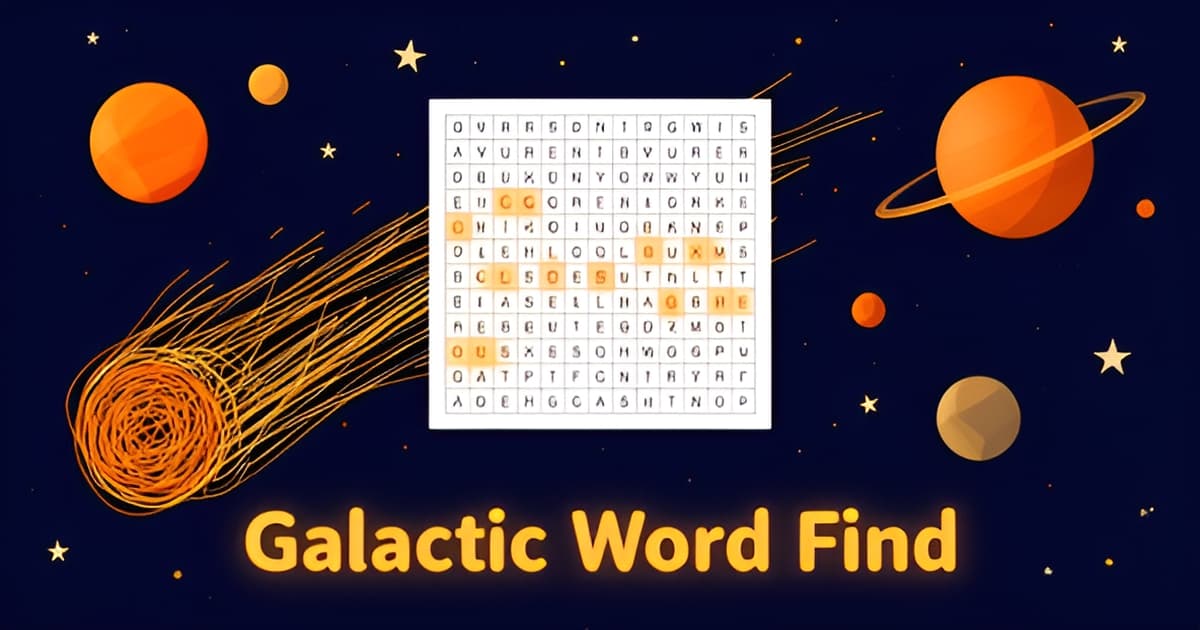
- Space Center Houston's 'Galactic Word Find' pairs its catchy title with definitions for all 14 space terms per the center's activity page.
- The industry-standard difficulty progression runs 5 words on a 10x10 grid up to 23 words on a 15x15 grid according to Word Search Battle.
- A vetted space word list includes 8 planets, 5 IAU-recognized dwarf planets, and 5 named stars like Canopus per one published collection.
- Scholastic says kids are 'fascinated with planets, stars, and space exploration,' making space activities strong learning motivators per its teaching materials.
- Cute Coloring Pages for Kids splits its space puzzles into a 20-word Solar System set and a 20-word Space Exploration set per its collection.
Why Most Space Puzzles Have Boring Names (and Why It Matters)
A word search called "Saturn" is technically accurate. It's also forgettable. If you're asking what a cool space name looks like, the gap between "Saturn" and something better is where most printable puzzles quietly lose their audience.
The dominant convention in printable space puzzles is the plain single-word title. BigActivities, a major puzzle site, structures its entire space collection around four names: Rocket, Saturn, Earth, and Sun, repeated across all four difficulty levels (Easy, Medium, Hard, Super Hard), according to its published word search catalog. Each puzzle is solid. Each name is a label.
Contrast that with how credible institutions do it. Space Center Houston titles its activity "Puzzle Challenge: Galactic Word Find," and pairs the catchy name with a bonus challenge ("Best the puzzle and find all the words!") plus definitions for all 14 space terms inside, per the center's own activity page. Scholastic Teachables, meanwhile, organizes its space printables under subcategory titles like "Astronauts and Rocket Ships" and "Planets, Moons, and Solar Systems," as its space theme collection shows. NASA Space Place goes furthest with playful object-plus-activity mashups: "Comet on a Stick," "Sunspot Cookies," "Universe Slime," and "Pinwheel Galaxy Pinwheel," all listed on its make-and-do activity page.
Why does this matter? Because a title is the first thing a child, student, or party guest reads, and it sets the tone before anyone picks up a pencil. Scholastic notes that kids are "fascinated with planets, stars, and space exploration," which makes space activities "terrific motivators for learning." A name like "Galactic Word Find" leans into that fascination. A name like "Sun" leaves it on the table.
The evidence points to a clear pattern worth following when you name your own puzzle:
- Evocative beats literal. "Galactic Word Find" creates anticipation; "Word Search" just describes the format.
- Pair the title with a hook. Space Center Houston adds definitions; BigActivities adds a picture to color. A name plus a bonus element doubles the engagement.
- Sub-themes deserve their own names. "Solar System" and "Space Exploration" work better as distinct, titled puzzles than as one generic "Space" sheet.
The practical takeaway: when you generate a themed activity on Printoodle, whether it's a space word search, a space maze, or a space crossword puzzle, spend thirty extra seconds on the title. Name it "Cosmic Explorer Word Hunt" instead of "Planets." The puzzle inside is identical; the experience of starting it is completely different. Print it. Doodle it. Done.
What Is a Cool Space Name? Three Naming Patterns That Work
So, what is a cool space name? When you look at how the big players actually title their space activities, three reliable formulas emerge. Pick the one that fits your project and you can't go far wrong.
Pattern 1: Simple single-word celestial names. The default convention across puzzle sites is a plain, recognizable object name. BigActivities builds its entire space word search collection around just four titles: Rocket, Saturn, Earth, and Sun, repeated across Easy, Medium, Hard, and Super Hard levels. Single-word names are safe, instantly understood, and great when you want one strong theme per puzzle. ABCmouse even proves the plain label "Space Word Search" still works as a title in its printable collection.
Pattern 2: Evocative multi-word titles. Credible institutions consistently choose richer names over dry labels. Space Center Houston calls its puzzle "Puzzle Challenge: Galactic Word Find" and pairs it with a bonus challenge plus definitions for all 14 terms, according to its official puzzle page. Scholastic Teachables uses subcategory titles like "Astronauts and Rocket Ships" and "Planets, Moons, and Solar Systems" in its space theme hub. These names set a mood before the solver even picks up a pencil.
Pattern 3: Playful object-plus-activity mashups. NASA Space Place is the master here. Its activity catalog includes "Comet on a Stick," "Universe Slime," "Sunspot Cookies," "Pinwheel Galaxy Pinwheel," and "Moon Habitat." The formula is simple: take a real space object, attach a hands-on twist, and you get a title that sounds like fun rather than homework.
For accuracy, build your word lists from vetted vocabulary. The 8 planets, 5 IAU-recognized dwarf planets (Ceres, Pluto, Eris, Haumea, Makemake), and 5 named stars in Word Search Battle's space set give you a trustworthy foundation.
Here are ready-to-use cool space names you can copy for your own puzzles:
- Galactic Word Find (a Space Center Houston proven title)
- Astronauts and Rocket Ships
- Planets, Moons, and Solar Systems
- Comet on a Stick
- Universe Slime Search
Want to put one of these names on an actual printable? Printoodle lets you generate a space word search, a space maze, or a space crossword puzzle in seconds, with your title at the top and a word list you control. Print it. Doodle it. Done.
Back Your Cool Name With Real Space Vocabulary
A cool space name gets kids to pick up the puzzle. Accurate words inside it are what keep teachers coming back. When you're answering "what is a cool space name" for a classroom or a rainy afternoon, the best answer pairs a catchy title with vocabulary that holds up to a fact-check.
The foundation is the International Astronomical Union's official vocabulary. A vetted space word list includes the 8 planets, the 5 dwarf planets the IAU currently recognizes (Ceres, Pluto, Eris, Haumea, and Makemake), and named stars like Canopus, the second-brightest star in the night sky and one most people in the US never see, according to one published space puzzle collection. That's a word list parents and teachers can trust.
Why does accuracy matter so much? Because space printables carry real educational weight. Scholastic notes that kids are "fascinated with planets, stars, and space exploration," which makes space activities strong motivators for learning, as its space-themed teaching materials explain. A puzzle that quietly teaches the correct set of dwarf planets earns trust that a random word jumble never will.
One cool name can also anchor a whole series. Sub-theme splits are a proven pattern: one popular collection offers a 20-word Solar System puzzle alongside a 20-word Space Exploration puzzle, plus easier and harder grids from 10 to 23 words, per Cute Coloring Pages for Kids. Scholastic takes a similar approach with categories like "Astronauts and Rocket Ships" and "Planets, Moons, and Solar Systems."
A workable sub-theme structure looks like this:
- Solar System: 8 planets, 5 dwarf planets, moons, and named stars like Canopus and Vega.
- Space Exploration: astronauts, rockets, rovers, orbit, and mission vocabulary.
- Universe and Deep Sky: galaxies, nebulae, and light-year concepts for older kids.
You can build each of these on Printoodle with a space word search, a space maze, or a space crossword puzzle, so one catchy title stretches into a full printable pack. Print it. Doodle it. Done.
Build Your Themed Space Activity Pack in Minutes
If you have ever tried to turn a fun theme into a finished activity, you know the challenge is in the details. A great title draws them in, but the real value comes from what happens next. Printoodle’s tools make it easy to take a catchy name and build a complete printable set that works for a classroom, a party, or a rainy day at home.
The most successful themed word searches follow a proven difficulty tiering system. BigActivities structures its space word searches around four simple object names repeated across Easy, Medium, Hard, and Super Hard levels. Word Search Battle offers three tiers, Easy (10x10 grid with 5 words), Medium (12x12 with up to 15 words), and Hard (15x15 with up to 23 words), while Cute Coloring Pages for Kids provides four puzzles ranging from 10 to 23 words. This 10/15/23-word progression has become the industry standard, and Printoodle mirrors this structure so every themed activity pack feels polished and professional.
Beyond the word list, adding a bonus element significantly boosts engagement. Space Center Houston pairs its “Galactic Word Find” puzzle with a definition for each of the 14 space terms, turning a simple search into a learning moment. BigActivities includes a coloring picture alongside its word search, giving kids a second activity in one download. These small additions transform a single puzzle into a mini lesson or a full party activity.
Printoodle makes it simple to combine these elements into a complete themed set. Start with a space word search generator to create the core puzzle, then add a space maze for a path-finding challenge, and finish with a space crossword puzzle to round out the pack. Each tool uses the same themed vocabulary, so the activities feel cohesive rather than random. Print it. Doodle it. Done.
Frequently Asked Questions
What is a cool space name for a word search puzzle?
Are simple names like "Rocket" or "Saturn" bad titles for space puzzles?
What space words should I put inside my space word search?
How many words should a space word search have for different ages?
Should one space puzzle cover everything, or should I split it into sub-themes?
How can I make my space puzzle more engaging than just a word list?
Your Cool Space Name Is Thirty Seconds Away
So, what is a cool space name? It's a title that does what NASA, Space Center Houston, and Scholastic have already proven works: it evokes, it hooks, and it pairs a catchy phrase with vocabulary that holds up to a fact-check. Whether you go with a single celestial word like "Saturn," an evocative title like "Galactic Word Find," or a playful mashup like "Comet on a Stick," the pattern is clear, evocative beats literal, and a name plus a bonus element doubles the engagement. The vocabulary inside matters just as much: build from the 8 planets and the 5 dwarf planets the International Astronomical Union recognizes, and your puzzle earns trust along with attention. Ready to put your name on paper? Head to Printoodle and generate a space word search, a space maze, or a space crossword puzzle with your title at the top and a word list you control. Print it. Doodle it. Done.